Château de Tautavel
Château de Tautavel stands as a remarkable example of a medieval hill castle situated in the village of Tautavel, France, within the historical region of Northern Catalonia or Rosselló. This fortress, with origins dating back to the early Middle Ages, reflects the complex feudal and military history of the region, marked by shifting allegiances and strategic fortifications.
The castle's earliest documentary mention occurs in 1011 when Bernard Taillefer, Count of Besalú, transferred ownership to his son Guillem. Bernard’s testament of 1020 refers to the site as “Taltevolo” or “Talteüll,” underscoring the castle’s longstanding significance. These early records establish the castle’s presence during the High medieval period, a time of territorial consolidation and feudal development in Catalonia.
Historical evolution and strategic significance
Throughout the 12th and 13th centuries, Château de Tautavel experienced several ownership changes reflecting the region's dynamic political landscape. In the early 1200s, the Vernet family acquired the castle through feudal grants, emphasizing its role as a manorial center. By 1261, Ponç Hug, Count of Empúries, took possession but sold it in 1269 to the infant Jaume, later James II of Mallorca. Jaume’s subsequent enfeoffment of the castle to Guillem de Talteüll reinforced local noble ties.
The year 1286 marked a pivotal moment when the castle underwent significant fortification enhancements amid military tensions with the Crown of Aragon. These improvements highlight the fortress’s strategic importance in regional conflicts, serving as a defensive stronghold along contested borders. Following this period, the castle reverted to royal ownership, reflecting its continued military and administrative relevance.
Architectural features and construction phases
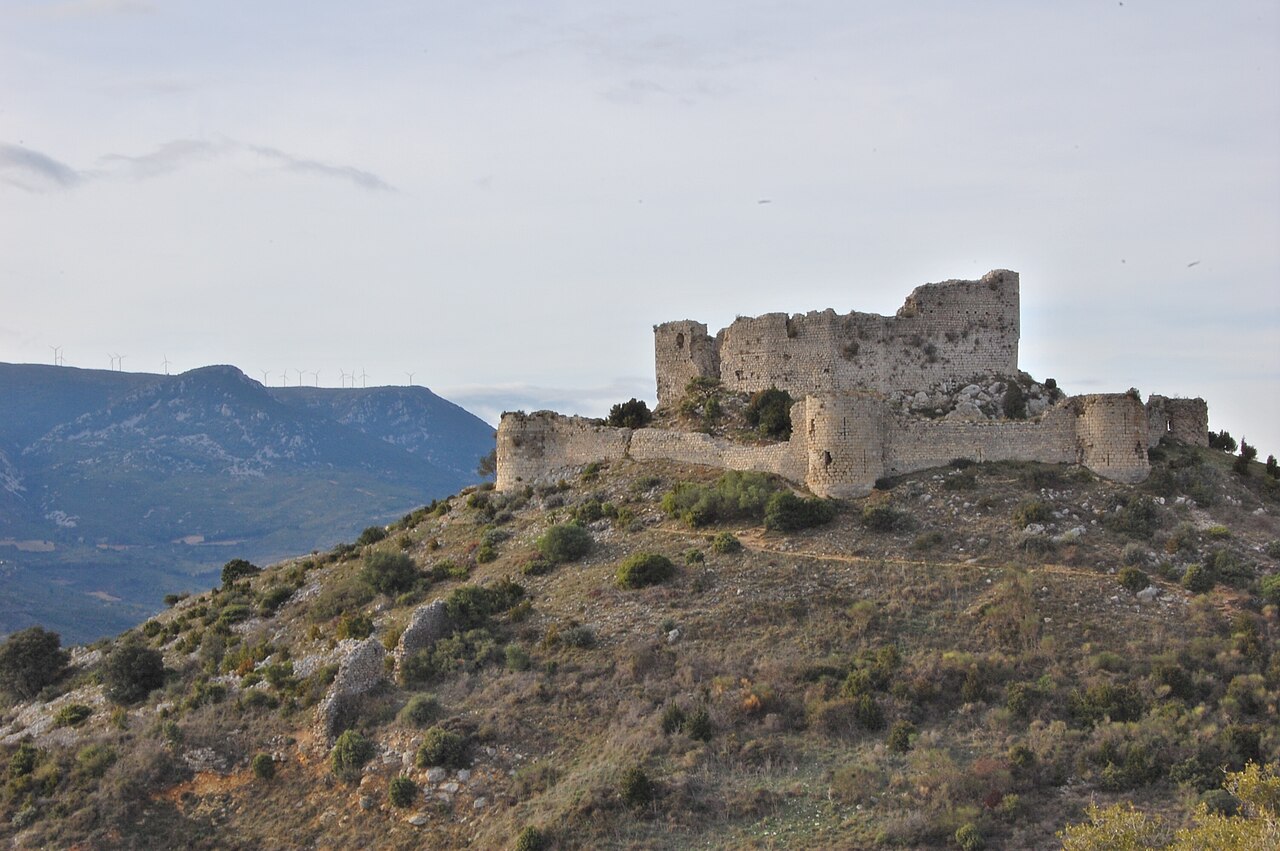
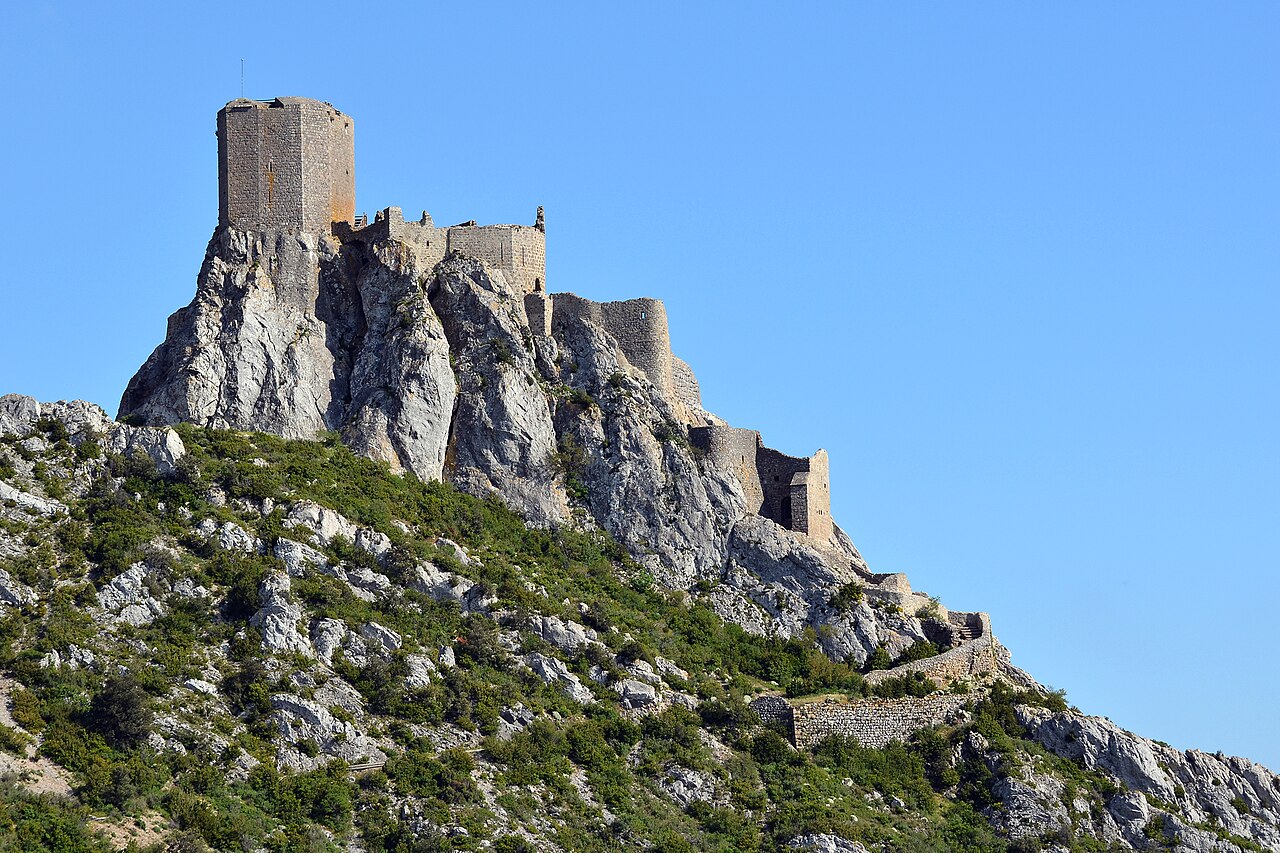
Château de Tautavel is perched on a narrow rocky ridge overlooking the village, with fortifications extending approximately 200 meters along a northeast-southwest axis. This linear arrangement follows the natural contours of the rocky spur, a design characteristic shared with nearby contemporary castles such as Perapertusa, Puillorenç, and Querbús.
The castle’s core defensive enclosure, located at the southwestern end, measures around 50 meters in length and 11.5 meters in width. The masonry primarily dates from the 11th to 13th centuries and features large, precisely cut ashlar blocks approximately 30 by 45 centimeters in size. These stones are laid in regular horizontal courses bonded with lime mortar, evidencing skilled medieval craftsmanship.
Two distinct construction phases are visible in the surviving walls, indicating ongoing development and adaptation to evolving military needs. Among the preserved structures is the Torrassa, the main building that housed the lord’s chambers, showcasing the residential aspect of the fortress. The eastern entrance gate remains intact, marking the original access point to the castle.
The northern section contains the best-preserved wall, standing about 15 meters tall. Within this area, remnants of internal walls and cisterns used for water storage are still visible, illustrating the practical considerations of sustaining a garrison during sieges or prolonged occupation.
Down the slope from the main enclosure lie the remains of a circular tower that served as a bastion. Although partially collapsed, this tower was integral to the castle’s defensive network. To the east and downhill, traces of a straight wall nearly 50 meters long are believed to be part of a chapel dedicated to Santa Maria, dating from the 13th century and representing a later addition to the site.
Decline and preservation
By the mid-15th century, Château de Tautavel had fallen into disuse and ruin, ceasing to function as a military fortress. The 17th century saw further degradation when French forces systematically dismantled its defenses. Notably, in 1639, the castle was captured by the army of the Condé, reflecting its involvement in the broader military conflicts of the era.
Today, the castle exists as ruins, protected as a historic monument since March 17, 1986. The site offers valuable insights into medieval military architecture and feudal history, with its remains providing a tangible connection to the region’s turbulent past.
Archaeological context and surrounding settlement
Below the main castle on the eastern slope, numerous walls reveal the footprint of an earlier settlement corresponding to the original village of Talteüll. This archaeological evidence highlights continuous occupation of the site, predating and paralleling the castle’s history. The integration of the fortress with the surrounding village underscores the castle’s role not only as a military bastion but also as a center of local governance and community life.
Overall, Château de Tautavel exemplifies the strategic and architectural characteristics of medieval hill castles in the Catalan region. Its layered history, from feudal stronghold to ruin, reflects broader patterns of medieval fortification, noble power, and regional conflict in southern France and northern Spain.
Frequently asked questions (FAQ)
- How do I get to Château de Tautavel?
- Château de Tautavel is located in the village of Tautavel, France, approximately 30 kilometers from Perpignan. You can reach the castle by car or by public transport, with several bus services operating in the region. Parking is available nearby for visitors who choose to drive.
- What is the historical significance of Château de Tautavel?
- Château de Tautavel is renowned for its archaeological importance, particularly due to the discovery of the Tautavel Man, one of the oldest human remains found in Europe. The site has provided invaluable insights into prehistoric life and human evolution, making it a key location for researchers and history enthusiasts alike.
- When was Château de Tautavel built?
- Château de Tautavel was originally constructed in the 11th century, serving as a stronghold during the feudal era. Over the centuries, it has undergone various renovations and restorations, which have helped preserve its architectural heritage for future generations to appreciate.
- Can I take photographs inside the castle?
- Yes, visitors are welcome to take photographs inside Château de Tautavel, but it's advisable to check for any specific restrictions in certain areas. Capturing the stunning architecture and the beautiful views from the castle is a fantastic way to remember your visit.
- Why is Château de Tautavel a popular tourist destination?
- Château de Tautavel attracts tourists due to its unique blend of history, archaeology, and stunning views of the surrounding landscape. The castle's rich heritage and the fascinating exhibits related to prehistoric findings make it an educational experience for all ages.
- Is it possible to access Château de Tautavel with a wheelchair?
- Château de Tautavel has made efforts to improve accessibility for all visitors. While some areas may be challenging due to the castle's historical architecture, there are accessible paths and facilities available to help accommodate guests with mobility issues.
- What are the opening hours for Château de Tautavel?
- Château de Tautavel is typically open to visitors from 10 AM to 6 PM, but hours may vary depending on the season or special events. It is recommended to check the official website or contact the castle directly for the most up-to-date information before planning your visit.
- What are the ticket prices for visiting Château de Tautavel?
- Ticket prices for Château de Tautavel are generally reasonable, with discounts available for students, seniors, and children. Family packages may also be offered, making it an affordable outing for groups. Always check the official website for current pricing and any special promotions.
- What nearby attractions should I visit when in Tautavel?
- While visiting Château de Tautavel, consider exploring the nearby archaeological site of the Tautavel Museum, which showcases the findings from the region. Additionally, the picturesque village of Tautavel itself offers charming local cafes and scenic walking paths, perfect for a day of exploration.
Information
Website
Visit websiteSources & official resources
Verify the information above using these authoritative references.
Loading map...
Visitor reviews
No reviews yet. Been here? Write the first review and help other travelers!
Write the first reviewVisited this castle? Share your experience
Your review helps other travelers and adds first-hand knowledge to our encyclopedia.