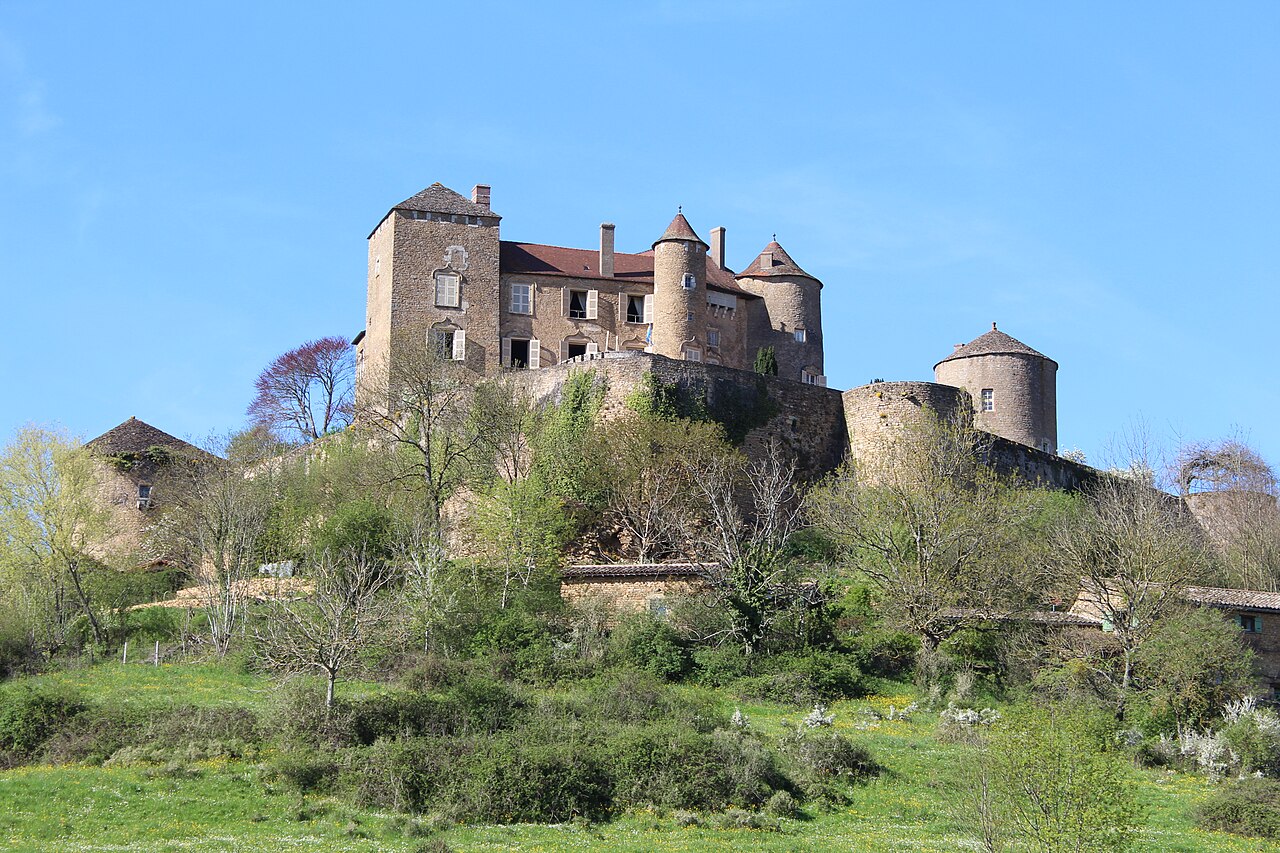
Château de Saint-Point
The Château de Saint-Point stands as a remarkable example of a medieval hill castle in France, nestled in the commune of Saint-Point within the Hauts-de-France region. This castle's origins trace back to the late 11th century, when it was established by feudal lords tasked with protecting the surrounding territories and religious centers, notably the influential Abbey of Cluny. The castle's strategic location on a hillside allowed it to serve as a defensive stronghold, overseeing important routes and safeguarding ecclesiastical interests.
Medieval origins and strategic importance
Constructed during the High Medieval period, the château initially functioned as part of a broader network of fortifications linked to the Abbey of Cluny, a dominant monastic power in medieval Europe. Records from the abbey indicate that the castle was integral to the defense of its vast holdings, emphasizing its military and administrative significance. Local lore speaks of an underground tunnel connecting the château directly to the abbey, a feature common in medieval fortresses for secret communication or escape, though this remains unverified by archaeological evidence.
Historical conflicts and noble ownership
The château's history is marked by military engagements, including a notable siege in 1471 when French royal forces captured it, signaling a shift in regional power. Following this event, the castle passed through the hands of several noble families, including the Rochefort d’Ailly and the Castellane families, who each contributed to its maintenance and adaptation over the centuries. The turbulent period of the French Revolution in 1789 brought unrest to the region, during which the château suffered damage inflicted by local inhabitants, reflecting the widespread social upheaval of the time.
19th-century transformation and the lamartine legacy
A defining chapter in the château's history began in 1802 with its acquisition by Pierre de Lamartine, followed by inheritance by his son, Alphonse de Lamartine, a renowned poet and politician. Between 1852 and 1855, Alphonse undertook extensive renovations that profoundly reshaped the château's appearance. Embracing the Gothic Revival architectural style, the renovations introduced a prominent donjon (tower), an elegant gallery, and decorative battlements. These enhancements were complemented by the creation of a large English-style garden, reflecting the romantic tastes of the era and transforming the château into a picturesque residence.
Architectural features of the 19th century
The château's main building is a rectangular structure featuring two substantial square pavilions projecting from the west façade. The east-facing façade is distinguished by large windows with wrought iron balconettes beneath the lower panels, characteristic of the Gothic Revival style. A notable addition is the passage door with a curved pediment on the west side, accompanied by an external staircase connecting the ground floor to the first floor, enhancing both functionality and aesthetic appeal.
Courtyard and surrounding grounds
Facing east, a spacious rectangular courtyard is enclosed on three sides by auxiliary buildings, secured by a metal grate and a simple carriage gate. This layout provides a practical entrance directly from the adjacent road while maintaining the château's historic character. The château is situated on a hillside slope, separated from the local communal cemetery by a boundary wall. Within this cemetery lies the family vault of Alphonse de Lamartine, underscoring the intimate connection between the château and its most famous occupant.
Cultural significance and preservation
Since 1972, the château has been officially protected as a historic monument, with multiple parts—including its façades, roofs, dining room, and annex buildings—recognized for their heritage value. It forms part of the "Route des châteaux en Bourgogne du Sud", a collection of culturally significant sites in southern Burgundy. Ownership has changed hands several times in the 20th and 21st centuries, with the current owner, Philippe Mignot, undertaking ongoing maintenance and preservation efforts to retain the château's architectural integrity and historical ambiance.
Legacy of alphonse de lamartine
Alphonse de Lamartine's influence extends beyond architecture; his literary and political contributions have cemented the château's place in French cultural history. The romantic renovations he commissioned reflect his artistic sensibilities and desire to blend historical reverence with contemporary style, making the château a symbol of 19th-century romanticism intertwined with medieval heritage.
Architectural analysis and stylistic elements
The Château de Saint-Point exemplifies a layered architectural history, combining its High Medieval origins with significant 19th-century Gothic Revival additions. The juxtaposition of medieval defensive features with romantic stylistic elements creates a unique aesthetic. The donjon and battlements, while evocative of medieval fortifications, serve more ornamental and symbolic roles following their 19th-century reconstruction. The English-style garden surrounding the château complements the architectural ensemble, offering a landscaped setting that enhances the visual impact and visitor experience.
Frequently asked questions (FAQ)
- How do I get to Château de Saint-Point?
- Château de Saint-Point is conveniently located in the scenic countryside of France. You can reach it by car, with ample parking available on-site, or by using public transportation options that connect to nearby towns.
- What are the opening hours of Château de Saint-Point?
- The castle is open to visitors from 10 AM to 6 PM, Tuesday through Sunday. It is closed on Mondays and certain holidays, so it's best to check the official website for any updates on hours.
- Is there an entrance fee to visit Château de Saint-Point?
- Yes, there is a modest entrance fee to explore the castle and its grounds. Ticket prices are typically around €10 for adults, with discounted rates for students and children, and family passes available.
- When was Château de Saint-Point built?
- Château de Saint-Point dates back to the 17th century, reflecting a rich history that intertwines with the architectural styles of the time. Its construction showcases the grandeur of French history and offers insight into the life of nobility during that era.
- Can I take guided tours of Château de Saint-Point?
- Yes, guided tours are available and highly recommended for a deeper understanding of the castle's history and architecture. These tours often include access to areas not available to general visitors and provide fascinating insights from knowledgeable guides.
- What is the best time to visit Château de Saint-Point?
- The best time to visit is during the spring and early autumn months, when the weather is mild and the gardens are in full bloom. Additionally, these seasons tend to have fewer crowds, allowing for a more enjoyable experience.
- Why is Château de Saint-Point historically significant?
- Château de Saint-Point is significant for its role in the regional history of France, serving as a residence for noble families and a witness to many historical events. Its architecture and preserved artifacts provide valuable insight into the cultural heritage of the region.
- Is Château de Saint-Point accessible for visitors with disabilities?
- Yes, Château de Saint-Point is committed to providing accessibility for all visitors. The grounds have been designed to accommodate those with mobility issues, including ramps and accessible restrooms.
- What nearby attractions can I visit while at Château de Saint-Point?
- While visiting Château de Saint-Point, you can explore the beautiful surrounding countryside and nearby villages. Other attractions include local vineyards, hiking trails, and historical sites that showcase the rich culture of the region.
Information
Website
Visit websiteSources & official resources
Verify the information above using these authoritative references.
Loading map...
Visitor reviews
No reviews yet. Been here? Write the first review and help other travelers!
Write the first reviewVisited this castle? Share your experience
Your review helps other travelers and adds first-hand knowledge to our encyclopedia.