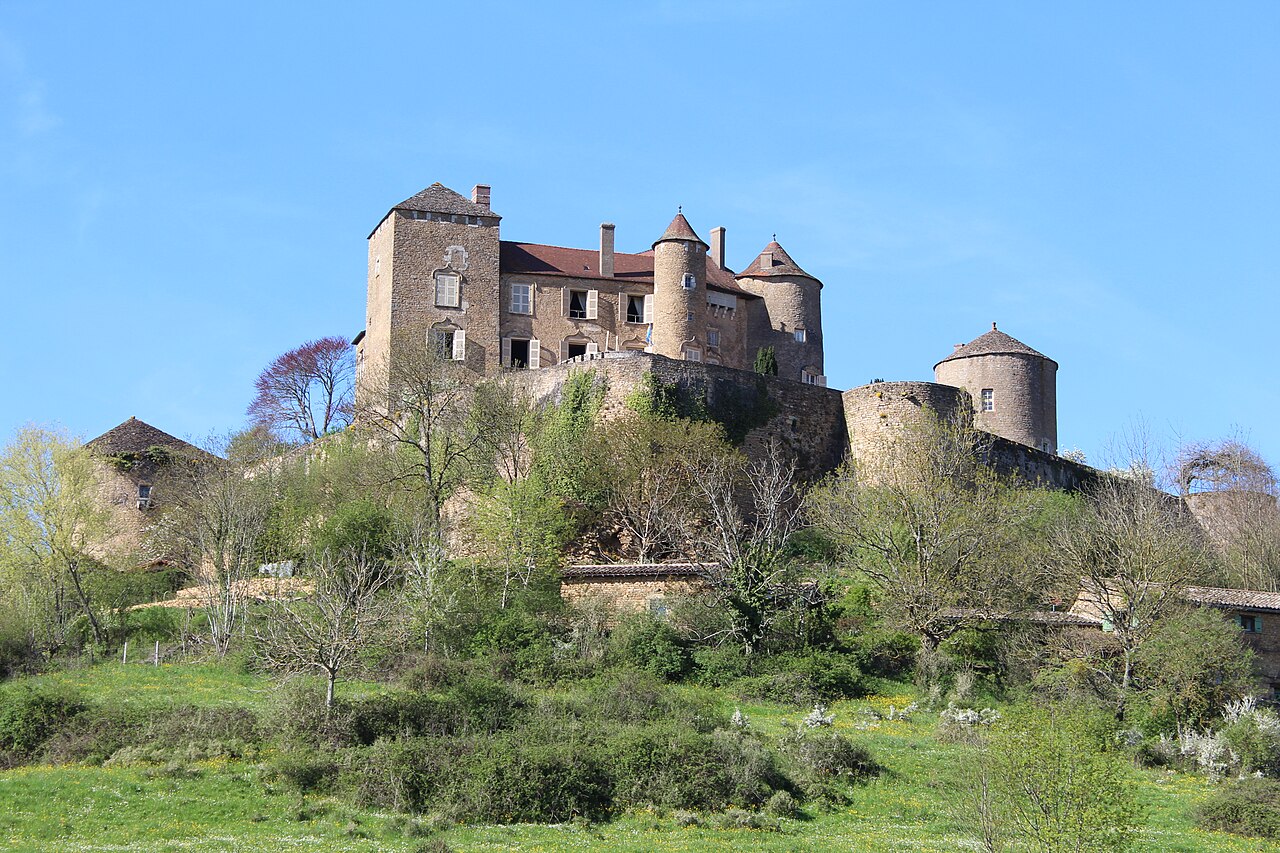
Castle of Langeais
The castle of Langeais stands prominently on a strategic promontory overlooking the small valley of the Roumer River, marking the entrance to the fertile and historically significant Loire Valley in the Indre-et-Loire department of France. This imposing fortress is a prime example of late medieval architecture, embodying the transition from fortified medieval strongholds to more refined chateaux that combined defense with residential comfort.
Originally constructed in the 10th century, the castle's earliest incarnation was a wooden motte-and-bailey structure, typical of early medieval fortifications designed for rapid defense. Over the centuries, it evolved through various phases of stone construction and expansion, reflecting the changing military and political landscape of the region. The castle gained particular prominence during the turbulent period of the Hundred Years' War (1337–1453), when it was repeatedly contested and ultimately destroyed.
Reconstruction under king louis xi
Following the devastation wrought by the war, King Louis XI undertook the ambitious project of rebuilding the castle in the 15th century, transforming it into a formidable stone fortress that also served as a royal residence. This reconstruction is a hallmark of late medieval military architecture, characterized by robust defensive walls, cylindrical towers, and a well-fortified gatehouse designed to withstand siege warfare.
The castle's layout includes a massive keep or donjon, which served as the last line of defense and a symbol of lordly power. The walls are punctuated by machicolations and arrow slits, allowing defenders to repel attackers effectively. The moat surrounding the castle, fed by the Roumer River, added an additional layer of protection. Inside, the castle was adapted to accommodate the evolving needs of its inhabitants, blending military functionality with elements of comfort and status.
Architectural features and interior layout
The castle of Langeais is notable for its harmonious integration of defensive and residential elements. The curtain walls encircle a spacious courtyard, which was the hub of daily activity. The gatehouse is particularly impressive, featuring a drawbridge and portcullis that controlled access securely. The towers provide commanding views of the surrounding landscape, essential for early warning against invaders.
Inside the castle, visitors can explore the great hall, once the center of social and political life. This hall would have hosted feasts, court proceedings, and gatherings of the nobility. The private chambers and chapel reflect the castle's dual role as a fortress and a residence. The interiors, restored in the 19th century, showcase period furnishings and decorations that evoke the lifestyle of the late medieval aristocracy.
19th-century restoration and modern significance
In the late 19th century, the castle underwent extensive restoration to preserve its historical and architectural integrity. This restoration was part of a broader movement in France to safeguard medieval heritage sites, led by prominent architects and historians. The work at Langeais aimed to stabilize the structure, restore damaged elements, and recreate the castle's appearance during its peak in the late medieval period.
Today, the castle is owned by the Institut de France and is listed as a monument historique by the French Ministry of Culture. It is open to the public, offering visitors a unique glimpse into the military architecture and noble life of the late Middle Ages. The castle's location in the Loire Valley, a UNESCO World Heritage site, further enhances its cultural and touristic appeal.
Historical context and cultural importance
The castle of Langeais played a significant role in the defense and administration of the Loire Valley, a region of great strategic and economic importance throughout French history. Its control was vital for securing trade routes and asserting royal authority in the area. The castle also witnessed key historical events, including royal visits and political negotiations.
Its architectural evolution reflects broader trends in medieval fortification, transitioning from wooden structures to stone castles with sophisticated defensive features. The castle serves as a tangible link to the late medieval period, illustrating the complexities of feudal power, warfare, and aristocratic life.
Visiting the castle of langeais
Visitors to the castle can explore its well-preserved fortifications, including the towers, gatehouse, and moat, as well as the richly furnished interiors that bring the medieval past to life. Guided tours provide detailed insights into the castle's history, architecture, and the lives of its former inhabitants.
The castle hosts various cultural events and exhibitions throughout the year, enhancing its role as a center for heritage and education. Its picturesque setting in the Loire Valley makes it a popular destination for tourists interested in medieval history and French cultural heritage.
Frequently asked questions (FAQ)
- How do I get to the castle of Langeais?
- The castle of Langeais is located in the town of Langeais in the Centre-Val de Loire region of France. It is accessible by car and public transport, with nearby train stations and local bus services connecting the castle to major cities like Tours.
- What is the historical significance of the castle of Langeais?
- The castle of Langeais is historically significant as a well-preserved example of late medieval military architecture. It played a strategic role in the defense of the Loire Valley and was rebuilt by King Louis XI after the Hundred Years' War.
- Can I visit the interior of the castle?
- Yes, visitors can explore the castle's interior, including the great hall, private chambers, and chapel. The interiors have been restored to reflect the late medieval period and feature period furnishings and decorations.
- When is the best time to visit the castle of Langeais?
- The castle is open daily from 10:00 to 18:00, making spring and summer ideal times to visit due to pleasant weather and the availability of guided tours and cultural events.
- Are there guided tours available at the castle?
- Guided tours are available and provide detailed information about the castle's history, architecture, and former inhabitants, enhancing the visitor experience.
Information
Opening hours
10:00-18:00, daily
Ticket prices
€8 adult, €5 child
Current owner
Institut de France
Website
Visit websiteSources & official resources
Verify the information above using these authoritative references.
Loading map...
Visitor reviews
No reviews yet. Been here? Write the first review and help other travelers!
Write the first reviewVisited this castle? Share your experience
Your review helps other travelers and adds first-hand knowledge to our encyclopedia.