Château de Saint-Cloud
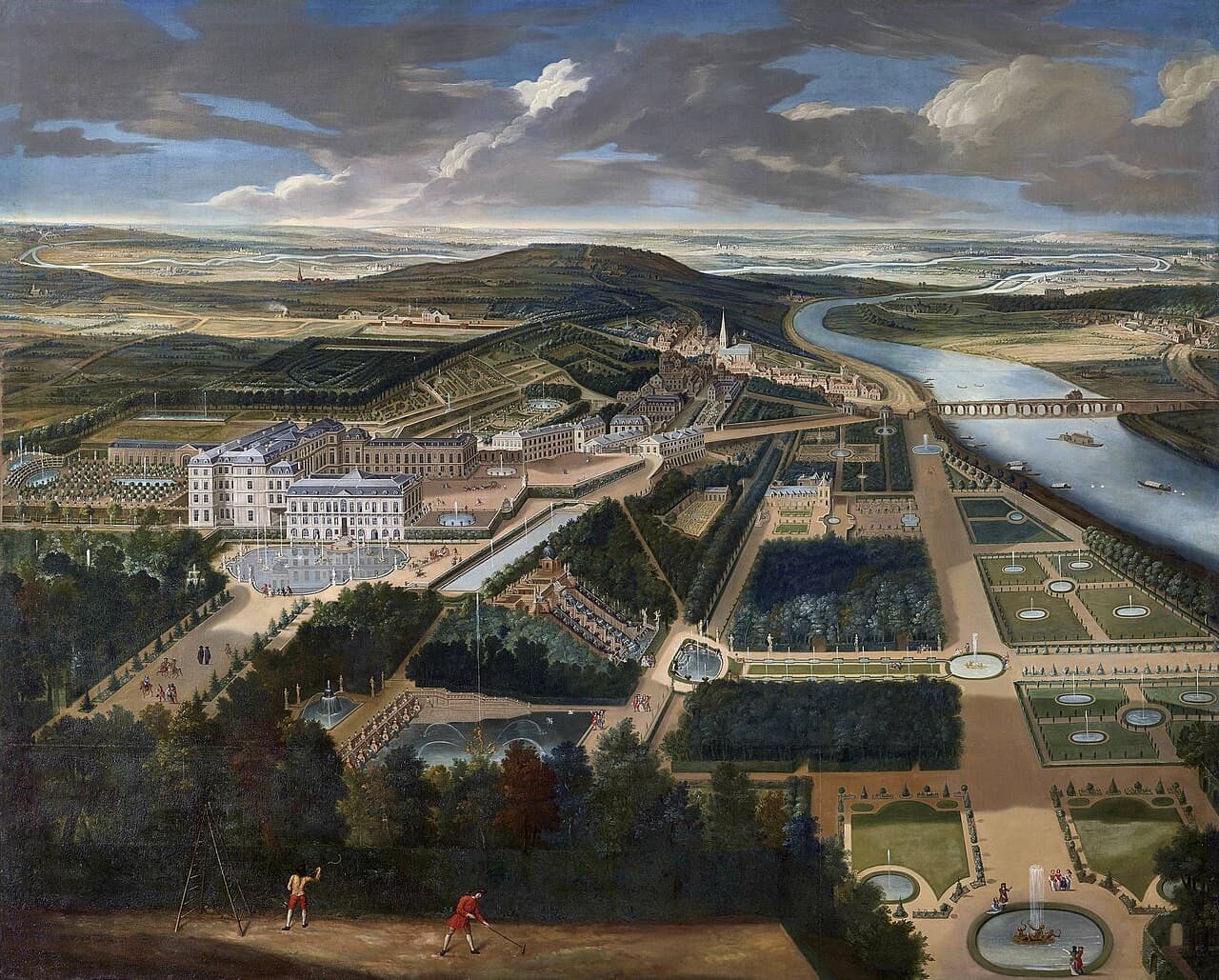
The Château de Saint-Cloud was a significant Renaissance château located in Saint-Cloud, in the Hauts-de-Seine region of France, approximately 5 kilometres west of Paris. Perched on a strategic site overlooking the Seine River, it commanded expansive views and served as a royal residence for several centuries. Though the château itself was destroyed, its extensive and beautifully designed gardens remain preserved today as the Parc de Saint-Cloud, a public park celebrated for its landscape architecture and historical importance.
Early construction and renaissance origins
The château was originally constructed in the 16th century, during the renaissance period, a time of significant architectural innovation in France. Its initial design reflected Renaissance principles, emphasizing symmetry, classical proportions, and ornamental details inspired by Italian models. The château was built as a country residence for French nobility, taking advantage of the elevated terrain to provide commanding views and a prestigious setting.
Expansion under philippe i, duke of orléans
In the 17th century, the château underwent major expansions under the direction of Philippe I, Duke of Orléans, the younger brother of King Louis XIV. Philippe I transformed the château into a grand royal residence, enhancing its architectural complexity and grandeur. He added new wings, lavish interiors, and formal gardens that reflected the evolving tastes of the French court. This period saw the château become a center of aristocratic life and political intrigue.
The château in the 18th century: marie-antoinette’s influence
The 18th century brought further modifications, notably under the reign of Marie-Antoinette, Queen of France and Navarre. In the 1780s, she commissioned renovations that modernized and refined the château’s interiors and gardens. Marie-Antoinette's influence introduced elements of the rococo style, with elegant decorative motifs and intimate private spaces designed for leisure and court entertainment. These changes reflected the queen’s personal tastes and the cultural shifts of pre-revolutionary France.
19th-century use by napoleon and the royal family
During the 19th century, the château served various prominent occupants, including Napoleon Bonaparte, the royal family during the Bourbon Restoration, Louis-Philippe d'Orléans, and Napoleon III. The château was a favored residence and political venue, hosting important events and state functions. Its architecture and interiors were adapted over time to suit the needs of these different rulers, blending elements from various periods and styles. The château thus embodied the complex political history of France during this era.
Destruction during the franco-prussian war and aftermath
In 1870, during the Franco-Prussian War, the château suffered catastrophic damage when it was set on fire amid the conflict. The blaze destroyed much of the structure, leaving it in ruins. Due to the extent of the damage, the remnants of the château were demolished in 1891. Despite the loss of the building, the estate's gardens were preserved and later developed into the Parc de Saint-Cloud, which remains a significant cultural and historical site.
Architectural and cultural significance
The Château de Saint-Cloud was an important example of renaissance architecture evolving through the centuries with additions reflecting baroque and rococo influences. Its location overlooking the Seine made it a strategic and symbolic site. The château’s history is intertwined with key figures of French history, including royalty and emperors, making it a witness to France’s political and cultural transformations from the Renaissance through the 19th century.
The parc de saint-cloud today
Today, the Parc de Saint-Cloud preserves the legacy of the château’s gardens, featuring terraces, fountains, and formal landscaping that illustrate French garden design traditions. The park is open to the public and serves as a recreational and historical space, attracting visitors interested in landscape architecture and French history. While the château itself no longer stands, the park remains a testament to its former grandeur and the artistic achievements of its creators.
Frequently asked questions (FAQ)
- What is the historical significance of Château de Saint-Cloud?
- Château de Saint-Cloud was a royal residence and played a significant role in French history, especially during the reign of Louis XIV. It was the site of numerous important events, including the signing of significant treaties and the hosting of lavish royal gatherings. The château was also the birthplace of several notable figures in French history.
- When was Château de Saint-Cloud built?
- Construction of the original château began in the early 16th century, with significant renovations and expansions occurring throughout the 17th century. The château reached its peak under the patronage of Louis XIV, who transformed it into a grand royal residence. Unfortunately, it was largely destroyed during the Franco-Prussian War in 1870.
- Is it possible to visit Château de Saint-Cloud?
- Yes, visitors can explore the grounds of Château de Saint-Cloud, which includes beautiful gardens and parkland. While the main building is not fully intact, the site is still rich in history and offers a glimpse into royal life in France. Guided tours and information panels provide insights into the château's past.
- What are the opening hours for Château de Saint-Cloud?
- Château de Saint-Cloud is typically open to the public from 9 AM to 6 PM, with extended hours during the summer months. However, it is advisable to check the official website for any seasonal changes or special events that may affect opening times. Keep in mind that the last admission is usually one hour before closing.
- Can I access Château de Saint-Cloud by public transport?
- Yes, Château de Saint-Cloud is accessible via public transport, including the Paris Métro and regional trains. The closest station is the Saint-Cloud station, which is just a short walk from the château. Additionally, several bus lines service the area, making it convenient for visitors.
- What is the best time to visit Château de Saint-Cloud?
- The best time to visit Château de Saint-Cloud is during the spring and early summer when the gardens are in full bloom. The pleasant weather allows for enjoyable strolls through the expansive parkland. Additionally, visiting during weekdays can help avoid the larger crowds often seen on weekends.
- Are there any nearby attractions to Château de Saint-Cloud?
- Yes, there are several nearby attractions, including the Parc de Saint-Cloud, which offers stunning views of Paris and extensive walking paths. Additionally, the nearby city of Versailles, home to the famous Palace of Versailles, is just a short trip away and makes for a perfect day trip. Visitors can also explore local cafes and shops in the surrounding area.
- What are the ticket prices for Château de Saint-Cloud?
- Admission to the grounds of Château de Saint-Cloud is typically free, but there may be a fee for specific exhibitions or guided tours. It's wise to check the official website for the most current ticket prices and any special offers that may be available during your visit. Discounts may apply for students, seniors, or groups.
Photo gallery

Photo by Attributed to Étienne Allegrain•Public domain
Information
Loading map...
Visitor reviews
No reviews yet. Been here? Write the first review and help other travelers!
Write the first reviewVisited this castle? Share your experience
Your review helps other travelers and adds first-hand knowledge to our encyclopedia.