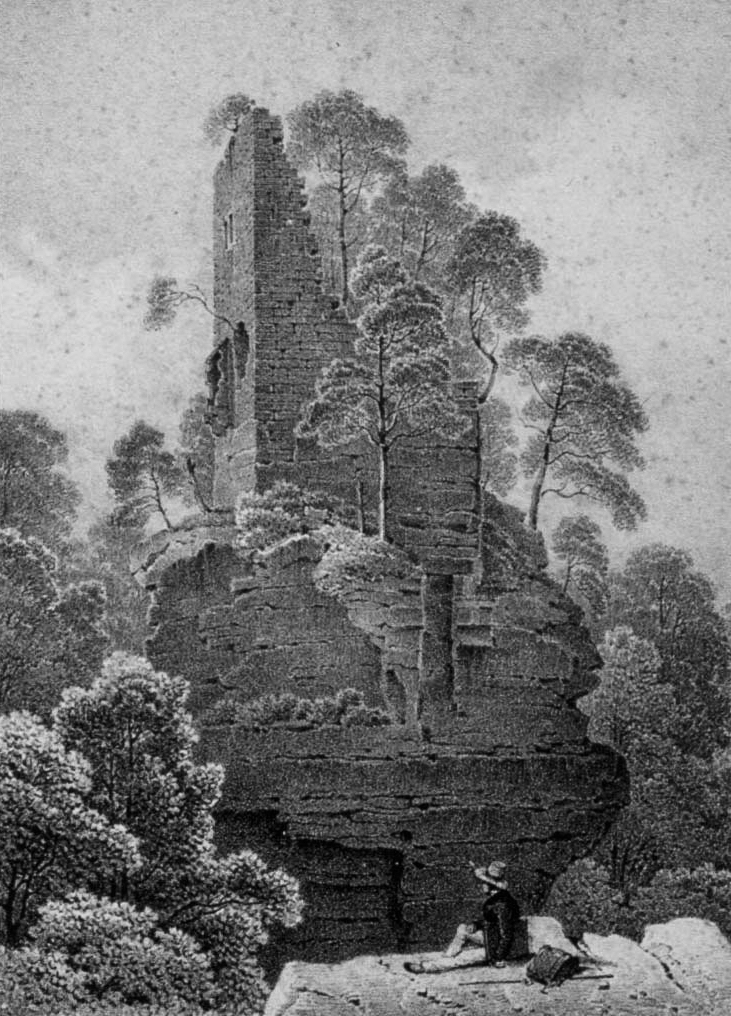
Château de Rothenbourg
The Château de Rothenbourg is a ruined medieval castle located in the commune of Philippsbourg in northeastern France. Perched atop a hill known as Rothenberg or Rodenberg, this fortress has origins dating back to the 9th century AD, making it one of the earliest fortifications in the region. The castle's strategic hilltop position provided commanding views over the surrounding landscape, a typical feature of hill castles designed for defense and control of territory.
Historical records suggest that around 912 AD, the Bishop of Strasbourg, Otbert, sought refuge within the castle, then known as Rathburg, during a period of local unrest. Tragically, he was assassinated shortly after taking shelter there, highlighting the turbulent nature of the era and the castle's role as a refuge in times of conflict.
Construction and architectural features
The Château de Rothenbourg was likely constructed initially in the early medieval period, with significant development attributed to the Duke of Lorraine in the 13th century. The castle is primarily built from dressed sandstone, a durable material commonly used in the region for its availability and defensive qualities. The architectural style reflects typical medieval military design, including robust curtain walls, defensive towers, and a fortified gatehouse.
As a hill castle, its layout took advantage of the natural topography, with steep slopes enhancing its defensive capabilities. The remains suggest a complex of defensive structures arranged to protect the inner bailey and residential quarters. The castle's fortifications would have included battlements and arrow slits, allowing defenders to repel attackers effectively.
Ownership and feudal history
In the late 13th century, the castle passed into the hands of the Counts of Zweibrücken-Bitsch, an influential noble family in the region. During the 14th century, it was partly owned by Count Walram of Zweibrücken-Bitsch, who granted it as a fiefdom in 1353 to Gerhard Harnasch von Weisskirchen. This transfer illustrates the castle's role within the feudal system as a center of local power and governance.
The castle also appears to have influenced the name of the Blick de Rothenburg family, who held several fiefs from the Lords of Bitche and maintained their lineage until their extinction in 1749. This connection underscores the castle's lasting impact on the regional nobility and landholding patterns.
Destruction and decline
In 1368, the castle was attacked and destroyed by forces from Strasbourg, reflecting the ongoing conflicts between local powers during the medieval period. The destruction marked the beginning of the castle's decline, and it was never fully restored to its former strength or prominence.
Today, the Château de Rothenbourg stands as a partially preserved ruin, with remnants of its walls and defensive structures still visible on the hilltop. The site offers valuable insights into medieval military architecture and the feudal history of the Lorraine region.
Historical significance and cultural heritage
The castle's long history, from its early medieval origins through its association with prominent noble families, makes it an important cultural and historical landmark. It exemplifies the typical development of hill castles in northeastern France and their role in regional defense and administration.
Visitors to the site can explore the remains and appreciate the strategic location that once made the Château de Rothenbourg a formidable fortress. Its ruins contribute to the understanding of medieval fortifications and the complex feudal relationships that shaped the area's history.
Frequently asked questions (FAQ)
- What are the opening hours for Château de Rothenbourg?
- Château de Rothenbourg is open to visitors from 10:00 AM to 6:00 PM daily. During the peak tourist season, the castle may extend its hours to accommodate more visitors. It is advisable to check the official website for any seasonal changes or special events.
- How do I get to Château de Rothenbourg?
- Château de Rothenbourg is located in Philippsbourg, France, and is easily accessible by car or public transport. The nearest train station is a short bus ride away, and there are parking facilities available for those driving. Visitors can also reach the castle by following well-marked hiking trails from nearby towns.
- What is the historical significance of Château de Rothenbourg?
- Château de Rothenbourg dates back to the 12th century and played a crucial role in the regional defense during the medieval period. It has witnessed numerous historical events and has been carefully preserved to showcase its architectural heritage. The castle offers insight into the feudal system and the daily lives of those who inhabited it.
- Can I take guided tours of Château de Rothenbourg?
- Yes, guided tours are available at Château de Rothenbourg, providing visitors with an in-depth understanding of its history and architecture. These tours are led by knowledgeable guides who share fascinating stories and facts about the castle. It is recommended to book in advance during peak seasons to secure your spot.
- Is the castle accessible for visitors with disabilities?
- Château de Rothenbourg strives to be accessible to all visitors. The main areas of the castle are equipped with ramps and designated pathways for wheelchair users. However, certain parts of the castle, such as the towers, may have limited access due to steep steps.
- When is the best time to visit Château de Rothenbourg?
- The best time to visit Château de Rothenbourg is during the spring and early autumn months when the weather is mild and the gardens are in full bloom. This period also sees fewer crowds compared to the summer peak season, allowing for a more peaceful experience. Additionally, special events and festivals often take place during these months.
- What are the ticket prices for Château de Rothenbourg?
- Ticket prices for Château de Rothenbourg vary depending on age and group sizes. Adults typically pay around €10, while discounts are available for students and seniors. Children under a certain age may enter for free, making it an affordable outing for families.
- Are there any nearby attractions to visit while at Château de Rothenbourg?
- Yes, there are several nearby attractions worth exploring, including the picturesque village of Philippsbourg and the surrounding natural parks. Visitors can also enjoy hiking trails that lead to stunning viewpoints and other historical sites. Make sure to allocate time to explore the local culture and cuisine as well.
Information
Loading map...
Visitor reviews
No reviews yet. Been here? Write the first review and help other travelers!
Write the first reviewVisited this castle? Share your experience
Your review helps other travelers and adds first-hand knowledge to our encyclopedia.