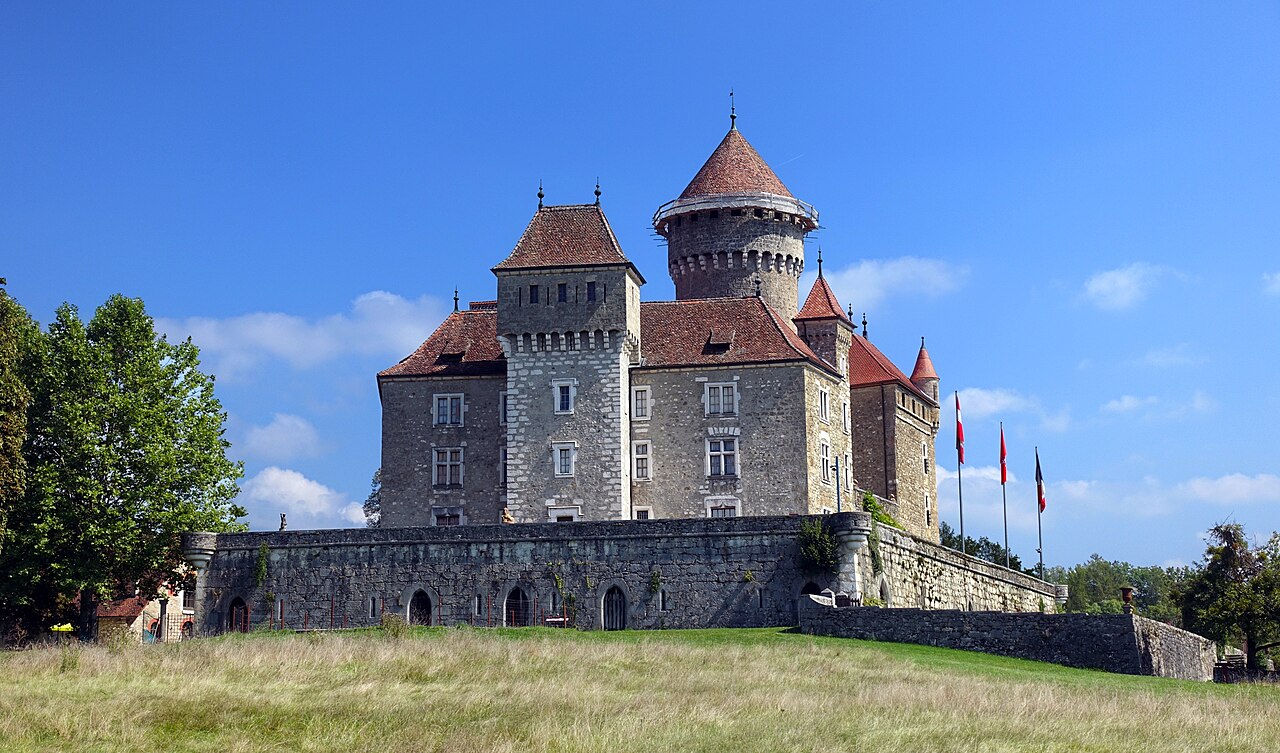
Château de Rochefort-sur-Séran
The Château de Rochefort-sur-Séran is a notable medieval fortress situated near the village of Cressin-Rochefort in the Hauts-de-France region of France. Perched atop a small hill roughly one kilometer north-northeast of the village, the castle's strategic location reflects its original purpose as a defensive stronghold during the medieval period. The castle's origins date back to the 11th or 12th century, constructed by the local lordship that governed the area. Its early history is intertwined with the feudal and ecclesiastical powers of the time, illustrating the complex relationships between secular lords and the Church.
Early history and ownership
The earliest recorded figure associated with the castle is Gui de Rochefort, who played a significant role in the 12th century. In 1159, Gui de Rochefort transferred ownership of the castle and its surrounding lands to the episcopal seat of Belley, marking an important connection between the fortress and the Church's regional authority. Documentation from the mid-14th century further confirms the castle's existence and its significance during a period marked by political turbulence and territorial disputes.
Medieval transitions and noble families
Throughout the 14th and 15th centuries, the Château de Rochefort-sur-Séran experienced several changes in ownership involving prominent noble families. The counts and dukes of Savoy, notably Amédée VI and Amédée VII, were key figures in this era. In 1375, Amédée VI granted the lands to Pierre de Gerbais, but following legal disputes, these estates were confiscated in 1377. Later, in the mid-15th century, the seigneurie was awarded to Antoine de Gerbais as a reward for service, but inheritance laws favoring male heirs led to the lands reverting to the Duke of Savoy in 1446. Shortly thereafter, the estate was granted to Marguerite and Gasparde de Gerbais, married to Claude and Louis de Menthon, respectively.
The menthon family stewardship
The Menthon family maintained control of the seigneurie for several generations through the 17th century. Their stewardship reflects the continuity of noble influence in the region during a period of relative stability and the gradual evolution of castle functions from purely military to residential and administrative roles.
Later ownership and decline
In the late 17th and early 18th centuries, the castle passed to the Mareste family, followed by the Montillet de Grenaud family, who held the lordship until the end of the 18th century. Louis-Honoré de Montillet was the last titled lord before the castle's decline. Over time, the fortress fell into private hands and gradually deteriorated, leading to its current state of partial ruin.
Architectural features and remains
The Château de Rochefort-sur-Séran is classified as a hill castle, built to take advantage of elevated terrain for defensive purposes. The surviving remains primarily consist of portions of the main castle building, which are visible behind a modern entrance porch. Among the most notable architectural elements still extant is the internal staircase, offering insights into the castle's vertical organization and internal layout.
The construction style is typical of medieval fortifications, utilizing durable materials suited for defense. While specific building materials are not extensively documented, the castle's remnants suggest the use of stone masonry common in the region during the medieval era. Photographic evidence shows the entrance porch leading into the core of the castle, highlighting the preserved fragments that convey the original form and function of the fortress.
Restoration efforts
Between 1991 and 2003, the castle underwent significant restoration efforts aimed at preserving its historical legacy. These initiatives were supported by community projects such as the Concordia youth work camp, which played a vital role in the conservation and stabilization of the ruins. The restoration focused on maintaining the integrity of the remaining structures while making the site accessible and informative for visitors interested in medieval architecture and history.
Historical significance and cultural heritage
The Château de Rochefort-sur-Séran stands as a testament to the feudal history of the Hauts-de-France region, reflecting the complex interplay of secular and ecclesiastical powers in medieval France. Its association with prominent noble families, including the counts of Savoy and the Menthon lineage, underscores the castle's importance within the regional power dynamics of the Middle Ages.
Today, the castle's ruins offer valuable insights into medieval defensive architecture and the evolution of noble residences. The site attracts historians, architects, and visitors interested in exploring the tangible remains of France's medieval past. Its preservation contributes to the broader understanding of regional history and the architectural heritage of hill castles in northern France.
Visiting information
While the castle is partially ruined, the site is accessible to visitors who wish to explore its remains and learn about its history. The surrounding landscape provides a scenic backdrop that enhances the experience of visiting a medieval hill castle. Interpretive signage and guided tours may be available during certain periods, facilitating a deeper appreciation of the castle's architectural and historical context.
Frequently asked questions (FAQ)
- What is the historical significance of Château de Rochefort-sur-Séran?
- Château de Rochefort-sur-Séran is a remarkable example of French Renaissance architecture, reflecting the rich history of the region. Originally built in the 16th century, it has served various roles throughout its history, including as a noble residence. The castle's architecture and surrounding gardens offer a glimpse into the royal lifestyle of its time.
- When was Château de Rochefort-sur-Séran built?
- Construction of Château de Rochefort-sur-Séran began in the early 1500s and was completed in the latter part of the century. The castle showcases the transition from medieval fortification to Renaissance elegance, making it an important marker of architectural development during that period.
- What are the opening hours for Château de Rochefort-sur-Séran?
- Château de Rochefort-sur-Séran is open to visitors from Tuesday to Sunday, 10 AM to 6 PM, with extended hours during the summer months. It is advisable to check the castle's official website for any seasonal changes or special events that might affect opening times.
- Can I access the castle with a wheelchair?
- Yes, Château de Rochefort-sur-Séran is committed to accessibility and provides wheelchair access to certain areas of the grounds. However, due to the historical nature of the building, some sections may have limited access, so it's recommended to contact the castle in advance for specific accommodations.
- What is the best time to visit Château de Rochefort-sur-Séran?
- The best time to visit Château de Rochefort-sur-Séran is during the spring and early autumn months when the weather is mild, and the gardens are in full bloom. Visiting during these times allows you to enjoy the beautiful landscape surrounding the castle and participate in outdoor events.
- Are there any nearby attractions to explore after visiting the castle?
- Yes, there are several nearby attractions, including the picturesque village of Cressin-Rochefort and the scenic hiking trails along the Séran River. Additionally, the region is known for its wine production, so visiting local vineyards can enhance your experience.
- What are the ticket prices for Château de Rochefort-sur-Séran?
- Ticket prices for Château de Rochefort-sur-Séran vary based on age and group size, typically ranging from €8 for adults to €4 for children aged 6 to 12. Discounts may be available for students and seniors, so it's worth checking for special offers when planning your visit.
Information
Loading map...
Visitor reviews
No reviews yet. Been here? Write the first review and help other travelers!
Write the first reviewVisited this castle? Share your experience
Your review helps other travelers and adds first-hand knowledge to our encyclopedia.