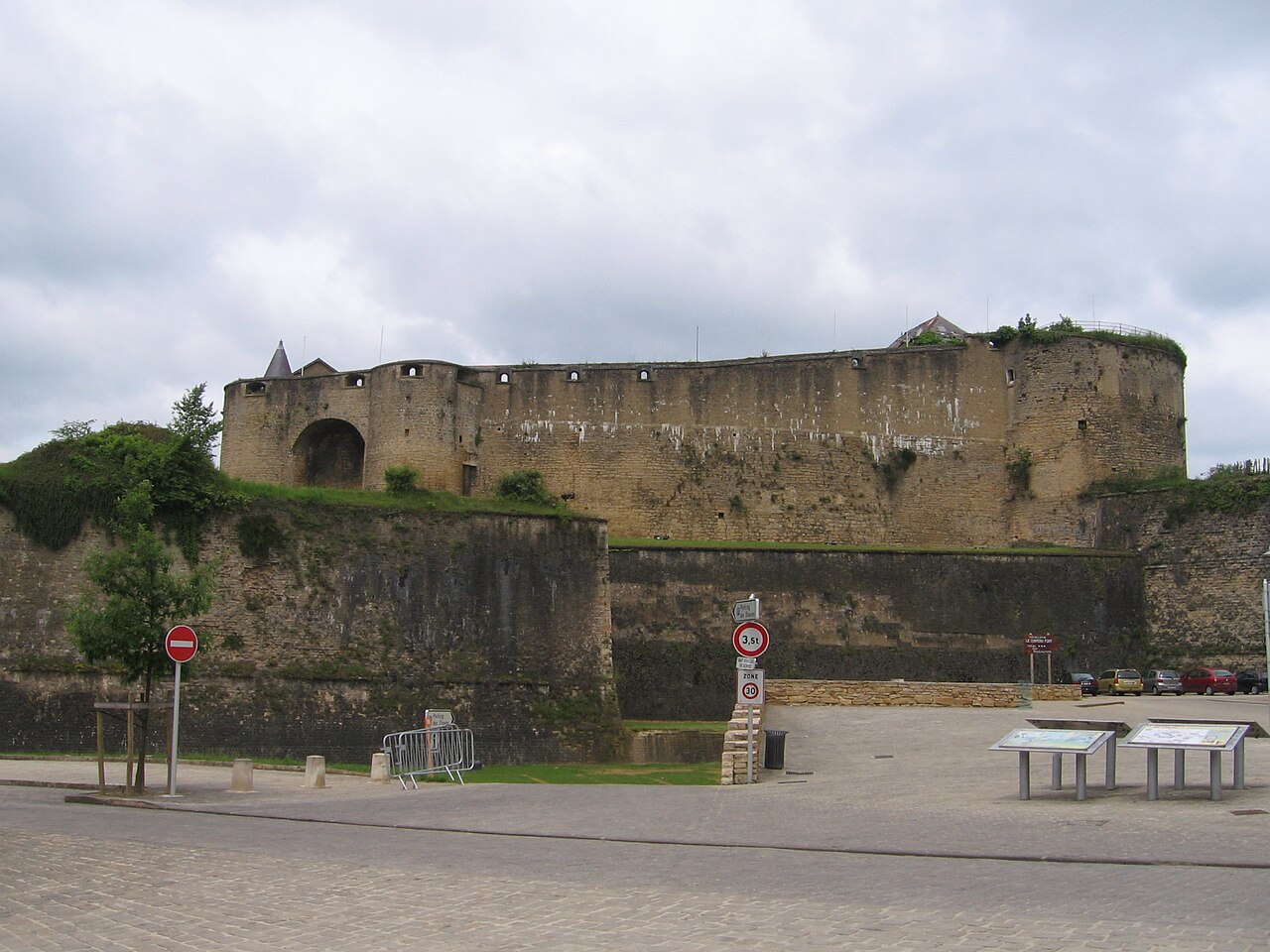
Château de Remilly-Aillicourt
The Château de Remilly-Aillicourt is a distinguished 18th-century hill castle located in the commune of Remilly-Aillicourt in the Hauts-de-France region of northern France. This elegant château exemplifies the architectural and historical heritage of the late Ancien Régime, blending refined classical design with the regional landscape overlooking the Meuse River valley. Its construction and subsequent ownership reflect the intertwined narratives of industrial entrepreneurship, judicial authority, and military distinction that shaped the region during the turbulent decades spanning the late 18th to early 20th centuries.
Founding and early history
The château's origins date back to 1774, when Antoine Raulin, a textile manufacturer from nearby Sedan, initiated the construction of a grand residence on a substantial estate of approximately thirty-five hectares. Raulin’s vision was to establish a prestigious country seat that reflected his industrial success during a period of economic growth in the region. However, Raulin did not complete the château; by 1777, ownership had passed to François Collin de Curemont, a Parisian lawyer and lord of Villers-devant-Mouzon. This transfer marked the beginning of a lineage dominated by female heirs, which linked the estate to several notable families involved in regional governance and industry.
Ownership lineage and regional influence
Throughout the late 18th and 19th centuries, the château remained closely connected to influential figures in the judicial and military spheres. One prominent owner was Jean François Félix Dorival, president of the Court of the Duchy of Bouillon, whose stewardship underscored the estate’s ties to local judicial authority. Subsequently, the château came into the possession of Louis Samuel Béchet, an officer under Napoleon who was ennobled as General Béchet de Leocour. His tenure linked the château to France’s military history and the Napoleonic legacy.
The estate’s prominence continued under the stewardship of the Lamour-Béchet family. Joseph Marie Lamour, mayor of Remilly, and his descendants, including Albert Félix Lamour-Béchet de Léocour and Louis-Félix Lamour, the marquis of Sainte-Valière and a general councilor, maintained the château as a center of local administration and social influence. Their involvement in regional governance highlights the château’s role as both a private residence and a symbol of local authority.
Architectural features and estate layout
The château’s architectural composition centers on a nearly square main residence crowned with a Mansard roof, a hallmark of French classical architecture that provides additional living space beneath its distinctive double-sloped design. The façade, constructed from finely dressed stone blocks, presents a refined and symmetrical appearance. Windows are framed with molded surrounds, and the central entrance is accentuated by recessed panels and sculpted cartouches, decorative keystones that embellish the door and window openings with artistic detail.
Flanking the main building are two curved, low wings, each divided into three bays. These wings connect the central residence to smaller square pavilions built from rendered rubble stone, forming a U-shaped configuration that encloses an entrance courtyard. This courtyard is surrounded by a perimeter wall and accessed through an imposing gate framed by two ringed columns, lending a formal and grand approach to the château.
Around 1870, an additional wing was added to the left side of the entrance, expanding the château’s footprint and modifying its original layout. The estate is set within landscaped gardens and approximately five hectares of land that slope gently toward the Meuse River, integrating the château harmoniously with its natural surroundings.
Later history and preservation efforts
In the 20th century, the château underwent a period of transition. It was sold in 1933 and briefly used as a vacation home before falling into disuse for several decades. The estate’s restoration began when Claudine and Philippe Mathieu acquired the property and dedicated thirty-four years to its rehabilitation. Their meticulous efforts culminated in the château’s designation as a historic monument in 1984, securing its protection under French heritage laws and ensuring its preservation for future generations.
Today, the Château de Remilly-Aillicourt stands as a well-preserved example of late 18th-century French aristocratic architecture. Its location on the main road D4B between Sedan and Mouzon maintains its historical connection to regional transportation and communication routes. The château’s combination of architectural elegance, historical significance, and scenic setting make it a notable heritage site within the Hauts-de-France region.
Cultural significance and regional context
The château’s history reflects the broader socio-economic transformations of northeastern France during the late 18th and 19th centuries. From its origins tied to textile manufacturing and industrial wealth to its associations with judicial and military figures, the estate encapsulates the evolving roles of aristocratic residences in regional governance and society. The preservation of the château contributes to understanding the architectural and cultural heritage of the Ardennes area, illustrating how historic estates adapted to changing political and economic conditions.
The integration of the château’s gardens and its proximity to the Meuse River highlight the traditional French emphasis on harmonizing built environments with nature, a principle evident in many grand estates of the period. This relationship enhances the château’s aesthetic appeal and underscores its role as a symbol of status and refinement.
Accessibility and tourism potential
While currently a private property, the château’s historical and architectural significance makes it a potential point of interest for cultural tourism in the region. Its proximity to Sedan, a city known for its own historic fortress, and the scenic Meuse valley positions the château within a network of heritage sites attractive to visitors interested in French history, architecture, and landscape design.
Frequently asked questions (FAQ)
- How do I get to Château de Remilly-Aillicourt?
- Château de Remilly-Aillicourt is located in the picturesque region of France. Visitors can reach the castle by car, with ample parking available nearby. Public transport options may include buses from surrounding towns, so be sure to check local schedules for the best routes.
- What is the historical significance of Château de Remilly-Aillicourt?
- Château de Remilly-Aillicourt boasts a rich history, dating back to the medieval period. Originally a defensive fortress, it has witnessed numerous historical events and changes in ownership over the centuries, making it a significant landmark in the region. Its architecture reflects the evolution of styles and functions throughout its existence.
- When was Château de Remilly-Aillicourt built?
- The construction of Château de Remilly-Aillicourt began in the early 16th century, showcasing the architectural styles of that era. It has undergone various renovations and restorations, which have helped preserve its historical integrity. Visitors can explore different parts of the castle that highlight its long and storied past.
- Can I take guided tours of Château de Remilly-Aillicourt?
- Yes, guided tours are available at Château de Remilly-Aillicourt, providing an in-depth look at its history and architecture. These tours are led by knowledgeable guides who can share fascinating stories and facts about the castle. It is recommended to book in advance, especially during peak tourist seasons.
- Why is Château de Remilly-Aillicourt a popular attraction?
- Château de Remilly-Aillicourt is popular due to its stunning architecture and rich historical background. Visitors are drawn to its picturesque setting and the opportunity to learn about France's medieval history. Additionally, the castle often hosts cultural events, making it a vibrant place to explore.
- Is it possible to hold events at Château de Remilly-Aillicourt?
- Yes, Château de Remilly-Aillicourt offers facilities for hosting events such as weddings, receptions, and corporate gatherings. The scenic backdrop and historical ambiance make it a unique venue for special occasions. Interested parties should contact the castle administration to discuss arrangements and availability.
- What are the opening hours for Château de Remilly-Aillicourt?
- Château de Remilly-Aillicourt typically opens to visitors from 10 AM to 6 PM, Tuesday through Sunday. It is advisable to check the official website or contact the castle directly for any changes in hours, especially during holidays or special events. Arriving early can enhance your experience with fewer crowds.
- What are the ticket prices for visiting Château de Remilly-Aillicourt?
- Ticket prices for Château de Remilly-Aillicourt vary based on age and type of tour chosen. Generally, adult tickets range from €8 to €10, while discounts may be available for children, seniors, and groups. It's best to purchase tickets online in advance to secure your visit and avoid long lines.
- What is the best time to visit Château de Remilly-Aillicourt?
- The best time to visit Château de Remilly-Aillicourt is during the spring and early fall when the weather is pleasant, and the surrounding gardens are in full bloom. Summer can be busy with tourists, while winter may have limited access due to weather conditions. Planning your visit during weekdays can also help you avoid crowds.
- Are there any nearby attractions to explore after visiting Château de Remilly-Aillicourt?
- Yes, there are several nearby attractions worth exploring, including charming villages and natural parks. Visitors can enjoy scenic walks or bike rides in the surrounding countryside, as well as local museums that showcase regional history and culture. Be sure to ask the castle staff for recommendations on nearby sites to enhance your trip.
Information
Loading map...
Visitor reviews
No reviews yet. Been here? Write the first review and help other travelers!
Write the first reviewVisited this castle? Share your experience
Your review helps other travelers and adds first-hand knowledge to our encyclopedia.