Château de Pieusse
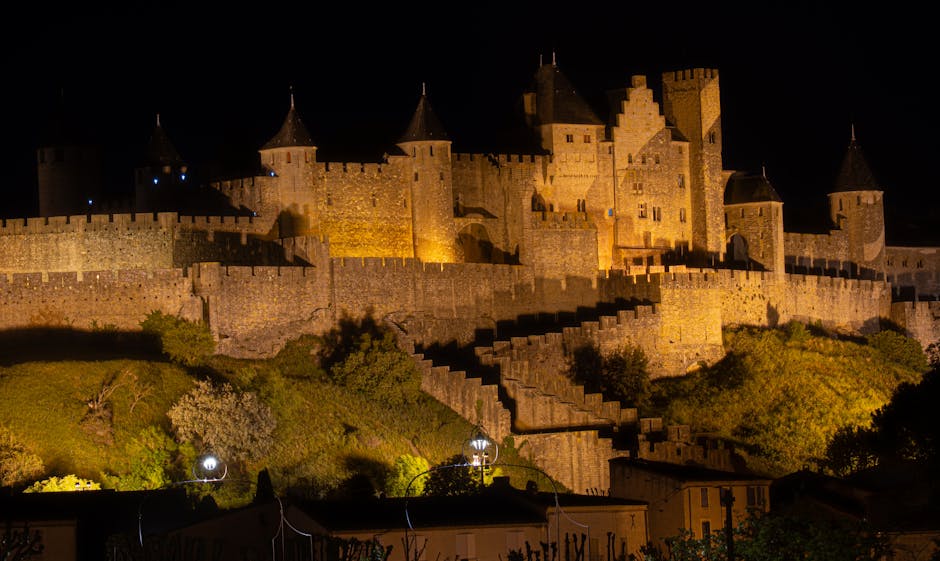
The Château de Pieusse stands as a significant medieval fortress in the commune of Pieusse, France. Renowned as one of the authentic Cathar castles, it played a crucial role during the Albigensian Crusade and the religious conflicts of the 13th century. The castle's origins trace back to the early 12th century, with fortifications confirmed by a papal bull in 1119, and its main construction occurring between 1140 and 1145 under the Counts of Foix during the reign of Louis VII.
Strategically perched on a rocky outcrop overlooking the Aude river valley, the castle's location afforded commanding views of the surrounding Razes countryside. Its design reflects the high medieval period's defensive priorities, featuring a trapezoidal curtain wall enclosing the site and a massive four-story donjon (keep) that was primarily defensive in purpose, although some architectural elements suggest residential use as well.
Historical significance and cathar connections
The Château de Pieusse is deeply entwined with the history of the Cathars, a religious group deemed heretical by the Catholic Church. In 1225, the castle hosted a pivotal Cathar synod presided over by Guilhabert de Castres, bishop of Toulouse. This assembly of approximately a hundred 'Perfects' was instrumental in establishing the bishopric of Razès, with Benoît de Termes ordained as its first bishop. This event underscores the castle's role as a center of Cathar religious organization during a tumultuous era.
Following the Albigensian Crusade, in 1229, Bernard Roger, son of the Count of Foix, ceded his fiefdom including the castle to King Louis IX. The king then incorporated the castle into the jurisdiction of the Archbishopric of Narbonne, marking a transition from noble to ecclesiastical control. The castle remained under church ownership until the upheavals of the French Revolution.
Architectural features and layout
The castle's layout is defined by a roughly trapezoidal curtain wall approximately 120 meters in length, enclosing the main courtyard and defensive structures. A well within the courtyard provided essential water access during sieges, highlighting the castle's preparedness for prolonged defense. Several ancillary buildings once supported the castle's functions, with some remnants adapted for modern residential use.
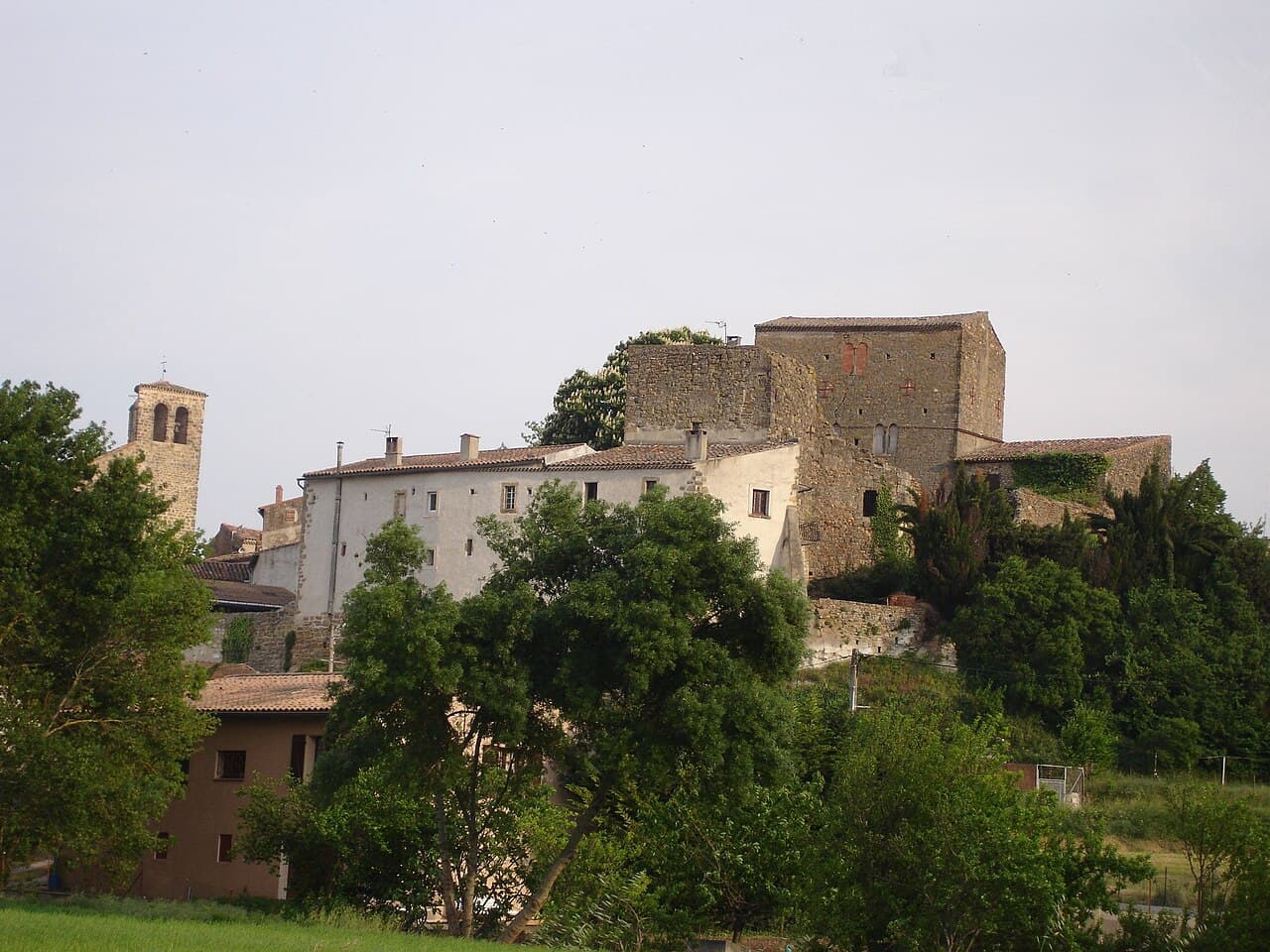
Dominating the site is the donjon, a four-story tower measuring about eleven by seven meters. The donjon's north façade is the best preserved, featuring pairs of pointed-arch windows dating from the 13th century. These windows include carved stone seats designed for occupants to observe the surrounding landscape, particularly the Aude valley.
Inside the donjon, the first floor retains a rare and well-preserved painted wooden ceiling from the 13th century. This polychrome ceiling is decorated with geometric patterns, stylized stars, and heraldic shields that once displayed vibrant coats of arms. This artistic feature is among the oldest known of its kind in the region, offering valuable insight into medieval decorative arts.
Defensive and residential aspects
While the donjon was built for defense, its architectural details suggest some residential functions. The presence of elegantly arched windows with sculptured capitals, especially on the first floor, allowed noble inhabitants and their families to enjoy extensive views and natural light. These windows also served a symbolic purpose, demonstrating status and control over the surrounding territory.
The castle's massive keep was notable for its robust construction, unusual for the period, emphasizing security and fortification. However, the donjon's interior connectivity was compromised after the collapse of the internal staircase in the 1980s, limiting access between floors.
Later history and preservation efforts
Throughout the 14th century, records indicate the castle was well maintained, with facilities such as an orchard and wine cellars documented within its grounds. Ownership transitioned over centuries, with the castle eventually belonging to Arthur Richard Dillon, Archbishop of Narbonne and last president of the États généraux of Languedoc, from 1764 to 1790.
The French Revolution marked a turning point when the castle was seized as national property and sold in 1791. Subsequently, it served varied roles including private residence and agricultural use, reflecting changing social and economic conditions.
In the 20th century, the castle's condition declined. Notably, in the 1960s, a document referencing a hidden treasure in the castle's cellar sparked interest, but the treasure was never found. Structural deterioration culminated in the partial collapse of the four-story donjon in 1987.
Renewed preservation efforts began in 2014 when Jean-François and Frédérique Accart acquired the ruins. Supported by a dedicated society formed in 2015, restoration projects commenced to stabilize and protect the site. Despite financial challenges, these efforts highlight the castle's cultural importance. The Château de Pieusse was officially listed as a Monument historique in 1989, ensuring legal protection and recognition of its heritage value.
Current state and visitor information
Today, the Château de Pieusse remains privately owned and is not open to the public. Visible remains include the north wall of the castle and portions of the donjon, which stand as evocative reminders of its medieval past. The site’s partially preserved condition offers a tangible connection to the region’s high medieval history and the complex narrative of the Cathar movement.
While access is restricted, the castle’s silhouette and surviving architectural features can be appreciated from the nearby village and surrounding countryside. The site continues to attract interest from historians, architects, and enthusiasts of medieval heritage, underscoring its enduring significance in the cultural landscape of southern France.
Frequently asked questions (FAQ)
- How do I get to Château de Pieusse?
- Château de Pieusse is located in the charming village of Pieusse, France. It is easily accessible by car and is a short drive from major cities like Carcassonne and Limoux. Public transportation options are available, including local buses that connect to nearby towns.
- What is the historical significance of Château de Pieusse?
- Château de Pieusse dates back to the Middle Ages and has played a significant role in the region's history. It served as a strategic fortress during various conflicts and has been a residence for nobility over the centuries. Today, it stands as a testament to the architectural and cultural heritage of the area.
- When was Château de Pieusse built?
- The construction of Château de Pieusse began in the 12th century and continued to evolve through the 15th century. Its architecture reflects the styles and needs of various periods, showcasing the evolution of defensive structures and residential designs over time. This rich history makes it an important site for both architecture enthusiasts and history buffs.
- Can I visit Château de Pieusse year-round?
- Yes, Château de Pieusse is open to visitors year-round, though hours may vary by season. It is recommended to check the official website for the most current opening hours and any special events that may be taking place during your visit. Guided tours are available, providing insights into the castle's history and architecture.
- Why is Château de Pieusse a popular tourist attraction?
- Château de Pieusse attracts visitors for its stunning architecture, rich history, and picturesque setting. The castle offers breathtaking views of the surrounding countryside, making it a perfect spot for photography and exploration. Additionally, its historical significance and well-preserved structures provide a fascinating glimpse into medieval life.
- Is it possible to take guided tours of Château de Pieusse?
- Yes, guided tours are available at Château de Pieusse, offering visitors an in-depth look at its history and architectural features. These tours are led by knowledgeable guides who provide valuable context and anecdotes about the castle. It's advisable to book in advance, especially during peak tourist seasons.
- What are the ticket prices for visiting Château de Pieusse?
- Ticket prices for Château de Pieusse are generally affordable, with discounts available for students and seniors. Children under a certain age may enter for free, making it a great family-friendly destination. For the most accurate and up-to-date pricing, it's best to visit the official website before your trip.
- What is the best time to visit Château de Pieusse?
- The best time to visit Château de Pieusse is during the spring and fall when the weather is mild and the surrounding landscape is particularly beautiful. Summer months can be busy with tourists, while winter might see limited access due to weather conditions. Plan your visit accordingly to enjoy the best experience.
- Are there any nearby attractions to visit along with Château de Pieusse?
- Yes, there are several nearby attractions worth exploring, including the historic town of Limoux, famous for its sparkling wine, and the medieval city of Carcassonne. The region is also home to beautiful vineyards and scenic landscapes, perfect for hiking and outdoor activities. Consider spending a whole day in the area to fully enjoy its offerings.
Photo gallery

Information
Website
Visit websiteSources & official resources
Verify the information above using these authoritative references.
Loading map...
Visitor reviews
No reviews yet. Been here? Write the first review and help other travelers!
Write the first reviewVisited this castle? Share your experience
Your review helps other travelers and adds first-hand knowledge to our encyclopedia.