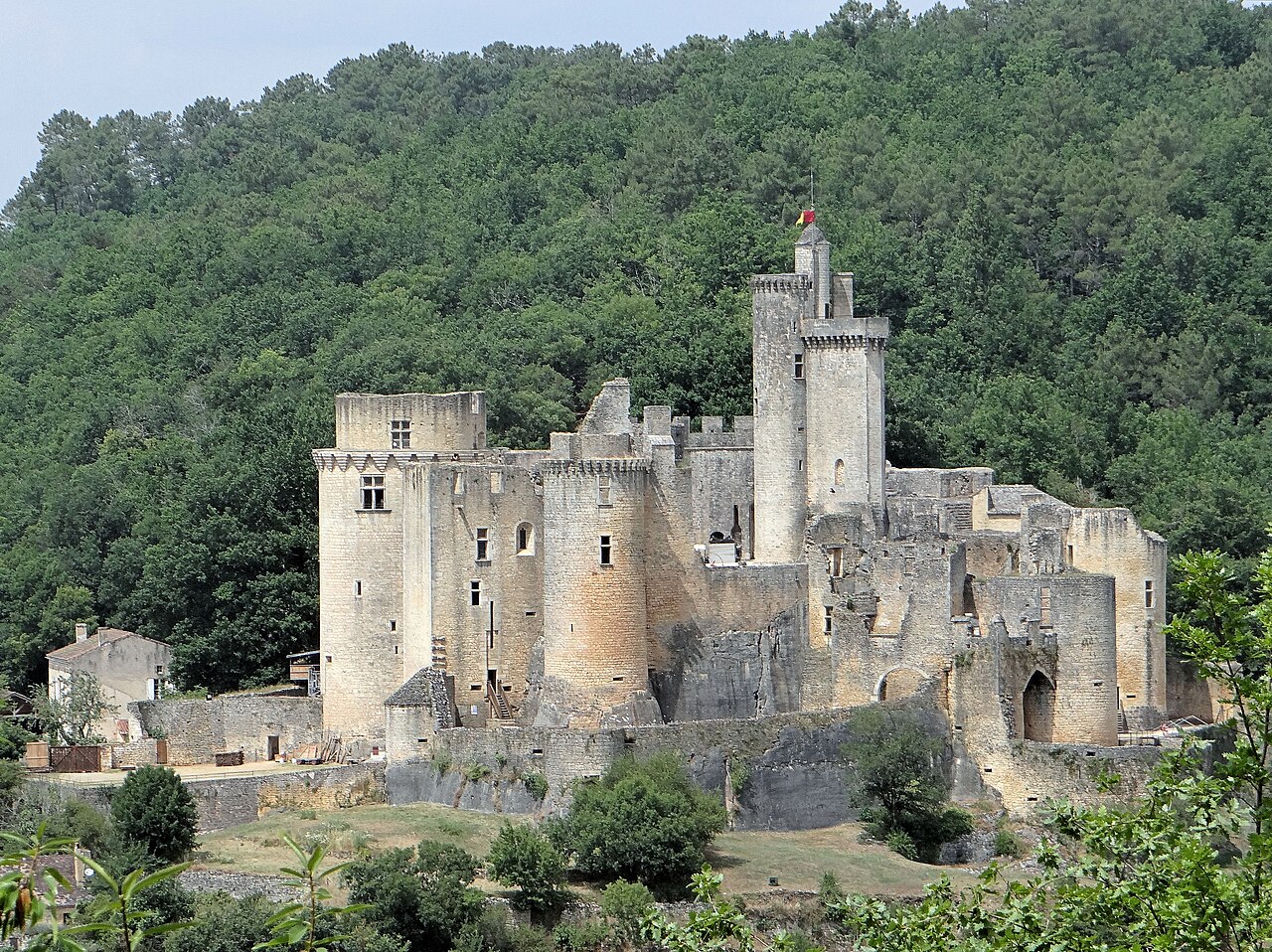
Château de Pestillac
The Château de Pestillac is a medieval fortress located in the commune of Montcabrier in the Hauts-de-France region of France. This hill castle was constructed by the noble Pestilhac family during the Middle Ages, strategically positioned on a plateau overlooking the Thèze valley and facing the bastide of Montcabrier. The castle's location reflects its importance as a defensive stronghold and a symbol of feudal authority between the historic regions of Quercy and Périgord.
Historical background and the pestilhac family
The Pestilhac family, whose name appears in records as early as 1030, were significant local lords with strong ties to regional power structures. They acted as witnesses in church donation deeds to the abbey of Moissac, indicating their influence in ecclesiastical and secular affairs. Over time, the family expanded their control to govern the barony of La Châtaigneraie, a domain encompassing several neighboring communities.
During the 11th and early 12th centuries, the Pestilhac family maintained close relations with the ruling Gourdon family, often appearing in legal documents and testaments that reveal their prominence in the region's feudal hierarchy. Their status allowed them to oversee the construction and maintenance of the castle complex, which served both defensive and administrative functions.
The albigensian crusade and its impact on pestillac
In the early 13th century, the Pestilhac family became involved in the religious turmoil of the Albigensian Crusade. Some family members adopted Cathar beliefs, considered heretical by the Catholic Church, and aligned themselves with the Count of Toulouse. This allegiance placed them in direct opposition to Simon de Montfort, the crusader leader who seized much of their holdings, including Château de Pestillac, around 1214.
Following the crusade's conclusion in 1229, the castle was restored to the Pestilhac family, although their control over the fortress and surrounding lands became increasingly fragmented throughout the 13th century. The establishment of bastides such as Villefranche-du-Périgord in 1261 and Montcabrier in 1298 within their baronial domain marked a period of territorial consolidation and administrative reorganization.
Conflict and decline during the hundred years’ war
Relations between the Pestilhac lords, local inhabitants, and the French crown deteriorated over the subsequent decades. During the Hundred Years’ War, Amalvin de Pestilhac allied with the English and was declared a rebel in 1342. He died in combat in 1346, after which opposing forces captured and destroyed the castle.
Despite a formal agreement in 1356 restoring lordship of the castle to the Pestilhac family, the fortress remained in ruins, marking the end of its military and administrative significance.
Architectural remains and site layout
The Château de Pestillac occupies a plateau that commands views over the Thèze valley. The site features the ruins of a 12th-century castle and an adjacent church, which together formed the core of the medieval stronghold. Surrounding the main castle plateau are remnants of several tower-houses, which likely served as residences for knights or minor nobility involved in the castle’s defense and governance.
The stone towers and fragmentary walls illustrate the typical medieval approach to combining residential and defensive architecture within a feudal lordship. The presence of two adjoining church buildings or chapels near the castle ruins highlights the integration of religious practice within the fortress complex, a common feature in medieval fortifications.
Defensive features and strategic position
The castle's elevated position on the plateau provided natural defensive advantages, overseeing the valley and controlling access routes between Quercy and Périgord. The layout likely included curtain walls, battlements, and fortified gates, typical of hill castles built during the High to Late Medieval periods, although detailed descriptions of these features are limited due to the ruinous state.
Religious architecture within the complex
The two adjoining churches or chapels near the castle ruins underscore the close relationship between feudal power and ecclesiastical authority. While detailed architectural or decorative elements have not been extensively documented, these ruins testify to centuries of local religious activity and the castle’s role as a spiritual as well as military center.
Modern preservation and cultural significance
In the 20th century, the ruins of Château de Pestillac and its attached church were officially recognized and registered as historic monuments by the French Ministry of Culture in 1926. This designation highlights the site's enduring historical and cultural importance.
Today, the castle and church ruins are preserved as protected heritage sites, maintaining their spatial relationship with the surrounding landscape and the neighboring bastide of Montcabrier. The preservation of the site allows visitors to appreciate the medieval fortress's strategic location and its role in regional history.
Efforts to maintain the ruins focus on stabilizing the remaining structures and preventing further decay, ensuring that Château de Pestillac continues to offer insights into medieval military architecture and feudal society in the Hauts-de-France region.
Frequently asked questions (FAQ)
- How do I visit Château de Pestillac?
- Château de Pestillac is located near Montcabrier in Hauts-de-France. Visitors should check local tourism offices for access details, as the site consists of ruins and may have limited facilities.
- What is the historical significance of Château de Pestillac?
- The castle was a strategic medieval fortress built by the Pestilhac family, involved in regional conflicts including the Albigensian Crusade and the Hundred Years' War.
- When was Château de Pestillac built?
- The castle dates back to the 12th century, constructed during the High Medieval period as a hill castle overlooking the Thèze valley.
- Can I explore the ruins of Château de Pestillac?
- Visitors can explore the ruins of the castle and adjacent church, but should be cautious as the structures are in a ruinous state and may not be fully accessible.
- Why is Château de Pestillac protected as a historic monument?
- The castle and church ruins were registered as historic monuments in 1926 due to their architectural and historical importance in the Hauts-de-France region.
Information
Loading map...
Visitor reviews
No reviews yet. Been here? Write the first review and help other travelers!
Write the first reviewVisited this castle? Share your experience
Your review helps other travelers and adds first-hand knowledge to our encyclopedia.