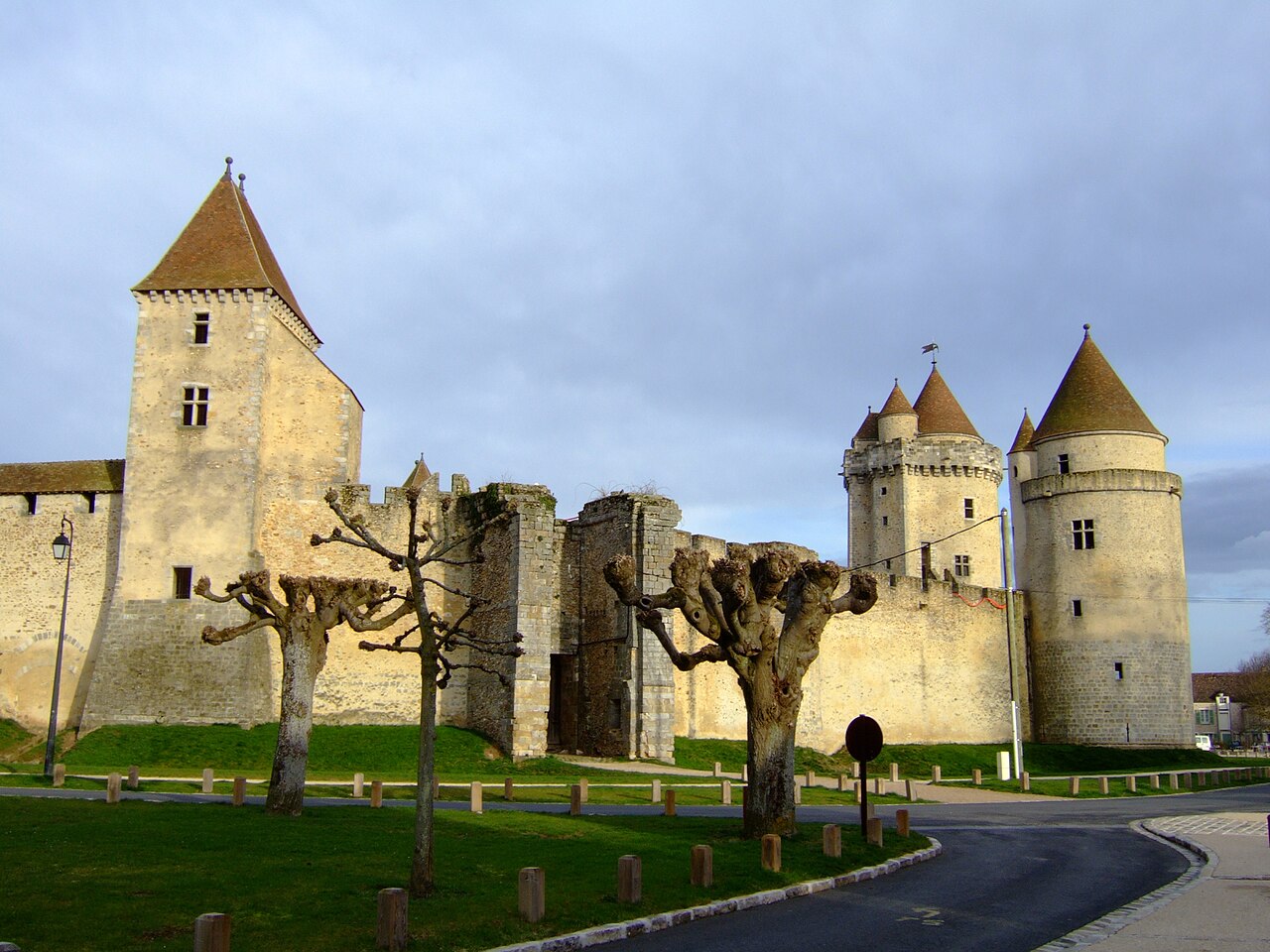
Château de Nangis
The Château de Nangis stands as a significant example of a late medieval castle with origins tracing back to the motte-and-bailey fortifications typical of the Middle Ages. Located in the heart of Nangis, France, the castle's earliest known lord was Fleury, son of King Philip I of France, who lived around the late 11th and early 12th centuries. This early association with French royalty underlines the historical importance of the site.
Medieval origins and early history
The original name of the site, 'La Motte', reflects its beginnings as a motte-and-bailey castle, a common form of fortification during the medieval period characterized by a raised earthwork (motte) and an enclosed courtyard (bailey). By the mid-13th century, in 1245, the castle came under the ownership of the powerful Montmorency family, a noble house influential in French history.
By the late 14th century, the castle was recognized as a notable fortress. However, in 1429, during the Hundred Years' War, the English forces inflicted significant damage on the castle, reflecting its strategic importance in the conflict between England and France.
Reconstruction and ownership changes in the 15th and 16th centuries
Following the damage sustained in the war, King Charles VII, known as 'the Well-Served,' rewarded Denis de Chailly of Chailly-en-Bière for his support of Joan of Arc by granting him the domain. In 1436, Denis de Chailly undertook the rebuilding of the fortress, restoring its defensive and residential functions.
In 1507, the castle passed to the Brichanteau family through the marriage of Louis de Brichanteau to Marie de Vères. The Brichanteau descendants maintained control of the domain until the upheavals of the French Revolution. Around 1590, Antoine de Brichanteau modernized the residential buildings, reflecting the evolving architectural styles and the transition from purely defensive structures to more comfortable noble residences.
Status as marquisate and royal visits
The domain was elevated to a marquisate in 1612, marking its enhanced status within the French nobility. A notable event in the castle's history was the visit by King Louis XIV in 1678, highlighting its continued importance in the 17th century.
Decline and partial destruction in the 18th and 19th centuries
After the death of Armand de Brichanteau in 1742, the castle passed to a distant relative, the Count of Guerchy. His son, Anne-Louis of Guerchy, the last marquis of Nangis, faced financial difficulties and sold the castle in 1795 to a Parisian notary. The new owner destroyed two of the three main buildings, preserving only the left wing of the castle.
In 1859, the city of Nangis purchased the remaining structure and repurposed it as the town hall. The left wing has remained largely unchanged since this time, preserving key architectural elements from the castle's historic past.
Architectural features and surviving elements
The surviving left wing of the castle features two corner towers and a cylindrical outer wall tower equipped with loopholes, which were designed for defensive purposes. These elements provide insight into the castle's military architecture and its adaptation over time.
The castle's moats, originally part of the motte-and-bailey design, are still visible today, although they have been filled with water to preserve their form. This feature adds to the castle's historic character and illustrates typical medieval defensive strategies.
Inside the castle, the marriage room contains six paintings that were classified as historical monuments in May 1909. Although the castle itself is not officially classified as a historical monument, these artworks contribute to its cultural significance.
Cultural significance and current use
Today, the Château de Nangis serves as the town hall of Nangis, integrating its historic architecture into the civic life of the community. While much of the original castle has been lost, the preserved structures and features offer valuable insights into medieval and early modern French castle architecture.
The castle's layered history—from its medieval motte-and-bailey origins through its late medieval reconstruction and early modern modifications—reflects broader trends in French noble residences and fortifications. Its survival and adaptive reuse demonstrate the continuing relevance of historic castles in contemporary France.
Frequently asked questions (FAQ)
- What is the historical significance of Château de Nangis?
- Château de Nangis has a rich history dating back to the 12th century, serving as a royal residence and a strategic stronghold during various conflicts. Its architecture reflects the evolving styles of French castles over the centuries, making it an important landmark for understanding France's medieval heritage.
- When was Château de Nangis built?
- The construction of Château de Nangis began in the 12th century, with significant renovations occurring in the 15th and 17th centuries. This long history has contributed to its impressive architectural features, blending styles from different eras.
- Can I visit Château de Nangis?
- Yes, visitors are welcome at Château de Nangis. Guided tours are available, offering insights into the castle's history and architecture, making it a great destination for history enthusiasts and families alike.
- What are the opening hours for Château de Nangis?
- Château de Nangis is typically open to visitors from 10 AM to 6 PM, but it's advisable to check the official website for any seasonal changes or special events. Plan your visit accordingly to ensure you have ample time to explore the grounds and exhibits.
- Is it possible to access Château de Nangis with limited mobility?
- Yes, efforts have been made to improve accessibility for visitors with limited mobility. While some areas may pose challenges due to the castle's historic architecture, there are accessible routes and facilities available to enhance your experience.
- What is the best time to visit Château de Nangis?
- The best time to visit Château de Nangis is during the spring and autumn months when the weather is mild, and the gardens are in full bloom. Additionally, these seasons often see fewer crowds compared to the peak summer months.
- How much do tickets cost for Château de Nangis?
- Ticket prices for Château de Nangis vary depending on age and group size, with discounts available for children and students. It is recommended to purchase tickets online in advance to secure the best rates and avoid long queues on-site.
- Are there any nearby attractions to Château de Nangis?
- Yes, there are several nearby attractions worth exploring, including the charming town of Nangis itself, which features quaint shops and cafes. Additionally, the surrounding countryside offers beautiful walking trails and other historic sites to enhance your visit.
Information
Loading map...
Visitor reviews
No reviews yet. Been here? Write the first review and help other travelers!
Write the first reviewVisited this castle? Share your experience
Your review helps other travelers and adds first-hand knowledge to our encyclopedia.