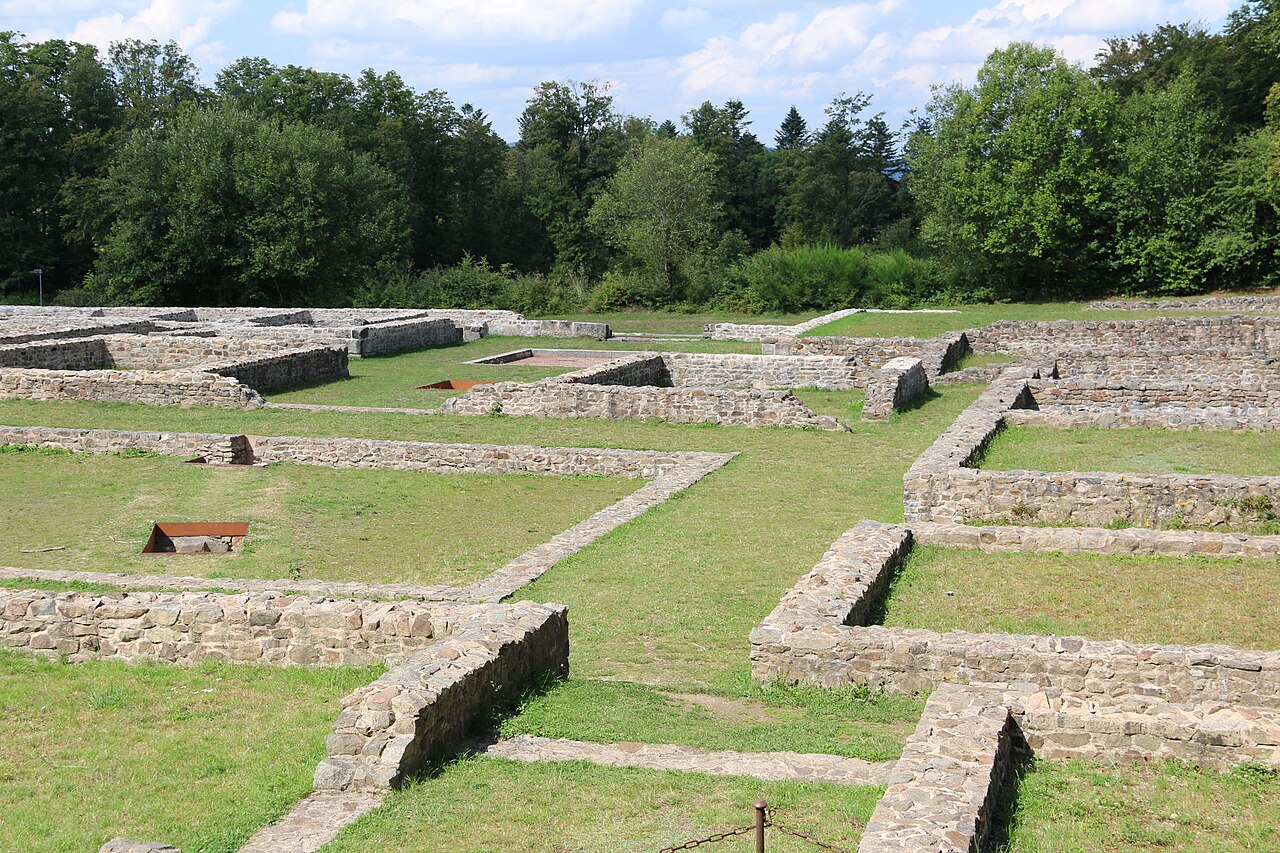
Château de Moulins-Engilbert
The Château de Moulins-Engilbert is a remarkable example of medieval military architecture located in the town of Moulins-Engilbert, France. This hill castle boasts origins dating back to the late 10th and early 11th centuries, making it a significant historical monument that reflects the evolution of fortification techniques and noble residence styles over several centuries. Its strategic position on elevated terrain allowed it to serve as a defensive stronghold and administrative center through the Middle Ages and beyond.
Early construction and medieval expansions
The castle's foundations were laid during the early medieval period, with scientific analysis confirming the use of opus spicatum masonry—a distinctive herringbone pattern in stonework—dating from this era. Initially, the fortress consisted of a central donjon or keep, which was the principal defensive tower and residence of the lord. By the early 11th century, the castle expanded with the addition of a new structure attached to the east side of the donjon, enhancing its defensive capabilities and living space.
During the 13th century, the castle came under the authority of the Count of Nevers, who initiated significant renovations including the reconstruction of the donjon. This period marked an important phase in the castle's history, as it became a focal point of regional governance and aristocratic life. Notably, the castle hosted the wedding of Louis I, Count of Nevers, and Jeanne de Rethel in December 1290, underscoring its social and political significance.
Fortification and residence under burgundian rule
Between 1383 and 1390, the castle underwent extensive repairs under the supervision of the Duchy of Burgundy. These works were aimed at strengthening the castle's defenses in response to the turbulent political climate of the late Middle Ages. The refurbishments included reinforcing walls, repairing towers, and upgrading living quarters to accommodate the needs of the nobility.
From 1424 to 1440, the château served as a residence for the children of Philip the Good and Bonne d’Artois, linking it to the powerful ducal family of Burgundy. This period further enhanced the castle's status as both a military fortress and a noble household. The mid-15th century also saw the castle take on administrative importance when the Count of Nevers drafted the first customary law of the Nivernais region there between 1463 and 1464, a legal code that was officially adopted in 1534.
The castle was the site of military conflict in 1475, contested by royal and Burgundian forces during the struggles for regional dominance. Despite these conflicts, the fortress remained a symbol of noble power and governance.
Decline, transformation, and romantic restoration
Over subsequent centuries, the castle gradually fell into disrepair. By the 18th century, its entrance towers had been repurposed as a local prison, reflecting a shift from noble residence to practical municipal use. The upheavals of the French Revolution led to the castle being sold as national property, marking a significant change in ownership and function.
In 1853, Victor Moreau, a local notary, acquired the estate and initiated a series of restoration efforts in line with the romantic movement of the 19th century. Moreau introduced new circulation paths, planted various trees including a laricio pine that still survives today, restored an east window in 1877, and added a basin to the lower courtyard in 1879. These enhancements transformed the castle grounds into a picturesque landscape, combining historical preservation with romantic aesthetics.
The castle grounds also include a kitchen garden and orchard, maintained since at least the 18th century, emphasizing the site’s long-standing tradition of horticulture and self-sufficiency. A public garden was established around the basin in the 1950s, further integrating the château into the community’s cultural life.
Architectural layout and surviving features
The Château de Moulins-Engilbert is arranged as a long, narrow complex approximately 150 meters in length, oriented roughly north to south. The lower courtyard, or basse-cour, is enclosed by a northern wall with an irregular shape and a western wall that curves, measuring up to 50 meters across at its widest point. Above this lies the upper courtyard, or haute-cour, positioned on the northern part of the site, where the remains of the donjon stand prominently at the southwest corner.
The castle’s main entrance is located at the southern end and consists of a châtelet, a fortified gateway approximately 15 by 15 meters in size. This entrance provides a commanding view of the donjon, reinforcing its defensive and symbolic dominance. The base of the donjon and parts of the haute-cour exhibit the ancient opus spicatum masonry, linking the current ruins to their early medieval origins.
Today, the château’s appearance is heavily influenced by the 19th-century restoration and landscaping efforts, which introduced new trees and a large basin in the basse-cour, now surrounded by a public garden. Preservation work in the 21st century has focused on stabilizing the ruins and renovating key structures, such as the southern wall of the logis—the main residential building—between 2008 and 2010. These efforts ensure the château remains a valuable cultural and historical landmark.
Cultural significance and preservation
Recognized as a historic monument in 1993, the château reflects the layered history of medieval fortifications in the Hauts-de-France region. Purchased by the local municipality in 2006, it benefits from ongoing preservation initiatives supported by dedicated associations committed to maintaining its legacy. The site offers visitors a tangible connection to medieval architecture, noble life, and regional history, enriched by centuries of adaptations and restorations.
The château’s mix of early medieval foundations, Burgundian-era renovations, and 19th-century romantic landscaping provides a unique narrative of architectural evolution. It stands as a testament to the enduring importance of such fortresses in France’s cultural heritage and continues to attract historians, architects, and tourists interested in medieval history and castle architecture.
Information
Loading map...
Visitor reviews
No reviews yet. Been here? Write the first review and help other travelers!
Write the first reviewVisited this castle? Share your experience
Your review helps other travelers and adds first-hand knowledge to our encyclopedia.