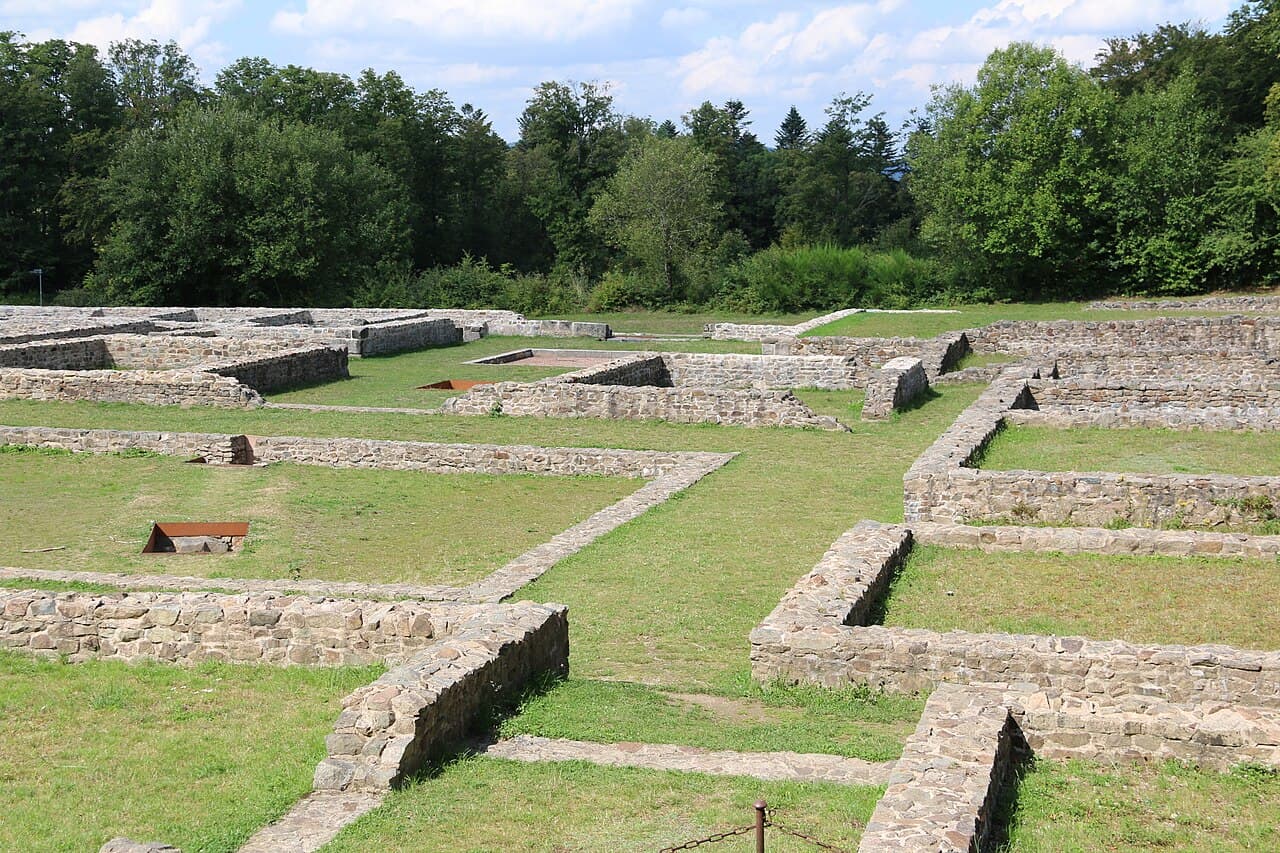
Bibracte
Bibracte was a prominent Gallic oppidum, or fortified settlement, serving as the capital of the Aedui tribe and one of the most significant hillforts in ancient Gaul. Located near the modern city of Autun in the Burgundy region of France, Bibracte played a central role in the social, political, and military history of the Late Iron Age La Tène culture. The site occupies the summit of Mont Beuvray, a forested hill that straddles the border between the French départements of Nièvre and Saône-et-Loire. This elevated position provided natural defensive advantages, which were enhanced by extensive man-made fortifications.
Historical significance and early history
Founded in the 2nd century BC, Bibracte was a thriving urban center with an estimated population exceeding 30,000 inhabitants before the Roman conquest. The settlement was enclosed by a massive Murus Gallicus type stone wall, a distinctive fortification technique characterized by a timber framework filled with stone, which surrounded an area of approximately 135 hectares. This defensive structure was designed to protect the inhabitants from external threats and reflects the advanced engineering skills of the Gauls during the Late Iron Age.
Bibracte's strategic importance is underscored by its role in key historical events during Julius Caesar's Gallic Wars. In 58 BC, the Battle of Bibracte occurred roughly 26 kilometers south of the oppidum, where Caesar's forces defeated the migrating Helvetii tribe. Later, in 52 BC, the site was the location where the Gallic chieftain Vercingetorix was proclaimed leader of the united Gallic resistance against Roman domination, marking Bibracte as a focal point of Gallic nationalism and military organization.
Roman conquest and abandonment
Following the Roman victory in Gaul, the significance of Bibracte diminished as the Romans established new urban centers better suited to their administrative and economic systems. Within a few decades, the population relocated to Augustodunum (modern Autun), about 25 kilometers away, which became the new regional capital under Roman rule. The abandonment of Bibracte led to its preservation under forest cover, leaving the site largely undisturbed for centuries.
Archaeological discovery and excavations
The site of Bibracte was rediscovered in the 19th century, with the first systematic excavations initiated by Jacques-Gabriel Bulliot between 1867 and 1895. His work laid the foundation for understanding the oppidum's layout and cultural significance. Bulliot's nephew, Joseph Déchelette, a renowned archaeologist and author of the influential "Manuel d'Archéologie," continued excavations from 1897 to 1907, expanding knowledge of the site's material culture and fortifications.
Today, the archaeological site at Mont Beuvray functions as an open-air museum and research center, attracting international teams from universities across Europe, including Brno, Sheffield, Kiel, Budapest, Vienna, and Leipzig. It serves both as a training ground for young archaeologists and as a cultural heritage site that interprets Gaulish civilization for the public.
Architectural features and layout
The fortifications of Bibracte are among the most impressive examples of Murus Gallicus construction. This technique involved a timber lattice framework interspersed with stone infill, creating walls that were both strong and flexible, capable of withstanding sieges and natural decay. The walls enclosed a vast area, indicating a complex urban plan that included residential quarters, artisan workshops, public spaces, and religious sites.
Within the oppidum, archaeologists have uncovered evidence of craft production, including metalworking and pottery, as well as trade activities that connected Bibracte to wider European networks. The layout also reveals a sophisticated water management system and roads that facilitated movement and defense.
Modern recognition and preservation
In recognition of its cultural and historical importance, Bibracte was designated a Great Site of France on 12 December 2007. This status highlights the site's value as a heritage landmark and ensures ongoing preservation efforts. The surrounding forested landscape contributes to the site's authenticity, offering visitors a glimpse into the natural environment of ancient Gaul.
Today, Bibracte is accessible to the public as an archaeological park with interpretive centers, guided tours, and educational programs. It remains a vital resource for understanding the Late Iron Age and the transition from Gallic to Roman civilization in this part of Europe.
Frequently asked questions (FAQ)
- What is Bibracte and why is it historically significant?
- Bibracte is an ancient Gaulish settlement located on the Mont Beuvray in France. It served as the capital of the Aedui tribe and was a significant center of trade and culture during the Iron Age, playing a crucial role in the interactions between Gauls and Romans.
- When was Bibracte established and abandoned?
- Bibracte was established around the 3rd century BC and thrived until it was gradually abandoned in the 1st century BC. The site was eventually deserted as the Romans expanded their influence in Gaul and established new cities.
- How do I get to Bibracte from nearby cities?
- Bibracte is accessible by car from major cities like Dijon and Mâcon, with parking available near the site. Public transport options are limited, so it's advisable to plan your visit ahead of time and consider a guided tour if you prefer not to drive.
- Is it possible to visit Bibracte year-round?
- Yes, Bibracte is open to visitors throughout the year, but the best time to visit is during the spring and summer months when the weather is pleasant, and the site is fully accessible. Guided tours and activities are more frequent during the peak season.
- What are the opening hours for Bibracte?
- Bibracte typically opens at 10 AM and closes at 6 PM during the summer months. In the off-peak season, hours may vary, so it's recommended to check the official website for the latest information before planning your visit.
- Can I find nearby attractions while visiting Bibracte?
- Absolutely! The surrounding area offers beautiful hiking trails and the Mont Beuvray Regional Park, where visitors can enjoy stunning natural scenery. Additionally, the nearby town of Montsauche-les-Settons is worth exploring for its charming atmosphere and local amenities.
- What are the ticket prices for visiting Bibracte?
- Ticket prices for Bibracte are generally affordable, with discounts available for students and seniors. Children under a certain age may enter for free, but it's best to check the current pricing on their official website before your visit.
- Is Bibracte accessible for visitors with disabilities?
- Yes, Bibracte has made efforts to improve accessibility for all visitors. The site features designated pathways and facilities to accommodate those with mobility challenges, ensuring a pleasant experience for everyone.
Photo gallery

Information
Loading map...
Visitor reviews
No reviews yet. Been here? Write the first review and help other travelers!
Write the first reviewVisited this castle? Share your experience
Your review helps other travelers and adds first-hand knowledge to our encyclopedia.



