Château de Moret — France castle

Château de Moret

Château de Moret: medieval hill castle in Moret-sur-Loing, France
Moret-sur-Loing, France
High Medieval (11th–13th c.)

The Château de Moret is a notable hill castle located in the commune of Moret-sur-Loing within the Seine-et-Marne département of France. This castle has a rich history dating back to the 12th century, making it a significant example of high medieval fortification architecture in the region.

Historical background and construction

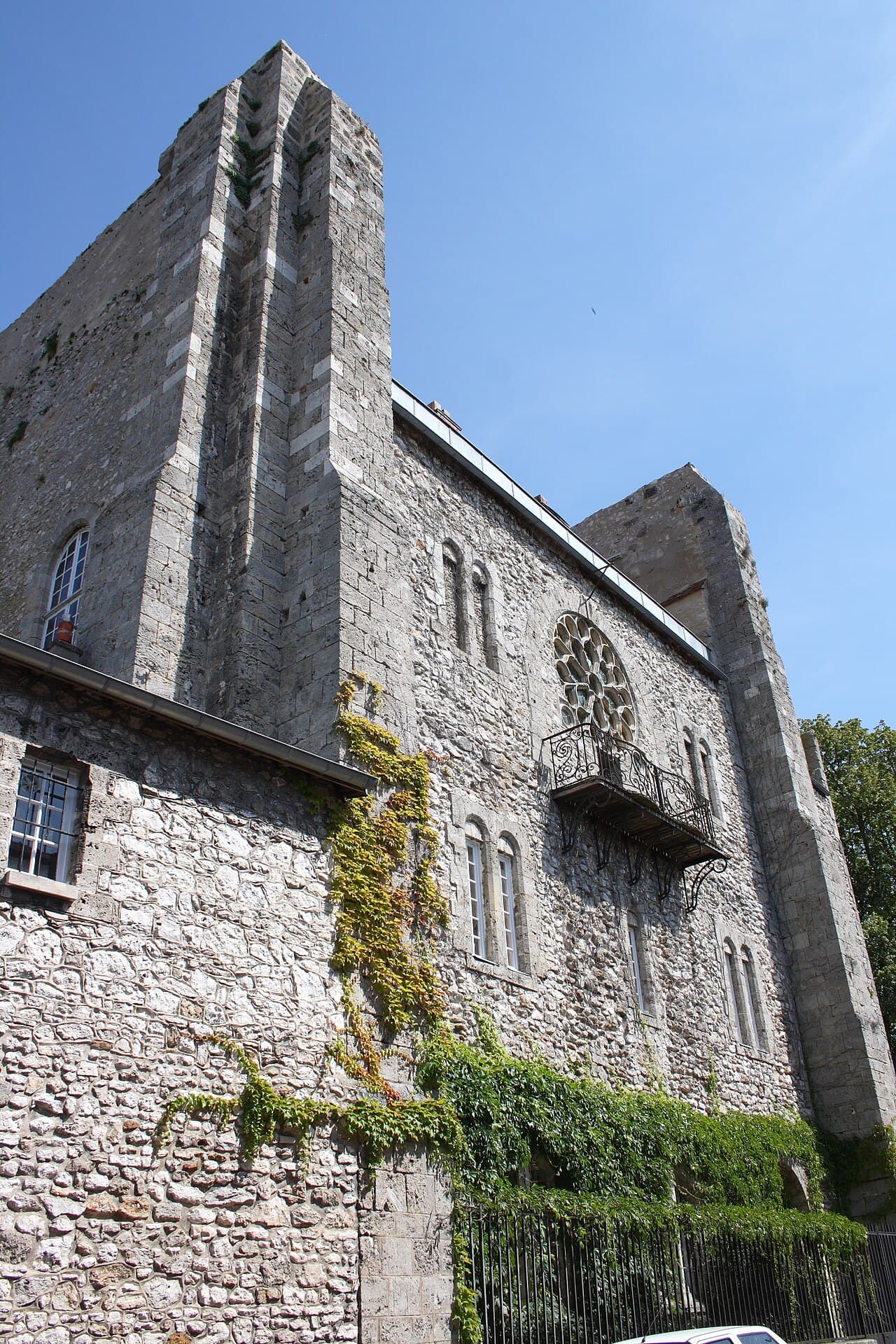
Originally constructed in the 12th century, the Château de Moret was built during the reign of King Louis VII, who ruled France from 1137 to 1180. The castle's rectangular keep with its distinctive buttresses is a key surviving feature from this period, reflecting the defensive priorities and architectural styles of the time. This keep served as the stronghold and last line of defense for the castle's inhabitants.

The strategic location of the castle on the edge of a plateau overlooking the Loing River provided natural defensive advantages. The castle's secondary defences slope down towards the river, enhancing its protection against potential attackers. The town of Moret-sur-Loing developed around the castle, particularly at the head of the bridge crossing the river and on the slopes of the castle's hillock, highlighting the castle's central role in local settlement and defense.

Architectural features and alterations

While the core of the castle dates to the high medieval period, the Château de Moret underwent substantial modifications in the 17th century. These alterations reflect changes in military technology and domestic needs, transitioning the castle from a purely defensive fortress to a more comfortable residence. The modifications likely included updates to living quarters, windows, and possibly the addition of ornamental features common in that era.

The castle's rectangular keep remains one of its most prominent architectural elements, characterized by robust buttresses that reinforce the structure. The positioning on a plateau with sloping secondary defenses demonstrates medieval military engineering adapted to the natural landscape.

Significance and preservation

The Château de Moret has been recognized for its cultural and historical importance by the French Ministry of Culture, which listed it as a monument historique in 1926. This designation helps protect the castle and acknowledges its value as part of France's medieval heritage.

Currently, the castle remains in private ownership and is not open to the public. Despite this, its preservation contributes to the understanding of medieval castle architecture and the historical development of the Moret-sur-Loing area.

The castle's role in the local landscape

The castle's location at the head of a bridge over the Loing River was strategic for controlling river traffic and local trade routes. The surrounding town grew in close association with the castle, with buildings on the slopes of the hillock indicating a community organized around this defensive structure.

The integration of natural topography with man-made fortifications at Château de Moret exemplifies medieval military architecture's adaptability to landscape features, enhancing both defense and control over the surrounding area.

Architectural style and classification

Classified as a hill castle, Château de Moret fits within the typical medieval category of fortifications built on elevated ground to maximize defensive capabilities. Its architectural style primarily reflects the high medieval period's functional design, with later 17th-century alterations introducing elements that may align with early modern residential styles, though the core remains medieval.

Visiting information

Although the castle is privately owned and not open to the public, the exterior views from the town and surrounding areas offer a glimpse of its imposing structure and historical presence. Visitors interested in medieval architecture and French history can appreciate the castle's silhouette and its relationship with the historic town of Moret-sur-Loing.

Frequently asked questions (FAQ)

When was Château de Moret originally built?
Château de Moret was originally constructed in the 12th century during the reign of King Louis VII.
What is the architectural style of Château de Moret?
The castle primarily reflects high medieval architectural styles, with a rectangular keep featuring buttresses typical of the 12th century.
Is Château de Moret open to the public for visits?
No, Château de Moret is privately owned and not open to the public, but it can be viewed from the surrounding town.
What makes Château de Moret strategically important?
Its location on a plateau overlooking the Loing River provided natural defenses and control over river traffic and local trade routes.
Has Château de Moret been recognized for its historical significance?
Yes, it has been listed as a monument historique by the French Ministry of Culture since 1926.

Photo gallery

Château de Moret
Click to view

Photo by Reinhardhauke•CC BY-SA 3.0

1 photo • Click any image to view in full screen

Information

Hill Castle

Current owner

Private owner

Loading map...

Visitor reviews

No reviews yet. Been here? Write the first review and help other travelers!

Write the first review

Visited this castle? Share your experience

Your review helps other travelers and adds first-hand knowledge to our encyclopedia.

Write a review

(5/5)

0/2000 characters

Your review will be visible after admin approval

Nearby castles

3.9 km

Château de By

Thomery, France

The Château de By is a notable historic mansion located in Thomery, France. Purchased in 1859 by the celebrated French animal painter Rosa Bonheur, the château served as her home and studio for four decades. At the time of acquisition, Bonheur was at the peak of her artistic career, renowned for her detailed and lifelike paintings of animals. She transformed the building extensively to suit her needs, creating a comfortable residence and a large neo-Gothic studio room designed to provide ample space and natural light for her work. Architectural transformation and style Originally a traditional structure, the château was rebuilt under Bonheur's direction to incorporate neo-Gothic architectural elements, which were popular in the mid-19th century. The addition of the vast studio room is particularly significant, reflecting the Romantic Neo-Gothic style with its emphasis on verticality, light, and ornate detailing. This studio was equipped to accommodate live animals, as Bonheur kept pens in the surrounding park to observe her subjects closely. The building's design reflects both functional and aesthetic considerations, blending artistic inspiration with domestic comfort. Historical significance and cultural heritage The château is historically important not only as Bonheur's residence but also as a cultural landmark. In 1865, Empress Eugénie personally presented Rosa Bonheur with the Légion d'Honneur at the château, recognizing her contributions to French art. This event highlights the château's role as a site of artistic and social significance during the Modern period. The museum today preserves objects related to Bonheur's daily life, including personal items such as a Native American costume gifted by Buffalo Bill, which illustrates her wide-ranging interests and connections. Preservation and current use Since Bonheur's death in 1899, the château has remained largely unchanged, maintaining its original layout and interior features. While the paintings once housed in the château have been sold, the museum retains a rich collection of artifacts that offer insight into Bonheur's life and work. Managed by the town of Thomery, the château operates as a museum dedicated to preserving the legacy of one of France's most prominent 19th-century artists. Visitors can explore the neo-Gothic studio, the living quarters, and the surrounding park where animals were kept for artistic study. Rosa Bonheur's influence and legacy Rosa Bonheur was a pioneering figure in the art world, especially noted for breaking gender barriers in the 19th century. Her choice to establish her studio at Château de By allowed her to create a unique environment tailored to her artistic process. The château stands as a testament to her dedication and innovation, combining artistic ambition with architectural adaptation. It remains a site of interest for art historians, architecture enthusiasts, and visitors keen to understand the interplay between creative workspaces and artistic output in the Modern era.

Modern (19th–20th c.)
Details
6.4 km

Château de Challeau

Villecerf, France

The Château de Challeau refers to two distinct castles located in the neighbouring communes of Dormelles and Villecerf in France. These castles represent different historical periods and architectural styles, reflecting the evolution of French castle construction from the high medieval period through the Renaissance. The medieval Château de Challeau: fortification without a keep The original Château de Challeau was constructed in the 11th to 12th centuries as a fortified building typical of the high medieval era. Unlike many castles of the period, it notably lacked a central keep (donjon). Instead, its defense relied on a robust curtain wall approximately 6 meters high and 1.3 meters thick, enclosing an area roughly 30 by 24 meters. This wall was reinforced by rounded watchtowers positioned at the corners, providing vantage points for surveillance and defense. Inside the enclosure, permanent buildings were minimal, with evidence suggesting the presence of only temporary shelters rather than substantial residential or administrative structures. This unusual design may indicate a primarily military function, emphasizing defense over habitation. During the 15th century, the castle underwent modifications amid the Hundred Years War, reflecting the ongoing military significance of the site. After the French Revolution, the property was confiscated and sold to Guillot de Blancheville. In 1937, descendants of the original owners reclaimed the castle and initiated restoration efforts to preserve its medieval remains. The Renaissance Château de Challeau: a royal mistress's residence A second Château de Challeau was built near Fontainebleau in the 1540s, commissioned for Anne de Pisseleu, duchesse d'Étampes, who was the mistress of Francis I of France. This château was designed by the prominent architect Pierre Chambiges, known for his work on royal residences. Chambiges later designed the first Château de la Muette with a similar architectural approach. The Renaissance château at Challeau embodied the elegant style and comfort befitting a royal courtier, marking a departure from the austere military focus of the earlier medieval fortress. Ownership and historical significance Anne de Pisseleu's niece, Marguerite Hurault, sold the estates of Dormelles and Challeau to Pierre Le Charron, a courtier of King Henry IV, in the 17th century. The château was subsequently altered to serve as the residence of Gabrielle d'Estrées, a notable figure in French history. It is also linked to the famous writer Voltaire, who composed his epic poem La Henriade while at the château. Louis XIII later authorized Claude Le Charron to rename the castle as the Château de Saint-Ange, commemorating his tenure as the French ambassador to the Castel Sant'Angelo in Rome. Destruction and legacy The Renaissance château was destroyed in 1803. Subsequently, a new building was constructed on the grounds, also known as the Château de Saint-Ange. The ruins of the original structures, along with the surrounding park, were granted protected status in 1951, recognizing their cultural and historical importance. Architectural features and preservation The medieval fortress's curtain walls and corner towers remain significant examples of early castle fortification techniques that eschewed the conventional keep. The Renaissance château, though lost, is remembered for its association with royal figures and its architect Pierre Chambiges, who contributed to the development of French Renaissance château design. Today, the site offers insight into the transition from medieval military architecture to Renaissance residential elegance. The conservation efforts have preserved the medieval ruins and the landscape, allowing visitors and historians to appreciate the layered history of the Château de Challeau.

High Medieval (11th–13th c.)
Details
9.5 km

Castle of Fontainebleau

Fontainebleau, France

The castle of Fontainebleau stands as one of the most significant royal palaces in France, renowned for its rich history spanning over eight centuries. Known as the "True home of kings, house of centuries," a phrase famously used by Napoleon Bonaparte, the château has been a favored residence for French monarchs, emperors, and queens. Its architectural grandeur and historical importance have earned it the status of a UNESCO World Heritage Site, making it a vital cultural landmark in France. Originally constructed in the 12th century as a modest medieval hunting lodge, Fontainebleau evolved from a fortified castle into a sprawling Renaissance palace and later a symbol of French royal power. The site was initially chosen for its proximity to abundant game and natural springs, making it an ideal retreat for hunting, a favorite pastime of the French kings. Over time, the castle expanded and transformed, reflecting the tastes and ambitions of successive rulers. Medieval origins and early royal use The earliest records of Fontainebleau date back to 1137 during the reign of King Louis VII, although the initial construction likely began under Philip I in the late 11th or early 12th century. The original fortress was a typical hill castle featuring a square donjon (keep) surrounded by defensive walls. This medieval structure served primarily as a hunting lodge and royal retreat rather than a heavily fortified stronghold. During the Middle Ages, Fontainebleau gained prominence as a royal residence. King Louis IX established a religious presence by founding a hospital-convent and inviting Trinitarian monks in 1259, integrating spiritual care within the castle grounds. The castle was also the birthplace and deathplace of Philip IV, underscoring its role as a significant royal domicile. Renaissance transformation under francis i The castle underwent a dramatic transformation during the Renaissance period, particularly under the reign of Francis I (1515–1547). Seeking to create a "New Rome" in France, Francis I demolished much of the medieval fortress except for the donjon and parts of the northern wall. He commissioned Italian artists and architects to redesign Fontainebleau into a magnificent Renaissance palace. Key architectural additions from this era include the Oval Courtyard, the Porte Dorée (Golden Gate), and the Galerie François I. The gallery became the centerpiece of the Fontainebleau School of art, celebrated for its elaborate frescoes and stucco work by artists such as Rosso Fiorentino and Francesco Primaticcio. The decorations feature mythological themes and royal emblems, including Francis I's salamander, symbolizing his reign. Artistic innovation and the Fontainebleau school The Fontainebleau School was instrumental in introducing Italian Renaissance artistic styles to France. The gallery's murals and ornamental woodwork by Francesco Scibec da Carpi exemplify the fusion of Italian and French artistic traditions. This period marked Fontainebleau as an extraordinary artistic center, influencing French art and architecture for decades. Expansion and embellishment in the 16th and 17th centuries Following Francis I, monarchs such as Henry II and Catherine de' Medici continued to expand and decorate the château. They added the grand ballroom and enhanced the Oval Court entrance. Artists like Niccolò dell’Abbate contributed to the rich interior decoration. During the Wars of Religion, Catherine fortified the castle with a moat, reflecting the era's instability. Henry IV further developed Fontainebleau between 1593 and 1609, adding new wings, the Porte du Baptistère, the Cour des Offices, and an indoor tennis court known as the Jeu de Paume. He also designed the extensive gardens and park, including the Grand Canal and the Garden of Diana with its fountain, blending formal French garden design with natural elements. The gardens and landscape architecture The château's gardens are a masterpiece of landscape design. The Grand Parterre, created under Louis XIV, is the largest formal garden in Europe, showcasing the king's preference for grand, open spaces. The gardens offer a variety of experiences with their diverse layouts, fountains, and perspectives, including the Grotto of the Pines, a 16th-century artificial grotto decorated with frescoes and stalactite-like features. Fontainebleau in the age of louis xiv and beyond During the reign of Louis XIV, Fontainebleau saw limited architectural modifications but extensive garden redesign by renowned landscape architect André Le Nôtre and architect Louis Le Vau. The château hosted royal births, state events, and visits from foreign dignitaries, maintaining its status as a key royal residence. The castle's interiors feature richly decorated rooms with wood paneling, tapestries, and furniture from various periods, including contributions from cabinetmakers like Jacob-Desmalter. The preserved Throne Room remains unique as the only one in France maintained in its original state. Revolution, napoleon, and 19th-century restorations During the French Revolution, Fontainebleau was pillaged and stripped of much of its furnishings. It was repurposed for military and educational uses before being restored by Napoleon I starting in 1804. Napoleon refurnished the château lavishly, using it as an imperial residence and political center. Notably, he bid farewell to his Old Guard on the iconic Horseshoe Staircase in 1814 before his exile to Elba. Napoleon III undertook further restorations in the 19th century, adding a theater designed by Hector Lefuel and establishing the Chinese Museum in the Gros Pavilion, which houses artifacts from the 1860 expedition to China and diplomatic gifts. Architectural highlights and notable features The château covers approximately 63,500 square meters and contains about 1,530 rooms arranged around five courtyards and three gardens. Its architecture is a layered testament to centuries of French history, blending medieval fortification, Renaissance innovation, and classical French styles. The surviving Donjon of Saint Louis is a prominent medieval feature within the Oval Courtyard, notable for its thick stone walls and three-story height. The Galerie François I is famed for its elaborate murals and stucco reliefs, while the Escalier du Fer-à-cheval (Horseshoe Staircase) is a monumental double staircase designed to allow carriages direct access to the royal apartments. The Salle de Bal (ballroom), created by Henry II and Catherine de’ Medici, is decorated with Greco-Roman frescoes and features a fireplace supported by bronze atlantes modeled on antique satyrs. The Chapel of the Trinity is a double chapel with distinct levels for servants and royalty, adorned with multicolored marble floors and statues of Saint Louis and Charlemagne. The Pavilion of Arms, originally the royal armory, showcases sculpted wood paneling and a mix of dressed stone and rubble masonry. The Gallery of Ulysses, built in the mid-16th century, was once decorated with numerous paintings by Primaticcio, though the original artworks are now lost. Modern significance and conservation efforts Today, the castle of Fontainebleau functions as a national museum and remains open to the public. It preserves an extensive collection of art, furniture, and historical artifacts spanning from the Renaissance to the 19th century. The château's cultural importance is highlighted by its role in French history, from medieval kings to emperors like Napoleon. Recent restoration projects have focused on preserving the theater, royal stables, and interiors. The theater, restored and reopened in 2014, retains original machinery and decorations inspired by the Versailles opera. Conservation efforts ensure that Fontainebleau continues to showcase the architectural and artistic achievements of centuries. The castle's vast estate, including its gardens and parklands, offers visitors a unique glimpse into the grandeur of French royal life and landscape design. Fontainebleau remains a symbol of France's monarchical heritage and artistic legacy, attracting scholars, tourists, and history enthusiasts worldwide.

High Medieval (11th–13th c.)
Details
