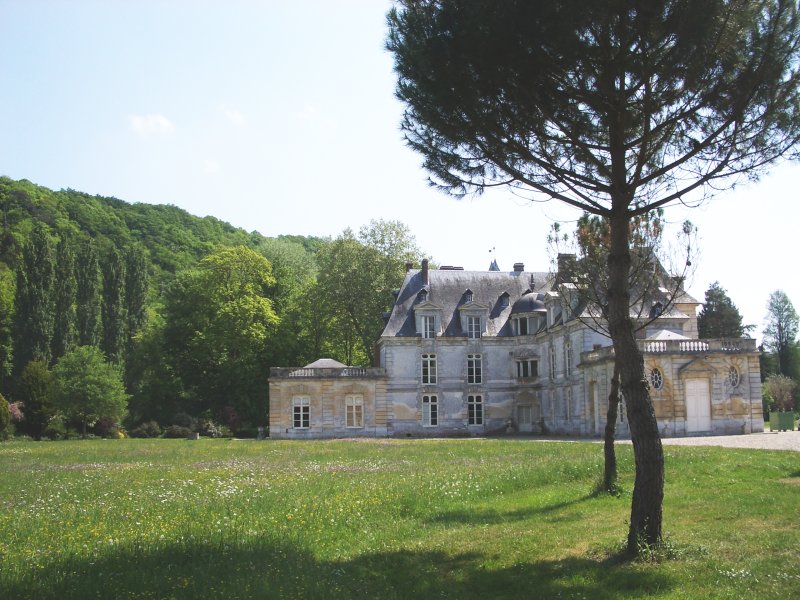
Château de Montaure

Château de Montaure: an 18th-century Louis XV style castle in Normandy
Montaure, France
Post-Renaissance (17th–18th c.)
Well Preserved

Château de Montaure stands as a notable example of 18th-century French architecture, embodying the refined elegance of the Louis XV style. Erected in the early 1700s, it occupies the historic site of an earlier feudal castle dating back to the 9th century, linking it to a deep medieval past that shaped the region of Normandy.

Historical background and site evolution

The location of Château de Montaure has been of strategic and residential importance since the Early Medieval period. Originally, a feudal castle occupied the site, serving defensive and administrative functions during the turbulent centuries of the Middle Ages. This early fortification would have been typical of Norman castles, likely featuring wooden palisades and earthworks, later replaced by stone structures as the region stabilized.

By the 18th century, the medieval fortress had fallen into disuse or ruin, and the château was constructed anew, reflecting the tastes and social aspirations of the French nobility during the Post-Renaissance era. The château was designed not for defense but as a comfortable, elegant residence, emphasizing aesthetics over military utility.

Architectural features and style

The château exemplifies the Louis XV style, a phase of French architecture characterized by graceful curves, ornate decoration, and harmonious proportions. This style is part of the broader Rococo movement, which favored lighter, more playful elements compared to the heavier Baroque forms of the previous century.

Typical architectural elements include delicately sculpted stonework, symmetrical façades, and large windows that allow ample natural light into the interiors. The château likely features a central corps de logis flanked by wings, with a formal entrance and carefully arranged gardens enhancing its visual impact.

The interiors would have been decorated with ornate wood paneling, parquet floors, and elaborate plasterwork ceilings, consistent with aristocratic residences of the period. Although specific details of the interior are less documented, the château’s style aligns with these common features.

Current condition and public access

Today, Château de Montaure is preserved as a well-maintained example of 18th-century French aristocratic architecture. While it does not serve as a museum, the site hosts occasional cultural and social events, offering visitors a chance to experience its historic ambiance. The château’s grounds and exterior can be appreciated for their architectural beauty and historical significance.

Its location in the town of Montaure, Normandy, situates it within a region rich in medieval and early modern history, making it a point of interest for visitors exploring the heritage of northern France.

Significance in regional history

The château’s foundation on a 9th-century feudal castle site connects it to the Norman legacy that shaped much of northern France. Normandy was a key region during the Middle Ages, known for its castles, fortifications, and role in European history, including the Norman Conquest of England.

Though the current château reflects the tastes of the 18th century rather than medieval military architecture, its location preserves the memory of the region’s feudal past and the evolution of aristocratic residences from fortress to elegant country house.

Architectural transition from fortress to residence

The transformation from a defensive castle to a refined château illustrates broader social and political changes in France. By the 18th century, the need for fortified residences had diminished, replaced by a desire for comfort, status, and artistic expression. Château de Montaure exemplifies this shift, moving away from military function toward a symbol of noble lifestyle.

Visiting information and cultural events

While the château is privately owned and not regularly open to the public, it occasionally welcomes visitors during special events or cultural festivals. These occasions provide a unique opportunity to explore the grounds and appreciate the château’s architectural and historical qualities.

Visitors interested in the château’s history and architecture should check local listings for event schedules and special openings. Nearby towns in Normandy offer additional attractions related to medieval and early modern history, enhancing the visitor experience.

Frequently asked questions (FAQ)

What is the historical significance of Château de Montaure?
Château de Montaure is a striking example of medieval architecture, reflecting the rich heritage of the region. Built in the 12th century, it served as a strategic fortification during various conflicts and has been a witness to the evolution of French history over the centuries.
When was Château de Montaure built?
The construction of Château de Montaure began in the early 12th century, making it one of the oldest castles in the area. Over the years, it has undergone several renovations, preserving its historical essence while adapting to changing architectural styles.
Can I visit Château de Montaure?
Yes, Château de Montaure is open to visitors throughout the year. Guided tours are available, allowing guests to explore its fascinating history and architectural features, making it an enriching experience for all ages.
What are the opening hours of Château de Montaure?
Château de Montaure is typically open from 10 AM to 6 PM, with extended hours during the summer months. It is advisable to check the official website for any seasonal changes or special events that may affect the visiting hours.
Is it possible to access Château de Montaure with disabilities?
The castle is committed to making its facilities accessible to all visitors. While some areas may present challenges due to the historic nature of the site, efforts are in place to accommodate guests with disabilities wherever possible.
What is the best time to visit Château de Montaure?
The best time to visit Château de Montaure is during the spring and early autumn months when the weather is mild and the surrounding gardens are in full bloom. These seasons also tend to attract fewer crowds, allowing for a more enjoyable experience.
What are the ticket prices for Château de Montaure?
Ticket prices for Château de Montaure vary depending on the season and tour options selected. Generally, adult tickets are priced around €10, while discounts are available for students and seniors, making it an affordable outing for families.
Are there any nearby attractions to visit after Château de Montaure?
Yes, the area surrounding Château de Montaure is rich in attractions, including beautiful parks, local markets, and other historical sites. Visitors can also explore nearby towns that offer charming cafes and shops, enhancing their overall experience in the region.

Information

Lowland Castle

Sources & official resources

Verify the information above using these authoritative references.

Loading map...

Visitor reviews

No reviews yet. Been here? Write the first review and help other travelers!

Write the first review

Visited this castle? Share your experience

Your review helps other travelers and adds first-hand knowledge to our encyclopedia.
Write a review

(5/5)

0/2000 characters

Your review will be visible after admin approval

Nearby castles

9.9 km
Château d\'Acquigny — France castle

Château d\'Acquigny

Acquigny, France

Château d'Acquigny is a remarkable Renaissance hill castle located in Acquigny, Eure, Upper Normandy, France. It stands at the strategic confluence of the Eure and Iton rivers, a location historically significant for its natural defense and water management. The castle's setting is notable for the two rivers that were dammed and redirected in the 12th century by the monks of Conches-en-Ouche to power local mills, simultaneously creating branches that feed the castle's moats. This early hydraulic engineering contributed to the castle's defense and the protection of the neighboring Saint-Mals monastery and medieval village. The historical significance of Acquigny castle The site of Château d'Acquigny has long been of strategic importance. During the Hundred Years' War, after the imprisonment of Charles II of Navarre in 1356, the castle served as a key stronghold contested by both English and French forces. The original medieval fortress occupied the same site as the current structure, featuring high defensive walls and wide ditches filled by the waters of the Eure river, enhancing its defensive capabilities. Architectural design and construction in the Renaissance era The current castle was constructed in 1557 by Anne de Laval, widow of Louis Silly, who was a cousin of the king and closely connected to Catherine de Medici, the influential queen and first lady of honor. Anne de Laval commissioned renowned architects Philibert Delorme and Jacques Androuet Hoop to design a residence that symbolized her enduring love for her late husband. The design of the castle is unique and elegant, reflecting the Renaissance architectural style with a complex structure that blends functionality and decoration. The castle's crest, featuring the intertwined initials of Anne de Laval and Louis Silly, adorns the building as a personal emblem of love and loyalty. A notable architectural feature is the center turret crowned with a superimposed scallop shell, a tribute to the Way of St. James pilgrimage route, symbolizing spiritual journey and protection. The castle's facade is richly decorated with motifs celebrating family and love, showcasing the artistic tastes and cultural influences of the mid-16th century French nobility. The use of blue slate, pink brick, and white stone creates a harmonious color palette that enhances the building's visual appeal and balance. Expansion and religious significance in the 17th and 18th centuries In 1656, the castle was acquired by Claude Roux Cambremont. Later, in 1745, his great-grandson, Peter Robert Roux Esneval, known as the President of Acquigny, undertook significant expansions. He employed the architect Charles Thibault to rebuild the chapel of Saint-Mals as well as the stables and sheds. This period also saw the construction of the orangery, the church, and the Little Castle, which was intended to be attached to a hermitage. Peter Robert Roux Esneval was a deeply religious man who chose to live as a hermit in the latter part of his life, adhering strictly to his faith and the principles of the Grande Trappe monastic order. From his pavilion, he could attend services in the church, reflecting the integration of religious devotion with the castle's architectural layout. The simplicity and harmony of the new constructions contrast with the ornate Renaissance main building, emphasizing spiritual humility. Gardens and landscape design The castle is surrounded by a vast park created in the 17th century, laid out along a circular route. The forested areas contain large chestnut trees over two centuries old, contributing to the estate's natural beauty. The grounds also include a vegetable garden, the restored orangery, and water features aligned perpendicularly to the main paths, although some of the original symmetrical rows of trees and flower beds have disappeared over time. Despite changes, the park retains its charm with mature linden and chestnut trees that have grown beyond their original geometric planting, adding a picturesque quality to the landscape. The garden and orangery have been partially restored, recovering elements of their historical elegance. Architectural features and cultural heritage Château d'Acquigny is an outstanding example of a Renaissance hill castle that combines defensive medieval elements with the refined aesthetics of the French Renaissance. Its construction by notable architects and its association with prominent historical figures like Anne de Laval and Peter Robert Roux Esneval enrich its cultural significance. The castle's listing in the French National Inventory of Historical Monuments in 1926 recognizes its architectural and historical value. The preservation of its distinctive features, including the moats fed by river branches, the decorative facades, and the harmonious blend of materials, make it a significant heritage site in Normandy. Visiting Château d'Acquigny Visitors to Château d'Acquigny can explore its elegant Renaissance architecture, the tranquil park with centuries-old trees, and the chapel and orangery added during the 18th century expansions. The castle's location at the meeting point of two rivers adds to its scenic appeal and historical context. The castle remains a testament to the architectural innovation and noble life of the French Renaissance, offering insights into the social and religious history of the region. Its well-preserved state allows for an immersive experience of a noble residence that has evolved through centuries of French history.

Renaissance (15th–17th c.)
Details
15.1 km
Robert le Diable Castle — France castle

Robert le Diable Castle

Moulineaux, France

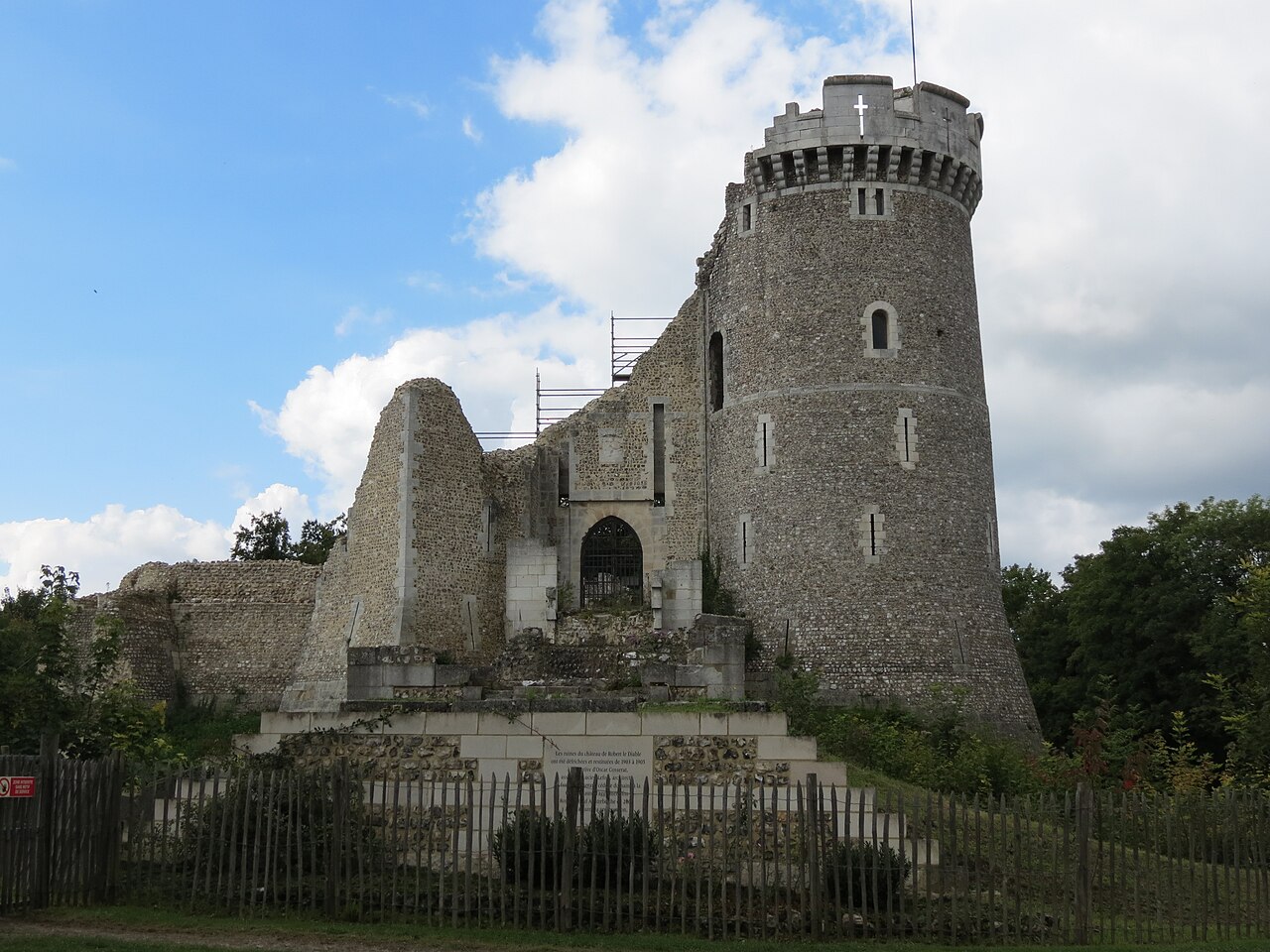
Robert le Diable Castle, also known as Château de Robert le Diable or Château de Moulineaux, is a striking medieval fortress perched on a steep ridge overlooking the River Seine in the Seine-Maritime department of France. This hill castle commands sweeping views of the river’s two branches and the city of Rouen, emphasizing its strategic importance since the High Medieval period. Its evocative name derives from the legendary Norman figure "Robert the Devil," a cruel knight said to be the son of Satan, though historical evidence linking the castle's construction to any specific Robert remains elusive. Legend and historical origins The castle’s name is associated with several historical figures named Robert, including Robert I, Duke of Normandy (father of William the Conqueror), Robert of Bellême, and Robert Curthose, William's son. Despite these associations, there is no concrete evidence that any of these men commissioned or inhabited the castle. The earliest reliable records indicate that the site was developed in the 11th century, consistent with the Norman expansion and fortification efforts in Normandy. The castle’s location atop a ridge overlooking a bend in the Seine made it a vital defensive stronghold. Its position allowed control over river traffic and surveillance of the surrounding region, including the important urban center of Rouen. Construction and medieval significance Early construction and royal involvement Historical documentation credits King John of England (reigned 1199–1216), also known as John Lackland, with building or rebuilding a small castle on this site in the early 13th century. This construction was part of the ongoing conflicts between England and France during the Anglo-Norman period. John's interest in the castle reflected its strategic importance in controlling Normandy and the Seine valley. Later, the castle was reportedly demolished by King John during his struggles with the French crown. Subsequently, Philip II Augustus of France (reigned 1180–1223) took control of the site and rebuilt the fortress, reinforcing its role as a French royal stronghold. Role during the Hundred Years’ War During the turbulent Hundred Years’ War (1337–1453), the castle’s military significance continued. In 1418, as the English laid siege to Rouen, the townspeople deliberately slighted (partially destroyed) the castle’s towers to prevent it from being used as a stronghold by the English forces. This act highlights the castle’s strategic value and the desperate measures taken to deny its use to enemies. Architectural features and restoration efforts Original medieval architecture The castle was originally designed as a typical Norman hill castle with defensive walls, towers, and deep moats. The moats, or defensive ditches, surrounded the complex, creating formidable obstacles for attackers. Most of these moats were filled in during the mid-19th century, altering the original defensive landscape. Notable architectural elements include the main tower known as the "Rouen tower," which was the largest and most prominent structure within the castle. This tower, along with the curtain walls and gatehouses, exemplified medieval military architecture designed for defense and control. 20th-century restoration and preservation In the early 20th century, between 1903 and 1905, the castle underwent partial restoration under the guidance of architect Lucien Lefort, a pupil of the renowned restorer Viollet-le-Duc. Commissioned by the then-owner Oscar Cosserat, this restoration focused on clearing the site of overgrowth and stabilizing the ruins while respecting the medieval fabric. Further restoration occurred in the 1950s when Roger Parment, the mayor of Moulineaux, acquired the castle. He enhanced the site by furnishing it with medieval artifacts, life-size historical figures, and a replica of a Viking ship built in Norwegian style, creating an immersive educational experience reflecting Norman history and culture. Unfortunately, the castle suffered a severe fire in 2007 that damaged the north tower’s wooden floors, leading to its closure. Since then, access has been limited, with occasional openings on national heritage days. Cultural significance and current status The Château de Robert le Diable is a protected historical monument listed since 1935, covering over 48 hectares. It is recognized for its archaeological and cultural value, representing Norman medieval fortifications and regional history. Today, the castle remains in a partially preserved and partially ruined state. Visitors can view the dramatic ruins, including the stone walls, the main tower remains, and the former moat areas from outside the site. Its proximity to the E-46 highway makes it easily visible, though interior access is restricted. The castle’s rich history, architectural remnants, and evocative setting continue to attract interest from historians, architects, and tourists alike. Its story reflects the complex Anglo-French relations of the medieval period and the enduring legacy of Norman heritage in northern France. Notable historical figures associated with the castle Robert I, Duke of Normandy (Robert the Magnificent) – legendary figure linked to the castle’s name, father of William the Conqueror. King John of England (John Lackland) – credited with building or rebuilding the castle in the early 13th century. Philip II Augustus – French king who rebuilt and fortified the castle after its demolition by King John. Lucien Lefort – early 20th-century architect who partially restored the castle under Oscar Cosserat’s ownership. Roger Parment – mayor of Moulineaux who restored and opened the castle to the public in the mid-20th century. Visiting information Currently, Robert le Diable Castle is closed to the public due to its condition and past fire damage. Visitors can view the castle from outside, particularly from the nearby E-46 highway and the surrounding area. Occasionally, the interior is accessible during national heritage days, offering a rare glimpse into its medieval interiors and architectural features. The castle is located in the Hauts-de-France region near the village of Moulineaux, making it a notable historical landmark within the Seine-Maritime department. A small war memorial near the road below the castle adds to the site's commemorative atmosphere.

High Medieval (11th–13th c.)
Details
16.5 km

Château du Neubourg

Le Neubourg, France

Château du Neubourg is a medieval fortress located in Le Neubourg, Normandy, France. Its origins trace back to the 12th century, with historical records indicating ownership by Henry I of England. The castle was constructed during the High Medieval period, primarily in the 13th century, reflecting the architectural and military styles of Norman fortifications from that era. Historical background and ownership The castle's early history is closely tied to the turbulent Anglo-Norman relations following the Norman Conquest. Henry I, King of England from 1100 to 1135, held the castle as part of his extensive holdings in Normandy. The fortress served both as a defensive stronghold and a symbol of feudal authority in the region. Over the centuries, Château du Neubourg changed hands among various noble families, adapting to the shifting political landscape of Normandy. By the 17th century, the castle's military significance declined due to changes in warfare and political stability. This period marked the transition of the castle from a fortress to a more residential or administrative role. Architectural features and construction The castle was originally designed as a hill castle, utilizing natural elevation to enhance its defensive capabilities. Its layout included stone walls, fortified towers, and a central keep or donjon, typical of Norman military architecture. The moat and gatehouse were integral to its defense system, controlling access and providing protection against sieges. In the late 18th century, specifically between 1782 and 1783, the eastern parts of the castle were demolished. This demolition reflected the reduced need for fortified structures and the changing tastes in architecture and land use during the period. Defensive elements The castle's fortifications included battlements and arrow slits designed for archers to defend the walls effectively. The curtain walls were thick and built to withstand assault, while the towers provided vantage points for surveillance and defense. Residential and administrative spaces Within the walls, the castle contained living quarters, halls, and chambers for the lord and his retinue. Over time, as military functions diminished, these spaces were adapted for more comfortable residential use, reflecting the evolving role of the castle. Decline and preservation By the 17th century, the castle lost its military role due to advancements in artillery and changes in political power structures. The demolition of parts of the castle in the late 18th century further reduced its size and defensive capability. Today, Château du Neubourg stands as a partially preserved medieval site. While some structures remain, much of the original castle has been altered or lost. The site offers valuable insight into Norman castle construction and medieval feudal history in Normandy. Visiting Château du Neubourg Visitors to the castle can explore the remaining fortifications and appreciate the strategic location that once controlled the surrounding territory. The castle's historical significance as a Norman stronghold and its connection to Henry I of England make it an important cultural landmark in the region. While the castle is not as extensively preserved as some other Norman fortresses, its ruins and remaining structures provide a tangible link to the medieval past of Normandy.

High Medieval (11th–13th c.)
Details