Château de Miral
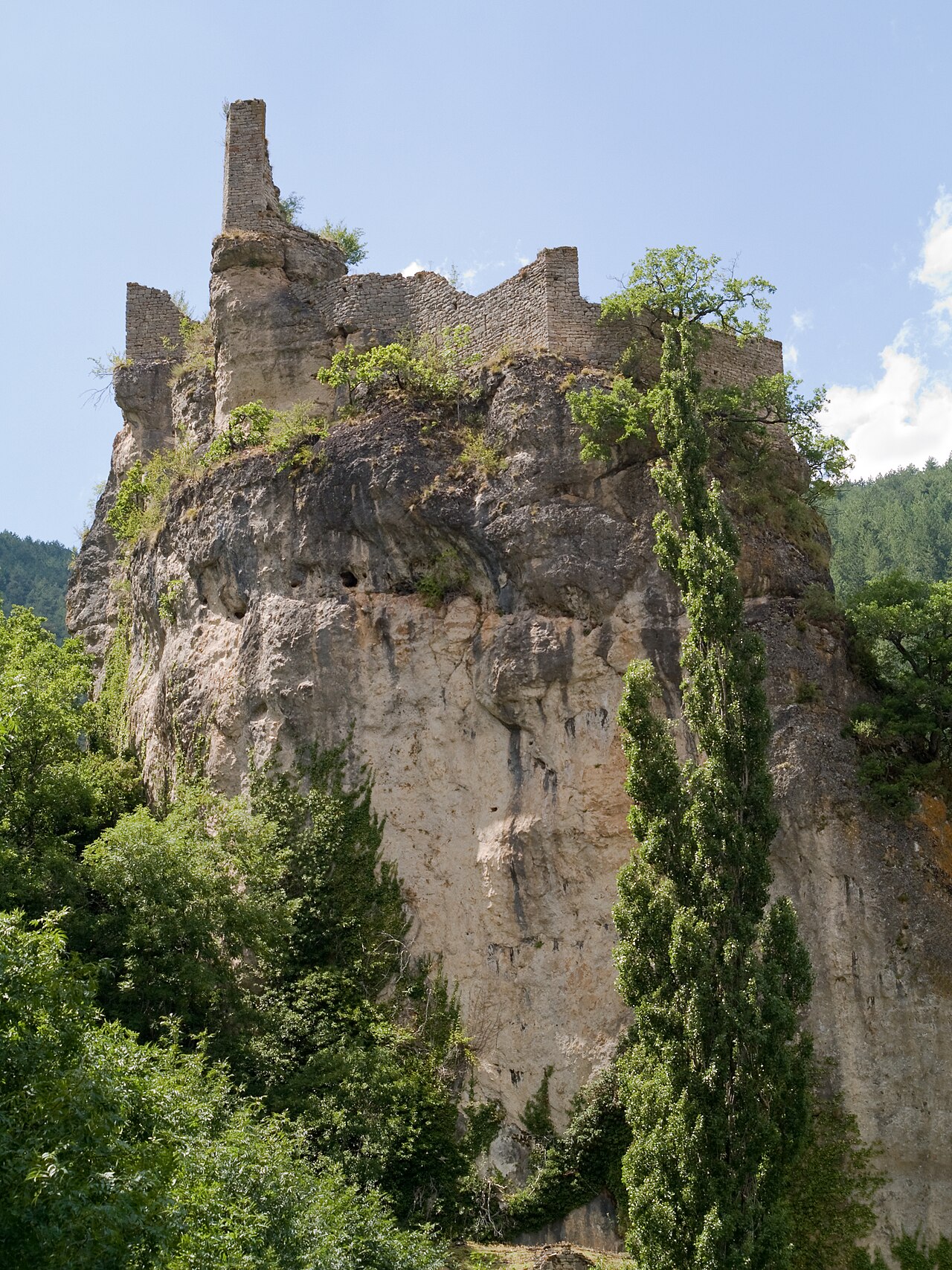
Château de Miral stands prominently overlooking the confluence of the Runes River and Tarn River in Bédouès, France. This medieval fortress, dating from the 13th century, was originally owned by the Cahbrieres family before passing to the Malbosc family in the 14th century. The castle's strategic location guarded the upper Tarn valley, playing a significant role in the region's military and feudal history.
Medieval origins and strategic importance
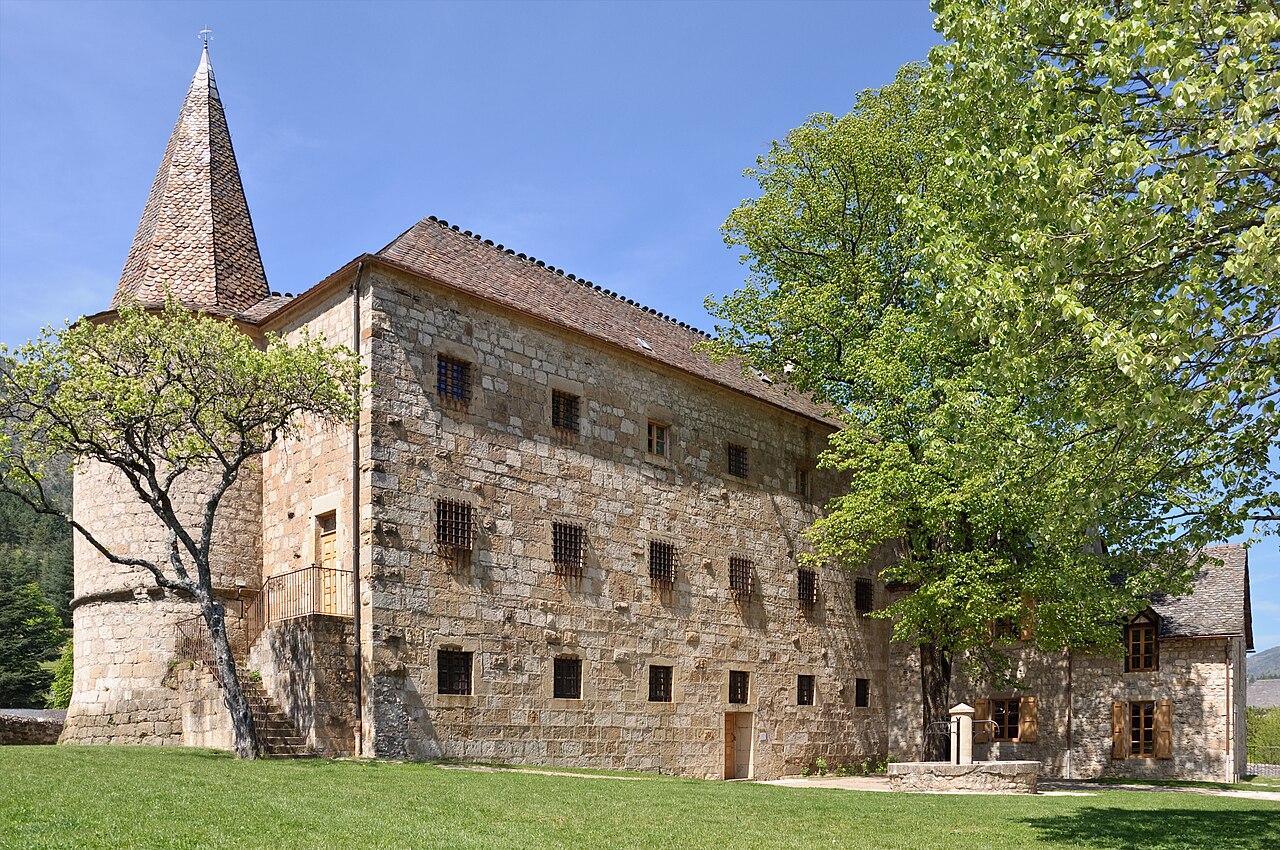
The core of the castle is a massive square keep constructed towards the end of the 13th century, serving as the seat of the Malbosc-Miral family. This keep is notable for its robust defensive design, including a high round tower attached to one side, which provided enhanced vantage and protection. The castle's fortifications include a double enceinte, a defensive feature that utilized the natural terrain to create two concentric walls, maximizing defense against attackers.
During the High Medieval period, the castle was a critical stronghold within the Gévaudan region, an area marked by frequent conflicts and local disorders. Its position allowed control over access routes and oversight of the nearby silver mines, which were economically important to the local lords.
Architectural evolution from the 14th to 16th centuries
Between the 14th and 16th centuries, the Lords of Malbosc-Miral expanded the castle complex by adding residential quarters and various outbuildings around the original keep. These additions included a seigniorial residence featuring mullioned windows, characteristic of the Renaissance architectural style. Inside, the castle preserves interior murals in the vaulted ceilings and western building, which are rare examples of civil decorative art from this period in the region.
The castle's military architecture reflects the transition from purely defensive medieval fortifications to incorporating elements of comfort and status, as seen in the residential expansions while maintaining strong defensive capabilities.
Historical significance and decline
The Château de Miral was closely tied to the history of the Gévaudan region over five centuries, witnessing numerous conflicts and changes in ownership. The last known proprietor before the French Revolution was Charles, Count of Altier. Tragically, he and his son were executed by guillotine in 1794 during the Revolution, leading to the castle's sale in 1796 for 34,719 livres.
Following the Revolution, the castle fell into disrepair and gradually declined into ruins. Its strategic and residential functions ceased, and it became a historical monument reflecting the turbulent past of the area.
Modern restoration and preservation efforts
Restoration work on the castle began in 1980, aiming to preserve its unique architectural and historical features. Efforts have focused on stabilizing the ruins and conserving the carved and painted decorations, which are among the few surviving examples of civil artwork in this part of France.
Today, Château de Miral is recognized for its blend of 13th and 14th-century military architecture and Renaissance artistic elements. Its preservation allows visitors to appreciate the castle's role in regional history, its architectural evolution, and its significance as a local seigniory that controlled valuable mineral resources.
Frequently asked questions (FAQ)
- How do I get to Château de Miral?
- Château de Miral is located in Bédouès, France, and can be easily accessed by car. The nearest major city is Alès, which is approximately 30 minutes away. Public transport options may be limited, so driving is recommended for convenience.
- What is the historical significance of Château de Miral?
- Château de Miral dates back to the 12th century and has played a crucial role in the region's history. Originally a fortress, it has witnessed numerous events during the medieval period, reflecting the architectural and cultural evolution of the time. The castle stands as a testament to the feudal system and local governance in the Languedoc region.
- When was Château de Miral built?
- Château de Miral was constructed in the 12th century, showcasing remarkable medieval architecture. Over the centuries, it has undergone various renovations, preserving its historical essence while adapting to different eras. This long-standing history makes it a fascinating site for visitors interested in the past.
- Can I take guided tours of Château de Miral?
- Yes, guided tours are available at Château de Miral, offering visitors insights into its rich history and architectural features. These tours are led by knowledgeable guides who share intriguing stories and facts about the castle. It's advisable to check the castle's website for tour availability and to book in advance.
- Why is Château de Miral an important architectural site?
- Château de Miral is significant for its unique blend of medieval and Renaissance architectural styles, showcasing various elements from different periods. Its well-preserved structures, including towers and fortifications, provide insight into the defensive strategies of the time. The castle's architecture reflects the region's historical context and artistic heritage.
- Is it possible to host events at Château de Miral?
- Yes, Château de Miral offers facilities for private events, including weddings and corporate gatherings. The stunning backdrop of the castle adds a unique charm to any occasion. It is recommended to contact the castle's management for detailed information on event hosting and availability.
- What are the opening hours of Château de Miral?
- Château de Miral is typically open to visitors from April to October, with varying hours depending on the season. During peak tourist months, the castle may have extended hours to accommodate visitors. Always check the official website for the most accurate and up-to-date information regarding opening times.
- What are the ticket prices for Château de Miral?
- Ticket prices for Château de Miral vary depending on the age of the visitor and whether they choose a guided tour. Generally, there are discounts for students, children, and groups. It is advisable to purchase tickets in advance online to secure your visit and avoid long queues.
- When is the best time to visit Château de Miral?
- The best time to visit Château de Miral is during the spring and early fall when the weather is mild and the gardens are in full bloom. These seasons also see fewer crowds, allowing for a more enjoyable experience. Summer can be hot, while winter may limit access due to weather conditions.
- Are there any nearby attractions to explore after visiting Château de Miral?
- Yes, there are several nearby attractions, including the picturesque village of Bédouès and the stunning Cevennes National Park, perfect for hiking and outdoor activities. Other historical sites in the region provide an enriching experience for those interested in local history. Plan a day trip to fully enjoy the beauty and culture of the area.
Information
Loading map...
Visitor reviews
No reviews yet. Been here? Write the first review and help other travelers!
Write the first reviewVisited this castle? Share your experience
Your review helps other travelers and adds first-hand knowledge to our encyclopedia.