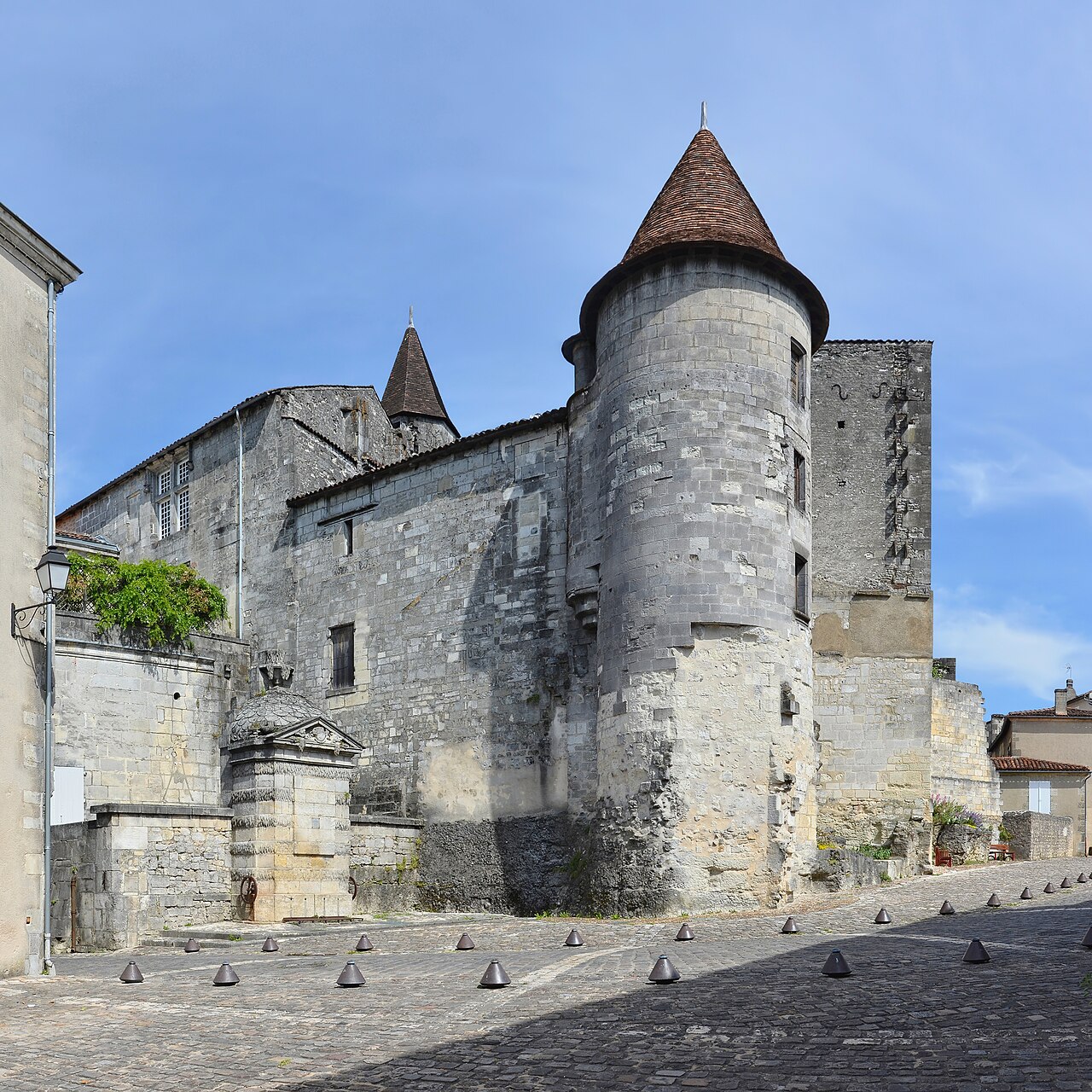
Château de Matha
Château de Matha stands as a remarkable example of architectural evolution, embodying both medieval fortification and Renaissance elegance. Originally established in the 9th century by Count Wulgrin of Angoulême, the castle began as a motte castrale, a fortified earth mound typical of early medieval military strategy. This initial construction served as a strategic stronghold in the region, reflecting the turbulent political landscape of the time.
The castle's early history is marked by significant ownership transitions among notable historical figures. After its foundation, the castle came under the control of Isabelle, widow of King John of England, who transferred it to her son Henry III. Subsequently, the French crown reclaimed the site under the reign of King Louis IX (Saint Louis). In a strategic move during the Battle of Taillebourg in 1242, Louis IX ordered the demolition of the castle and its main tower to prevent its use by opposing forces.
Medieval conflicts and ownership
Throughout the Hundred Years’ War, Château de Matha was a contested site, frequently changing hands between English and French forces. Despite this instability, the castle remained an important defensive and administrative center. Eventually, it came into the possession of the Montberon family, who played a pivotal role in its later history. In 1558, through the marriage of Jacquette de Montberon to André de Bourdeilles, the castle passed to the Bourdeilles family, who retained ownership until the upheavals of the French Revolution.
Renaissance transformation
The original medieval fortress was largely destroyed, but the site was revitalized in the late 16th century. Between 1582 and 1587, under the direction of Jacquette de Montbron, a Renaissance pavilion was constructed atop the original motte. This structure marks a significant architectural shift, moving away from purely defensive medieval designs towards the more refined and ornamental style of the Renaissance period.
Architectural features of the pavilion
The pavilion prominently features a three-story square tower rising above the entrance porch, which provides a vertical emphasis characteristic of Renaissance châteaux. Adjacent to this main tower is a smaller square tower of equal height, creating a symmetrical façade. Both towers are crowned with battlements and machicolations, defensive elements that harken back to the castle's military origins but are stylistically integrated into the Renaissance design.
The towers are topped with steeply pitched roofs covered in regional slate, a typical roofing material that complements the château's aesthetic. The pavilion’s windows and main door are adorned with sculpted pediments, adding an element of decorative sophistication. These pediments frame the openings elegantly, reflecting the Renaissance emphasis on harmony, proportion, and ornamentation.
Historical significance and later use
Château de Matha continued to hold strategic and symbolic importance into the early 17th century. Notably, Queen Anne of Austria resided at the château in 1621 during the siege of Saint-Jean-d’Angély, underscoring its role in regional political and military affairs. The château’s legacy as both a fortress and noble residence illustrates the broader historical transition from medieval warfare to Renaissance courtly life.
Preservation and public access
Today, the château is recognized for its cultural and historical value, having been officially protected as a historic monument since 1948. Its principal facades and roofs received further classification in 1952, ensuring the preservation of its distinctive Renaissance features. Visitors to Matha can explore the surviving Renaissance pavilion, which stands as a testament to the castle’s layered history and architectural evolution.
The château’s location atop the original motte offers a unique perspective on medieval defensive strategies, while the Renaissance elements provide insight into the artistic and cultural shifts of the late 16th century. This blend of architectural styles makes Château de Matha an important site for understanding the region’s heritage and the broader narrative of French castle development.
Information
Loading map...
Visitor reviews
No reviews yet. Been here? Write the first review and help other travelers!
Write the first reviewVisited this castle? Share your experience
Your review helps other travelers and adds first-hand knowledge to our encyclopedia.