Château de Merpins

Château de Merpins: medieval fortress ruins in Charente-Maritime, France
Merpins, France
Early Medieval (5th–10th c.)
Ruins

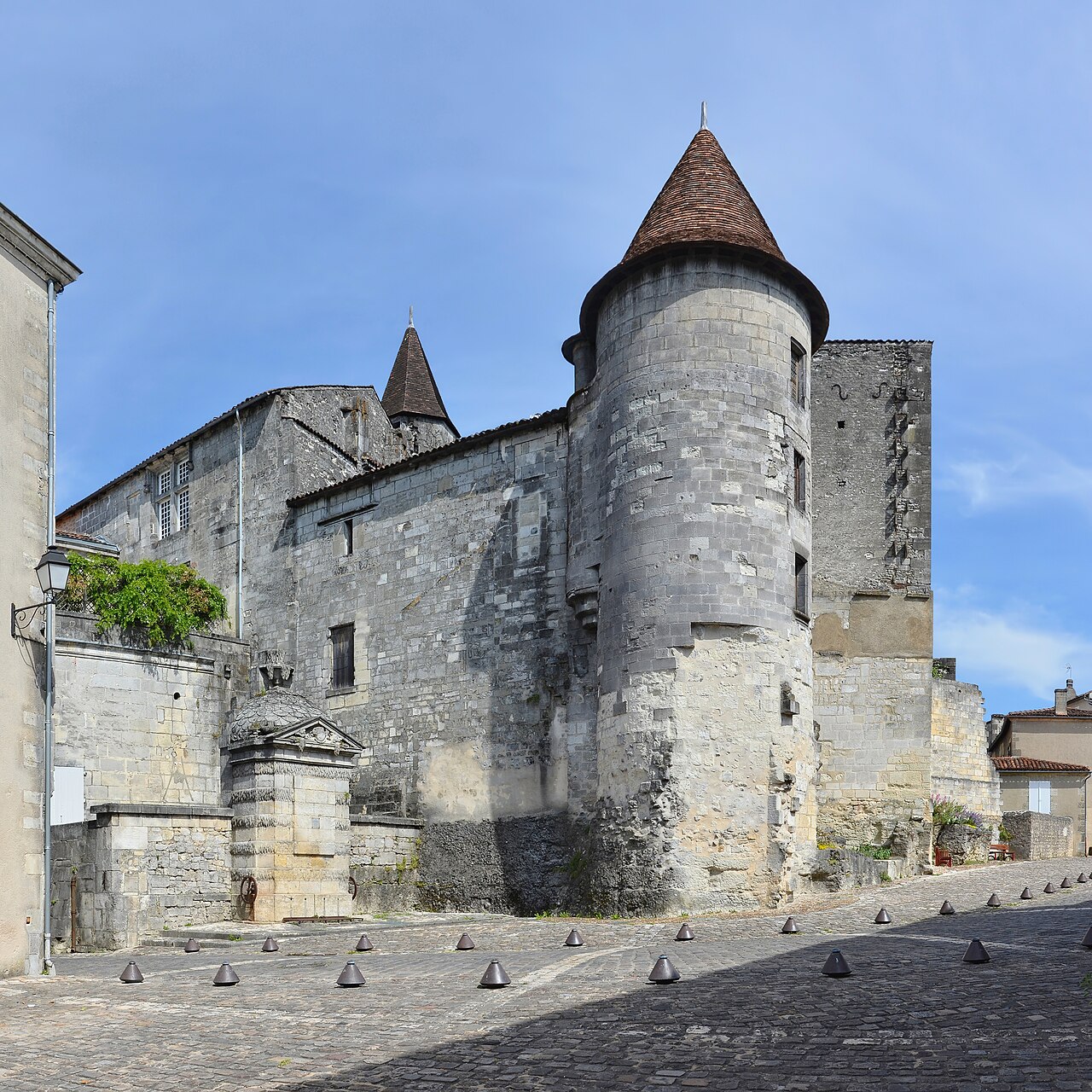
Château de Merpins stands as a significant medieval fortress ruin located in Merpins, within the Charente-Maritime region of France. Perched atop a rocky outcrop, the castle commands a strategic vantage point overlooking the rare double confluence of the Ne, Charente, and Antenne rivers. This location was chosen for its natural defensive advantages, which have attracted fortifications since the Neolithic period, indicating the site's long-standing military and settlement importance.

Early medieval origins and the taillefer lineage

The origins of Château de Merpins date back to the 10th century, during the early medieval period. At this time, the castle manor was under the control of the Taillefer family, the counts of Angoulême. This noble family played a vital role in the region's feudal structure, establishing the castle as a local power center. The initial construction likely involved a fortified manor adapted to the rocky terrain, emphasizing defense and control over the surrounding river valleys.

Medieval ownership and political shifts

In 1179, the castle changed hands when it was seized by Richard, Duke of Aquitaine, who was also King Richard I of England. Richard granted the castle to his illegitimate son, Philippe de Falcombridge. Philippe's tenure was brief, as he sold the castle to King John of England in 1204. This transaction marked the castle's integration into the Angevin Empire's holdings in France.

Later, King Henry III of England bestowed Château de Merpins to Hugh X de Lusignan, the lord of Cognac and husband to Isabelle d'Angoulême, the former queen consort of England. This alliance strengthened Lusignan's regional influence and tied the castle to the complex web of Anglo-French noble relations.

Conflicts and sieges in the late medieval period

By 1308, the castle was united with the French crown, but the political landscape remained volatile. Under the Treaty of Brétigny in 1360, which temporarily halted hostilities during the Hundred Years' War, Château de Merpins returned to English control. This period was marked by military tension and frequent skirmishes.

The castle endured a prolonged siege lasting six years, led by Marshal Sancerre, a notable French military commander. After this arduous siege, the French forces recaptured the fortress in 1387. In response to its contested significance, King Charles VI of France ordered the castle's destruction to prevent further military use by enemies.

Role during the wars of religion

Despite the ordered destruction, Château de Merpins remained a strategic site into the 16th century. During the French Wars of Religion, the castle was occupied alternately by Catholic and Protestant forces. This reflects the castle's enduring military and symbolic importance in regional conflicts.

The struggle for control culminated in 1577 when the Duke of Mayenne, a prominent Catholic leader, successfully dislodged the Protestant occupants. The castle's military relevance diminished thereafter as warfare evolved and fortifications elsewhere became more modernized.

Architectural features and current condition

Today, Château de Merpins exists as a ruined castle, with remnants of its fortifications visible atop the rocky promontory. The castle's design originally leveraged the natural rock formations for defense, supplemented by walls, towers, and gatehouses characteristic of early medieval fortresses. Although much of the structure has fallen into ruin, archaeological evidence and remaining masonry provide insight into medieval military architecture in southwestern France.

The castle's location at the confluence of three rivers not only offered natural defensive barriers but also controlled important trade and communication routes in the region. This strategic placement contributed to its historical significance and the numerous conflicts it witnessed.

Cultural heritage and tourism

Château de Merpins is recognized as a site of historical and cultural importance in the Charente-Maritime. While it no longer functions as a residence or military stronghold, the ruins attract visitors interested in medieval history, architecture, and the complex feudal past of the region. The castle's dramatic setting and layered history provide a tangible connection to the turbulent medieval period in France.

Visitors to the site can explore the remains and appreciate the castle's commanding views over the river valleys. Interpretive materials and local guides often highlight the castle's role in the Hundred Years' War and the Wars of Religion, enriching the visitor experience with detailed historical context.

Information

Hill Castle

Loading map...

Visitor reviews

No reviews yet. Been here? Write the first review and help other travelers!

Write the first review

Visited this castle? Share your experience

Your review helps other travelers and adds first-hand knowledge to our encyclopedia.
Write a review

(5/5)

0/2000 characters

Your review will be visible after admin approval

Nearby castles

5.7 km
Castle of Cognac — France castle

Castle of Cognac

Cognac, France

The Castle of Cognac, located in the historic town of Cognac in southwestern France, stands as a remarkable testament to the region's medieval and Renaissance heritage. Its origins date back to around 950 AD when Hélie de Villebois, the first lord of Cognac, established a fortified enclosure known as a castrum. This early fortification laid the groundwork for a complex architectural evolution that spans over a millennium, reflecting the shifting tides of power, warfare, and culture in the region. Situated along the banks of the Charente River, the castle's strategic riverside location was crucial for defense and trade. The site initially featured wooden and earthworks typical of early medieval fortifications, but it was transformed into a robust stone fortress by the Taillefer family, counts of Angoulême, around the 12th and 13th centuries. This period marked the construction of the first defensive walls encompassing the town of Cognac, emphasizing the castle's role not only as a noble residence but also as a military stronghold. Medieval origins and the villebois lineage The earliest documented references to the castle and its lords come from charters and Benedictine records in the early 11th century, highlighting the importance of the Villebois family in establishing the castle's initial prominence. By the year 1000, Itier and Arnaud de Villebois had solidified their control over the site, which functioned as a fortified center for the surrounding region. The taillefer and plantagenet influence By the turn of the 13th century, significant architectural advancements were made under the Taillefer family, who rebuilt the castle in stone, replacing earlier wooden structures. This stone reconstruction included formidable walls and towers designed to withstand sieges and assert dominance over the surrounding territory. The castle's lordship eventually passed to the Plantagenet dynasty through marriage alliances. Notably, Richard the Lionheart arranged the marriage of Amélie de Jarnac, heiress of Cognac, to his illegitimate son Philippe de Falcombridge. This alliance brought Cognac under English influence during a period marked by territorial disputes between England and France. Subsequently, the lordship was sold to King John of England, further entrenching English control. Following King John's death, his widow Isabella of Angoulême married Hugh X of Lusignan, who retained control of Cognac despite papal threats of excommunication. The Lusignan family's tenure saw continued fortification and expansion of the castle's defenses during the turbulent 13th century. Hundred years' war and the black prince's residence During the Hundred Years' War, the Castle of Cognac was a focal point of conflict between English and French forces. Between 1366 and 1370, it served as a principal residence for Edward, the Black Prince, son of King Edward III of England. This period underscored the castle's strategic importance as a military and administrative center. The castle changed hands multiple times during the war, reflecting the shifting fortunes of the warring kingdoms. After the lengthy captivity of John, Count of Angoulême in England from 1415 to 1448, he returned to find the castle in disrepair and initiated extensive reconstruction efforts around 1450. Renaissance expansion and the valois golden age The 15th and 16th centuries marked a cultural renaissance for the castle under the Valois dynasty. Charles de Valois and Louise of Savoy transformed Cognac into a vibrant cultural hub. Their children, including Marguerite de Navarre and King Francis I, who was born at the castle in 1494, maintained close connections to the site. Around 1517, King Francis I undertook significant expansions, adding a long riverside façade that combined defensive functionality with Renaissance aesthetics. This façade was later heightened in the 19th century but retains key features such as the prominent "balcon du roi" (king's balcony), adorned with sculpted medallions and salamander emblems representing Francis I. Architectural features of the renaissance period The castle's round towers, constructed between 1499 and 1500, replaced earlier square towers and featured distinctive trilobed machicolations. These openings in the parapet allowed defenders to drop projectiles or boiling substances on attackers below. These towers once faced a medieval bridge from the Saint-Jacques quarter, which was demolished in 1855. The "Tour du comte Jean" (Count Jean's Tower), dating from the 13th century, was enhanced in the 15th century with a well accessible from all floors, fireplaces, mullioned windows, and a rare medieval heating system called étuves, which warmed rooms through heated air or steam. The "Logis du Gouverneur" (Governor's residence) features a finely crafted Gothic doorway, a turret with an internal spiral staircase, and the notable "salle du casque" (helmet room), named after a monumental fireplace decorated with a plumed helmet above the Valois-Angoulême coat of arms. This building incorporates masonry and decorative elements from the 12th and 13th centuries, including Gothic arcatures and capitals adorned with palmette motifs. Later history and preservation In the late 17th and 18th centuries, the castle's importance declined, leading to neglect. During the Seven Years' War (1756–1757), it was repurposed as a prison for foreign detainees, with graffiti from this period still visible on its walls. In 1772, the then Count of Artois, the future King Charles X, sold parts of the property. The French Revolution led to the castle's nationalization and plans for demolition. However, in 1795, local merchants Otard and Dupuy purchased the castle and converted it into storage cellars, initiating a new phase in the site's history. The 19th century brought both modifications that partially damaged the original structure and restoration efforts led by the Otard company. Since 1925, the castle and associated features like the François I fountain have been officially protected as historic monuments, preserving their cultural and architectural legacy. Notable architectural remnants and features The Saint-Jacques gate on the Charente River, a key defensive entrance. The king's balcony with its sculpted medallions and salamander emblems. The Count Jean tower with its medieval heating system and well. The François I fountain, rebuilt in the 17th century blending classical and baroque styles, relocated in the 19th century. The "Logis du Gouverneur" with its Gothic doorway, turret, and helmet room fireplace. Vaulted cellars and chambers dating back to the 12th century. Today, the Castle of Cognac stands as a complex architectural ensemble that reflects its long and varied history. Its blend of medieval fortifications and Renaissance elegance offers invaluable insights into the region's past. The castle continues to attract visitors interested in history, architecture, and French heritage, serving as a cultural landmark in the town of Cognac.

High Medieval (11th–13th c.)
Details
16.1 km

Château des Sires de Pons

Pons, France

The Château des Sires de Pons stands as a remarkable example of medieval fortification in the town of Pons, located in the Nouvelle-Aquitaine region of southwestern France. This well-preserved fortress reflects the military and residential architecture of the High medieval period, with significant Gothic architectural elements that highlight its defensive and aesthetic design.The historical significance of Château des Sires de PonsConstructed primarily in the 12th and 13th centuries, the castle was the seat of the powerful lords known as the Sires de Pons. These lords played a crucial role in the political and military affairs of the region during the Middle Ages. The castle's location on a strategic hilltop allowed it to control important trade routes and defend the surrounding territory effectively.Throughout its history, the castle witnessed numerous conflicts, including regional disputes and the Hundred Years' War between France and England. Despite these turbulent times, the Château des Sires de Pons maintained its structural integrity, thanks to its robust construction and subsequent restorations.Architectural features and layoutFortifications and defensive structuresThe castle is classified as a hill castle, characterized by its elevated position which provided natural defense advantages. Its fortifications include imposing curtain walls with crenellated battlements, round towers at key points for enhanced defense and surveillance, and a moat that once encircled the fortress to deter attackers.The main entrance is protected by a strong gatehouse featuring a portcullis and murder holes, typical of Gothic military architecture. The thick walls and narrow arrow slits allowed defenders to repel sieges effectively.Residential and ceremonial spacesInside the walls, the castle contains a keep or donjon, which served as the lord's residence and the last line of defense. The keep houses spacious halls and private chambers, adorned with Gothic elements such as pointed arches and ribbed vaults, reflecting the architectural style prevalent during its construction.The courtyard features a well and various outbuildings that supported the daily life of the castle inhabitants, including stables, kitchens, and storage rooms. The layout emphasizes both defense and the comfort of the lord's household.Restoration and current conditionThe Château des Sires de Pons has undergone several restoration campaigns to preserve its medieval character and structural stability. These restorations have been carefully executed to maintain the authenticity of the original Gothic features while ensuring safety for visitors.Today, the castle is restored and open to the public, serving as a cultural landmark and a testament to the region's rich medieval heritage. It hosts various events and exhibitions that highlight its historical and architectural significance.Visiting information and cultural importanceVisitors to the Château des Sires de Pons can explore its extensive fortifications, climb the towers for panoramic views of the surrounding landscape, and learn about the history of the Sires de Pons through informative displays. The castle's location in the heart of Pons makes it accessible and a focal point for tourism in Nouvelle-Aquitaine.The castle's preservation contributes to understanding the military architecture of the High medieval period in France and offers insight into the lifestyle and power dynamics of medieval nobility.

High Medieval (11th–13th c.)
Details
19 km

Château d'Ardennes

Fléac-sur-Seugne, France

The Château d'Ardennes is a notable medieval fortress located in Fléac-sur-Seugne, France. Founded in the 12th century, this castle is believed to have been established by the Knights Templar, a military order renowned for their role in the Crusades and their architectural contributions across Europe. The castle's origins in the High Medieval period reflect the strategic importance of fortifications during this era, serving both defensive and administrative functions. Architectural features and fortifications The castle is distinguished by its moat, a classic defensive feature designed to deter attackers and protect the stronghold from siege. Surrounding the castle, the moat adds a layer of security that was typical of medieval fortresses. Notably, the drawbridge dating from the 18th century still survives, highlighting the castle's continued use and adaptation over several centuries. This drawbridge would have served as the primary controlled access point across the moat, demonstrating the castle's defensive design evolution. Structural expansions in the 15th century During the 15th century, the Château d'Ardennes underwent significant enlargement. This expansion likely included the reinforcement of walls, addition of living quarters, and enhancement of defensive structures to adapt to changing military technologies and residential needs. The 15th century was a period of architectural transition where castles were modified to accommodate artillery and improve habitability, reflecting the castle's ongoing strategic and residential importance. Historical context and significance The association with the Knights Templar places Château d'Ardennes within a broader network of Templar castles and commanderies across France. These castles often served as bases for military operations, centers of administration, and storage for wealth accumulated by the order. Although specific records about the castle's role during the Templar period are limited, its foundation during the 12th century aligns with the peak influence of the order. Over the centuries, the castle witnessed shifts in ownership and military relevance, adapting to the political and social changes in the region. The survival of the moat and drawbridge into the 18th century indicates that the castle retained some functional or symbolic importance well beyond the medieval period. Current condition and preservation Today, Château d'Ardennes is recognized for its well-preserved moat and the historic drawbridge, which remain key features for visitors and scholars. While detailed information about the castle's current structural condition is limited, the presence of these elements suggests that parts of the castle have been maintained or restored to preserve its historical character. Visiting and cultural heritage As a medieval castle with ties to the Knights Templar and a history spanning several centuries, Château d'Ardennes attracts interest from historians, architecture enthusiasts, and tourists exploring the heritage of the Charente-Maritime region. Its location in Fléac-sur-Seugne places it within a landscape rich in medieval history and offers a tangible connection to France's feudal past.

High Medieval (11th–13th c.)
Details

