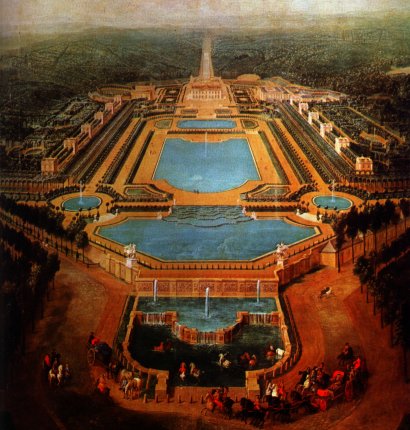
Château de Louveciennes
Château de Louveciennes is a historic French residence located in Louveciennes, near Paris. Its origins date back to 1684, when King Louis XIV ordered its construction close to the Machine de Marly, an elaborate hydraulic system designed to pump water from the Seine to the Château de Marly. The château was initially granted to Baron Arnold de Ville, the engineer behind the hydraulic installation, marking its early connection to the era's innovative engineering feats.
The château complex comprises the main building and the famous Pavillon de Louveciennes, a music pavilion set within a 19th-century landscaped park. The main château is an approximately cubic structure of modest size and appearance, situated along the chemin de la Machine, a location that inspired Impressionist painters such as Camille Pissarro and Alfred Sisley.
Historical background and royal associations
After its construction, the château passed into the hands of Louise-Françoise de Bourbon, the eldest legitimised daughter of Louis XIV and his mistress Françoise-Athénaïs, marquise de Montespan. Upon her death in 1743, ownership transferred to her daughter, the Princesse de Conti, who notably introduced Madame de Pompadour to the royal court. The château later reverted to the crown, and in 1769, Louis XV gifted it to his new favourite, Madame du Barry.
Madame du Barry commissioned Ange-Jacques Gabriel, the Premier Architecte du Roi, to enlarge and redecorate the château. Gabriel added an eastern wing and exquisite carved woodwork interiors, enhancing the château's elegance. The residence became known as the Château de Madame du Barry, and Louis XV frequently visited. It was here that Madame du Barry was arrested on 22 September 1793 during the French Revolution.
Architectural features and modifications
The main château is characterized by its cubic form and restrained exterior, reflecting the Renaissance architectural style prevalent at the time of its initial construction. The addition of the eastern wing by Gabriel introduced refined 18th-century decorative elements, including intricate wood carvings that exemplify the craftsmanship of the period.
Madame du Barry found the château's reception spaces inadequate and lacking views of the Seine. To address this, she commissioned the construction of the Pavillon de Louveciennes, a separate small house designed to overlook the Seine valley and serve as reception rooms. The pavilion's design was entrusted to two prominent architects: Charles de Wailly and Claude Nicolas Ledoux. Despite some opposition, Madame du Barry chose Ledoux's innovative design. Construction began in 1771, and the pavilion was inaugurated on 2 September 1771 in the presence of King Louis XV.
The Pavillon de Louveciennes
The pavilion is a notable example of early Neoclassical architecture, showcasing Ledoux's emerging style that would later influence French architectural developments. Its elegant design and strategic placement highlight the transition in architectural tastes from the ornate Rococo to the more restrained and geometric Neoclassicism.
Later history and preservation
Following the Revolution and Madame du Barry's arrest, the château underwent various changes in ownership and condition. In the 1980s, it was acquired by a Japanese woman and her French-American husband under controversial circumstances involving the company Nippon Sangyo. During this period, the château was neglected, its furniture sold off, and it suffered from occupation by squatters and degradation.
In 1994, authorities intervened to prevent the removal of valuable architectural elements, such as joinery and chimneypieces. Subsequently, the château was sold to a French investor who undertook careful restoration efforts to preserve its historical and architectural integrity.
Artistic significance and surroundings
The château's location along the chemin de la Machine places it within a landscape that inspired Impressionist painters like Camille Pissarro and Alfred Sisley. The nearby Machine de Marly was an engineering marvel of the 17th century, and the château's association with this hydraulic system adds to its historical importance.
The surrounding park, designed in the 19th century, provides a picturesque setting that complements the château and pavilion. The combination of historical architecture and natural beauty makes Château de Louveciennes a site of cultural heritage and architectural interest.
Visiting Château de Louveciennes
Today, Château de Louveciennes stands as a testament to French royal history and architectural evolution from the Renaissance through the Neoclassical period. Visitors can appreciate the château's modest yet elegant design, the artistic legacy of its surroundings, and the pioneering work of architects like Ange-Jacques Gabriel and Claude Nicolas Ledoux.
The château's story reflects the complex social and political changes of France from the reign of Louis XIV to the Revolution and beyond, making it a valuable destination for those interested in history, architecture, and art.
Frequently asked questions (FAQ)
- How do I visit Château de Louveciennes?
- Château de Louveciennes is privately owned and not regularly open to the public. Visitors should check for special events or guided tours that occasionally allow access.
- What is the historical significance of Château de Louveciennes?
- The château is historically significant for its connection to Louis XIV, Madame du Barry, and the Machine de Marly hydraulic system, reflecting French royal history and engineering.
- Who designed the Pavillon de Louveciennes?
- The Pavillon de Louveciennes was designed by Claude Nicolas Ledoux, a pioneer of Neoclassical architecture, under the patronage of Madame du Barry in 1771.
- Can I see the Machine de Marly from the château?
- The château is located near the chemin de la Machine, close to the Machine de Marly, but it does not have direct views of the Seine or the hydraulic system.
- When was Madame du Barry arrested at the château?
- Madame du Barry was arrested at Château de Louveciennes on 22 September 1793 during the French Revolution.
Information
Current owner
Private owner
Address
6 chemin de la Machine, Louveciennes, France
Loading map...
Visitor reviews
No reviews yet. Been here? Write the first review and help other travelers!
Write the first reviewVisited this castle? Share your experience
Your review helps other travelers and adds first-hand knowledge to our encyclopedia.