Château de Lorge

Château de Lorge: 18th-century French noble residence
L'Hermitage-Lorge, France
Post-Renaissance (17th–18th c.)
Well Preserved

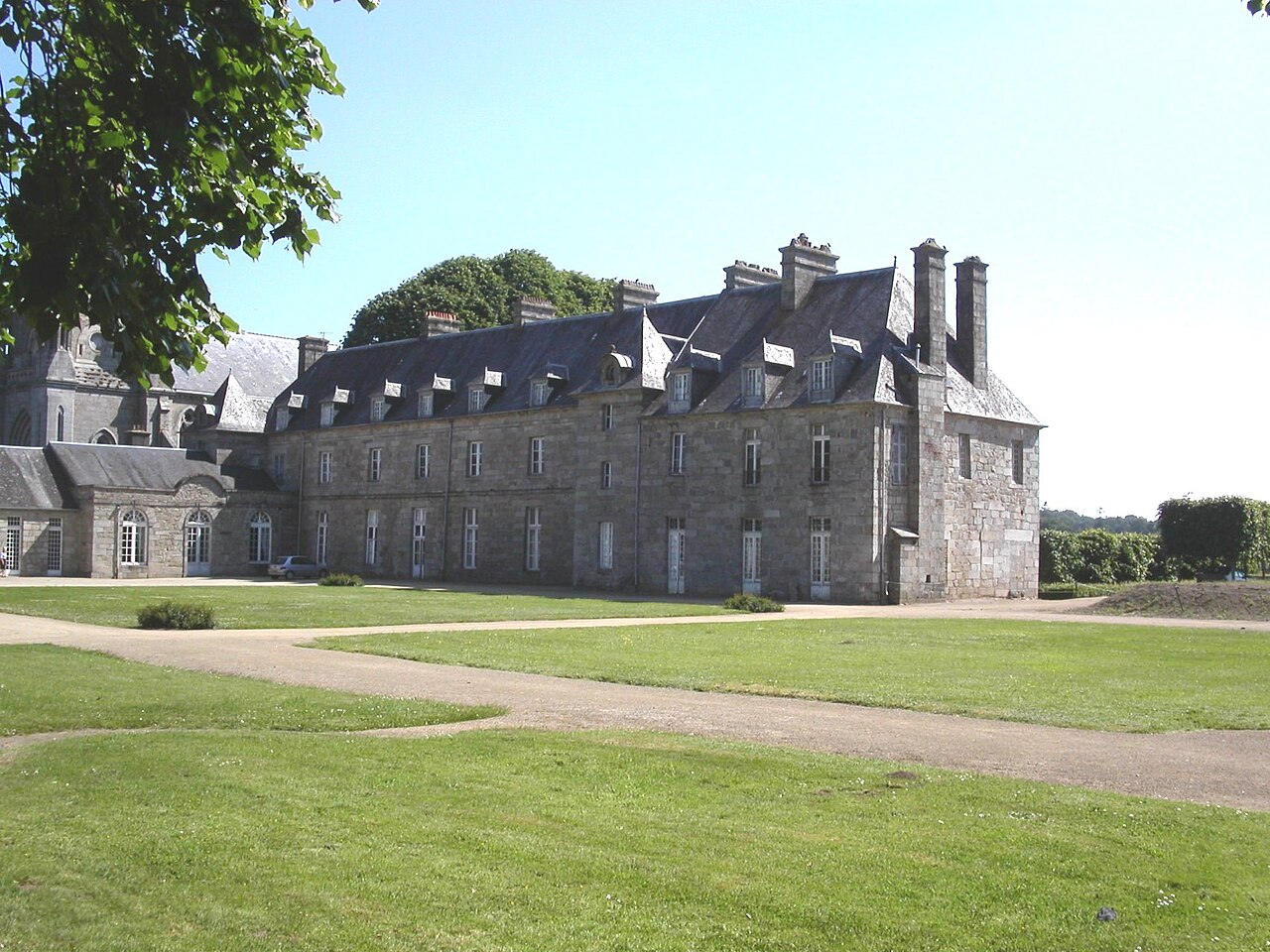
Château de Lorge is a distinguished example of an 18th-century French noble residence, constructed between 1721 and 1740 under the direction of Guy-Nicolas de Durfort, Duke of Lorges. Situated in the commune of L'Hermitage-Lorge in France, this castle represents the architectural and cultural tendencies of the post-Renaissance period in French aristocratic estates.

Historical background and ownership

The Durfort family, a prominent noble lineage in France, commissioned the château as a symbol of their status and influence. Guy-Nicolas de Durfort, a notable figure in the early 18th century, oversaw the construction of the castle, which was intended as a refined country residence rather than a fortified stronghold. The château reflects the social and political climate of the time, emphasizing comfort, elegance, and the display of wealth.

Architectural composition and style

The château is composed of a main building flanked by two annexes, forming a harmonious ensemble typical of the period's aristocratic architecture. The design features symmetrical layouts and classical proportions, characteristic of the post-Renaissance architectural style that succeeded the Baroque period in France.

The façades are marked by refined stonework and delicate decorative elements, including pilasters and cornices, which enhance the château's elegant appearance without the heavy ornamentation seen in earlier Baroque structures. Large windows allow ample natural light into the interiors, emphasizing the shift towards comfort and aesthetic appeal.

Interior features

Inside, the château likely contains spacious reception rooms, ornate fireplaces, and wood-paneled salons reflecting the tastes of the French nobility during the 18th century. While specific interior details are less documented, the overall design would have prioritized both functionality and the display of refined artistic craftsmanship.

Setting and grounds

Set within the rural landscape of L'Hermitage-Lorge, the château's surroundings would traditionally include formal gardens and possibly parkland, typical of French noble estates of the era. These outdoor spaces were designed to complement the château's architecture and provide a setting for leisure and social events.

Preservation and current status

Today, Château de Lorge remains a well-preserved example of early 18th-century noble architecture in the region. Its condition reflects careful maintenance of the structural and decorative elements that define its historical and architectural significance. While it does not serve a defensive purpose, the château stands as a cultural heritage site illustrating the lifestyle and artistic values of the French aristocracy in the post-Renaissance period.

Significance in French architectural history

The château exemplifies the transition in French castle architecture from fortified medieval structures to elegant residences emphasizing comfort and status. It contributes to understanding the evolution of aristocratic dwellings in France during the 18th century, highlighting the shift towards classical restraint and refined aesthetics after the grandeur of the Baroque era.

Frequently asked questions (FAQ)

How do I get to Château de Lorge?
Château de Lorge is located in L'Hermitage-Lorge, France, and can be easily accessed by car or public transport. If you're driving, it's a short distance from major highways, and there is parking available on-site. For public transport, check local bus schedules for routes that stop near the castle.
What is the historical significance of Château de Lorge?
Château de Lorge dates back to the 15th century and is an excellent example of medieval architecture in Brittany. It has served various roles throughout history, including as a noble residence and a military stronghold. Today, it stands as a symbol of the region's rich cultural heritage.
When was Château de Lorge built?
Construction of Château de Lorge began in the late 15th century, with significant renovations occurring in subsequent centuries. The castle showcases architectural styles from the Renaissance period, reflecting the evolution of design over the years. Its historical layers provide insight into the changing trends of French architecture.
Can I take guided tours of Château de Lorge?
Yes, guided tours are available at Château de Lorge, allowing visitors to explore its rich history and stunning architecture. These tours are led by knowledgeable guides who provide insights and answer questions throughout the visit. It's recommended to book in advance, especially during peak tourist seasons.
Why is Château de Lorge a popular destination for visitors?
Château de Lorge attracts visitors due to its stunning architecture, historical significance, and picturesque surroundings. The castle's well-preserved grounds and beautiful gardens offer a peaceful retreat for those looking to explore French history. Additionally, its location near other attractions makes it a convenient stop for tourists.
Is it possible to host events at Château de Lorge?
Yes, Château de Lorge is available for hosting various events, including weddings, corporate meetings, and private gatherings. The castle's enchanting atmosphere and beautiful settings provide a unique backdrop for any occasion. Interested parties should contact the castle administration for more information on availability and services.
What are the opening hours for Château de Lorge?
Château de Lorge is typically open to visitors from 10 AM to 6 PM during the tourist season, which generally runs from spring to autumn. It's advisable to check the official website or contact the castle for specific dates and any seasonal changes in hours. Note that the castle may have reduced hours during the winter months.
What are the ticket prices for visiting Château de Lorge?
Ticket prices for Château de Lorge vary depending on age and group size, with discounts often available for students and seniors. Typically, adult tickets are around €10, while children under 12 may enter for free. Group rates can also be arranged, making it an affordable option for families and tour groups.
When is the best time to visit Château de Lorge?
The best time to visit Château de Lorge is during the spring and early autumn months when the weather is mild and the gardens are in full bloom. Additionally, visiting during weekdays can help you avoid larger crowds. Special events and exhibits may also be scheduled during these times, enhancing the visitor experience.
Are there any nearby attractions to explore while visiting Château de Lorge?
Yes, there are several nearby attractions worth exploring, including local museums, historical sites, and beautiful parks. The surrounding area of L'Hermitage-Lorge offers picturesque landscapes and charming villages to discover. Guests can easily create a full day of sightseeing in this beautiful region of Brittany.

Information

Lowland Castle

Loading map...

Visitor reviews

No reviews yet. Been here? Write the first review and help other travelers!

Write the first review

Visited this castle? Share your experience

Your review helps other travelers and adds first-hand knowledge to our encyclopedia.
Write a review

(5/5)

0/2000 characters

Your review will be visible after admin approval

Nearby castles

9.3 km
Quintin Castle — France castle

Quintin Castle

Quintin, France

Quintin Castle, also known locally as Château de Quintin, is a remarkable historic site located in the town of Quintin in the Côte-d'Armor department of Brittany, France. This castle complex reflects a layered history spanning from the 12th century through the 18th century, showcasing architectural and historical developments shaped by regional conflicts, religious strife, and noble ownership. The origins of Quintin Castle date back to the late 12th century, when a fortified manor was likely constructed by Alain de Penthièvre. This early structure, mentioned as castellum novum in 1202, served as a defensive stronghold and noble residence. The castle was first explicitly referenced in 1204, marking its significance in the medieval landscape of Brittany. The medieval fortress and its evolution In the mid-13th century, around 1249, Geoffrey I of Penthièvre, also known as Geoffrey I Boterel, replaced the initial manor with a more substantial castle. This medieval fortress featured a moat, four fortified gates, curtain walls, and multiple towers, embodying typical defensive architecture of the High Medieval period. The castle’s fortifications underscored its strategic importance in the region. Despite its strength, the castle suffered severe damage during the French Wars of Religion in the late 16th century, particularly at the hands of the troops of Philippe Emmanuel, Duke of Mercœur. The conflict left the castle in ruins, marking the end of its medieval military function. 17th-century reconstruction and religious tensions In 1602, the ruined castle was inherited by Henri I, Duke de La Trémoille, who sold it in 1633 to the Marquis de La Moussaye. The La Moussaye family, being fervent Protestants, faced significant opposition from the Catholic local clergy and authorities. This religious tension led to strict conditions imposed on them, including restrictions on construction, residency duration, and religious practice. Eventually, in 1643, with permission from Anne of Austria, construction of a new castle began. The La Moussaye built foundations, stables, and notably a faceted corner tower. However, due to ongoing religious conflicts and local resistance, construction proceeded slowly and ceased entirely by 1666. Financial difficulties forced the La Moussaye family to sell the unfinished castle to Guy-Aldonce de Durfort, Marshal de Lorge, in 1681. The 17th-century faceted corner tower and stables The faceted corner tower from this period remains a significant architectural feature. Its design reflects the transition from medieval fortifications to more residential and symbolic structures. The stables initially built by La Moussaye were later converted into a manor house by the Durfort family during the 18th century. 18th-century manor and later history Throughout the 18th century, the castle complex evolved into a more comfortable residence. The Durfort family, who adopted the name Lorge, rebuilt the stables into a manor, reflecting the architectural tastes of the period. However, by the late 18th century, the castle was largely abandoned as a noble residence and was occupied only by an intendant and some officers. In 1775, the castle passed into the hands of the Choiseul family through marriage. During the French Revolution, the castle’s 17th-century tower served as a prison, and its cellars were used for manufacturing saltpeter, an important component for gunpowder. Architectural features and current condition Today, the visible remains of Quintin Castle primarily include the 17th-century faceted corner tower and the 18th-century manor house that was converted from the original stables. The subterranean basement galleries beneath the tower are notable features currently undergoing slow restoration to enable public visits. The castle is classified as a high medieval site with later additions from the post-medieval period, embodying a mix of defensive medieval architecture and residential manor elements. Its condition is considered partially preserved and partially restored, reflecting its complex history and ongoing conservation efforts. Gardens and visitor experience Visitors to Quintin Castle can explore its well-maintained gardens and the 18th-century manor. Although the castle remains private property, it is open to the public for a small fee. The full historic castle complex is not yet entirely accessible, but restoration aims to enhance visitor experiences in the future. Historical significance and cultural heritage Quintin Castle stands as a testament to the turbulent history of Brittany, reflecting the region’s medieval military architecture, the impact of the French Wars of Religion, and the evolution of noble residences through the centuries. Its story intertwines with prominent historical figures such as Geoffrey I Boterel, Henri I, Duke de La Trémoille, and Guy-Aldonce de Durfort. The castle’s layered history, from a fortified manor to a Renaissance-style residence and revolutionary prison, provides valuable insights into the social, religious, and political dynamics of the region. Its preservation and ongoing restoration efforts contribute to the cultural heritage of Brittany and offer a rich experience for historians, architects, and visitors alike. Architectural style and typology While originally a high medieval fortress with defensive features such as moats, curtain walls, and towers, the later construction phases introduced elements characteristic of post-medieval manor houses. The castle does not fit neatly into a single architectural style but represents a mixed typology reflecting its historical transformations.

High Medieval (11th–13th c.)
Details
19.1 km

La Touche Castle

Trébry, France

La Touche Castle, also known locally as Château de La Touche or Château de La Touche-Trébry, is situated west of the village of Trébry in the Côtes-d'Armor department of Brittany, France. This Renaissance period castle was constructed at the end of the 16th century by Christophe de la Roche, a knight from a prominent local family. It is believed that the castle incorporates remnants of an earlier medieval structure, reflecting a common practice of adapting older fortifications into more modern residences during the Renaissance. Historical lineage and ownership In 1608, ownership of La Touche Castle passed to the Freslon family through marriage, marking the beginning of a series of noble family transitions. By the mid-17th century, the castle saw a decline in permanent residency and was rarely occupied. In 1748, the estate transferred to the Talhouet-Bonamour family also through marriage. During this period, the castle's use shifted away from a noble residence, and it was eventually repurposed as a granary for local farmers, indicating a significant change in its function and status. Architectural adaptations and division Following the sale of the castle in 1803 to Francois Quéro-Brangolo, the property was inherited by his two daughters in 1819. The daughters' families divided the castle among themselves, resulting in a unique partitioning of the interior. The main stairway and well became shared spaces, while separate parts of the castle were used independently by each family and the leased farm. This unusual division led to architectural modifications, with some rooms converted into passageways to accommodate the segmented use. Unfortunately, this arrangement contributed to the gradual dilapidation of the castle's interior and structural integrity. Restoration efforts and modern use In 1880, Count and Countess Louis de Calan acquired full ownership of La Touche Castle and initiated a significant restoration project. Most of the castle's exterior restoration was completed by the outbreak of World War I, while interior restoration work continued after 1925. These efforts helped preserve the castle's Renaissance architectural features and historical character. Today, La Touche Castle functions as a rural holiday destination offering holiday apartments and a visitable garden during the holiday seasons. Visitors can explore the gardens and experience the castle's peaceful countryside setting. While the castle is not open year-round, it remains an attractive example of a Renaissance rural castle with a layered history reflecting the changing fortunes and uses of French noble estates. Architectural features and style La Touche Castle exhibits typical Renaissance architectural elements with adaptations from earlier medieval structures. The castle's layout includes a central stairway and a well, which historically served as communal features during its divided occupancy. The structure likely features stone masonry characteristic of the period, with defensive elements softened into more residential and aesthetic forms, aligning with Renaissance ideals of harmony and proportion. The castle's rural location north of the D25 road situates it within the pastoral landscape of Brittany, contributing to its charm as a historic country residence. Its transformation from a noble residence to agricultural use and back to a restored heritage site illustrates the dynamic history of many French castles outside major urban centers. Visiting information and cultural significance Although La Touche Castle is primarily used for private holiday accommodation, its gardens are open to visitors during specific seasons, offering a glimpse into the estate's landscape design and historical setting. The castle's layered history, from its 16th-century origins through periods of neglect and restoration, provides insight into the social and architectural evolution of rural French castles. Its preservation and adaptive reuse highlight the importance of maintaining historical sites for cultural tourism and education. Visitors interested in Renaissance architecture, French noble history, and rural heritage will find La Touche Castle a noteworthy destination in the Côtes-d'Armor region.

Renaissance (15th–17th c.)
Details
23.4 km

Castle of Tonquedec

Lannion, France

The Castle of Tonquedec is a remarkable example of a late medieval fortress located near Lannion in the Côtes-d'Armor department of Brittany, France. This 15th-century castle stands as one of the most visited and impressive medieval monuments in the region. Nestled within a lush, green, forested landscape approximately 8.5 kilometers south of the town of Lannion, the castle offers a striking glimpse into the defensive architecture and feudal history of Brittany. The site of the castle has a history that predates the current structure, with an earlier 12th-century fortress originally occupying the location. The present castle was constructed in the 15th century, during a period of heightened military and political tensions in Brittany and France. It was designed primarily as a chateau-fort, a fortified castle combining residential and defensive functions, characteristic of the late medieval period. Architectural features and layout The Castle of Tonquedec is notable for its robust defensive elements, which include thick stone walls, a moat, and towers designed to withstand siege warfare. The castle's layout reflects the typical fortified chateau design of the late Middle Ages, with a central courtyard surrounded by curtain walls and multiple defensive towers. The castle features a prominent keep, which served as the last line of defense and the lord's residence. The keep is strategically positioned to oversee the surrounding countryside and control access to the castle grounds. The fortifications include battlements and arrow slits, allowing defenders to repel attackers effectively. Defensive structures The castle's walls are reinforced with round towers at key points, which provided vantage points for archers and artillery. The moat, which once surrounded the castle, added an additional layer of protection by making direct assault difficult. Access to the castle was controlled through a fortified gatehouse, equipped with a drawbridge and portcullis. Historical significance The Castle of Tonquedec played a significant role in the regional power struggles of Brittany during the late medieval period. It was a stronghold for local lords who were involved in the complex feudal conflicts and alliances of the time. The castle's strategic location near Lannion allowed it to control important routes and assert influence over the surrounding territory. Over the centuries, the castle witnessed various military engagements and changes in ownership. Despite these conflicts, much of the castle's structure has survived, allowing modern visitors to appreciate its historical and architectural value. Preservation and current status Recognized for its cultural and historical importance, the Castle of Tonquedec has been protected as a monument historique since the 19th century. The castle is currently owned by the local commune, which has undertaken efforts to preserve and maintain the site. Today, the castle is open to the public and serves as a popular tourist destination. Its well-preserved walls, towers, and courtyard provide visitors with an immersive experience of medieval fortification architecture. The surrounding forested landscape enhances the castle's picturesque setting, making it a favored spot for both history enthusiasts and nature lovers. Visiting the castle Visitors to the Castle of Tonquedec can explore its extensive grounds, including the defensive walls and towers. Informational displays and guided tours offer insights into the castle's history, construction, and role in Brittany's medieval past. The site is accessible year-round, although opening hours and ticket prices may vary seasonally. The castle's location near Lannion also makes it a convenient stop for those exploring the broader historical and natural attractions of the Côtes-d'Armor region.

Late Medieval (14th–15th c.)
Details

