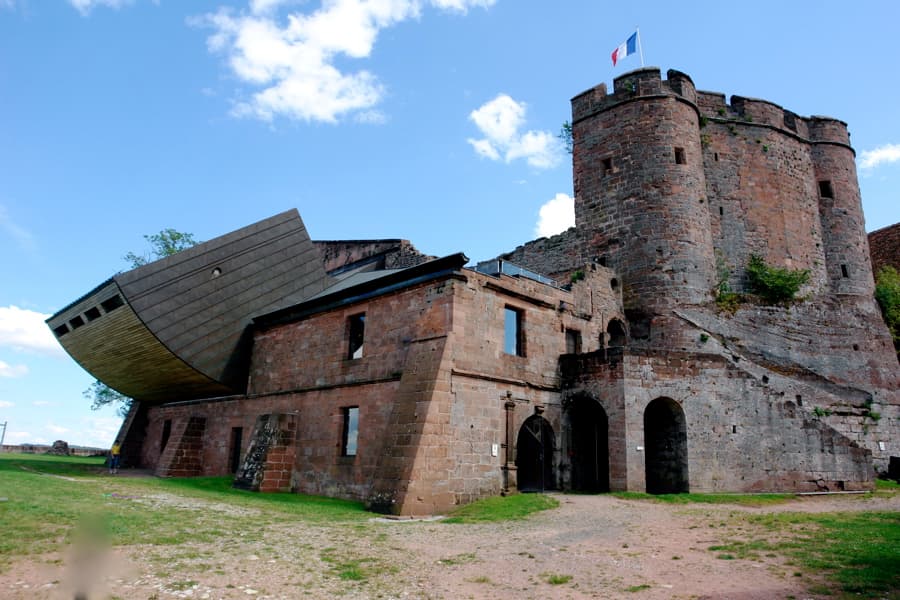
Château de Lichtenberg
The Château de Lichtenberg is a striking example of a high medieval hill castle located in the commune of Lichtenberg, in the historic region of Alsace, France. First documented in 1206 as the residence of the Lords of Lichtenberg, this fortress has witnessed centuries of strategic military importance, architectural evolution, and cultural transformation. Nestled on a commanding hill at about 480 meters elevation in the northern Vosges mountains, it overlooks the surrounding landscape with formidable defensive features that reflect its role within the Holy Roman Empire and later French territory.
Constructed around the 13th century, the castle originally served as a feudal stronghold under the authority of the Bishop of Strasbourg. Its early design focused on defense, featuring a massive donjon (keep) with tall, smooth walls facing a deep, wide defensive ditch, and limited openings to resist siege assaults. The castle's strategic position and robust fortifications made it a key power base for the Lichtenberg family and later their successors, the Counts of Hanau-Lichtenberg.
Historical evolution and military significance
Following the death of Ludwig I of Lichtenberg in 1252, the castle's ownership was divided among multiple family branches, leading to structural modifications to accommodate different households. This division illustrates the castle's dual function as both a military fortress and a noble residence throughout the medieval period.
In the late 16th century, the castle underwent significant transformation under the direction of Phillip IV of Hanau-Lichtenberg. Recognizing the advent of gunpowder artillery, Phillip IV commissioned the renowned architect and military engineer Daniel Specklin, famed for his work on Strasbourg's fortifications, to modernize the castle's defenses. Specklin's renovations incorporated bastions and artillery platforms designed to withstand cannon fire, marking a pivotal shift from medieval to early modern military architecture.
The castle's military role was tested during the Franco-Dutch War when French forces led by Marshal Créquy besieged it in 1678. After an eight-day siege, the castle capitulated and was incorporated into the Kingdom of France, becoming part of the northeastern border defenses. This transition reflects the shifting political landscape of the region during the 17th century.
The Franco-Prussian War of 1870 brought further conflict to Château de Lichtenberg. During an artillery bombardment by Württemberg troops, a devastating fire erupted, destroying much of the fortress and forcing its surrender. Although severely damaged, the castle was recognized as a French national historic monument in 1878. The region of Alsace, including Lichtenberg, remained under German control until the end of World War I, when it was returned to France.
Architectural features and renaissance influences
The castle's architecture reveals a fascinating blend of medieval fortification and Renaissance artistic elements. The early 13th-century donjon stands as a testament to medieval military engineering, with its imposing walls and minimal fenestration designed for defense. The castle's layout includes terraces and grassy courtyards, or baileys, that served both defensive and domestic purposes.
Late 16th-century renovations introduced Renaissance architectural details visible in the castle's pink sandstone facades. These include Italianate elements such as round oculus windows—unusual in Alsace—fluted pilasters, decorative pediments, volutes, and sculpted caryatids. These features illustrate the influence of Renaissance aesthetics on the castle's residential wings, reflecting the cultural aspirations of the Hanau-Lichtenberg counts.
The western residential wing, dating from this period, now houses modern exhibition spaces. Nearby, the former 16th-century weapons arsenal has been repurposed as a large hall for exhibitions and cultural events. A cantilevered auditorium extends from the old structure, supporting performances and gatherings.
Chapel and religious significance
Within the castle grounds is a late Gothic chapel dedicated to the Holy Trinity, which also served the local village community. The chapel features a notable painted depiction of Saint Christopher on the wall facing the keep, underscoring the castle's spiritual role alongside its military function.
Modern restoration and cultural revitalization
Beginning in 1996, architects Andrea Bruno and Jean-Pierre Laubal led a comprehensive restoration campaign to preserve the castle's ruins and adapt the site for cultural use. Their work involved stabilizing stone walls, repointing mortar joints with historically accurate materials, removing invasive vegetation, and adding protective caps to vulnerable masonry.
The restoration also introduced new facilities, including the Renaissance pavilion des Dames, which offers educational workshops, a permanent exhibition in a vaulted chamber, and a cafeteria. The former arsenal, known as the Knights’ building, features a multifunctional wooden ceiling supported by laminated beams, blending historical authenticity with modern architectural techniques.
The castle's entrance area includes a caserne (barracks) converted into a theater with a stage set below ground level to protect against weather, and tiered seating extending to the roofline for audience comfort. Behind the scenes, dressing rooms and administrative offices support cultural programming.
At night, the castle's outer walls are illuminated by the contemporary light installation "Mémoire de jour" by artist Yan Kersalé, which recreates the sensation of daylight for several minutes, merging modern art with the historic environment. Accessibility improvements ensure barrier-free access to exhibition spaces and parts of the castle, allowing a wide range of visitors to experience this heritage site.
These restoration and enhancement efforts earned the castle the "Patrimoines du XXe siècle" label in 2015, now known as "Architecture contemporaine remarquable", recognizing the successful integration of historic preservation with innovative contemporary design.
Visitor experience and cultural events
Today, Château de Lichtenberg functions as a vibrant cultural center managed by the Pays de la Petite-Pierre community of communes. Visitors can explore the castle's medieval and Renaissance architecture, attend exhibitions, and enjoy theatrical performances held in the adapted barracks theater and the cantilevered auditorium.
The castle's location on a hilltop offers panoramic views of the surrounding Vosges landscape, enhancing the visitor experience. Educational programs and workshops held in the pavilion des Dames engage audiences with the site's rich history and architectural heritage.
Overall, Château de Lichtenberg exemplifies the dynamic history of European castles, combining centuries of military, residential, and cultural functions into a single landmark that continues to evolve and inspire.
Frequently asked questions (FAQ)
- How do I get to Château de Lichtenberg?
- Château de Lichtenberg is accessible by car and public transport. If you are driving, it is located about 40 kilometers from Strasbourg, with ample parking available on-site. For public transport, check local train and bus schedules that connect to Lichtenberg.
- What is the historical significance of Château de Lichtenberg?
- Château de Lichtenberg, built in the 12th century, played a crucial role in the defense and governance of the region during the Middle Ages. It served as a residence for the Lords of Lichtenberg and has witnessed various historical events over the centuries. Today, it stands as a symbol of the region's rich heritage.
- When was Château de Lichtenberg built?
- The construction of Château de Lichtenberg began in the 12th century, with significant expansions and renovations occurring in subsequent centuries. Its strategic location on a hilltop provided a commanding view of the surrounding area, enhancing its defensive capabilities. The castle reflects changes in architectural styles over the years.
- Can I take guided tours of Château de Lichtenberg?
- Yes, guided tours of Château de Lichtenberg are available and provide an in-depth look at its history and architecture. Tours are typically conducted in multiple languages, making them accessible to a diverse audience. It's advisable to book in advance, especially during peak tourist seasons.
- Why is the architecture of Château de Lichtenberg noteworthy?
- The architecture of Château de Lichtenberg showcases a blend of medieval and renaissance styles, characterized by its imposing towers and fortified walls. The castle's design reflects its military purpose while also serving as a residence, with beautiful interiors that highlight its historical significance. Visitors can appreciate both the aesthetic and functional aspects of its architecture.
- Is it possible to host events at Château de Lichtenberg?
- Yes, Château de Lichtenberg offers venues for various events, including weddings and corporate gatherings. The stunning backdrop of the castle and its grounds provides a unique setting for memorable occasions. It is recommended to contact the management for availability and specific arrangements.
- What are the opening hours for Château de Lichtenberg?
- Château de Lichtenberg is generally open to visitors from April to October, with specific opening hours varying by season. It is advisable to check the official website for the most current information on opening times and any potential special events. During peak season, the castle may extend its hours to accommodate more visitors.
- What are the ticket prices for visiting Château de Lichtenberg?
- Ticket prices for Château de Lichtenberg are typically affordable, with discounts available for students and seniors. Children under a certain age may enjoy free admission. It's best to check the official website for the latest pricing details and any special offers that may be available during your visit.
- When is the best time to visit Château de Lichtenberg?
- The best time to visit Château de Lichtenberg is during the spring and early fall when the weather is pleasant and the surrounding landscape is beautiful. These seasons often feature fewer crowds, allowing for a more enjoyable experience. Additionally, special events and guided tours are frequently held during these times.
- Are there any nearby attractions to visit along with Château de Lichtenberg?
- Yes, the area surrounding Château de Lichtenberg offers several attractions, including picturesque villages and hiking trails. Visitors can explore local wineries, historical sites, and scenic viewpoints that enhance the overall experience. A visit to nearby towns can complement your castle tour with additional cultural and culinary delights.
Photo gallery

Information
Website
Visit websiteSources & official resources
Verify the information above using these authoritative references.
Loading map...
Visitor reviews
No reviews yet. Been here? Write the first review and help other travelers!
Write the first reviewVisited this castle? Share your experience
Your review helps other travelers and adds first-hand knowledge to our encyclopedia.


