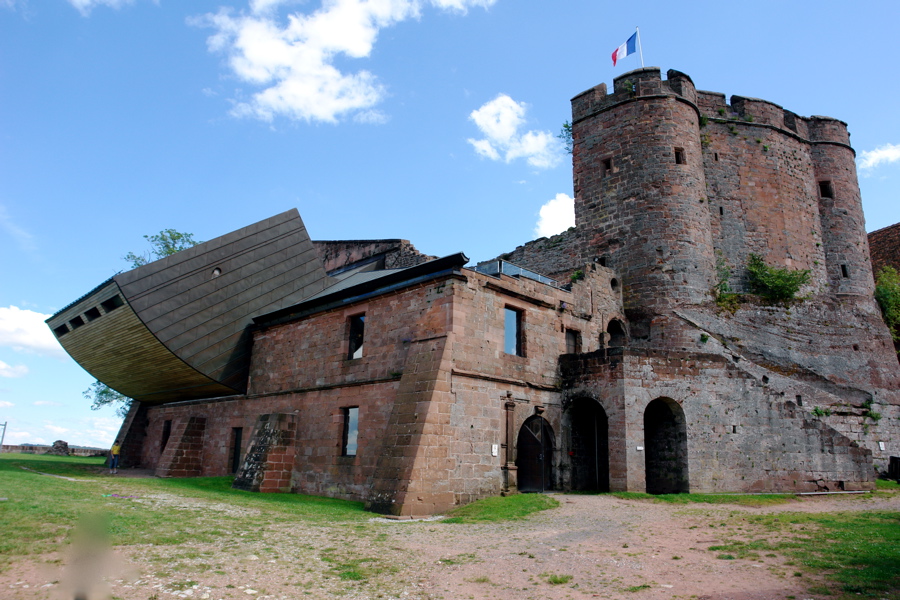
Castle of Lichtenberg
The Castle of Lichtenberg stands as a remarkable example of high medieval military architecture in the Alsace region of France. Constructed at the dawn of the 13th century, this imposing fortress was originally built by the influential Counts of Hanau-Lichtenberg. The castle is first documented in 1206, serving as the residence of the Lords of Lichtenberg before their elevation to counts. Its strategic location on a hill provided commanding views over the surrounding landscape, typical of a hill castle, which allowed for effective defense and control of the region.
Early history and medieval significance
During the Middle Ages, the Castle of Lichtenberg played a central role in regional power dynamics. The Lords of Lichtenberg, later the Counts of Hanau-Lichtenberg, used the castle as a stronghold to assert their influence. Its robust stone curtain walls, fortified gatehouse, and towers exemplify the military architectural practices of the high medieval period. The castle's design focused on defense against siege warfare common in the era, with features such as battlements and arrow slits enabling defenders to repel attackers effectively.
16th-century transformation and military innovations
By the 16th century, the advent of gunpowder and the cannon necessitated significant adaptations to traditional castle fortifications. The Castle of Lichtenberg underwent extensive renovations to withstand artillery attacks. Renowned architect Daniel Specklin, noted for his work on the fortifications of Strasbourg, was commissioned to modernize the castle's defenses. Specklin introduced innovations such as angled bastions and reinforced walls designed to absorb and deflect cannon fire, transforming the medieval fortress into a more formidable Renaissance-era fortress.
Siege and change of control in the 17th century
Despite these upgrades, the castle fell to the forces of Louis XIV in 1678 after an intense eight-day siege during the wars of expansion under the Sun King. The capture of the castle marked its transition from the control of the Hanau-Lichtenberg counts to the Kingdom of France. This event reflected the shifting political landscape of the region, as France consolidated its territories in Alsace.
Damage and decline in the 19th century
The Franco-Prussian War of 1870 brought further turmoil to the castle. German troops bombarded the fortress, leaving it in a state of ruin. Following the war, the castle remained within German territory until the conclusion of the First World War, when Alsace was returned to France. The damage sustained during this period left the castle largely abandoned and in disrepair for many decades.
Restoration and present-day status
In the late 20th century, the Castle of Lichtenberg underwent a comprehensive restoration project during the 1990s. These efforts aimed to stabilize the ruins and restore key architectural elements, allowing the castle to reopen as a cultural and historical site. Today, visitors can explore the well-preserved medieval walls, towers, and the remains of the fortifications, gaining insight into the castle's evolution from a medieval stronghold to a Renaissance fortress. The site also hosts exhibitions and events that celebrate its rich history and architectural heritage.
Architectural features and layout
The castle's layout reflects its dual function as a residence and military fortress. The keep or donjon served as the last line of defense and the living quarters for the lord. Surrounding it are extensive curtain walls punctuated by defensive towers that provided overlapping fields of fire. The entrance is fortified by a robust gatehouse with a portcullis and murder holes, designed to thwart attackers. The castle's position on a rocky hilltop enhances its defensive capabilities, classifying it as a hill castle.
Defensive adaptations for artillery
Specklin's 16th-century modifications introduced angled bastions and thicker walls to absorb cannon fire, a significant evolution from the original medieval design. These features exemplify the transition from medieval to early modern military architecture, highlighting the castle's strategic importance through changing warfare technologies.
Cultural and historical significance
The Castle of Lichtenberg is not only a monument to medieval and Renaissance military architecture but also a symbol of the complex history of Alsace, a region frequently contested between France and Germany. Its survival through centuries of conflict and its restoration underscore its importance as a heritage site. The castle offers valuable insights into the feudal society, military innovations, and political shifts that shaped the region.
Visitor experience
Open to the public, the castle provides an immersive experience with guided tours, educational exhibits, and panoramic views of the surrounding countryside. Its well-preserved structures and interpretive displays make it a significant destination for those interested in medieval history, architecture, and the Franco-German heritage of Alsace.
Frequently asked questions (FAQ)
- How do I get to the Castle of Lichtenberg?
- The Castle of Lichtenberg is located in the town of Lichtenberg, France. You can reach it by car, with ample parking available nearby, or by public transportation from major cities in the region. The nearest train station is a short bus ride away, making it accessible for visitors.
- What is the historical significance of the Castle of Lichtenberg?
- The Castle of Lichtenberg, built in the 13th century, is a significant example of medieval military architecture in France. It served as a fortress and residence for the local nobility, and its history is intertwined with the region's political and military developments. Today, it stands as a testament to the architectural styles and historical events of its time.
- When was the Castle of Lichtenberg built?
- Construction of the Castle of Lichtenberg began in 1250, and it was completed in the late 13th century. Over the centuries, it has undergone various renovations and restorations, reflecting different architectural styles and historical periods. Its rich history is preserved through the castle's structure and the artifacts displayed within.
- Can I take guided tours of the Castle of Lichtenberg?
- Yes, guided tours are available for visitors interested in learning more about the castle's history and architecture. These tours are led by knowledgeable guides who provide insights into the castle's significance and various features. It is recommended to check the schedule and book in advance during peak tourist season.
- Why is the Castle of Lichtenberg a popular tourist destination?
- The Castle of Lichtenberg attracts visitors due to its stunning architecture, rich history, and breathtaking views of the surrounding landscape. Its well-preserved structures and informative exhibitions make it an ideal destination for history enthusiasts and families alike. The castle also hosts various cultural events and festivals throughout the year.
- Is it possible to visit the Castle of Lichtenberg year-round?
- Yes, the Castle of Lichtenberg is open for visitors throughout the year, although hours may vary by season. It is advisable to check the official website for specific opening times and any seasonal closures. Visiting during spring and summer offers the chance to explore the beautiful gardens and outdoor areas.
- What are the ticket prices for the Castle of Lichtenberg?
- Ticket prices for the Castle of Lichtenberg vary depending on age and group size, with discounts available for students and seniors. Children under a certain age may enter for free, making it an affordable family destination. It’s recommended to purchase tickets online to avoid long lines on busy days.
- What are the best times to visit the Castle of Lichtenberg?
- The best times to visit the Castle of Lichtenberg are during the spring and fall when the weather is mild and the gardens are in full bloom. Summer is also popular, but it can be crowded, especially on weekends. Visiting during weekdays may offer a more leisurely experience.
- Are there any nearby attractions to the Castle of Lichtenberg?
- Yes, there are several nearby attractions, including beautiful hiking trails and charming villages that showcase regional culture and history. The surrounding area features other historical sites, museums, and local markets that enhance your visit. Exploring these nearby locations can provide a richer understanding of the region.
Information
Website
Visit websiteSources & official resources
Verify the information above using these authoritative references.
Loading map...
Visitor reviews
No reviews yet. Been here? Write the first review and help other travelers!
Write the first reviewVisited this castle? Share your experience
Your review helps other travelers and adds first-hand knowledge to our encyclopedia.