Château de La Roche-Guyon
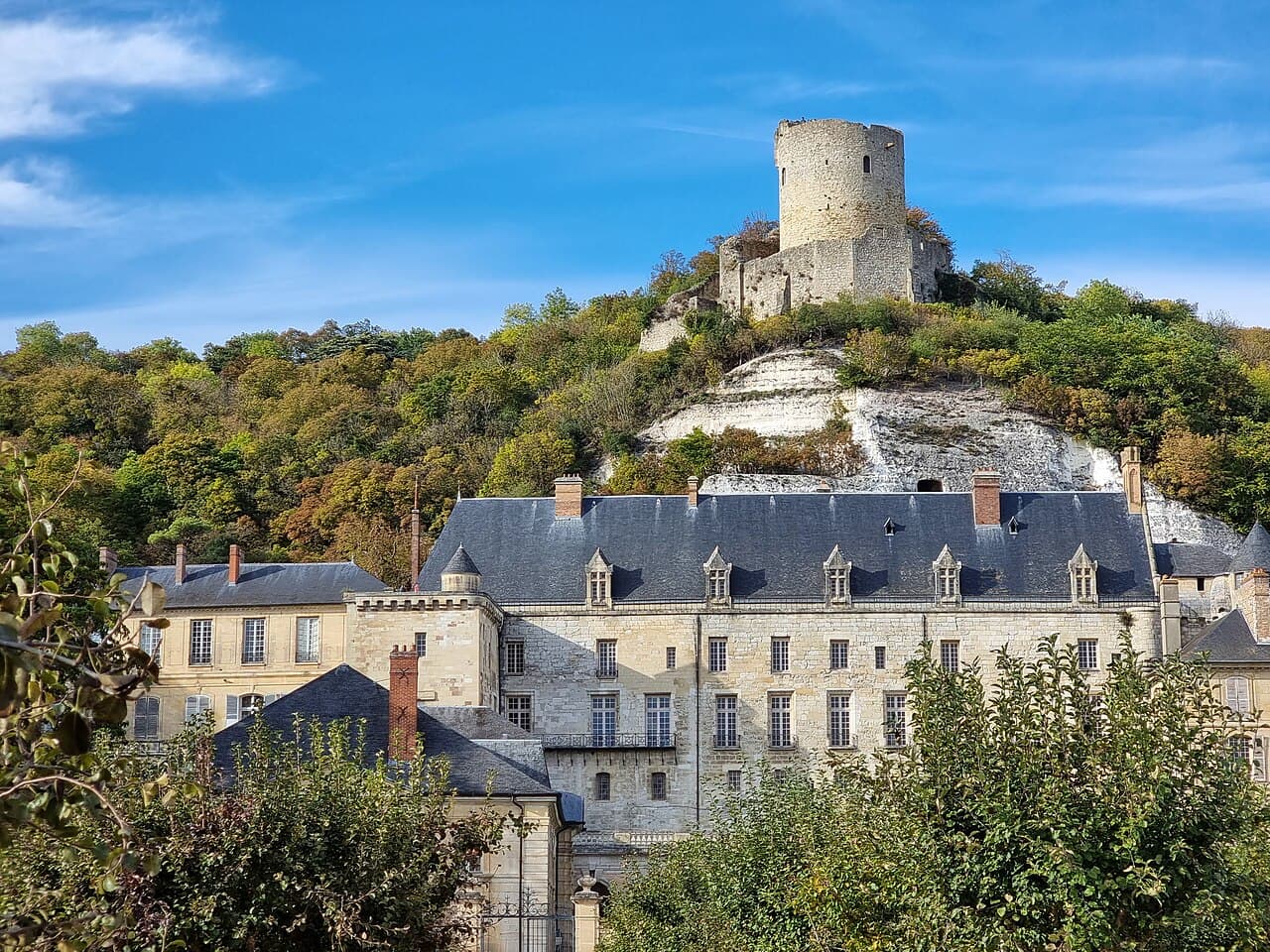
Château de La Roche-Guyon stands as a remarkable example of a high medieval hill castle carved into the limestone cliffs overlooking the Seine River in Normandy, France. Originally constructed in the 12th century, this fortress was strategically positioned to control an important river crossing and to guard the border established by the Treaty of Saint-Clair-sur-Epte in 911, which delineated the frontier between Normandy and the Kingdom of France. The castle's imposing circular donjon, rising approximately 35 meters tall with walls up to three meters thick, remains one of the most significant surviving medieval keeps in the region.
The castle complex is divided into two main sections: the upper castle, featuring the massive donjon and concentric defensive walls, and the lower castle, which evolved from a fortified manor house into an elegant aristocratic residence by the 18th century. The connection between the two parts is marked by a unique staircase of about 100 steps, hewn directly into the cliff face, blending natural geology with medieval military architecture.
Medieval origins and strategic importance
The origins of Château de La Roche-Guyon trace back to the late 11th century when it was established as a fortress to secure the Seine River crossing and protect the Norman frontier. The La Roche family controlled the castle from the 10th through the 15th centuries, with Guy de La Roche notably constructing the upper fortress and donjon around 1180-1200. The family wielded significant regional power, including rights to levy tolls on river traffic and exclusive hunting privileges granted by King Philip Augustus in 1185.
During the Hundred Years’ War, the castle endured a six-month siege by English forces in 1419, leading to its occupation until 1449. The fortress's military significance was underscored by its robust fortifications, including two concentric defensive walls known as chemises, and a triangular bastion reinforcing the most vulnerable northern approach.
The transition to aristocratic residence
Following the war, the castle passed through several noble families, including the Silly family in 1474 and later the Rohan-Chabot family in 1628. The marriage of Jeanne-Charlotte de Plessis-Liancourt to François VII de La Rochefoucauld in 1669 brought the estate into the La Rochefoucauld family, who transformed the castle significantly during the 18th century. They introduced baroque architectural elements such as grand entrance gates, elegant pavilions, and stables designed by architect Louis Villars, reflecting the Enlightenment's aesthetic and intellectual currents.
Architectural features and expansions
The upper castle retains its medieval fortress character with the massive donjon, thick walls, and defensive chemises. The donjon itself is a masterpiece of military architecture, with its height and wall thickness designed to withstand siege warfare. The triangular projection on the northern side enhanced its defensive posture against attacks.
The lower castle evolved into a residential complex with significant 18th-century additions. The stables, inspired by those at Chantilly, feature a sculpted rearing horse by Jamay above the central gate, exemplifying the period's artistic craftsmanship. The Villars and Enville pavilions added to the eastern and western courtyards respectively, along with a small observatory built in 1741, illustrate the integration of scientific interests and aristocratic lifestyle.
The troglodytic theatre and gardens
One of the castle's most unique features is the troglodytic theatre, carved directly into the rock beneath the grand salon in 1768. This intimate venue, seating 40 to 50 spectators, retains original stage machinery and decorations, offering a rare glimpse into the cultural life of the aristocracy during the Enlightenment. Despite challenges from humidity and wood-boring insects, the theatre remains a significant heritage asset.
The extensive French formal kitchen garden or potager, covering about three hectares, reflects 18th-century horticultural science and design. Divided into four symmetrical squares with triangular beds and central water tanks for irrigation, the garden contained approximately 675 fruit trees. Its restoration in the 21st century continues to honor the original Enlightenment principles of order and utility.
Historical events and modern significance
The castle's history is marked by significant events, including the deliberate reduction of the donjon's height during the French Revolution in 1793 to prevent royalist use. The estate remained in the La Rochefoucauld family despite political upheavals and succession challenges throughout the 19th century.
During World War II, Château de La Roche-Guyon gained renewed strategic importance as the headquarters of German Field Marshal Erwin Rommel from February 1944. The castle's natural underground galleries were expanded and fortified to serve as munitions storage capable of supporting a large military force. Allied bombing raids in August 1944 caused significant damage to the castle's structures, including collapsed roofs and breaches in the main buildings.
Post-war restoration and cultural legacy
Restoration efforts beginning in 1946 have focused on repairing the donjon, chapel, stables, and other buildings, alongside waterproofing and structural stabilization. The château was officially designated a historic monument in 1943 and opened to the public in 1994 under cultural management. Visitors today can appreciate original tapestries such as the Gobelins “Esther” series and period furniture that reflect the castle's rich history.
Château de La Roche-Guyon has inspired numerous artists and writers, including painters Hubert Robert, Claude Monet, and Georges Braque, as well as literary figures like Lamartine and Victor Hugo. Its blend of medieval military architecture, aristocratic refinement, and wartime history makes it a unique cultural landmark in Normandy.
Frequently asked questions (FAQ)
- How do I get to Château de La Roche-Guyon?
- Château de La Roche-Guyon is accessible by car and public transport. The nearest train station is in Vétheuil, from where you can take a short bus ride or taxi. There is also parking available near the castle for those driving.
- What is the historical significance of Château de La Roche-Guyon?
- Château de La Roche-Guyon dates back to the 12th century and played a vital role during various historical events, including the Hundred Years' War. It was strategically located to oversee the Seine river and served as a stronghold for both the French and English armies. Today, it is recognized as a historical monument and a symbol of medieval architecture.
- When was Château de La Roche-Guyon built?
- The construction of Château de La Roche-Guyon began in the 12th century, though it underwent numerous renovations and expansions over the centuries. The castle exhibits a blend of architectural styles, reflecting its long history and the various periods of restoration it has undergone. Its dramatic cliffside location adds to its historical charm.
- Can I take guided tours of Château de La Roche-Guyon?
- Yes, guided tours are available and highly recommended to fully appreciate the castle's rich history and architecture. These tours often include access to areas that may be restricted to the general public. Audio guides are also available for those who prefer to explore at their own pace.
- Why is Château de La Roche-Guyon a popular tourist destination?
- Château de La Roche-Guyon attracts visitors for its stunning views of the Seine Valley and its remarkable history. The blend of natural beauty and architectural grandeur makes it a picturesque location for sightseeing and photography. Additionally, the castle hosts various cultural events and exhibitions throughout the year, adding to its appeal.
- Is it possible to visit Château de La Roche-Guyon year-round?
- Yes, Château de La Roche-Guyon is open to visitors year-round, although opening hours may vary seasonally. It’s best to check the official website for the most current hours and any special events that may affect accessibility. Visiting during spring and fall offers a beautiful backdrop of changing foliage.
- What are the ticket prices for Château de La Roche-Guyon?
- Ticket prices vary depending on age and the type of tour chosen. Discounts are often available for students and groups, while children under a certain age may enter for free. It's advisable to purchase tickets in advance during peak tourist seasons to ensure availability.
- What are the opening hours for Château de La Roche-Guyon?
- Château de La Roche-Guyon typically opens from 10 AM to 6 PM, with extended hours during the summer months. However, it's important to check the castle's official website for any changes to hours and possible closures due to events or maintenance. Planning your visit in advance can enhance your experience.
- Are there any nearby attractions to visit while at Château de La Roche-Guyon?
- Yes, the surrounding area is rich with attractions, including the charming village of La Roche-Guyon itself, which offers quaint shops and cafes. The nearby Giverny, home to Monet's Garden, is also a popular destination for art lovers. Exploring these sites can make for a delightful day trip.
Photo gallery

Information
Website
Visit websiteSources & official resources
Verify the information above using these authoritative references.
Loading map...
Visitor reviews
No reviews yet. Been here? Write the first review and help other travelers!
Write the first reviewVisited this castle? Share your experience
Your review helps other travelers and adds first-hand knowledge to our encyclopedia.