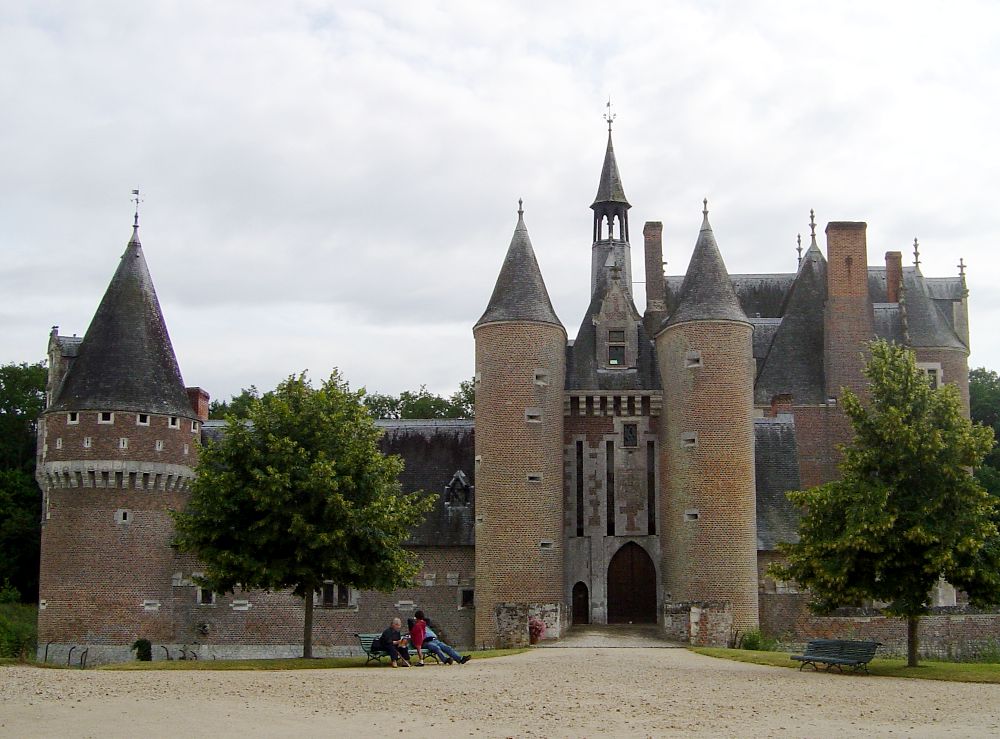
Château de La Ferté-Imbault
The Château de La Ferté-Imbault stands as a prominent example of Renaissance architecture in the heart of the Loire Valley, France. Known as the largest brick château in Sologne and among the region's oldest, its roots trace back to a medieval fortress that was extensively rebuilt in the 16th century. This château served as the ancestral seat of the House of Estampes for over four centuries, reflecting the historical continuity and aristocratic heritage of the area.
Architectural features and layout
The château's design is characterized by a rectangular plan fortified by four corner towers, a typical feature of Renaissance military architecture adapted for residential use. The façades display exquisite intricate brickwork combined with stone detailing, including historical medallions that embellish the exterior walls. Surrounding the main building are expansive formal gardens and tree-lined alleys that enhance the château’s aesthetic appeal and offer a glimpse into Renaissance landscape design.
A moat fed by the nearby Sauldre River encircles the château, providing both defense and a scenic water feature. The estate also includes several outbuildings, such as stables and pavilions, which historically supported a cavalry unit under the command of the Maréchal d’Estampes. These auxiliary structures were restored in the 17th century, reflecting the château’s evolving military and residential functions.
Historical significance and ownership
Originally a medieval fortress, the château was transformed during the Renaissance period into a residence that balanced defense and comfort. The House of Estampes maintained ownership for four centuries, during which the château witnessed numerous historical events. It hosted notable figures such as Joan of Arc and King Louis XIII, linking the site to key moments in French history.
In the 18th century, the château became associated with the Enlightenment through connections to Madame Geoffrin, a prominent salon hostess who influenced intellectual circles. The estate originally covered thousands of hectares, including farms and parishes, illustrating its importance as a feudal and economic center in the region.
Later modifications and restorations
During the 19th century, the château underwent modernization under English ownership, which introduced new elements while respecting the original Renaissance style. However, it suffered significant damage during World War II, reflecting the turbulent history of the region in the 20th century.
Restoration efforts in the later 20th century aimed to preserve the château’s architectural integrity and historical value. Today, it remains privately owned and opens to visitors during the summer months, offering access to its beautifully maintained interiors, gardens, and parklands.
Landscape and natural environment
The château is set within an extensive estate featuring formal gardens, a canal, and diverse parklands that support a variety of wildlife. The landscape design complements the château’s architecture, providing a harmonious blend of nature and built environment typical of French Renaissance estates.
The presence of the Sauldre River not only contributes to the château’s defensive moat but also enriches the local ecosystem, making the estate a site of both historical and natural interest.
Frequently asked questions (FAQ)
- When was Château de La Ferté-Imbault originally built?
- The château was originally a medieval fortress but was rebuilt during the 16th century Renaissance period.
- What architectural style characterizes Château de La Ferté-Imbault?
- It is primarily Renaissance in style, featuring a rectangular layout with four corner towers and intricate brickwork façades.
- Is Château de La Ferté-Imbault open to the public?
- Yes, the château is privately owned but opens to visitors during the summer months, allowing access to its gardens and interiors.
- What notable historical figures are associated with Château de La Ferté-Imbault?
- Notable figures include Joan of Arc, King Louis XIII, and Madame Geoffrin, reflecting the château's rich historical connections.
- What features surround the château?
- The estate includes formal gardens, a canal, tree-lined alleys, a moat fed by the Sauldre River, and parklands with diverse wildlife.
Information
Sources & official resources
Verify the information above using these authoritative references.
Loading map...
Visitor reviews
No reviews yet. Been here? Write the first review and help other travelers!
Write the first reviewVisited this castle? Share your experience
Your review helps other travelers and adds first-hand knowledge to our encyclopedia.