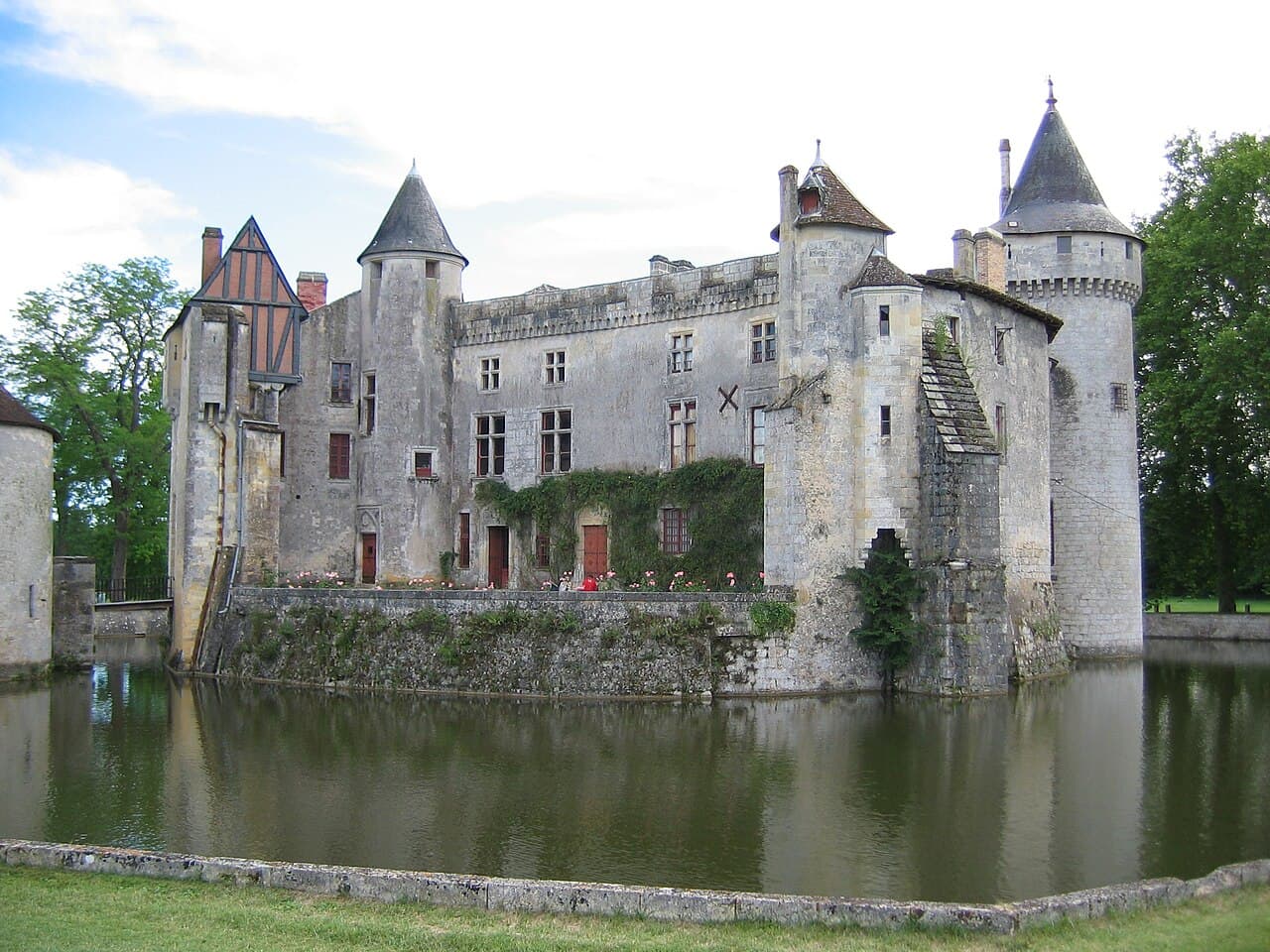
Château de La Brède
The Château de La Brède stands as a remarkable example of a 14th-century Gothic fortress nestled in the commune of La Brède, within the Gironde department of southwestern France. Constructed beginning in 1306 on the site of an earlier fortification, this castle has maintained its medieval character despite centuries of modifications. It is uniquely surrounded by water-filled moats dating from the 16th century, crossed by three wooden bridges, which enhance its defensive features and historic ambiance.
Set amidst the Bordelais vineyards, the château is enveloped by extensive formal gardens, including a French-style garden currently undergoing restoration and an 18th-century English garden within a vast wooded park of approximately 150 hectares. The park’s landscape features a broad avenue lined with majestic plane trees leading to a farmhouse and vegetable garden, while ornamental plants such as boxwood, viburnum, forsythia, and magnolias flourish alongside native and introduced trees like American oak, hornbeam, acacia, and chestnut. The eastern façade is graced by white climbing roses, and the courtyard is adorned with pink roses, contributing to the estate’s timeless charm.
Historical significance and ownership lineage
The château’s history is deeply intertwined with the region’s medieval nobility and intellectual heritage. Initially built by French noble families in the late medieval period, it was owned by the La Lande family from the 11th century until 1502, then passed to the L’Isle family until 1577. Subsequently, the du Pesnel family held the estate until 1686. Through the marriage of Jacques de Secondat to Marie-Françoise Du Pesnel, the property entered the Montesquieu family, who retained ownership for over three centuries.
The château is most famously associated with Charles-Louis de Secondat, Baron de Montesquieu, born there in 1689. Montesquieu, a towering figure of the Enlightenment, composed his seminal works, including De l’esprit des lois, within these walls. The château remained in the Montesquieu lineage until 2004, when the last direct descendant, Countess Jacqueline de Chabannes, bequeathed the property to a private foundation bearing her name.
Architectural features and preservation
The Gothic architecture of Château de La Brède is characterized by its robust fortress design, featuring thick stone walls, battlements, and defensive moats. Despite later modifications, the castle retains its military character, offering visitors a vivid impression of medieval fortification techniques. The water-filled moats, added in the 16th century, are a distinctive feature that enhances both the castle’s defense and aesthetic appeal.
Inside, the château preserves key historical interiors, notably the bedroom and former library of Montesquieu, maintained in their 18th-century state. While the original books have been relocated to the municipal library in Bordeaux, the furniture, including Montesquieu’s iconic canopy bed, remains intact with upholstery preserved by his descendants. Visitors can appreciate the harmonious integration of the château with its natural surroundings through multiple vantage points on the first floor, overlooking gardens and the surrounding landscape.
Gardens and parkland
The château’s extensive grounds are a significant aspect of its historical and cultural value. The English garden reflects 18th-century landscaping trends, emphasizing naturalistic design within the larger wooded park. The ongoing restoration of the French formal garden aims to revive the castle’s historic horticultural heritage, complementing the architectural grandeur of the fortress.
Cultural heritage and modern stewardship
Recognized as a historic monument since 1951, with the entire estate receiving this status in 2008, Château de La Brède is a protected site of national importance. The Fondation Jacqueline de Chabannes has managed the property since 2004, committing to extensive restoration projects initiated in 2008. These efforts, supported by regional cultural authorities, have ensured the château’s preservation and accessibility to the public.
The château’s legacy as the birthplace and lifelong home of Montesquieu adds profound intellectual and cultural significance. Its preservation allows visitors to connect with the Enlightenment era and the life of one of France’s most influential philosophers. The castle’s combination of medieval military architecture, landscaped gardens, and historical interiors offers a comprehensive glimpse into French heritage across centuries.
Visiting information
The château is open to visitors from Easter through November, providing access to its historic rooms, gardens, and exhibitions related to Montesquieu’s life and works. While the original library books are housed in Bordeaux, the preserved interiors and furniture offer an authentic experience of 18th-century aristocratic life. Guided tours and educational programs enrich the visitor experience, emphasizing the castle’s architectural features and historical context.
Frequently asked questions (FAQ)
- What is the historical significance of Château de La Brède?
- Château de La Brède is renowned for its association with the philosopher Montesquieu, who lived there in the 18th century. The castle played a crucial role in the development of his ideas on liberty and governance, making it a significant cultural landmark in France.
- When was Château de La Brède built?
- Construction of Château de La Brède began in the 14th century and was completed in the 19th century. Its architecture showcases various styles that evolved over the centuries, reflecting the rich history and artistic trends of the periods.
- Is it possible to visit Château de La Brède?
- Yes, Château de La Brède is open to the public for tours. Visitors can explore the beautiful gardens and the interior, which houses various artifacts related to Montesquieu and the castle's history.
- What are the opening hours for Château de La Brède?
- Château de La Brède is typically open to visitors from Tuesday to Sunday, with specific hours depending on the season. It is recommended to check the official website for the most current opening times before planning your visit.
- Can I purchase tickets in advance for Château de La Brède?
- Yes, tickets for Château de La Brède can be purchased in advance online, which is highly recommended during peak tourist seasons. This helps ensure entry and allows visitors to skip the lines upon arrival.
- What is the best time to visit Château de La Brède?
- The best time to visit Château de La Brède is during the spring and early autumn when the weather is pleasant, and the gardens are in full bloom. Additionally, these seasons tend to be less crowded than the summer months.
- How accessible is Château de La Brède for visitors with disabilities?
- Château de La Brède strives to be accessible to all visitors, with facilities in place to accommodate those with mobility challenges. However, it is advisable to contact the castle in advance to confirm specific accessibility options available during your visit.
- What nearby attractions can I visit while at Château de La Brède?
- While visiting Château de La Brède, you can explore the nearby vineyards and enjoy wine tasting experiences that the region is famous for. Additionally, the town of La Brède itself offers charming shops and local dining options to enhance your trip.
- How much does it cost to visit Château de La Brède?
- Ticket prices for Château de La Brède vary, with discounts often available for students, seniors, and groups. It is best to check the official website for the latest pricing information and any special promotions that may be offered.
Photo gallery

Information
Website
Visit websiteSources & official resources
Verify the information above using these authoritative references.
Loading map...
Visitor reviews
No reviews yet. Been here? Write the first review and help other travelers!
Write the first reviewVisited this castle? Share your experience
Your review helps other travelers and adds first-hand knowledge to our encyclopedia.



