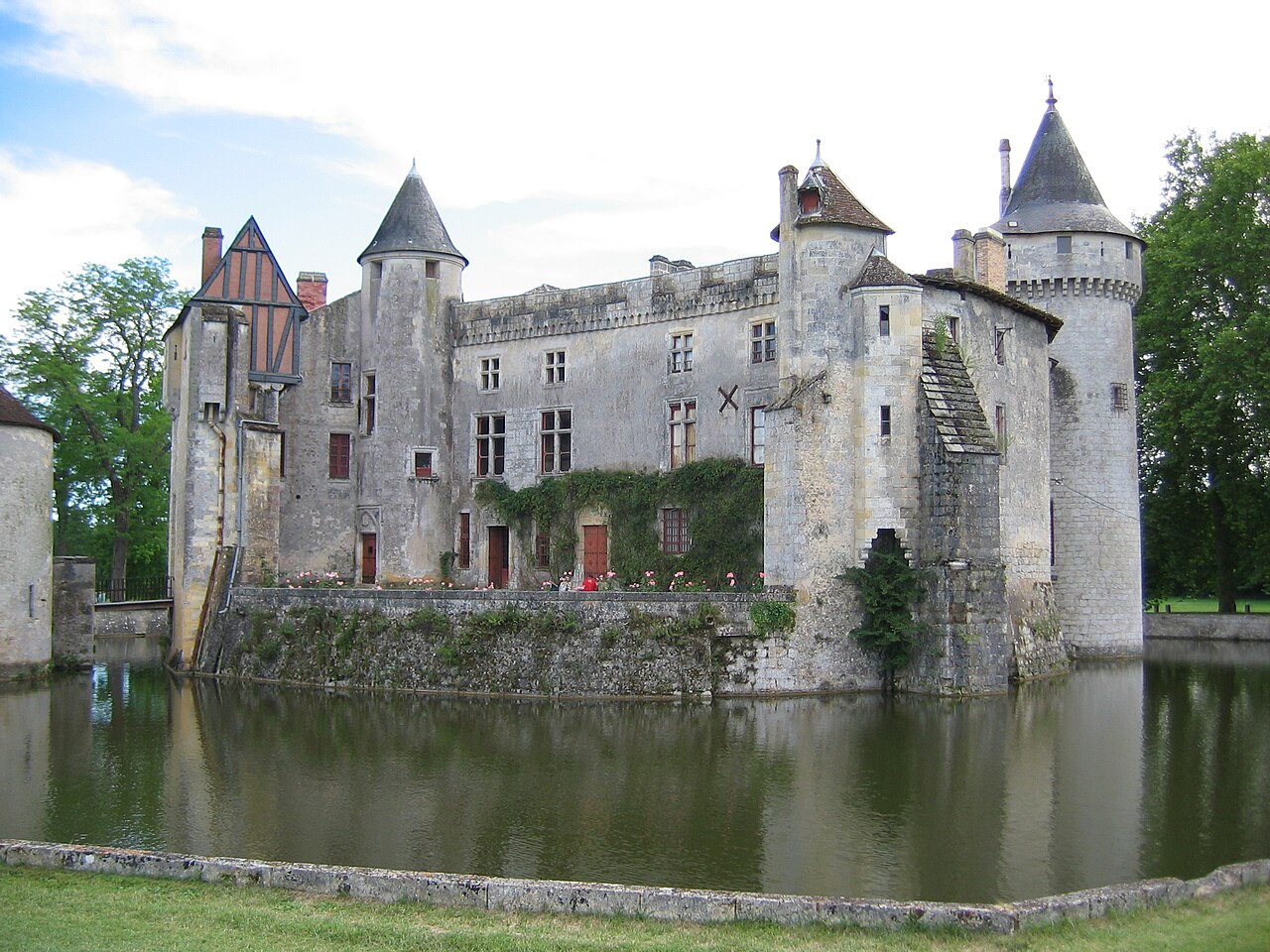
Castle of la Brede
The Castle of la Brede stands as a remarkable example of a late medieval Gothic fortress in the Gironde region of southwestern France. This castle is historically significant not only for its architectural features but also as the lifelong home of the eminent political philosopher Montesquieu. Born at the castle in 1689, Montesquieu lived and wrote many of his influential works here, making the estate an important cultural and intellectual landmark.
Early history and medieval origins
The site of the Castle of la Brede has a history dating back to at least the 11th century. The earliest recorded mention of the castle appears in 1079, describing a duel involving the lord of La Brede and Hernandes, a champion of the Navarre army. At this time, the castle was likely a wooden fortification constructed on an artificial mound or motte, typical of early medieval defensive structures. This initial wooden stronghold was probably destroyed during military conflicts in the region.
By 1306, a significant transformation began with the construction of a more durable stone castle in the Gothic architectural style. This new fortress was designed with a large square courtyard surrounded by water-filled moats, enhancing its defensive capabilities. The castle's robust design reflected the turbulent period of the Hundred Years War, during which it sustained damage from French artillery fire.
Fortifications and architectural evolution
In response to the damage and ongoing military threats, the castle underwent further fortification. A third moat was added, connecting to the existing two, creating an even more formidable defense system. The castle's walls and moats formed a protective barrier that was both functional and imposing.
During the late 16th century, the castle's role shifted from purely military to residential. Major renovations transformed the fortress into an elegant residence. The walls surrounding the moats were connected to form a large lake encircling the castle, and only three drawbridges remained in use. This period marked the castle's final external form, which has remained largely unchanged since then.
Montesquieu's influence and estate improvements
Montesquieu cherished the Castle of la Brede and made significant contributions to the estate, although he made few alterations to the castle structure itself. His most notable improvements were in the surrounding landscape. Inspired by his travels to England, Montesquieu introduced an English garden style around the castle, a departure from traditional French formal gardens. He also installed a modern irrigation system, enhancing the estate's agricultural productivity and aesthetic appeal.
Cultural heritage and preservation
Over the centuries, successive generations of Montesquieu's family added artistic decorations and furnishings to the castle's interior. Despite these changes, there was a consistent effort to preserve the memory and legacy of Montesquieu. The castle contains important historical rooms such as Montesquieu's library and bedroom, preserved as they appeared in the 18th century, offering visitors a unique glimpse into the philosopher's life.
The last private owner, the Countess of Chabannes, Montesquieu's great-granddaughter, passed away in 2004 and bequeathed the castle to a foundation bearing her name. Since then, the Castle of la Brede has become a site of cultural interest and a popular tourist destination, attracting visitors keen to explore its rich history and architectural beauty.
Architectural features and layout
The castle's Gothic architecture is characterized by its imposing stone walls, fortified towers, and the extensive moat system. The square courtyard at the center of the castle is surrounded by residential and defensive buildings, typical of medieval fortresses designed for both habitation and protection. The water-filled moats, enhanced in the late medieval period, are a distinctive feature that contributed to the castle's defensive strength.
The transformation from a purely defensive fortress to a noble residence is evident in the refined exterior and the landscaped grounds. The creation of the large lake from the connected moats added a picturesque quality to the castle's surroundings, blending functionality with aesthetic considerations.
Visitor experience and significance today
Today, the Castle of la Brede offers visitors a rich historical experience that combines medieval military architecture with Enlightenment intellectual heritage. Tourists can explore the castle's well-preserved rooms, including Montesquieu's personal quarters, and enjoy the scenic gardens inspired by English landscaping traditions.
The castle serves not only as a monument to medieval fortification techniques but also as a tribute to one of France's most influential thinkers. Its preservation as a cultural site ensures that the legacy of Montesquieu and the architectural heritage of the late medieval period remain accessible to the public.
Frequently asked questions (FAQ)
- What are the opening hours for the Castle of la Brede?
- The Castle of la Brede is open to visitors from April to October, typically from 10 AM to 6 PM. During the off-peak months, the hours may vary, so it’s advisable to check the official website before planning your visit.
- How do I get to the Castle of la Brede?
- The Castle of la Brede is conveniently located just 20 kilometers from Bordeaux. Visitors can reach the castle by car, with ample parking available, or by taking public transportation to La Brede and walking a short distance to the castle.
- Can I take guided tours of the castle?
- Yes, guided tours are available at the Castle of la Brede, providing visitors with in-depth insights into its history and architecture. These tours are often conducted in English and French, and it is recommended to book in advance to secure a spot.
- When was the Castle of la Brede built?
- The Castle of la Brede was constructed in the 13th century, making it a significant example of medieval architecture in France. It was later renovated in the 17th century, which added to its historical and architectural importance.
- Is it possible to explore the gardens at the Castle of la Brede?
- Absolutely! The castle's gardens are a beautiful feature that visitors can explore. They enhance the overall experience, offering a serene environment to enjoy the stunning landscape surrounding the castle.
- What is the historical significance of the Castle of la Brede?
- The Castle of la Brede is known for being the birthplace of the famous philosopher Montesquieu. It holds great historical importance as it reflects the cultural and intellectual heritage of the region, showcasing the life and times of one of France's prominent thinkers.
- What are the ticket prices for visiting the Castle of la Brede?
- Ticket prices for the Castle of la Brede are generally around €8 for adults, with discounts available for students and children. It’s advisable to check the official website for any seasonal promotions or special event pricing.
- When is the best time to visit the Castle of la Brede?
- The best time to visit the Castle of la Brede is during the spring and early autumn months when the weather is pleasant and the gardens are in full bloom. Additionally, these times tend to be less crowded, allowing for a more enjoyable experience.
- Are there any nearby attractions to visit while at the Castle of la Brede?
- Yes, there are several attractions near the Castle of la Brede, including the scenic vineyards of the Bordeaux region and the charming town of La Brede itself. Visitors can enjoy wine tours, local markets, and beautiful walking paths that enhance their trip to the area.
Information
Website
Visit websiteSources & official resources
Verify the information above using these authoritative references.
Loading map...
Visitor reviews
No reviews yet. Been here? Write the first review and help other travelers!
Write the first reviewVisited this castle? Share your experience
Your review helps other travelers and adds first-hand knowledge to our encyclopedia.