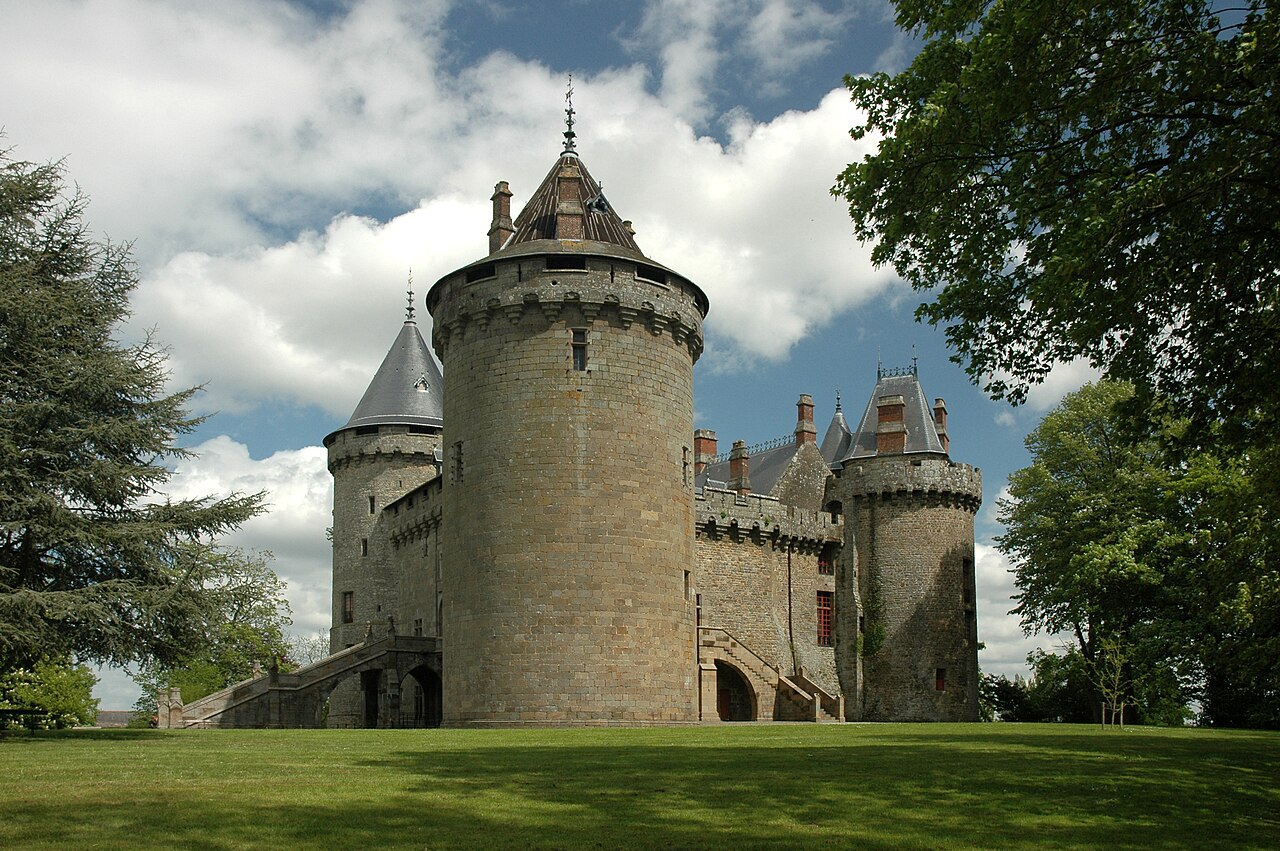
Château de la Bourbansais
Château de la Bourbansais, located in Pleugueneuc, France, is a notable example of a Renaissance castle with significant medieval elements. Originally constructed in 1583 by Jean du Breil, the château began as a smaller structure consisting primarily of the façade and two defensive towers. This initial phase reflects the transitional architectural styles of the late 16th century, combining both defensive and residential functions.
Early construction and medieval elements
The château's donjon and ditches date back to the Middle Ages, indicating that the site held strategic importance prior to the Renaissance rebuild. These medieval features were integrated into the later Renaissance design, providing both fortification and historical continuity. The donjon, a type of fortified keep, would have served as a stronghold and residence, while the ditches functioned as defensive moats or dry trenches to deter attackers.
Renaissance expansion and architectural features
During the Renaissance period, the castle was expanded beyond its original towers and façade. The design emphasizes symmetry and proportion, characteristic of Renaissance architecture. The large, regularly spaced windows on the façade enhance natural light and create a harmonious appearance, typical of the style's focus on balance and classical elements.
Seventeenth-century additions
In the 17th century, a significant modification was made with the construction of the west façade, which faces the French gardens. This addition reflects the evolving tastes and social functions of the château, aligning with the broader French tradition of integrating formal gardens with grand residences.
Eighteenth-century enhancements
The 18th century saw the château transformed into a more luxurious and hospitable estate under the ownership of the d’Armaillé family. They added two wings to the main building, creating additional space for guests. These wings contained apartments where visitors could stay for extended periods, sometimes over a month.
The ground floor was remodeled into elegant French salons designed for receptions and social gatherings, showcasing the family's wealth and status. The French gardens were also expanded and formalized, emphasizing geometric patterns and carefully maintained plantings typical of the period.
Architectural style and significance
The château is often described as Renaissance due to its large-scale symmetry and the orderly arrangement of windows and architectural details on the façade. However, the presence of the medieval donjon and defensive ditches reveals a layered history that spans several centuries.
This blend of styles makes Château de la Bourbansais a valuable example of architectural evolution, illustrating how noble residences adapted from fortified medieval structures to elegant Renaissance and later period country estates.
Current status and attractions
Today, Château de la Bourbansais is not only a preserved historical monument but also the site of a zoo within its extensive grounds. The zoo attracts visitors interested in both natural heritage and cultural history, providing a unique combination of wildlife and architectural tourism.
The château and its gardens remain well-preserved, allowing visitors to appreciate the Renaissance architecture, the medieval fortifications, and the beautifully maintained French gardens. The site offers a glimpse into the lifestyle of the French nobility from the 16th to the 18th centuries.
Frequently asked questions (FAQ)
- How do I get to Château de la Bourbansais?
- Château de la Bourbansais is located in Pleugueneuc, France, easily accessible by car or public transportation. If you are driving, you can follow the D137 road, and there is ample parking available on-site. For public transport, check local bus schedules that connect to nearby towns.
- What is the historical significance of Château de la Bourbansais?
- Château de la Bourbansais dates back to the 16th century and is an excellent example of Renaissance architecture in Brittany. It has a rich history, having served as both a noble residence and a site of agricultural innovation. The castle is surrounded by beautiful gardens that reflect its historical importance and natural beauty.
- When was Château de la Bourbansais built?
- Construction of Château de la Bourbansais began in the 16th century and was completed in the early 17th century. The castle has undergone various renovations over the years, preserving its architectural integrity and historical charm. Today, visitors can enjoy the beautifully restored interiors and grounds.
- Can I take a guided tour of the castle?
- Yes, guided tours of Château de la Bourbansais are available and highly recommended to fully appreciate its history and architecture. These tours provide insights into the castle's past, the lives of its inhabitants, and the unique features of its design. Check the official website for tour schedules and availability.
- Why is Château de la Bourbansais considered an architectural gem?
- Château de la Bourbansais is considered an architectural gem due to its Renaissance style and the harmony between its structure and the surrounding gardens. The intricate details of its façade and the beautifully designed interiors showcase the craftsmanship of the period. It serves as a fine example of how architecture can reflect cultural and historical significance.
- Is it possible to host events at Château de la Bourbansais?
- Yes, Château de la Bourbansais offers facilities for hosting various events, including weddings and corporate gatherings. The picturesque setting and historical ambiance make it an ideal venue for special occasions. It is advisable to contact the management for specific details regarding bookings and availability.
- What are the opening hours for Château de la Bourbansais?
- Château de la Bourbansais is typically open to visitors from April to October, with varied hours depending on the season. During peak months, the castle may offer extended hours to accommodate more visitors. Always check their official website for the most current opening hours before your visit.
- What are the ticket prices for visiting the castle?
- Ticket prices for Château de la Bourbansais vary depending on age and type of tour chosen. Generally, there are discounts for children and families, and special rates for group visits. It is recommended to purchase tickets in advance online to ensure availability and to take advantage of any special offers.
- What is the best time to visit Château de la Bourbansais?
- The best time to visit Château de la Bourbansais is during the spring and summer months when the gardens are in full bloom and the weather is mild. This period also coincides with the castle's regular opening season, allowing visitors to enjoy both indoor and outdoor attractions. Additionally, special events and activities are often held during these months.
- Are there any nearby attractions to visit while in Pleugueneuc?
- Yes, Pleugueneuc is surrounded by several attractions, including the beautiful Mont-Saint-Michel and the coastal town of Dinard. Nature lovers can explore nearby parks and walking trails, while history enthusiasts may enjoy visiting other historic châteaux in the region. The area offers a rich blend of cultural and natural experiences for visitors.
Information
Website
Visit websiteSources & official resources
Verify the information above using these authoritative references.
Loading map...
Visitor reviews
No reviews yet. Been here? Write the first review and help other travelers!
Write the first reviewVisited this castle? Share your experience
Your review helps other travelers and adds first-hand knowledge to our encyclopedia.