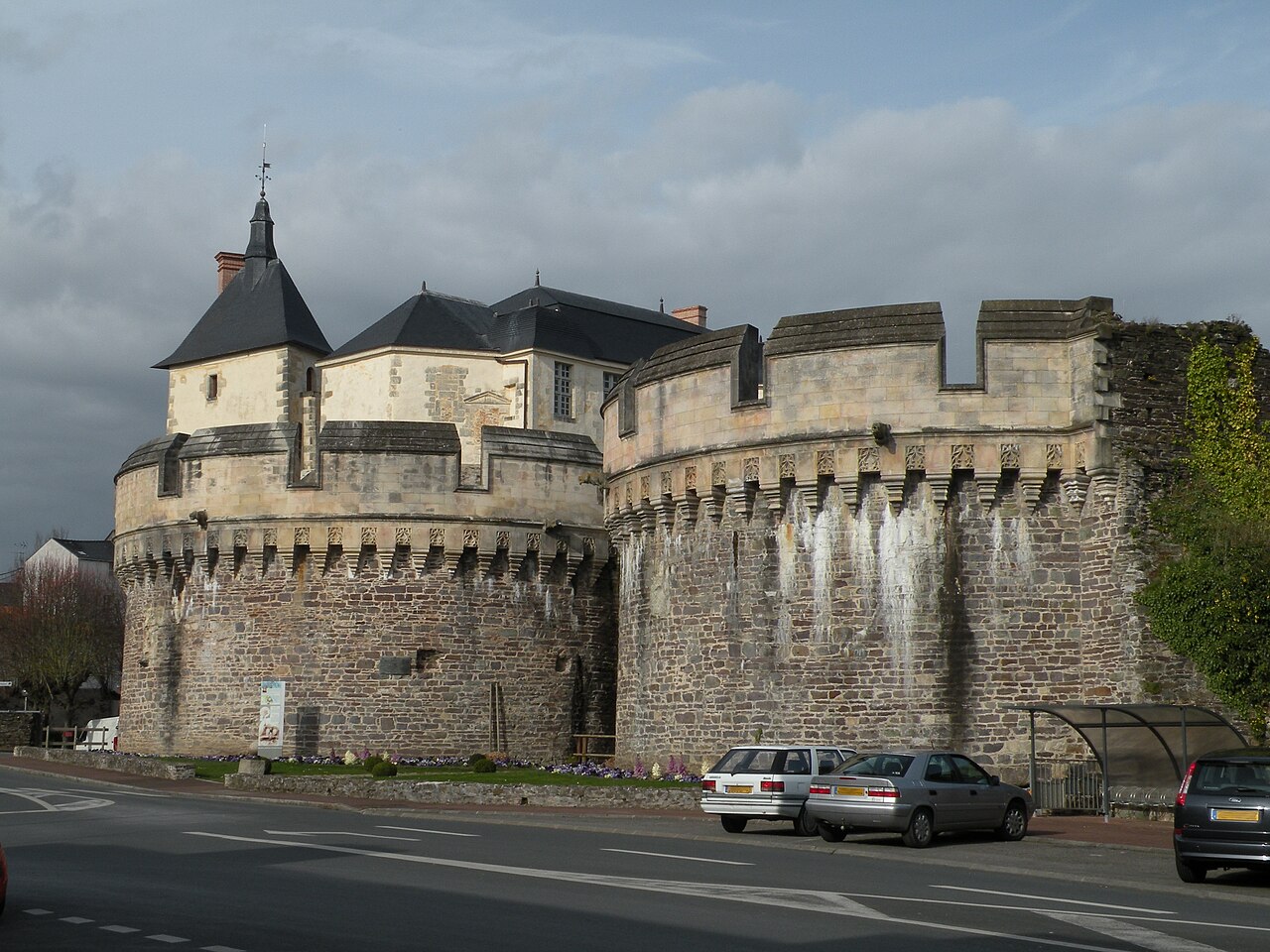
Château de la Baronnière
The Château de la Baronnière stands as a remarkable example of a French hill castle blending centuries of history and architectural evolution. Located in the municipality of Mauges-sur-Loire within the Hauts-de-France region, this estate traces its origins back to the late Middle Ages, first documented in the 15th century under the ownership of the Froger family. Over the centuries, the château has witnessed significant historical events, architectural transformations, and changes in ownership that reflect the broader cultural and political shifts in France.
Historical origins and early ownership
The estate's earliest records date to the 15th century, marking it as a property of the Froger family. In 1580, the château passed into the hands of Jacques de La Roche through marriage, illustrating the common practice of property transfer via marital alliances among the French nobility. By 1636, ownership shifted again through marriage to the Bonchamps family, who would become central figures in the château's history.
17th-century construction and religious additions
Towards the end of the 17th century, the original château was constructed as a manor with a distinctive square layout, featuring pointed roofs and corbelled turrets. This design reflected the architectural tastes of the period and the status of its owners. The addition of a chapel dedicated to Notre Dame de Piété, blessed in 1734, underscored the religious devotion of the inhabitants and the importance of private chapels in noble estates.
The château during the vendée wars
Charles de Bonchamps, born in 1760, was a notable member of the Bonchamps family who retired to the château in 1791 after refusing to take an oath of allegiance to the Revolutionary government. This period was marked by turmoil, particularly during the Vendée Wars of 1793, when republican forces occupied the château. The site suffered an attack and was burned, leaving only a square tower with a corbelled turret standing as a testament to its former grandeur.
19th-century restoration and neo-Gothic transformation
Following the destruction, the estate was sold in 1801 to Jean-Joseph Arnous Rivière, whose family remains the current owners. They undertook significant restoration, including refurbishing agricultural buildings and residential quarters, adding an orangery, and renovating the inner courtyard. In 1848, a new chapel dedicated to Sainte Anne was constructed on the remains of the old château’s tower, incorporating elements of the original masonry. This chapel features stained glass windows crafted by master glazier Thévenet in 1846, adding artistic vibrancy.
Between 1852 and 1856, under the guidance of architect René Hodé, a new château was erected nearby in the neo-Gothic troubadour style, inspired by 15th-century forms. This construction reflected the Arnous Rivière family’s status and their commitment to reviving the estate's historical prestige. The château's interiors boast a grand staircase, oak-paneled reception rooms with towel-fold motifs, and large chimneys topped by expansive glass panes, all contributing to its elegant character.
Architectural features and estate layout
The château's façade is adorned with heraldic shields representing the Arnous Rivière and Guillet de la Brosse families, showcasing their coats of arms with distinct colors and symbols. The estate's inner courtyard retains its square design, blending 17th-century construction with 19th-century modifications. Historically, this courtyard housed essential service buildings such as stables, a bakery, and a press on the ground floor, with servant quarters above. The courtyard has been restored since 2010 and is recognized as a historic monument since 1993.
A key surviving element from the earlier château is integrated into the neo-Gothic chapel built in 1848. The chapel preserves visible traces of the original masonry on one façade and includes a sacristy with a small stove, indicating attention to comfort during colder seasons.
Grounds and gardens
The estate is surrounded by a semicircular kitchen garden covering over 3,000 square meters, redesigned in 2011 to host about 150 species and 500 varieties of plants, demonstrating a rich botanical diversity. The surrounding park spans approximately 20 hectares and was established around 1838 under the direction of André Leroy, a pioneering French nurseryman and landscape designer. Classified as a picturesque park since 1993, it has undergone ongoing restoration to preserve its historic landscape design.
Preservation and cultural significance
After a period of neglect in the mid-20th century, the château and its associated buildings have been progressively restored since the 1970s. The estate was officially designated as a historic monument in 1995, highlighting its cultural and architectural importance. Restoration efforts have focused on roofing, architectural details, and adapting parts of the estate, such as converting stables into horse boxes in 2004, ensuring the château remains a living heritage site.
The Château de la Baronnière offers a unique glimpse into the evolution of French noble estates from the late medieval period through the 19th century. Its blend of original structures, neo-Gothic revival architecture, and carefully maintained grounds make it a significant landmark in the region, reflecting the intertwined history of aristocratic families, religious devotion, and landscape artistry.
Frequently asked questions (FAQ)
- How do I get to Château de la Baronnière?
- Château de la Baronnière is located in Mauges-sur-Loire, France, easily accessible by car or public transport. The nearest train station is in Angers, from where you can take a bus or taxi to the castle. Parking facilities are available on-site for visitors traveling by car.
- What is the historical significance of Château de la Baronnière?
- Built in the 15th century, Château de la Baronnière is a remarkable example of French Renaissance architecture. It has witnessed significant events throughout history, including being a residence for noble families and serving strategic purposes during various conflicts. The castle is now a symbol of the region's rich cultural heritage.
- When was Château de la Baronnière constructed?
- Château de la Baronnière was constructed in the late 15th century, showcasing the architectural styles of the Renaissance period. Its construction reflects the transition from medieval fortifications to more elegant residential designs. Over the centuries, it has undergone restorations that preserve its historical essence.
- Can I take guided tours of Château de la Baronnière?
- Yes, guided tours are available at Château de la Baronnière, providing visitors with in-depth insights into its history and architecture. The tours are led by knowledgeable guides who share fascinating stories about the castle and its former inhabitants. It is recommended to book in advance, especially during peak tourist seasons.
- Why is Château de la Baronnière a popular tourist destination?
- Château de la Baronnière attracts visitors due to its stunning architecture, rich history, and picturesque surroundings. The castle offers a glimpse into France's noble past, making it a fascinating stop for history enthusiasts. Additionally, its beautiful gardens and serene location enhance the overall visitor experience.
- Is it possible to host events at Château de la Baronnière?
- Yes, Château de la Baronnière offers facilities for hosting various events such as weddings, corporate gatherings, and private parties. The picturesque setting and historic ambiance make it an ideal venue for memorable occasions. Interested parties should contact the castle's administration for more details on availability and services.
- What are the opening hours for Château de la Baronnière?
- Château de la Baronnière is typically open to visitors from April to October, with varying hours depending on the day of the week. It is advisable to check the castle's official website for the most current opening times and any seasonal changes. Special events may also affect the schedule.
- What are the ticket prices for visiting Château de la Baronnière?
- Ticket prices for Château de la Baronnière vary depending on age and group size, with discounts available for children, students, and seniors. Family packages are also offered for those visiting with children. For the most accurate pricing information, it is best to consult the castle's official website before your visit.
- What nearby attractions should I visit while in Mauges-sur-Loire?
- While visiting Château de la Baronnière, consider exploring other nearby attractions such as the picturesque village of Montjean-sur-Loire and the scenic Loire River. The region offers beautiful landscapes perfect for hiking and cycling. Additionally, local vineyards provide opportunities for wine tasting and tours.
Information
Website
Visit websiteSources & official resources
Verify the information above using these authoritative references.
Loading map...
Visitor reviews
No reviews yet. Been here? Write the first review and help other travelers!
Write the first reviewVisited this castle? Share your experience
Your review helps other travelers and adds first-hand knowledge to our encyclopedia.