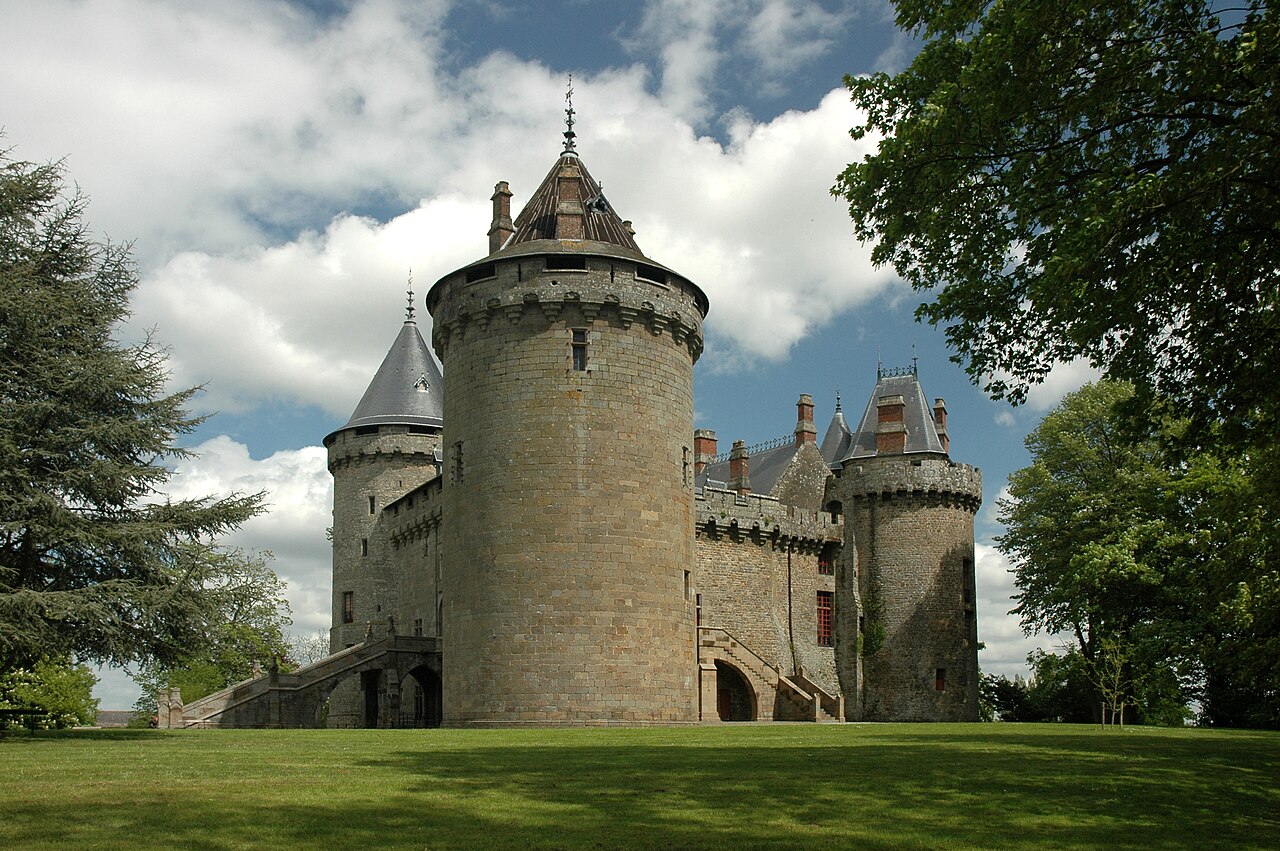
Château de la Ballue

Château de la Ballue in Bazouges-la-Pérouse, France
Bazouges-la-Pérouse, France
Renaissance (15th–17th c.)
Well Preserved

Château de la Ballue is a distinguished Renaissance château located in Bazouges-la-Pérouse, France. Constructed in 1620 by Gilles de Ruellan, the castle reflects the architectural elegance and refined tastes of early 17th-century French nobility. The château was later renovated in 1705, adapting its structure and interiors to evolving styles while preserving its original grandeur.

Architectural features and design

The château exemplifies Renaissance architecture with its balanced proportions, classical details, and harmonious integration with the surrounding landscape. Its design includes a stately main building with symmetrical façades, large windows that allow abundant natural light, and ornate stonework typical of the period. The structure is complemented by formal gardens, which are a defining characteristic of the estate.

The gardens and landscape

The gardens of Château de la Ballue are renowned for their meticulous design and historical significance. They feature French formal garden elements such as geometric parterres, tree-lined avenues, and sculpted hedges. These gardens have been carefully maintained and restored to reflect their original 17th-century layout, providing visitors with a vivid experience of period landscaping.

Visitors often highlight the experience of enjoying tea in the garden setting, which offers a serene atmosphere amid the carefully curated flora. Guided tours allow guests to explore the garden's intricate design and learn about its botanical and historical aspects.

Historical context and uses

After its initial construction and renovation, the château underwent various functional changes. In the 19th century, the site housed a glass factory, marking a shift from noble residence to industrial use. Despite this change, the château and its gardens retained their historical and architectural value, eventually becoming a cultural landmark in the region.

Cultural significance and visitor experience

Today, Château de la Ballue is recognized not only for its architectural beauty but also for its role in preserving French heritage. The estate hosts cultural events, exhibitions, and private visits, attracting enthusiasts of history, architecture, and garden design. The combination of the château's elegant structure and its exquisite gardens makes it a unique destination in Brittany.

Visitors can enjoy guided tours that delve into the château's history, architecture, and the artistry of its gardens. The tea service in the garden is a popular highlight, offering a traditional French experience in a historic setting.

Practical information for visitors

The château is located in the Ille-et-Vilaine department of Brittany, accessible by road from nearby towns. While specific visiting hours and ticket prices vary seasonally, the estate generally offers guided tours and garden visits during the warmer months. It is advisable to check in advance for opening times and special events.

Frequently asked questions (FAQ)

How do I get to Château de la Ballue?
Château de la Ballue is located in Bazouges-la-Pérouse, France, easily accessible by car with ample parking available on-site. If you are using public transport, the nearest train station is in Dol-de-Bretagne, from where you can take a taxi or a local bus to the castle.
What is the historical significance of Château de la Ballue?
Château de la Ballue dates back to the 17th century and is an outstanding example of French Renaissance architecture. It is renowned for its beautifully designed gardens and has been classified as a historical monument, reflecting the era's artistic and cultural values.
When was Château de la Ballue built?
Construction of Château de la Ballue began in the early 1600s, with significant renovations and additions made throughout the following centuries. The castle's architecture showcases the evolution of French castle design over time.
Can I take photographs inside the castle?
Yes, visitors are welcome to take photographs in designated areas of Château de la Ballue. However, please respect any restrictions in certain rooms or exhibits to preserve the integrity of the artwork and the overall experience for all guests.
Why is the architecture of Château de la Ballue unique?
The architecture of Château de la Ballue is unique due to its harmonious blend of classical Renaissance styles and its stunning gardens, which are designed to create an artistic dialogue with the castle. The intricate details and the layout reflect the grandeur of the period, making it a captivating site for architecture enthusiasts.
Is it possible to visit the gardens at Château de la Ballue?
Yes, the gardens at Château de la Ballue are open to visitors and are a highlight of the property. They feature a range of landscaping styles and are meticulously maintained, offering a beautiful setting for a leisurely stroll.
What are the opening hours for Château de la Ballue?
Château de la Ballue is typically open to visitors from April to October, with varied hours depending on the day of the week. It's recommended to check the official website before your visit for the most up-to-date information on opening hours.
What are the ticket prices for visiting Château de la Ballue?
Ticket prices for Château de la Ballue vary depending on the season and any special events. Generally, adult tickets are priced around €10, while discounts may be available for children, seniors, and families, making it an affordable destination for all.
When is the best time to visit Château de la Ballue?
The best time to visit Château de la Ballue is during the spring and summer months when the gardens are in full bloom. Additionally, visiting on weekdays can help you avoid larger crowds, allowing for a more tranquil experience.
Are there any nearby attractions to visit while at Château de la Ballue?
Yes, several nearby attractions include the historic town of Dol-de-Bretagne and the stunning Mont Saint-Michel, both of which offer rich cultural experiences. Additionally, the beautiful Brittany coastline is just a short drive away, providing opportunities for scenic walks and exploration.

Information

Palace Castle

Sources & official resources

Verify the information above using these authoritative references.

Loading map...

Visitor reviews

No reviews yet. Been here? Write the first review and help other travelers!

Write the first review

Visited this castle? Share your experience

Your review helps other travelers and adds first-hand knowledge to our encyclopedia.

Write a review

(5/5)

0/2000 characters

Your review will be visible after admin approval

Nearby castles

3.6 km

Château de Bonnefontaine

Antrain, France

Château de Bonnefontaine stands as a notable example of a late medieval fortress constructed in 1488 in the commune of Antrain, France. Originally built at the end of the 15th century, this castle has undergone various modifications over the centuries, reflecting changes in architectural styles and the evolving needs of its inhabitants. Historical background and architectural evolution The castle was erected during a period marked by the transition from fortified medieval strongholds to more comfortable residences, though it retained significant defensive features typical of the late medieval period. Its initial construction in 1488 places it in the waning years of the Middle Ages, a time when castles began to serve dual roles as both fortresses and noble homes. Throughout its history, Château de Bonnefontaine has been adapted to suit residential purposes, which has influenced its current form. Despite these changes, the structure maintains key elements of its original design, such as thick stone walls and defensive layouts that were common in late medieval castles. The castle’s preservation as a well-preserved residence allows visitors to appreciate its historical fabric while understanding its functional transformation over time. Gardens and landscape design The castle is particularly renowned for its extensive 25-hectare landscaped grounds and gardens, which offer a striking contrast to the medieval architecture. These grounds were designed by the prominent 19th-century landscape gardeners Denis Bülher and Édouard André, whose work exemplifies the English garden style popular in the late 1800s. The gardens feature expansive open spaces that create surprising visual perspectives framed by carefully planned plantings and copses. Visitors can enjoy majestic avenues lined with giant sequoia, cypress, and chestnut trees, which provide a tranquil and romantic atmosphere. This landscape design emphasizes naturalistic beauty, blending the castle's historical presence with a lush, green environment. Architectural features and layout The castle’s architecture reflects the defensive needs of its time, with robust stone construction and features such as battlements and possibly a moat, typical of late medieval fortifications. While the castle has been adapted for residential use, these elements remain visible, offering insight into the martial origins of the structure. Inside, the castle likely contains a combination of residential chambers and functional spaces that evolved from its original fortress role. The integration of the castle with its gardens creates a harmonious balance between built and natural environments, a hallmark of aristocratic estates in France during the 19th century. Current status and visitor experience Today, Château de Bonnefontaine remains inhabited, which has contributed to its excellent state of preservation. Although it is a private residence, the owners welcome visitors to explore the extensive gardens and grounds, making it accessible to the public in a limited capacity. The castle and its gardens provide a unique experience for visitors interested in both medieval architecture and historic landscape design. The English-style gardens offer peaceful walking paths and scenic views that complement the castle’s imposing structure, making it a favored destination for those exploring the heritage of Brittany and the broader region of Ille-et-Vilaine. Significance and heritage value Château de Bonnefontaine exemplifies the evolution of French castles from purely defensive fortresses to elegant noble residences integrated with sophisticated landscape design. Its combination of late medieval architecture and 19th-century English gardens illustrates the layered history of aristocratic estates in France. The castle’s preservation and continued use contribute to the cultural heritage of the region, offering insights into architectural and horticultural trends spanning several centuries. Visitors can appreciate the castle not only as a historical monument but also as a living estate that bridges past and present.

Late Medieval (14th–15th c.)
Details
16 km

Castle of Combourg

Combourg, France

The Castle of Combourg stands prominently on a natural hill near Lac Tranquille in the historic town of Combourg, Brittany. Founded around 1025 by Junken, Archbishop of Dol, the castle was originally constructed as a strategic fortress to defend the fief of Comburnium. The first lord, Riwallon, the Archbishop's illegitimate brother, received the initial donjon and fortifications, establishing the castle's medieval military significance. Over the centuries, the castle evolved architecturally and historically, witnessing expansions and reinforcements from the 12th to 15th centuries. It played a vital role during regional conflicts, notably resisting English sieges under Raoul II de Fougères in the 12th century. Ownership transitioned through prominent noble families such as the Châteaugiron-Malestroit and later the Marquis de Coëtquen. In the 18th century, it passed to Emmanuel-Félicité de Durfort, Duke of Duras, before acquisition in 1761 by René-Auguste de Chateaubriand, a wealthy shipowner from Saint-Malo. Historical significance and literary heritage The castle is best known for its association with François-René de Chateaubriand, a celebrated writer and politician who spent his childhood and youth here. His memoirs immortalize the castle, linking it deeply to French literary history. The estate endured turmoil during the French Revolution, including confiscation, pillaging, and fire after the execution of Jean-Baptiste de Chateaubriand and his family in 1794. Although returned to the family in 1796, it lay abandoned for decades, falling into disrepair. Architectural evolution and restoration Between the 12th and 15th centuries, the castle expanded into an irregular quadrilateral layout with robust round towers at each corner. Defensive features such as a drawbridge, arrowslit openings, and machicolations supported by pyramidal corbels exemplify medieval military architecture. The main residential wing lies on the northern side, complemented by southern and eastern wings, all enclosed by a defensive wall on the west. In the 19th century, restoration efforts spearheaded by Count Geoffroy de Chateaubriand and architect Ernest Thrile, a disciple of Eugène Viollet-le-Duc, transformed the castle in the troubadour style, a romanticized medieval revival popular at the time. This included the removal of the original chapel, guardroom, and inner courtyard, replaced by a Renaissance-style courtyard with white stone ornaments, a monumental wooden staircase with a seventeenth-century style ramp, and the creation of an English-style park designed by Denis and Eugène Bühler. Notable architectural features The round towers at each corner provide strong defensive points and reflect typical high medieval fortress design. The drawbridge with arrowslits and machicolations illustrates advanced defensive mechanisms of the period. The Renaissance-style courtyard and ornamental facades highlight the 19th-century romantic restoration influences. The large wooden staircase added during restoration blends seventeenth-century stylistic elements with medieval structure. The surrounding English-style park enhances the castle's picturesque setting and reflects 19th-century landscape design trends. Cultural significance and preservation The castle remains privately owned by descendants of the Chateaubriand family, including Sonia, Countess de La Tour du Pin Verclause and her son Guy. It is officially listed as a monument historique by the French Ministry of Culture, with protections extending to its facades, roofs, guardroom, and vestibule since the early 20th century. During restoration, a remarkable discovery was made: a mummified black cat walled behind a 16th-century beam. This cat, now displayed in François-René de Chateaubriand's childhood bedroom, symbolizes medieval superstitions where cats were believed to protect buildings from evil spirits. Local legends also tell of a "count of Combourg with a wooden leg," adding to the castle's rich folklore. The castle during modern times In World War I, the castle served as a military hospital for wounded French soldiers. German prisoners of war were tasked with cleaning the neglected pond, marking a rare moment of restoration to the natural surroundings after centuries of neglect. Today, the Castle of Combourg stands as a unique blend of medieval fortification and 19th-century romantic restoration. Its historical layers and literary connections make it a significant cultural landmark in Brittany and a testament to the region's rich heritage. Visiting and exploring While privately owned, the castle occasionally opens to the public for tours, allowing visitors to explore the preserved rooms, including the childhood bedroom of François-René de Chateaubriand and the impressive architectural features. The surrounding park provides a scenic setting for walking and reflection on the castle's storied past.

High Medieval (11th–13th c.)
Details
16.4 km
Combourg Castle — France castle

Combourg Castle

Combourg, France

Combourg Castle stands as a formidable example of medieval fortress architecture in the heart of Brittany, France. Its origins trace back to the early 11th century, with construction beginning around 1025 under the auspices of Archbishop Guinguené. The castle was initially built to assert control and defend the region, particularly the important religious site of Dol Cathedral, and to uphold the independence of Brittany during a period marked by territorial disputes and feudal conflicts. The castle's strategic location and robust design reflect its primary function as a military stronghold. It features four large granite buildings arranged around a rectangular courtyard, each corner fortified by a round tower with conical roofs, crenellations, and machicolations. These defensive elements are characteristic of High Medieval military architecture, designed to repel invaders and provide vantage points for archers and lookouts. The use of dressed granite not only enhanced the castle's durability but also gave it an imposing aesthetic presence in the landscape. The architectural evolution of Combourg Castle Significant modifications and expansions occurred between the 15th and 19th centuries, reflecting changing architectural styles and the castle's transition from purely military use to a noble residence. The castle's enduring structure includes elements from the High Medieval period while also showcasing later adaptations that accommodated residential comfort and aesthetic considerations. The restoration completed in 1876 was particularly important in preserving the castle's historical integrity and enhancing its romantic appeal. Defensive features and layout The castle's design incorporates traditional medieval defensive features such as crenellated battlements for protection during sieges and machicolations that allowed defenders to drop projectiles on attackers below. The round towers at each corner improved the field of vision and eliminated blind spots, a strategic advantage in medieval fortification design. The rectangular courtyard served as a central gathering space and facilitated internal communication between the different parts of the fortress. Residential transformation and restoration By the time the Chateaubriand family acquired the castle in 1761, it had begun to shift from a military fortress to a noble residence. The castle became the childhood home of the renowned writer and politician François-René de Chateaubriand (1768–1848), whose literary works later immortalized the castle as the "cradle of romanticism" in French literature. The 19th-century restoration led by the family sought to preserve the castle's medieval character while adapting it for modern habitation and aesthetic appreciation. Combourg's cultural and literary significance François-René de Chateaubriand is one of France's most celebrated literary figures, and his association with Combourg Castle greatly enhances its cultural importance. His autobiographical work, Mémoires d'Outre-Tombe, vividly describes the castle and its surroundings, contributing to the castle's reputation as a symbol of French romanticism. The castle's evocative atmosphere and historic grandeur inspired not only Chateaubriand but also subsequent generations of writers and artists who sought to capture the spirit of the romantic era. The castle's park and gardens, designed in 1876 by the landscape architect Denis Buhler, are inspired by Chateaubriand's literary descriptions. Covering approximately 25 hectares, the park features centuries-old trees and a tranquil lake known as Lake Tranquille. This landscape design enhances the castle's romantic ambiance and offers visitors a serene environment that complements the historic architecture. Visiting Combourg Castle today Today, Combourg Castle remains a well-preserved monument open to the public through guided tours. Visitors can explore seven interior rooms as well as the tower walls during a typical 45-minute visit. These tours provide insight into the castle's architectural features, historical context, and its significance in French literature. The park surrounding the castle is accessible for free tours, including walks around Lake Tranquille. Visitors are welcome to bring leashed pets, making it a family-friendly destination. The castle continues to be privately owned by descendants of the Chateaubriand family, maintaining a direct link to its storied past. Architectural highlights and historical context The castle's granite construction is notable for its durability and the skillful masonry work evident in the dressed stone blocks. The crenellations and machicolations are classic defensive features that highlight the castle's martial origins. The round towers with their distinctive conical roofs are typical of Breton fortifications and contribute to the castle's iconic silhouette. Historically, the castle played a role in the defense of Brittany during the High Medieval period, a time of frequent conflicts between local lords and external forces. Its position near Dol Cathedral underscores its strategic importance in protecting ecclesiastical interests and regional autonomy. Legacy and preservation Combourg Castle's preservation as a well-maintained medieval fortress and its association with a major literary figure make it a unique cultural landmark. The careful restoration efforts in the 19th century and ongoing maintenance have ensured that the castle remains an enduring symbol of Brittany's history and France's literary heritage.

High Medieval (11th–13th c.)
Details