Château de Hunebourg
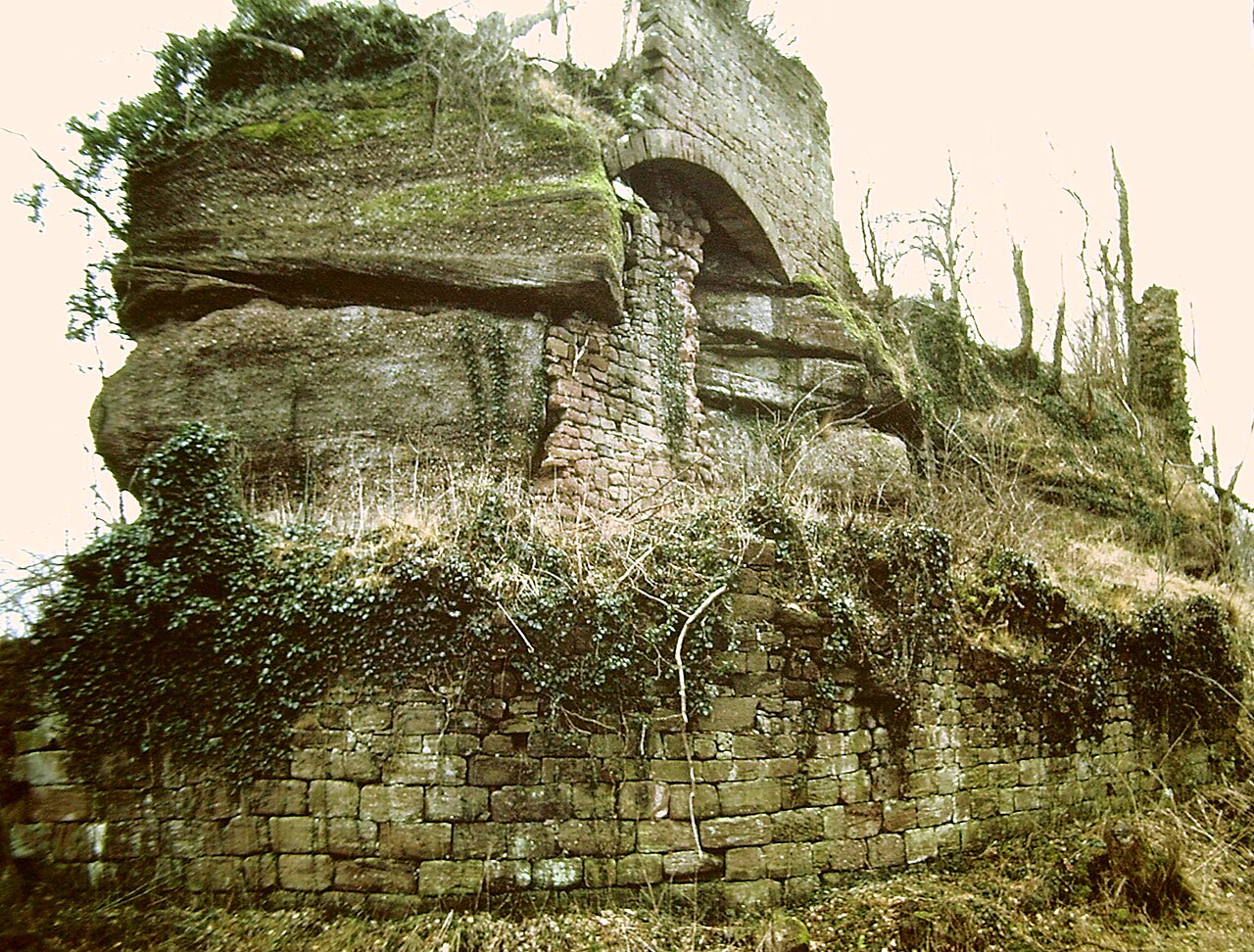
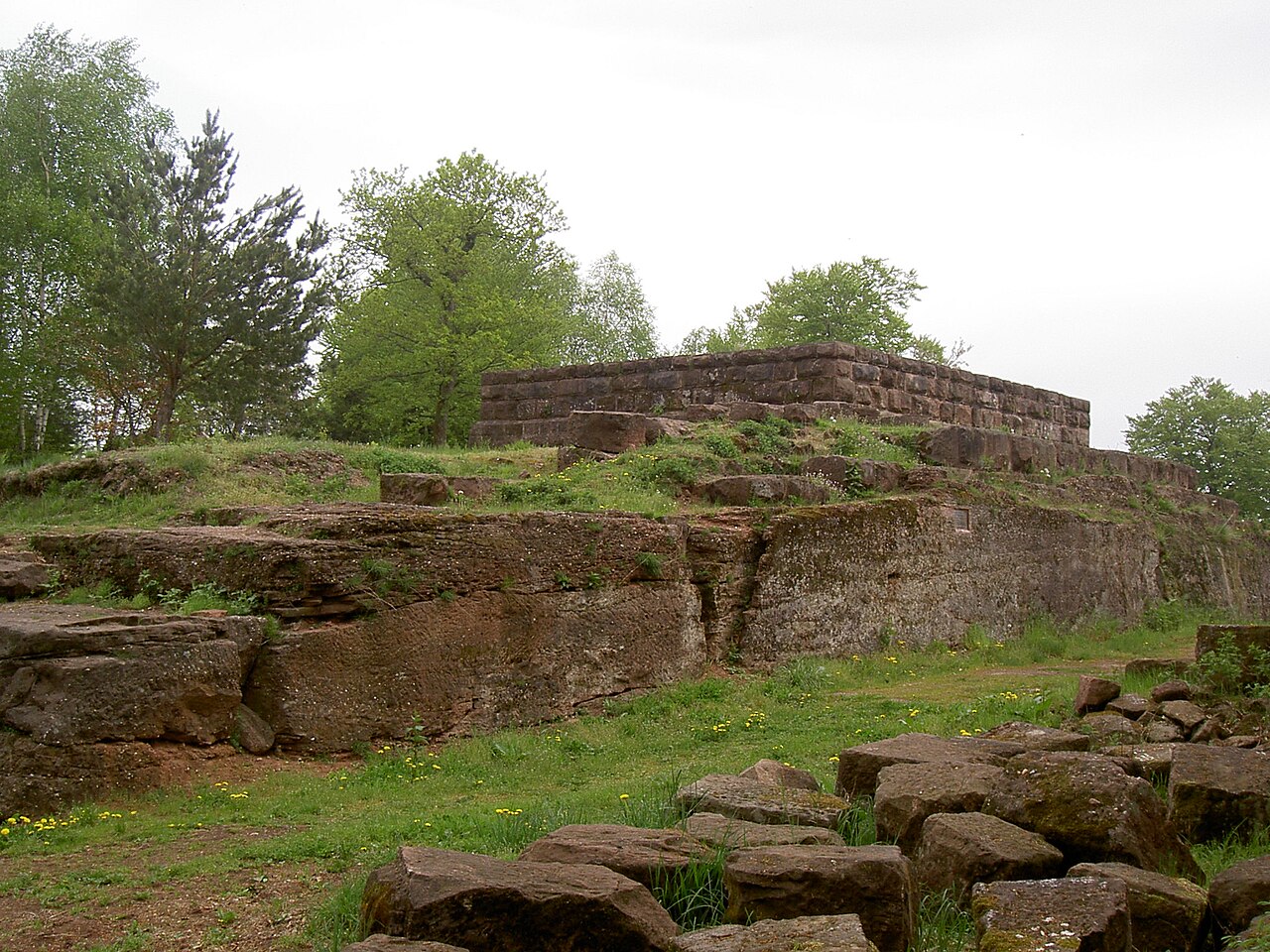
Château de Hunebourg, also known by its German names Hüneburg or Hünenburg, is a notable hill castle perched on a prominent 425-metre-high sandstone rock outcrop in the French département of Bas-Rhin. Located just west of Neuwiller-lès-Saverne, it overlooks the valley of the Zinsel du Nord, providing strategic views and natural defenses that were typical considerations in medieval castle siting.
Medieval origins and strategic location
The castle's origins trace back to the 12th century, placing it firmly within the high medieval period. Initially constructed as a rock castle, Château de Hunebourg was designed to take advantage of the natural sandstone outcrop, which provided a formidable defensive position against invaders. The castle's location in the border region of Alsace, historically contested between French and Germanic powers, underscores its military and political significance during the Middle Ages.
While the original structure was built in the 12th and early 13th centuries, very little of the initial medieval fabric remains today. The castle likely featured typical high medieval defensive elements such as curtain walls, towers, and a keep adapted to the rocky terrain, although specific architectural details from this period are scarce due to the limited surviving ruins.
Architectural evolution and neo-romanesque reconstruction
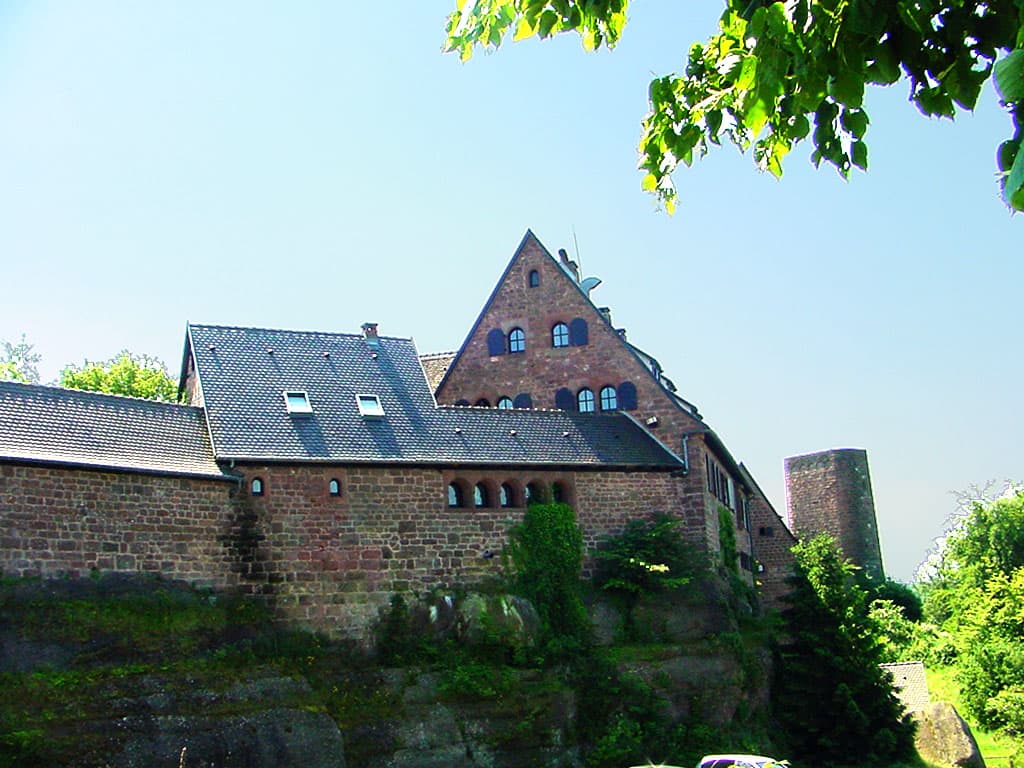
In the 20th century, Château de Hunebourg underwent significant reconstruction, particularly during the 1930s, when it was rebuilt in a neo-romanesque style. This architectural revival style sought to evoke the solidity and simplicity of Romanesque architecture, characterized by rounded arches, robust masonry, and symmetrical forms.
The reconstruction in the 1930s was part of a broader movement to preserve and restore historic castles in France, often blending historical inspiration with contemporary building techniques. The neo-romanesque features introduced during this period include rounded archways, decorative arcading, and stone detailing that reflect medieval Romanesque motifs but are adapted to the 20th-century restoration approach.
Current status and heritage recognition
Today, Château de Hunebourg is recognized as a listed historical monument since 2007, reflecting its cultural and architectural importance. Although the castle is only partially preserved, it remains an important heritage site in the Bas-Rhin region, attracting visitors interested in medieval history, castle architecture, and the scenic landscapes of northeastern France.
Its position on a sandstone rock outcrop not only provided medieval defensive advantages but also offers modern visitors impressive views of the surrounding Alsace countryside. The castle's blend of medieval origins and neo-romanesque reconstruction provides a unique example of how historic sites can evolve architecturally across centuries.
Exploring château de hunebourg today
Visitors to Château de Hunebourg can explore the castle's ruins and appreciate the 20th-century restoration efforts that have preserved its imposing silhouette. The site is accessible via hiking trails from the valley of the Zinsel du Nord, making it a popular destination for those interested in combining outdoor activity with cultural heritage.
While the castle does not function as a fully restored museum, its status as a protected monument ensures ongoing conservation efforts. Informational signage at the site helps contextualize the castle's history and architectural features for visitors.
Architectural features to note
- Sandstone rock foundation: The castle is uniquely integrated into a natural sandstone outcrop, enhancing its defensive capabilities.
- Neo-romanesque elements: The 1930s reconstruction introduced characteristic rounded arches and stone detailing reminiscent of Romanesque architecture.
- Medieval ruins: Remnants of original walls and defensive structures provide insight into the castle's high medieval military function.
Historical context
Situated in a region with a complex history of shifting borders between France and Germany, Château de Hunebourg exemplifies the strategic importance of castles in medieval territorial control. Its original builders likely intended it as a stronghold to monitor and defend the surrounding territory.
The castle's later reconstruction reflects changing attitudes toward heritage preservation in the 20th century, blending historical reverence with architectural revivalism.
Frequently asked questions (FAQ)
- How do I get to Château de Hunebourg?
- Château de Hunebourg is accessible via hiking trails from the valley of the Zinsel du Nord near Neuwiller-lès-Saverne in Bas-Rhin, France. Visitors can reach the castle on foot, enjoying scenic views along the way.
- What is the historical significance of Château de Hunebourg?
- The castle dates back to the 12th century and served as a strategic hilltop fortress in the contested Alsace region. Its location on a sandstone rock outcrop provided natural defense and control over the surrounding area during the high medieval period.
- Can I visit the interior of Château de Hunebourg?
- As the castle is partially preserved and primarily a ruin with neo-romanesque reconstruction, visitors can explore the exterior and remaining structures but should not expect fully restored interiors or museum exhibits.
- When was Château de Hunebourg reconstructed?
- The castle underwent significant reconstruction in the 1930s, adopting a neo-romanesque architectural style that reflects Romanesque design elements from the medieval period.
- Is Château de Hunebourg a protected monument?
- Yes, Château de Hunebourg has been listed as a historical monument since 2007, ensuring its preservation and recognition as an important cultural heritage site in Bas-Rhin.
Photo gallery

Information
Loading map...
Visitor reviews
No reviews yet. Been here? Write the first review and help other travelers!
Write the first reviewVisited this castle? Share your experience
Your review helps other travelers and adds first-hand knowledge to our encyclopedia.