Château de Hohenack
Château de Hohenack is a remarkable example of a medieval hill castle located in the municipality of Labaroche, in the historic region of Alsace, France. Perched atop the Petit-Hohnack mountain at an elevation of 927 meters, the castle commands sweeping views over the Alsace plain, reflecting its strategic importance as a military lookout and administrative center. Its origins date back to the 12th century, with significant construction phases spanning the late 12th century, the 13th, 15th, and 16th centuries, illustrating the castle's evolution in response to changing military technologies and political circumstances.
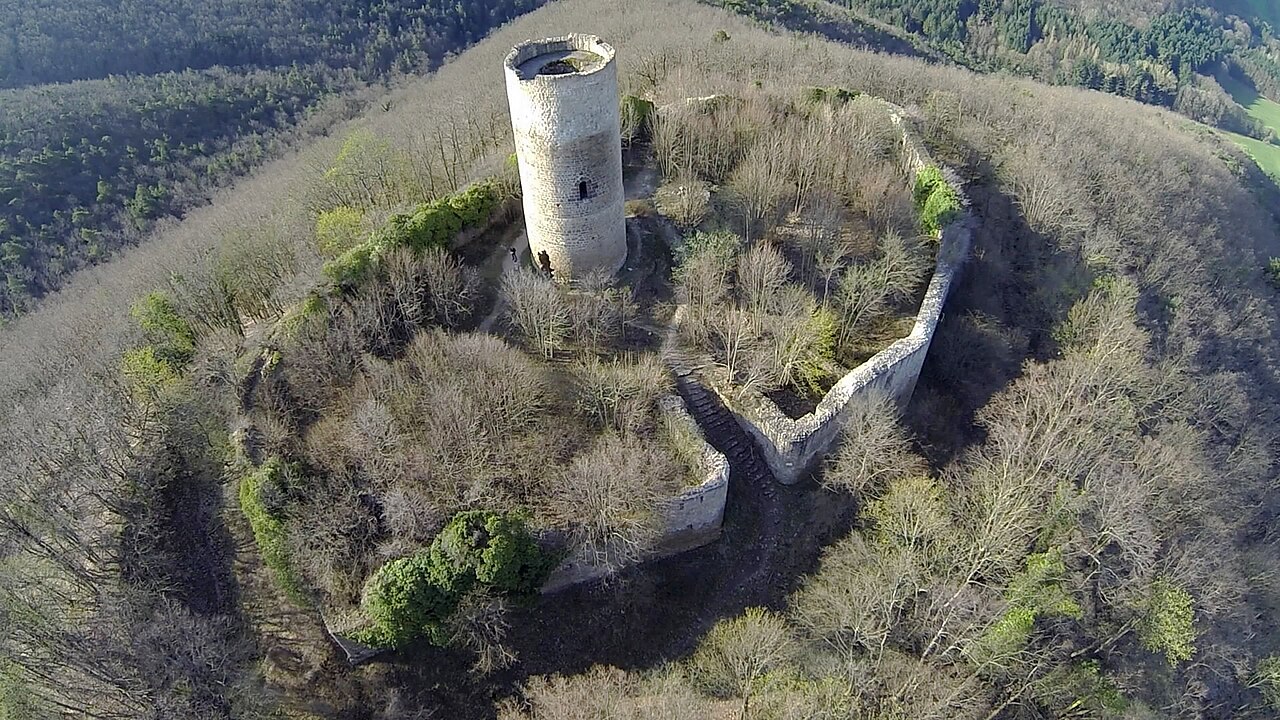
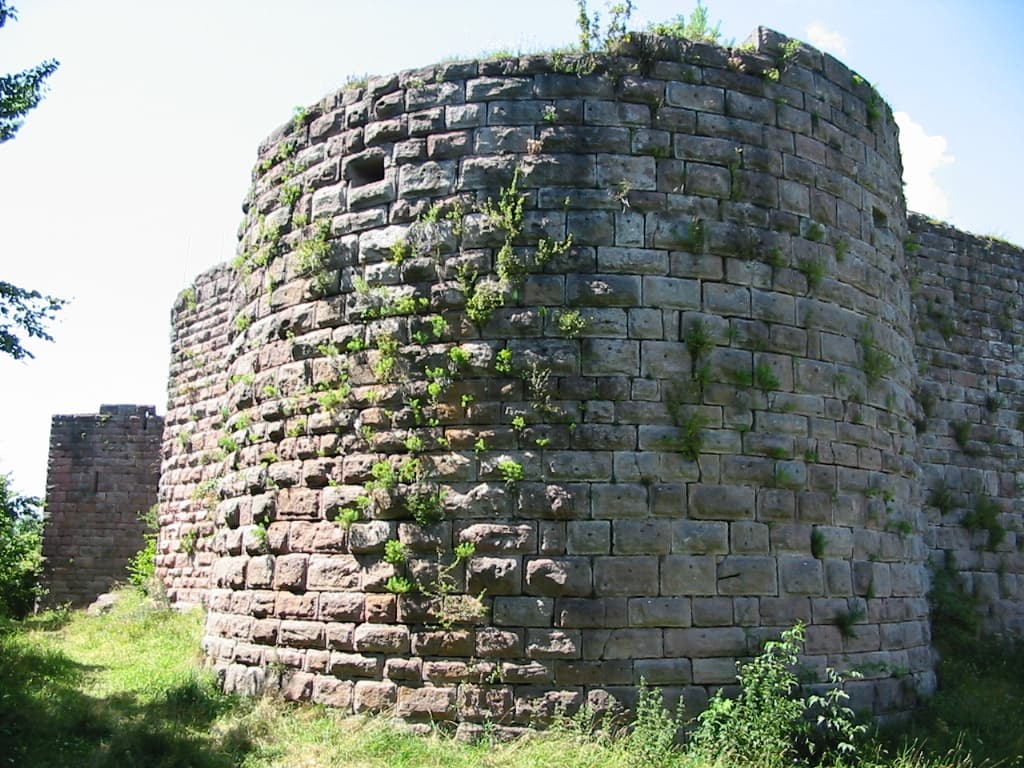
The castle's architectural layout is emblematic of High Medieval fortification design, featuring a polygonal curtain wall constructed of rusticated ashlar stone, also known as bossage, which provided both robustness and an imposing aesthetic. Central to the fortress is a free-standing square keep or donjon, rising approximately eight meters high, notable for its lack of flanking towers, a characteristic typical of early medieval military architecture. This keep served as the last defensive refuge and the lord's stronghold.
Historical context and ownership
The earliest documentary mention of Château de Hohenack appears in a chronicle from 1079, though it likely predates this record. Initially, the castle was under the control of the Counts of Eguisheim, a powerful noble family in the region. Over subsequent centuries, ownership transitioned through the houses of Ferrette and Ribeaupierre. The Ribeaupierre family formally acquired the castle in 1437, during a period when the territory was under the sovereignty of the Habsburg dynasty, reflecting the complex feudal allegiances in Alsace.
Mid-12th century records indicate that a family named Hohnack held the castle as vassals to the Counts of Pfirt. From 1251 onwards, the castle became a fief under the Bishop of Strasbourg, which sparked disputes over control with neighboring noble families such as the Rappoltstein and Lupfen houses. These conflicts underscore the castle's strategic and political significance in the region.
Military role and destruction
The castle played an active military role during the turbulent periods of the Thirty Years’ War. In 1635, a French garrison occupied the fortress under the authority of the governor of Colmar, maintaining their presence until 1654. The following year, in 1655, King Louis XIV ordered the castle's demolition as part of a broader policy to dismantle fortifications that could threaten French control along border regions. This deliberate destruction marked the end of Château de Hohenack as a functioning fortress.
After the upheaval of the French Revolution, the ruins were sold as national property and passed into private hands. Until 1898, the site was used as a quarry for building materials, which further contributed to the castle's deterioration. In 1886, the Golbéry family transferred ownership to the Society for the Conservation of Historical Monuments of Alsace. Today, the commune of Labaroche manages the site, which has been officially recognized as a historic monument since 1905.
Architectural features and remains
Medieval fortifications and layout
The castle's plan is characteristic of the 12th century, with a polygonal curtain wall enclosing the inner ward. The walls are constructed from rusticated ashlar blocks, giving the fortress a distinctive rugged texture and formidable appearance. The square donjon stands prominently within the enclosure, originally designed without flanking towers, reflecting early medieval defensive concepts focused on a strong central keep.
On the eastern side of the castle, the foundations of the lordly residence or logis seigneurial remain visible. This residential building formed the domestic core of the castle, providing living quarters and administrative spaces for the lord and his household. Surrounding ancillary structures supported the daily functions of the castle and garrison.
Adaptations to artillery warfare
Responding to the advent of gunpowder and artillery in the late medieval period, Château de Hohenack underwent significant modifications from the late 15th century. Three quadrangular bastions were added to enhance the castle’s defensive capabilities against cannon fire. Notably, the "Witches’ Tower" to the west and the "Mill Tower" to the northwest were designed to house artillery pieces, providing overlapping fields of fire.
A semi-circular bastion, known locally as the "Chapel Tower", was constructed on the southern side, further strengthening the fortress's artillery defenses. Additionally, a barbican was built at the main entrance, serving as a fortified gateway to delay and expose attackers.
Water supply and armaments
Maintaining a reliable water supply was critical during sieges. The castle featured a well and a filtering cistern to ensure access to potable water. Archaeological excavations have uncovered bombards, large early cannons dating to the late 14th or early 15th century, highlighting Château de Hohenack's role in the early adoption of gunpowder weaponry in the region.
Current condition and visitor experience
Today, Château de Hohenack stands as a ruined medieval fortress offering visitors a tangible connection to the region's feudal past. The remains include the eastern gate tower, the Witches’ Tower, the Mill Tower, the Chapel Tower, the 12th-century donjon, and the foundational traces of the lordly residence.
Despite centuries of war damage and quarrying, the castle’s masonry and surviving structures provide valuable insights into the evolution of medieval military architecture from the High Middle Ages through the introduction of artillery fortifications. The site's elevated position atop Petit-Hohnack mountain continues to offer commanding views across the Alsace plain, preserving the castle's historical role as a strategic lookout.
Visitors to Château de Hohenack can explore the ruins and imagine the castle's former grandeur and military significance. The site is accessible via hiking trails from Labaroche and nearby villages, making it a popular destination for those interested in medieval history, architecture, and panoramic landscapes.
Photo gallery

Information
Loading map...
Visitor reviews
No reviews yet. Been here? Write the first review and help other travelers!
Write the first reviewVisited this castle? Share your experience
Your review helps other travelers and adds first-hand knowledge to our encyclopedia.