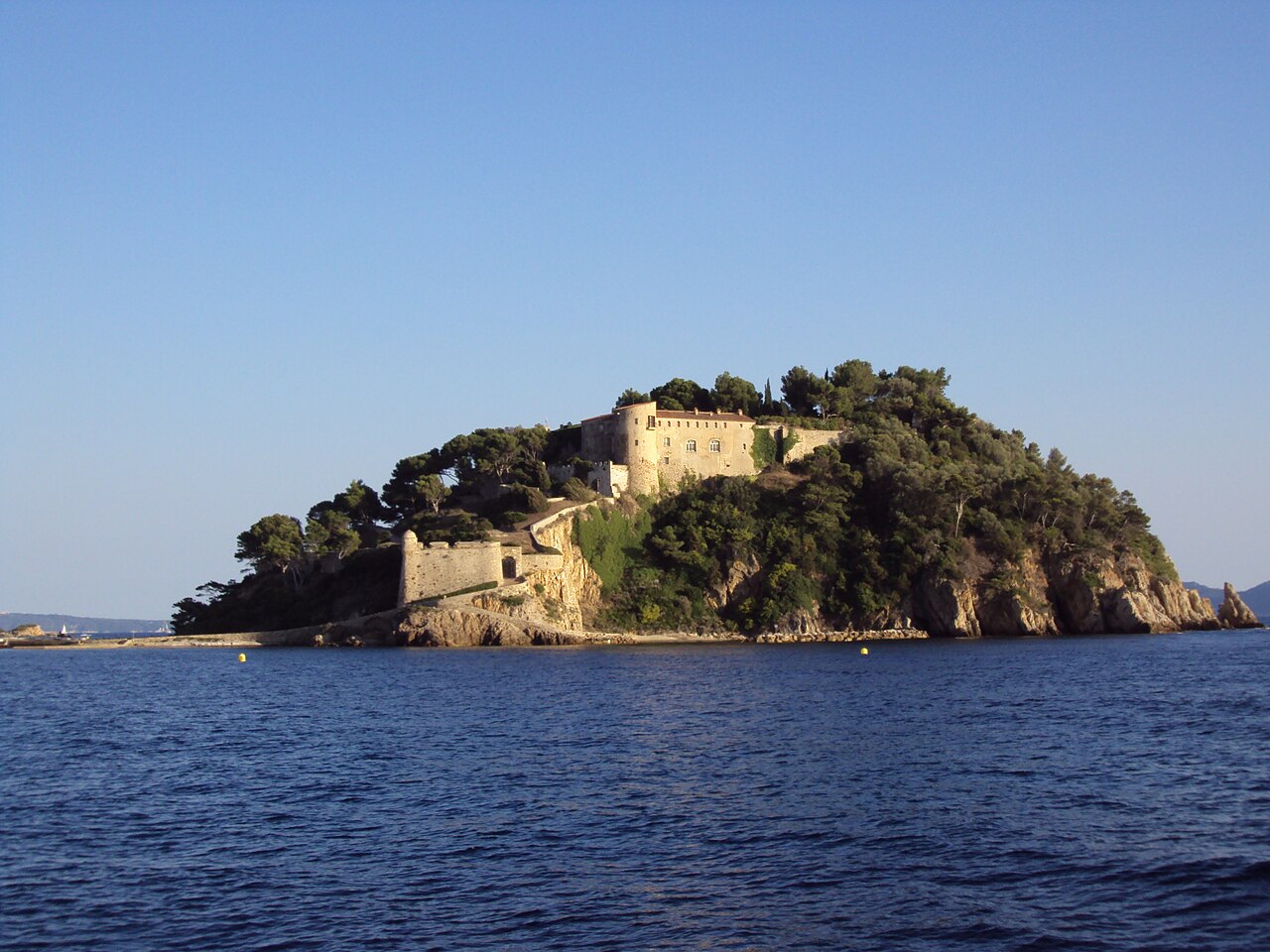
Château de Grimaud

Château de Grimaud: historic medieval hill castle in Provence-Alpes-Côte d'Azur
Grimaud, Provence-Alpes-Cote-d'Azur, France
High Medieval (11th–13th c.)
Ruins

Château de Grimaud stands as a remarkable example of a high medieval hill castle perched above the picturesque village of Grimaud in the Provence-Alpes-Côte d'Azur region of southeastern France. Dating back to the 11th century, this castle was originally constructed as a strategic fortress to oversee and control the surrounding lands and the Gulf of Saint-Tropez. Though now in a state of ruins, the remnants of its defensive walls, towers, and gatehouses offer a vivid glimpse into the military architecture and feudal history of medieval Provence.

Historical significance and origins

The Château de Grimaud was established during the high medieval period, a time characterized by the proliferation of fortified structures across Europe. Its location on a rocky hill provided a commanding vantage point, essential for surveillance and defense against invaders and rival lords. The castle played a key role in the feudal system, serving as the seat of local lords who exercised control over the surrounding territory.

Throughout the centuries, the castle witnessed numerous conflicts and changes in ownership, reflecting the turbulent history of Provence. It was part of the network of fortifications that protected the region from incursions and internal disputes. The castle's strategic position also allowed it to oversee important trade routes and coastal access points.

Architectural features and layout

The castle's design exemplifies the typical characteristics of hill castles built during the 11th century. It was constructed primarily of local stone, with thick defensive walls designed to withstand sieges. The remains include portions of the curtain walls, which once enclosed the inner courtyard, and fragments of several towers that provided lookout posts and defensive positions.

The entrance to the castle was fortified with a gatehouse, possibly equipped with a portcullis and other defensive mechanisms common in medieval fortifications. Inside the walls, there would have been living quarters, storage rooms, and possibly a chapel, although little remains of these structures today.

Defensive elements

The castle's elevated position was its foremost defense, complemented by the rugged terrain surrounding it. The walls were punctuated by battlements and arrow slits, enabling defenders to repel attackers effectively. The castle likely featured a keep or donjon, a strong central tower serving as the last refuge during sieges, although only traces remain.

The castle in later periods

Over time, as military technology and political landscapes evolved, the castle lost its strategic importance. By the early modern period, it was gradually abandoned and fell into ruin. Despite this, the site remained a symbol of the region's medieval heritage and has attracted historians and visitors interested in feudal architecture and Provençal history.

Today, the ruins of Château de Grimaud are accessible to the public, offering panoramic views of the village below and the Mediterranean coastline. The site is a protected historical monument, reflecting its cultural and architectural significance.

Visiting Château de Grimaud

Visitors to the castle can explore the ruins and enjoy sweeping vistas of the surrounding landscape. The castle's hilltop location makes it a popular destination for hikers and history enthusiasts. Interpretive signage provides insights into the castle's history and architectural features, enhancing the visitor experience.

The village of Grimaud itself offers charming streets, local markets, and traditional Provençal culture, making a visit to the castle part of a broader cultural exploration of the region.

Frequently asked questions (FAQ)

How do I get to Château de Grimaud?
Château de Grimaud is accessible by car, with parking available nearby. If you are using public transport, the nearest train station is in Saint-Raphaël, from which you can take a bus or taxi to reach Grimaud.
What is the historical significance of Château de Grimaud?
Château de Grimaud dates back to the 11th century and played a crucial role in the defense of the region during the Middle Ages. It offers insight into the feudal history of Provence and showcases the architectural evolution of the time.
When was Château de Grimaud built?
Construction of Château de Grimaud began in the 11th century, with significant modifications occurring in the following centuries. The castle served as a strategic point for controlling the surrounding lands and has since become a symbol of the town's rich history.
Can I visit Château de Grimaud year-round?
Yes, Château de Grimaud is open to visitors throughout the year, although opening hours may vary by season. It is advisable to check the official website for the most current visiting hours before planning your trip.
Why is Château de Grimaud a popular tourist attraction?
Château de Grimaud attracts visitors due to its stunning panoramic views of the Gulf of Saint-Tropez and the picturesque village below. The castle's historical architecture and serene surroundings make it a perfect spot for history enthusiasts and nature lovers alike.
Is it possible to take guided tours of Château de Grimaud?
Yes, guided tours are available at Château de Grimaud, providing visitors with in-depth knowledge about its history and architecture. These tours enhance the visitor experience by offering insights that may not be available through self-guided exploration.
What are the ticket prices for visiting Château de Grimaud?
Admission prices for Château de Grimaud are typically very affordable, with discounts available for children, seniors, and groups. It's recommended to check the official website for the latest pricing and any special offers.
What is the best time to visit Château de Grimaud?
The best time to visit Château de Grimaud is during the spring and early fall when the weather is mild and the tourist crowds are smaller. This allows for a more pleasant experience while exploring the castle and enjoying the surrounding scenery.
Are there any nearby attractions to visit along with Château de Grimaud?
Yes, nearby attractions include the beautiful beaches of the Gulf of Saint-Tropez and the charming village of Grimaud itself, which features quaint shops and restaurants. Additionally, the Port Grimaud, known for its unique canals and architecture, offers a lovely experience for visitors.

Information

Hill Castle

Loading map...

Visitor reviews

No reviews yet. Been here? Write the first review and help other travelers!

Write the first review

Visited this castle? Share your experience

Your review helps other travelers and adds first-hand knowledge to our encyclopedia.
Write a review

(5/5)

0/2000 characters

Your review will be visible after admin approval

Nearby castles

6.9 km
Fraxinetum — France castle

Fraxinetum

La Garde-Freinet, France

Fraxinetum, also known as Fraxinet and referred to in Arabic as Farakhshanīt or Farakhsha, derives its name from the Latin fraxinus, meaning "ash tree," and fraxinetum, meaning "ash forest." This early medieval fortress was established in the 8th century by Muslim forces originating from al-Andalus, situated in what is now identified as La Garde-Freinet, near Saint-Tropez in Provence, France. It served as a central stronghold for a frontier state that existed between approximately 887 and 972. Strategic location and military significance The fortress was strategically positioned on a hilltop, classifying it as a hill castle, which allowed for extensive surveillance and control over the surrounding terrain. Its location enabled the Muslim occupants to dominate key passes through the Western Alps, a critical factor in their ability to conduct raids and control movement across the region. Role in regional conflict and raids From this stronghold, the Muslim forces launched raids deep into European territories, advancing up the Rhône Valley and reaching as far as Piedmont in northern Italy and the Abbey of Saint Gall in present-day Switzerland. These raids were primarily focused on slave-raiding, capturing Europeans to be sold in Islamic markets. The presence of Fraxinetum posed a significant threat to the security and stability of the surrounding Christian realms. Resistance and downfall The fortress withstood multiple attempts by local powers to dislodge the Muslim occupants. However, in 972, a coalition of Provençal and Piedmontese nobility united to defeat the Muslim forces decisively at the battle of Tourtour. This battle marked the end of Muslim control in the region and the dissolution of the Fraxinetum stronghold. Historical and cultural impact Fraxinetum represents a unique chapter in the history of medieval Europe, illustrating the complex interactions between Islamic and Christian powers during the early medieval period. Its legacy is reflected in the cultural and military history of Provence and the broader Western Mediterranean region. Archaeological and preservation status Today, the site of Fraxinetum is identified with the area around La Garde-Freinet. While much of the original fortress has not survived in a well-preserved state, the location remains an important archaeological site for studying the early medieval Muslim presence in Europe.

Early Medieval (5th–10th c.)
Details
19.5 km

Château d’Astros

Vidauban, France

The Château d’Astros, located in Vidauban within the Hauts-de-France region of France, is a remarkable historic site that encapsulates centuries of layered history, architectural evolution, and cultural significance. Originally established in the 12th century by the Knights Templar, this estate has witnessed profound transformations, from its origins as a fortified military and religious commandery to its later incarnation as a refined 19th-century Italianate villa. Set within the expansive Argens plain, the Château d’Astros sits on lands once controlled by the viscounts of Marseille. The site's strategic location and fertile surroundings made it an ideal base for the Knights Templar, who were a powerful medieval Christian military order. Their presence was cemented in the early 13th century through significant donations by local nobles, notably Bertrand and Jourdan de Vidauban. These benefactors granted properties that formed the foundation of the commandery of Astros, initially subordinate to the commandery of Ruou. By 1232, the Templar holdings expanded to include the bastide known as the Temple d’Astros, marking the site as a key religious and military establishment in the region. The medieval origins and Templar commandery The Château d’Astros' medieval core, sometimes referred to as the Château Vieux, embodies the architectural and functional characteristics typical of a hill castle from the High Medieval period. Defensive walls, fortified buildings, and strategic positioning reflect its role in military command and control. The commandery was both a religious center and a military outpost, supporting the Knights Templar's operations in southern France. The presence of a dovecote on the estate illustrates typical medieval estate practices, providing food resources and fertilizer. The suppression of the Knights Templar under King Philip IV of France in 1314 led to a significant change in ownership. The castle and lands were transferred to the Knights Hospitaller, also known as the Order of Saint John of Jerusalem. Initially, Astros was dependent on the Hospitaller commandery in Marseille, but by 1637, it was elevated to independent status by the Order, then based in Malta. This transition marked the site's continued importance as a military-religious establishment well into the early modern period. Religious and agricultural features The estate encompasses the Saint-Lambert chapel, a key ecclesiastical building that underscores the site's religious functions throughout its history. The chapel served the spiritual needs of the commandery's inhabitants and remains a significant architectural and cultural element. Agricultural ingenuity is evident in the estate's extensive system of irrigation canals and aqueduct bridges. These water management structures supported the productivity of the land, including a large orchard planted with approximately 10,000 apple trees across twelve varieties. Such features highlight the integration of agricultural and military-religious functions on the estate, sustaining both the commandery and the local economy. Impact of the French Revolution and 19th-century transformation The upheavals of the French Revolution brought dramatic changes to the Château d’Astros. Like many ecclesiastical properties, it was seized and sold as national property. The post-revolutionary period was marked by difficulties in payment from buyers, prompting Napoleon in 1802 to order a second auction. Eventually, the estate was acquired by Maximin Martin, a member of a Protestant industrial family from Marseille, ushering in a new chapter for the property. In 1860, Maximin's grandson, Marc-Maximin Martin, constructed a new residence on the estate, drawing inspiration from Italian villa architecture. This new building introduced Italianate architectural elements, including a symmetrical façade adorned with pilasters, pepperpot turrets at the rear, and a large raised terrace. The villa is surrounded by a walled park featuring the Square of the Four Seasons, a designed landscape element contributing to the estate's aesthetic and cultural value. Preservation and heritage status The Château d’Astros and its associated structures were officially recognized for their heritage value on April 17, 2009. The protected ensemble includes the original castle remains, the later commandery buildings, agricultural installations such as irrigation canals, and the 19th-century villa with its parkland. This designation ensures the conservation of a coherent historical landscape where military, religious, residential, and agricultural functions intersect. Today, the site reflects a blend of restored and well-preserved elements, allowing visitors to appreciate the estate's extensive past. The combination of medieval fortifications, religious architecture, agricultural ingenuity, and 19th-century residential design makes Château d’Astros a unique testament to the evolving history of southern France. Architectural highlights Fortified castle (Château Vieux): Defensive walls and buildings from the 12th and 13th centuries, illustrating medieval military architecture. Dovecote: A typical medieval estate feature providing resources and fertilizer. Saint-Lambert chapel: Ecclesiastical building reflecting the religious role of the commandery. Irrigation canals and aqueduct bridges: Sophisticated water management supporting agriculture. 19th-century Italianate villa: Symmetrical façade, pilasters, pepperpot turrets, and a raised terrace within a walled park. Square of the Four Seasons: Landscape design element enhancing the park's aesthetic. Historical significance The Château d’Astros stands as a significant example of a military-religious complex that adapted through centuries of political and social change. Its origins with the Knights Templar link it to one of the most famous medieval orders, while its later association with the Knights Hospitaller highlights continuity in the region's crusading heritage. The estate's transformation during the 19th century reflects broader European architectural trends and the social shifts following the French Revolution. Visiting and cultural importance While the Château d’Astros is a private estate, its heritage status underscores its cultural importance. The site offers a tangible connection to medieval military orders, religious life, and agricultural practices. Its layered history and diverse architectural features make it a valuable subject for study and appreciation in the fields of medieval history, architecture, and landscape design.

High Medieval (11th–13th c.)
Details
25.9 km
Fort de Brégançon — France castle

Fort de Brégançon

Bormes-les-Mimosas, France

Fort de Brégançon stands prominently on a rocky outcrop 35 metres above sea level, situated on a small island just off the coast of the French Riviera. This strategic location in the commune of Bormes-les-Mimosas, in the Var department of the Provence-Alpes-Côte d'Azur region, has made it a significant military and political site for centuries. Connected to the mainland by a short causeway, the fort's position allowed it to control maritime approaches and protect the coastline from naval threats. The site has a long history of occupation dating back to the 2nd century AD, with archaeological evidence indicating early settlement on the islet. The initial fortifications likely began during the Merovingian period, reflecting the area's early medieval strategic importance. The present structure, however, primarily dates from the 13th century, marking its development into a formidable bastioned fortress designed to withstand the evolving nature of warfare during the High Medieval period. Medieval origins and architectural features The 13th-century fortifications of Fort de Brégançon were constructed to defend the coast and serve as a military stronghold during a turbulent era marked by feudal conflicts and external threats. Its bastioned fortress design incorporates thick stone walls, angular bastions for improved defensive coverage, and a compact layout optimized for the rocky islet terrain. The fort includes key architectural elements such as ramparts, watchtowers, and a main gatehouse that controlled access to the interior. The fortress's bastions allowed defenders to cover adjacent walls with crossfire, a significant advancement in military architecture at the time. The use of bastions was particularly important given the fort's coastal position, enabling it to repel attacks from both land and sea. The interior of the fort contained living quarters, storerooms, and a chapel, reflecting its dual function as a military installation and noble residence. Historical significance and notable occupants Throughout its history, Fort de Brégançon was controlled by various noble families, each leaving their mark on its development and use. The fort was besieged multiple times, testifying to its strategic importance in regional power struggles. One of its most notable historical occupants was Queen Jeanne Ire of Naples, who sought refuge there in 1348 after fleeing an invasion by her cousin. Her stay marked the fort's role as a sanctuary during periods of political upheaval. The fort remained a military asset through the centuries, including during the French Revolution, when it came under state ownership. Although it escaped major damage during the revolution, some local plundering occurred. The fort's military relevance continued into the Napoleonic era, with Napoleon Bonaparte himself staying there during the winter of 1793-94. As Emperor, Napoleon invested in strengthening the garrison, underscoring the fort's ongoing strategic value. 19th and 20th-century military use Following the Franco-Prussian War of 1870, the French War Ministry allocated funds to modernize the fort's artillery capabilities. Despite these upgrades, the external appearance of the fortress remained largely unchanged, and over time, the structure began to deteriorate. It continued to serve as a minor garrison during World War I until it was decommissioned in 1919. Presidential retreat and modern legacy In 1968, under the direction of General Charles de Gaulle, Fort de Brégançon was transformed into one of the official residences of the President of the French Republic. This marked a new chapter in the fort's history, shifting from a military fortress to a symbol of the French state and its executive power. The fort served as the official presidential retreat for decades, hosting numerous heads of state and dignitaries. The residence houses an extensive collection of gifts received by French presidents during the Fifth Republic, reflecting its diplomatic significance. Although it ceased to be the official retreat in 2013, Fort de Brégançon remains an important cultural and historical monument, emblematic of both medieval military architecture and modern French political history. Architectural conservation and public access Today, Fort de Brégançon is classified as a well-preserved bastioned fortress. Its robust stone construction and strategic location have helped it withstand the test of time. Conservation efforts have focused on maintaining its structural integrity and preserving its historical features, including the bastions, walls, and internal chambers. Visitors to the fort can explore its defensive structures and gain insight into its layered history, from medieval times through to its role as a presidential residence. The fort's unique setting on a rocky island connected by a causeway offers spectacular views of the Mediterranean coastline and enhances its appeal as a heritage site.

High Medieval (11th–13th c.)
Details