Château de Goulaine
Château de Goulaine stands as a remarkable testament to medieval fortification and noble heritage in the Loire Valley, France. This historic castle has been the ancestral home of the marquis de Goulaine family for over a millennium, embodying a unique continuity of aristocratic residence and viticultural enterprise. Nestled in the commune of Haute-Goulaine, the château's origins date back to the 12th century when it was constructed as a fortified manor on the volatile frontier between the Duchy of Brittany and the Kingdom of France. Its strategic location amidst marshlands provided natural defense against frequent Norman raids, a threat that shaped its early military architecture.
The estate is renowned not only for its architectural and historical significance but also for its exceptional legacy in winemaking. The Château de Goulaine estate is recognized as one of the oldest commercial wineries in the world and the longest-running family-owned business in Europe. Its vineyards have produced notable varieties such as Muscadet, Sancerre, and Vouvray, with historical claims suggesting it may have been the first in the Loire Valley to commercially cultivate Chardonnay. This winemaking tradition has been maintained continuously for over a thousand years, linking the château’s noble lineage to agricultural innovation and economic resilience.
Medieval origins and family legacy
The foundation of Château de Goulaine is closely tied to Jean de Goulaine, a key figure in the 12th century who served as captain of the city of Nantes. His fortification efforts were crucial in defending the estate against incursions, particularly from the Normans. The Goulaine family, part of the old Breton nobility, participated prominently in medieval military campaigns, including the Seventh Crusade in 1248, which underscores their importance in the broader historical context of medieval Europe.
Throughout the French Wars of Religion in the late 16th century, the Goulaine family remained staunch supporters of the Catholic League. Gabriel de Goulaine, leading a contingent of fifty lancers, and his brother Jean, baron du Faouët, were instrumental in capturing key fortresses such as the châteaux of Trogoff and Kérouzéré in 1590. Gabriel's allegiance to the Bourbon cause was rewarded when King Henry IV elevated him to the rank of marquis, cementing the family's noble status during a turbulent era.
Architectural evolution and defensive features
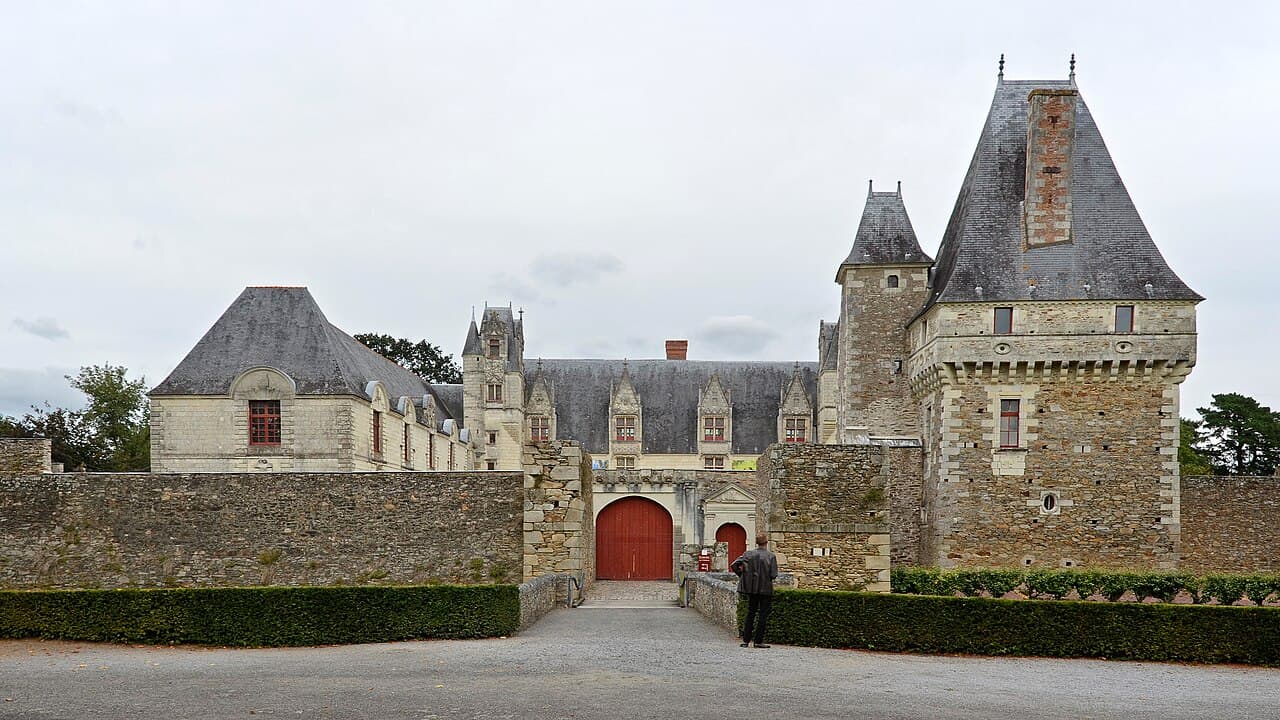
The château's architecture reflects its dual role as a fortified stronghold and a noble residence. Built primarily of tuffeau limestone, a material typical of the Loire Valley, the structure exhibits characteristics of high medieval defensive design. Its sharply pitched slate roofs and relatively conservative style contrast with the later, more flamboyant Loire châteaux such as Château de Blois and Château de Chambord, which emerged during the Renaissance.
The estate's setting amidst protected marshlands (now part of the Natura 2000 environmental network) provided natural fortification. Remnants of the original defensive works, including fortified walls and strategic positioning, remain integrated into the château's fabric. Inside, visitors can observe 16th-century fireplaces, coffered ceilings, and heraldic decorations bearing the Goulaine family coat of arms, all testifying to the castle's rich architectural heritage and the family's status.
Later modifications and cultural additions
Over the centuries, the château underwent various modifications reflecting changing tastes and functions. In the 19th century, after reacquisition by the Goulaine family in 1858, restoration efforts preserved its historic character. The 20th century saw the addition of unique cultural features, such as the butterfly aviary established in 1984 by Marquis Robert de Goulaine. This greenhouse housed hundreds of tropical butterflies flying freely among exotic plants, enriching the château's appeal as a cultural and natural attraction until its closure in 2016.
The former stables have been transformed into the LU Museum since 1999, showcasing the artistic and commercial heritage of the famous Nantes biscuit brand LU. This museum holds around 600 items, including advertising art and original paintings, linking the château to the industrial history of the region and the legacy of the Petit Beurre biscuit, a symbol of Nantes.
Winemaking heritage and economic significance
The Château de Goulaine estate is distinguished by its enduring viticultural tradition. The vineyards historically covered vast areas, reportedly extending to about 30,000 hectares by the late 15th century. While contemporary vineyard size is smaller, the estate continues to produce wine, maintaining its status as one of the last Loire Valley châteaux still active in winemaking.
This uninterrupted production over a millennium places Château de Goulaine among the oldest commercial wineries worldwide. Its wines, including Muscadet and other regional varieties, reflect centuries of expertise and adaptation to changing market and climatic conditions. The estate's wine production is integral to its identity and economic sustainability, linking heritage preservation with agricultural innovation.
Historical preservation and public engagement
Château de Goulaine has been officially recognized as a Monument historique since August 13, 1913, underscoring its architectural and cultural importance. Its preservation has been aided by the Goulaine family's continuous stewardship and thoughtful restoration initiatives.
Today, the château welcomes visitors to explore its historic interiors, gardens, and exhibitions. The integration of natural, cultural, and historical elements offers a multifaceted experience. The story of Clémence Lefeuvre, the château's head cook reputed to have invented the iconic beurre blanc sauce around 1890, adds a distinctive culinary heritage to the site.
Visitors can also enjoy the surrounding protected marshlands, which contribute to the château's unique setting and ecological significance. The estate's blend of medieval fortification, noble residence, winemaking tradition, and cultural attractions makes Château de Goulaine a compelling destination for those interested in history, architecture, and gastronomy.
Frequently asked questions (FAQ)
- How do I visit Château de Goulaine and what are the opening hours?
- Château de Goulaine is open daily from 10:00 to 18:00. Visitors can explore the castle grounds, gardens, LU Museum, and exhibitions. It is advisable to check the official website for any seasonal changes or special events.
- What is the historical significance of Château de Goulaine?
- Château de Goulaine has been home to the marquis de Goulaine family for over a thousand years and played a defensive role on the border of Brittany and France. It is also one of the oldest commercial wineries and a Monument historique.
- Can I learn about the winemaking tradition at Château de Goulaine?
- Yes, the château is renowned for its millennium-long winemaking heritage. Visitors can learn about the estate's vineyards, historic wine production, and taste local varieties such as Muscadet.
- Is the château accessible for visitors with mobility issues?
- While efforts have been made to improve accessibility, some historic areas may have limited access due to the castle's medieval architecture. Visitors with mobility concerns should contact the château in advance for specific information.
- What are some unique attractions at Château de Goulaine?
- Besides its historic architecture and vineyards, the château features the LU Museum showcasing Nantes biscuit brand art and advertising, and previously housed a butterfly aviary with tropical species.
Photo gallery

Information
Opening hours
10:00-18:00, daily
Ticket prices
€8 adult, €5 child
Current owner
Goulaine family
Website
Visit websiteSources & official resources
Verify the information above using these authoritative references.
Loading map...
Visitor reviews
No reviews yet. Been here? Write the first review and help other travelers!
Write the first reviewVisited this castle? Share your experience
Your review helps other travelers and adds first-hand knowledge to our encyclopedia.