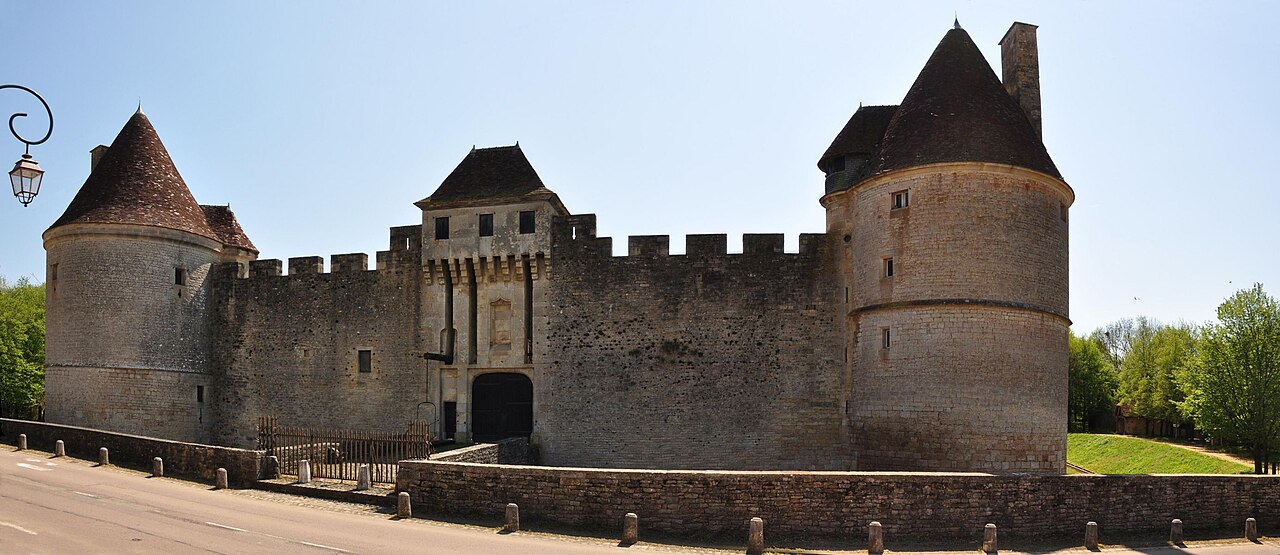
The Château de Frôlois stands as a significant example of medieval military architecture and noble residence in the region of Hauts-de-France, France. Established in the 13th century, this hill castle was originally constructed by local feudal lords to assert control and defend the surrounding territory. Its strategic location on the southern tip of a broad promontory overlooking the Vau valley provided a commanding vantage point more than 100 meters above the modern RD 122 road, underscoring its military importance.
Early history and feudal context
The origins of Château de Frôlois are closely tied to the turbulent feudal dynamics of the region. Before the castle's construction, the area was marked by conflict, as recorded in 1117 during a dispute between the lordships of Frôlois and Mont-Saint-Jean. By the mid-13th century, documentation confirms that the lordship of Frôlois was a vassal holding under the authority of the Saint-Seine Abbey, situating it firmly within the medieval feudal hierarchy. Further records from 1243 and 1301 reaffirm this relationship, illustrating the castle’s role as both a military stronghold and administrative center.
Ownership and property division
A distinctive feature of Château de Frôlois was the division of ownership that persisted for over two centuries. In 1372, the castle and its surrounding estates remained intact except for the main tower, or donjon, which was separately owned by the Hospital of Rhodes, a religious and military institution known for its crusading and hospitaller activities. This unusual arrangement highlights the complex feudal and religious entanglements of the period, with the castle serving both secular and ecclesiastical functions until at least 1614.
Architectural features and defensive structures
The castle’s design reflects its primary purpose as a fortified residence. The estate was enclosed by robust stone curtain walls and protected by a moat carefully cut directly into the rock, a formidable obstacle for any would-be attackers. The main entrance was secured by two types of bridges: a drawbridge that could be raised during siege to prevent access, and an adjacent fixed bridge for daily use. This dual-bridge system exemplifies medieval defensive ingenuity.
Layout and surviving structures
Today, the principal surviving structure is a large residential building dating from the 17th century, positioned on a cliff-edge above steep rocky escarpments. This building is bordered on its south and east sides by two tiers of terraces, which served both defensive and aesthetic purposes. Inside, visitors can explore a hall from the 1600s and a salon redecorated in the 1700s, including the notable Antoine de Vergy room, renowned for its decorative detail.
Artistic and cultural elements
The château’s interior features several authentic Italian painted tapestries imported from Bergamo, which adorn the salon walls and reflect the castle’s cultural connections beyond France. These tapestries contribute to the château’s artistic heritage, illustrating the influence of European art movements on French noble residences.
Later history and preservation
In 1683, the estate was acquired by Pierre du Ban de la Feuillée, who elevated the land’s status from a lordship to a county, marking an important moment in its noble prestige. The castle changed hands again in 1795 when it was sold to Nicolas Pierre Regnault, reflecting the social and political upheavals of the French Revolution and its aftermath.
By the early 20th century, Château de Frôlois was recognized as a fortified castle that had historically served as the core of an influential barony within the Duchy of Burgundy. Since 1977, it has been officially protected as a historic monument by the French Ministry of Culture, ensuring the preservation of its façades, roofs, supporting walls, and remaining curtain walls. Remarkably, the château has remained in the possession of the same family for nearly seven centuries, a testament to its enduring legacy and continuous habitation.
Geographical setting and strategic importance
The castle’s location on a promontory overlooking the Vau valley provided a natural defensive advantage, with steep rocky escarpments on multiple sides. This elevated position allowed for extensive surveillance of the surrounding landscape, crucial for early warning against potential invaders. The moat, carved directly into the rock, and the robust curtain walls further enhanced the castle’s defenses, making it a formidable stronghold in medieval times.
Integration with ecclesiastical structures
Within the castle grounds were not only military and residential buildings but also religious structures, including a church, clergy residence, and cemetery enclosed within the fortified perimeter. This integration of sacred and secular spaces was typical of medieval castles, reflecting the intertwined nature of feudal power and religious authority.
Architectural evolution and adaptations
Over the centuries, Château de Frôlois evolved from a purely military fortress into a noble residence. The 17th-century residential building exemplifies this transition, combining defensive features with more comfortable living spaces. The terraces surrounding the residence added both defensive layers and aesthetic appeal, demonstrating a shift in architectural priorities toward status and comfort alongside security.
Interior renovations, such as the 18th-century redecoration of the salon, indicate ongoing adaptations to contemporary tastes and the château’s role as a symbol of noble prestige. The preservation of original tapestries and decorative rooms offers valuable insights into the lifestyle of its inhabitants across different historical periods.
Frequently asked questions (FAQ)
- What is the historical significance of Château de Frôlois?
- Château de Frôlois is a remarkable example of medieval architecture and has played a significant role in the region's history since its construction in the 12th century. It served as a defensive stronghold and residence for local nobility, reflecting the feudal system of the time. Today, it stands as a testament to the rich heritage of France.
- When was Château de Frôlois built?
- Château de Frôlois was originally built in the 12th century, although it has undergone various renovations and restorations over the centuries. Its construction reflects the architectural styles of the medieval period, with later influences that showcase its evolution. The castle's enduring presence provides a glimpse into the past and the changing times it has witnessed.
- Can I visit Château de Frôlois?
- Yes, visitors are welcome to explore Château de Frôlois, although it is advisable to check in advance for any special events or private functions that may restrict access. Guided tours are often available, offering insights into the castle's history and architecture. Make sure to enjoy the surrounding gardens and scenic views during your visit.
- What are the opening hours for Château de Frôlois?
- Château de Frôlois typically opens to the public from 10 AM to 6 PM, but hours may vary depending on the season or special events. It is best to consult the official website or contact the castle directly for the most current information before planning your visit. This ensures you can make the most of your time at the castle.
- Is it possible to access Château de Frôlois with a disability?
- Château de Frôlois strives to be accessible to all visitors; however, due to its historical architecture, some areas may present challenges for those with mobility issues. It is recommended to contact the castle in advance to inquire about accessible paths and facilities. Staff members are usually available to assist visitors with special requirements.
- What are the ticket prices for visiting Château de Frôlois?
- Ticket prices for Château de Frôlois can vary based on age and the type of tour selected, with discounts often available for students and seniors. Typically, general admission is quite reasonable, making it an affordable outing for families and history enthusiasts alike. Be sure to check the official website for the latest pricing and any special promotions.
- When is the best time to visit Château de Frôlois?
- The best time to visit Château de Frôlois is during the spring and early autumn months when the weather is pleasant and the gardens are in full bloom. These seasons also tend to have fewer crowds, allowing for a more enjoyable experience. Special events and festivals are often held during summer, adding to the castle's allure.
- Are there nearby attractions to explore after visiting Château de Frôlois?
- Yes, there are several nearby attractions worth exploring after your visit to Château de Frôlois. The picturesque village of Frôlois offers charming streets and local shops, while the surrounding countryside is perfect for hiking and nature walks. Additionally, you can discover other historical sites in the region that showcase the rich culture and history of France.
Information
Loading map...
Visitor reviews
No reviews yet. Been here? Write the first review and help other travelers!
Write the first reviewVisited this castle? Share your experience
Your review helps other travelers and adds first-hand knowledge to our encyclopedia.