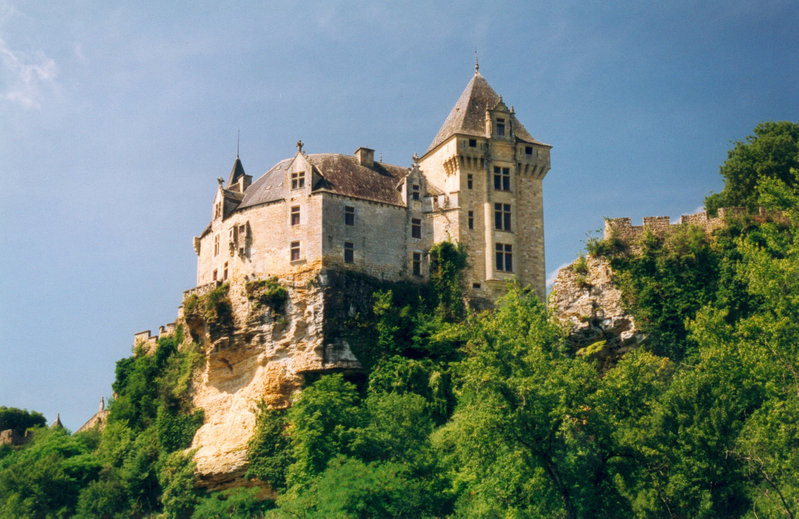
Château de Temniac

Château de Temniac: historic hill castle ruins in Nouvelle-Aquitaine
Temniac, Nouvelle-Aquitaine, France
High Medieval (11th–13th c.)
Ruins

Château de Temniac stands as a remarkable example of a hill castle located in the commune of Temniac, within the Nouvelle-Aquitaine region of southwestern France. This castle, now in a state of ruins, reflects a rich history that spans from the 11th century through to the 17th century, showcasing architectural evolution across the High Medieval period and beyond.

Historical context and significance

The origins of Château de Temniac date back to the 11th century, a time when feudal lords constructed fortified residences to assert control over their territories and protect against invasions. Situated strategically on a hilltop, the castle's location provided natural defensive advantages, allowing surveillance over the surrounding landscape and control of important routes in the region.

Throughout the centuries, the castle witnessed numerous historical events and changes in ownership, reflecting the turbulent history of southwestern France. Its long period of construction and modification, extending into the 17th century, indicates its sustained importance and adaptation to changing military and residential needs.

Architectural features and layout

As a hill castle, Château de Temniac was designed to maximize defensive capabilities afforded by its elevated position. The castle's remains suggest a complex layout typical of medieval fortifications, including stone curtain walls that once enclosed the inner ward, providing protection against attackers.

Key architectural elements likely included towers positioned at strategic points along the walls for enhanced defense and observation. The presence of a gatehouse would have controlled access to the castle, often reinforced with defensive mechanisms such as portcullises and murder holes.

Within the walls, the castle would have contained residential quarters, a great hall for gatherings and administrative functions, and possibly a chapel reflecting the religious practices of its inhabitants. The long construction period suggests that Renaissance influences may have been integrated into later modifications, although the predominant style remains rooted in High Medieval military architecture.

Decline and current condition

Like many medieval fortresses, Château de Temniac fell into decline as military technology and political circumstances evolved, reducing the strategic necessity of hilltop castles. The castle suffered damage over time, including possible destruction during regional conflicts or neglect during periods of peace.

Today, the site is classified as ruins, with surviving fragments of walls and foundational structures providing valuable insights into medieval fortification techniques. The ruins attract visitors interested in history, archaeology, and the picturesque landscape of Nouvelle-Aquitaine.

Cultural heritage and tourism

Château de Temniac holds cultural significance as a testament to medieval feudal society and architectural ingenuity. Efforts to preserve the ruins contribute to understanding the region's heritage and promote historical tourism.

Visitors to the site can explore the remains and enjoy panoramic views from the hilltop, gaining a tangible connection to the past. The castle's location within Nouvelle-Aquitaine places it among other notable historical sites, enriching the cultural landscape of the area.

Access and visitor information

While the castle is in ruins, it is accessible to the public, typically without an entrance fee. Visitors are advised to wear appropriate footwear due to uneven terrain and to respect preservation guidelines to protect the fragile remains.

Nearby towns and villages offer additional amenities and historical attractions, making Château de Temniac a worthwhile destination for those exploring the rich medieval heritage of southwestern France.

Frequently asked questions (FAQ)

How do I get to Château de Temniac?
Château de Temniac is located in the picturesque village of Temniac, France. You can reach it by car via the D820 road, and there is ample parking available near the castle. Public transport options include local buses that connect to nearby towns, making it accessible for visitors without a car.
What is the historical significance of Château de Temniac?
Château de Temniac dates back to the 12th century and has played a crucial role in the region's history, serving as a stronghold during various conflicts. Its architecture reflects the medieval style, and it has been beautifully preserved, offering a glimpse into the past. The castle is also linked to local legends and historical figures, making it an intriguing site for history enthusiasts.
When was Château de Temniac built?
Construction of Château de Temniac began in the early 12th century, with various renovations occurring in subsequent centuries. The castle showcases a blend of architectural styles due to these modifications, including Gothic and Renaissance elements. Its long history adds to its charm and significance in the region.
Can I take photographs inside the castle?
Yes, photography is allowed inside Château de Temniac, but visitors are encouraged to be respectful of the historical artifacts and exhibits. Make sure to check for any specific restrictions in certain areas, especially during guided tours. Capturing the beauty of the castle can enhance your visit and create lasting memories.
Why is the architecture of Château de Temniac unique?
The architecture of Château de Temniac is unique due to its combination of defensive features and elegant design elements. The structure includes thick stone walls, towers, and a beautifully landscaped courtyard, showcasing the dual purpose of fortification and residence. Visitors can appreciate the craftsmanship and historical significance of the architectural styles represented in the castle.
Is it possible to book guided tours of Château de Temniac?
Yes, guided tours of Château de Temniac are available and highly recommended for an enriching experience. These tours provide in-depth information about the castle's history, architecture, and legends, led by knowledgeable guides. It’s advisable to book in advance during peak tourist seasons to ensure availability.
What are the opening hours for Château de Temniac?
Château de Temniac is open to visitors from 10:00 AM to 5:00 PM, Tuesday through Sunday. During the summer months, the castle may have extended hours to accommodate more guests. Always check the official website or contact the castle directly for the most current information regarding seasonal hours and any special closures.
What are the ticket prices for Château de Temniac?
Admission prices for Château de Temniac are quite reasonable, with adult tickets priced at €10 and discounts available for children and seniors. Family packages are also offered, making it an affordable outing for all ages. Tickets can be purchased on-site or online for convenience.
When is the best time to visit Château de Temniac?
The best time to visit Château de Temniac is during the spring and early fall, when the weather is mild and the gardens are in bloom. This period also attracts fewer crowds, allowing for a more enjoyable experience as you explore the castle and its surroundings. However, each season offers a unique charm, so visitors can enjoy the castle year-round.
Are there any nearby attractions to visit after Château de Temniac?
Yes, visitors to Château de Temniac can explore several nearby attractions, including the beautiful Parc Naturel Régional des Causses du Quercy, which offers stunning landscapes and hiking opportunities. Additionally, the charming village of Saint-Cirq-Lapopie is just a short drive away, featuring picturesque streets and local shops. These attractions make for a perfect day trip in the region.

Information

Hill Castle

Loading map...

Visitor reviews

No reviews yet. Been here? Write the first review and help other travelers!

Write the first review

Visited this castle? Share your experience

Your review helps other travelers and adds first-hand knowledge to our encyclopedia.
Write a review

(5/5)

0/2000 characters

Your review will be visible after admin approval

Nearby castles

5.8 km
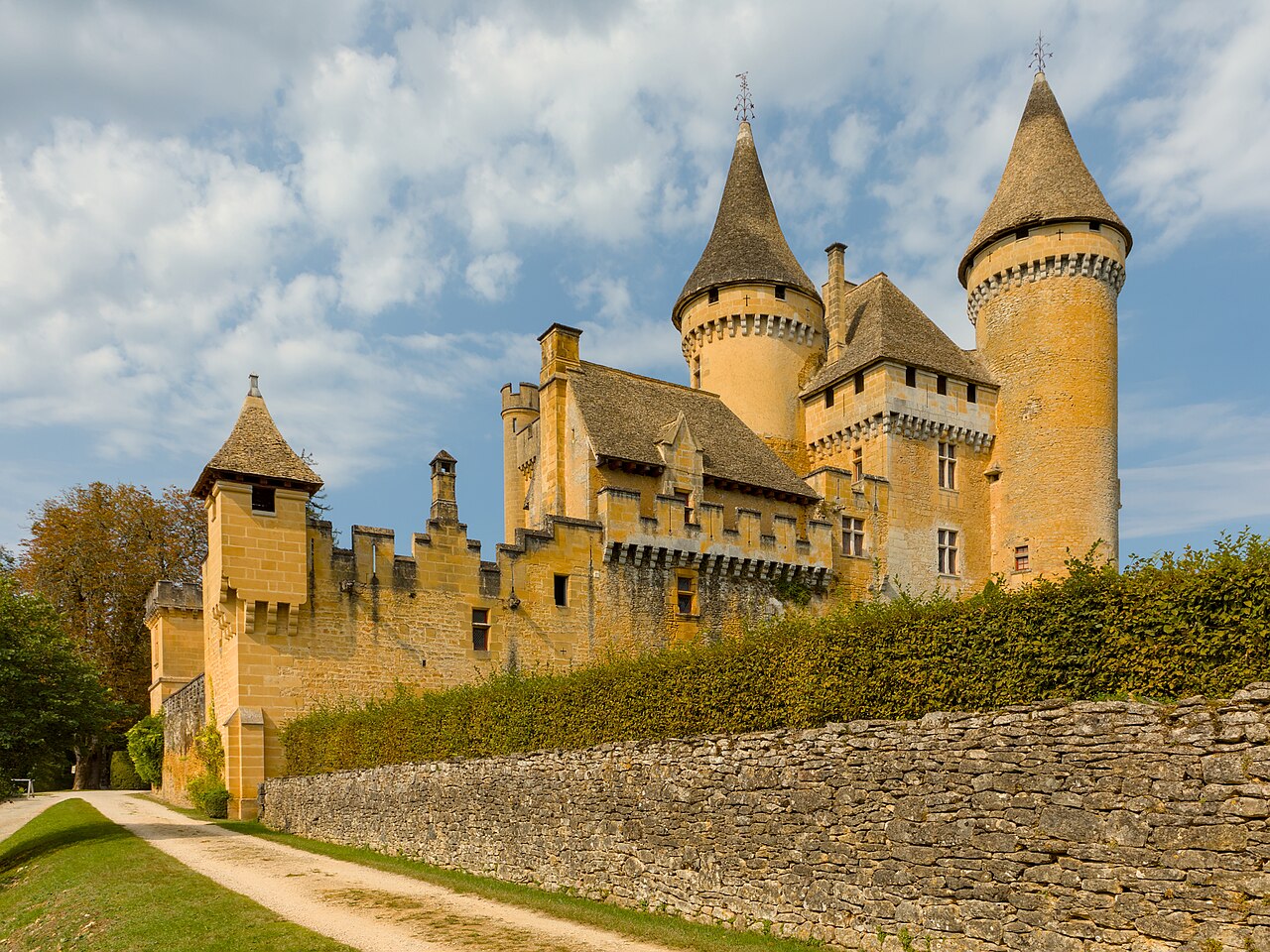
Puymartin Castle — France castle

Puymartin Castle

Marquay, France

Puymartin Castle is a prominent late medieval hill castle located in the commune of Marquay, nestled between the historic towns of Sarlat-la-Canéda and Les Eyzies in the Périgord Noir region of the Dordogne department, within the Nouvelle-Aquitaine region of southwestern France. This castle stands as a testament to the turbulent history of the area, having witnessed significant events during the Hundred Years' War and the French Wars of Religion. Its strategic position atop a steep hill provided commanding views over the surrounding landscape, essential for defense and control in medieval times. Historical background and strategic importance Construction of Puymartin Castle began in the late 13th century, around 1270, under the auspices of the abbots of Sarlat. Initially built as a fortified stronghold, it was later owned by the Serviens family, reflecting the feudal complexities of the region. The castle's location near a border zone made it a crucial military asset. During the Hundred Years' War, it was seized by English forces in 1357, suffering considerable damage through sieges and assaults. Following a period of abandonment by the mid-15th century, Radulphe de Saint-Clar acquired the ruins in 1450 and undertook extensive rebuilding and enlargement efforts. These renovations not only restored the castle's defensive capabilities but also enhanced its residential comfort, signaling a transition from purely military use to a noble residence. The Saint-Clar family played a pivotal role in the castle's history, particularly during the religious conflicts of the 16th century. Raymond de Saint-Clar, known as “Captain Puymartin,” led Catholic forces in reclaiming Sarlat-la-Canéda from Protestant Huguenots, underscoring the castle's ongoing military and political significance. Architectural features and restorations Puymartin Castle is characterized by a complex of interconnected buildings fortified by curtain walls and protected by a gatehouse consisting of two adjoining structures. One gatehouse building underwent significant restoration, while the other, dating from the Renaissance period, exemplifies 15th-century architectural style. The castle's layout reflects typical medieval defensive design, adapted over centuries to incorporate Renaissance and later stylistic elements. The interiors showcase a rich collection of 17th-century furnishings and artworks, including Aubusson tapestries, ornate wood paneling, intricately carved ceiling beams, and grand fireplaces. These features highlight the castle's evolution into a comfortable noble residence while preserving its historical character. A particularly unique architectural element is the studiolo on the second floor, a small private study adorned with eight wooden panels painted in grisaille by Philippe Lemaire in 1679. These panels depict mythological figures such as Alcyone, Argus, Bellerophon, Oeneus, Perseus, Meleager, Memnon, and Clytie, based on engravings from 1655. The studiolo's iconography remains a subject of scholarly interest, possibly symbolizing princely virtues or religious themes. It has been protected as a historic monument since 1977. The legend of the white lady One of the most enduring stories associated with Puymartin Castle is the legend of the White Lady, believed to be the ghost of Thérèse de Saint-Clar. According to tradition, Thérèse was imprisoned by her jealous husband in a small room within the north tower for 15 years after he discovered her alleged infidelity. She was reportedly confined without leaving the room, with food passed through a trap door in the ceiling until her death. This haunting tale contributes to the castle's mystique and attracts visitors intrigued by its paranormal history. Family disputes and decline The 17th century saw a prolonged dispute over ownership between siblings Jean and Suzanne de Saint-Clar, lasting approximately 40 years. Suzanne ultimately gained control of the castle. By the 18th century, the castle was largely abandoned and fell into disrepair, exacerbated by the upheavals of the French Revolution. The imprisonment of the then-owner, François Roffignac de Carbonnier de Marzac, further contributed to neglect. 19th-century restoration and modern ownership Revival of Puymartin Castle occurred in the late 19th century under the direction of Marquis Marc de Carbonnier de Marzac, who invested heavily in restoration using his wife's dowry. The restoration embraced a neo-Gothic style, blending medieval forms with romanticized architectural elements popular at the time. This extensive work significantly altered the castle's appearance, ensuring its preservation into the modern era. In 1920, the castle passed into the Montbron family through marriage, and following the death of Henri de Chérade de Montbron in 2002, ownership transferred to his wife and children in 2003. Today, Puymartin Castle remains a well-preserved monument, open to visitors who can explore its rich history, architecture, and the legends that surround it. Cultural significance and nearby attractions Besides its architectural and historical importance, Puymartin Castle is part of the cultural heritage of the Dordogne region. The castle's proximity to the Puymartin cave, known for its Paleolithic horse paintings, adds an archaeological dimension to the area, although the cave is privately owned and separate from the castle estate. Visitors to the castle can experience a blend of medieval history, Renaissance art, and romantic neo-Gothic restoration, making it a unique destination in southwestern France.

Late Medieval (14th–15th c.)
Details
8.7 km
Château de Montfort — France castle

Château de Montfort

Vitrac, France

The Château de Montfort is a prominent hill castle situated in the French commune of Vitrac within the Dordogne département, part of the Nouvelle-Aquitaine region. Perched dramatically on a steep promontory overlooking the Cingle de Montfort (Montfort Meander) of the Dordogne River, the castle commands a strategic vantage point that has shaped its turbulent history. Strategic location and early significance The castle's position on a rocky outcrop provided natural defenses and sweeping views of the winding river below, making it a coveted stronghold in the medieval period. Its imposing setting "aroused the envy of those who wished to rule Périgord," a reflection of its importance in controlling the surrounding territory. The site likely hosted fortifications since the early Middle Ages, although the exact date of initial construction is uncertain. Medieval conflicts and repeated destruction The Château de Montfort endured a series of violent episodes throughout its history, marked by numerous battles and sieges. In 1214, it was seized and deliberately razed on the orders of Simon de Montfort, a key figure in the Albigensian Crusade. The demolition was executed under the supervision of Abbot Guy of Vaux-de-Cernay, who led the destruction party. This event was part of a broader campaign to suppress rebellious lords and consolidate royal authority in the region. Despite its destruction, the castle was rebuilt, only to face devastation three more times. It suffered damage during the Hundred Years' War, a prolonged conflict between England and France that ravaged much of the French countryside. Later, under the reign of Louis XI in the 15th century, the castle was again targeted, reflecting the king's efforts to strengthen centralized control over fractious nobles. The final recorded destruction occurred on the orders of Henri IV of France, who ruled in the late 16th and early 17th centuries. This period was marked by religious wars and political upheaval, during which many fortresses were slighted to prevent their use by rebellious factions. Architectural features and 19th-century restoration The castle's architecture reflects its turbulent past. Although much of the original medieval structure was lost to repeated destruction, the remnants reveal typical features of a hill castle with defensive walls adapted to the rocky terrain. The castle's layout took advantage of the natural promontory, incorporating battlements, towers, and a gatehouse that controlled access to the stronghold. In the 19th century, the Château de Montfort underwent renovation work that introduced a romanticized aesthetic. The restoration gave the castle a whimsical appearance, described as resembling a "stage setting for light opera." This reflects the 19th-century fascination with medieval architecture and the Gothic Revival movement, which often emphasized picturesque and theatrical elements over strict historical accuracy. 19th-century romanticism and preservation The restoration efforts included rebuilding portions of the walls and towers, sometimes with imaginative embellishments. These changes aimed more at creating an evocative atmosphere than replicating the castle's original defensive function. The castle today stands as a blend of authentic medieval ruins and 19th-century additions, offering visitors a glimpse into both its martial past and later cultural reinterpretation. Historical context and cultural significance The Château de Montfort played a significant role in the medieval power struggles of the Périgord region. Its repeated destruction and reconstruction illustrate the shifting political landscape of France from the early 13th century through the Renaissance. The castle's association with figures like Simon de Montfort and monarchs such as Louis XI and Henri IV highlights its strategic and symbolic importance. Today, the castle is valued both as a historical monument and as a picturesque landmark that enriches the cultural heritage of Dordogne. Its dramatic location and layered history attract historians, architects, and tourists interested in medieval fortifications and French history. Visiting Château de Montfort Visitors to the castle can explore the ruins set against the striking backdrop of the Dordogne River meander. The site offers opportunities for hiking and photography, with panoramic views from the castle's elevated position. While the castle is partially preserved, it retains enough structural elements to convey its former grandeur and defensive capabilities. The surrounding region of Nouvelle-Aquitaine is rich in medieval castles and historic sites, making Château de Montfort a valuable part of any cultural itinerary in southwestern France.

Details
9.1 km

Castle of Beynac

Beynac-et-Cazenac, France

The Castle of Beynac is one of the most spectacular and well-preserved medieval castles in the Dordogne region of southwestern France. Perched atop a towering limestone cliff about 150 meters above the Dordogne River, the castle dominates the valley with commanding views of the surrounding countryside. Its strategic location made it a key stronghold controlling the vital river valley route during the High Medieval period. Constructed in the 12th century by the noble Barons of Beynac, the castle was designed primarily for defense. The natural cliff face provided formidable protection on one side, while the other sides were fortified with double crenelated walls, double moats—including a deep natural ravine—and a double barbican system, all intended to render the castle nearly impregnable. This combination of natural and man-made defenses exemplifies the strategic military architecture of the High Medieval era. Historical context and significance Early history and construction The earliest records of the Castle of Beynac date back to 1115, linked to Mainard de Beynac and his family, who held extensive lands in the region. The castle was built to assert control over the Dordogne valley, a crucial frontier between the territories of the French crown and the English during the medieval period. The Barons of Beynac were influential supporters of the nearby abbey of Cadouin, indicating their prominence in both secular and ecclesiastical affairs. The castle’s initial construction included a large square Romanesque donjon (keep) featuring defensive elements such as machicolations and a narrow spiral staircase tower. This donjon remains the oldest surviving structure within the castle complex, highlighting the military architectural style of the 12th century. Conflicts and sieges In 1197, the castle was famously captured by Richard the Lionheart, King of England, who scaled the cliff face to seize the fortress. Despite this daring conquest, Richard’s occupation was brief due to his death shortly afterward during a campaign against the nearby Castle of Chalus. The castle soon returned to the control of the Beynac family. During the Albigensian Crusade in 1214, the castle suffered damage when Simon de Montfort accused the Beynac lords of heresy and destroyed parts of the castle, including the main tower and walls. However, the family regained possession within a year and rebuilt the fortifications, demonstrating resilience amid religious and political turmoil. The Hundred Years’ War (1337–1453) saw Beynac as a steadfast French stronghold, positioned directly opposite the English-held Castle of Castelnaud across the Dordogne River. The two castles were focal points of ongoing skirmishes and military engagements. Despite the turbulent conflict and temporary English control of the surrounding region, Beynac was never permanently captured by English forces. Later history and decline In the 16th century, during the French Wars of Religion, the Beynac family converted to Protestantism and supported the Huguenot cause. In response to the period’s instability, King Henry IV ordered significant remodeling of the castle’s defenses in 1585 to strengthen its military capabilities. The male line of the Beynac family ended in 1753, and the castle passed to the Beaumont-Beynac family through marriage. Over time, the castle was gradually abandoned and fell into disrepair by the late 19th century. The last of the Beynacs, Marie-Claude de Beynac, died in 1811 without heirs, marking the end of the family’s direct association with the castle. In 1944, the castle was officially classified as a historic monument, recognizing its cultural and architectural significance. In 1962, Lucien Grosso purchased the property and undertook extensive restoration efforts to revive its medieval appearance and structural integrity. Architectural features and layout Defensive structures The castle’s position atop a steep cliff provides natural defense on the riverside. The plateau side, more vulnerable to attack, is heavily fortified with a double crenelated enceinte (curtain wall), double moats including a deep natural ravine, and two barbicans serving as outer defensive gateways. This layered defense system exemplifies medieval military engineering aimed at resisting sieges and assaults. The donjon and residential wings The Romanesque donjon is a prominent feature, characterized by thick walls, limited openings, and defensive elements such as machicolations and an échauguette (small watch turret). Its crenellated terrace offers panoramic views of the Dordogne valley and surrounding castles. Adjacent to the donjon is a residential wing dating from the 12th century, expanded and modified through the 16th and 17th centuries. Opposite this lies another residential wing with parts from the 14th century, including a courtyard and a square staircase leading to 17th-century apartments. These living quarters reflect the castle’s evolution from a purely military fortress to a noble residence. Interior decoration and art The interior of the castle retains significant historical elements such as 17th-century wood paneling and painted ceilings. The main hall, once the meeting place of the Périgord Estates, contains a Renaissance-style sculpted fireplace adorned with bucrania (carved ox skulls symbolizing strength). A small oratory within the castle is decorated with 15th-century frescoes depicting religious scenes including the Pietà, Saint Christopher, and the Last Supper featuring Saint Martial as the host. The castle also houses a rich collection of tapestries illustrating hunting scenes and noble life, highlighting its cultural importance beyond military functions. Cultural legacy and modern restoration Restoration and preservation Following decades of neglect, the castle’s restoration began in earnest after its acquisition by Lucien Grosso in 1962. His efforts focused on preserving the castle’s medieval character, repairing structural damage, and maintaining original architectural features. Today, the Castle of Beynac stands as one of the best-preserved medieval fortresses in the region, attracting visitors interested in history, architecture, and scenic views. Filming and tourism The castle’s authentic medieval appearance and dramatic location have made it a popular filming location for historical and fantasy movies, including "Joan of Arc" (1999) and "The Visitors" (1993). As a tourist attraction, it offers guided tours showcasing its rich history, architectural features, and art collections. Visitors can explore the castle’s defensive walls, towers, and interior rooms, enjoying breathtaking views over the Dordogne valley and neighboring castles such as Castelnaud. The site provides a unique opportunity to experience the military and residential aspects of a medieval fortress in a remarkably preserved setting.

High Medieval (11th–13th c.)
Details