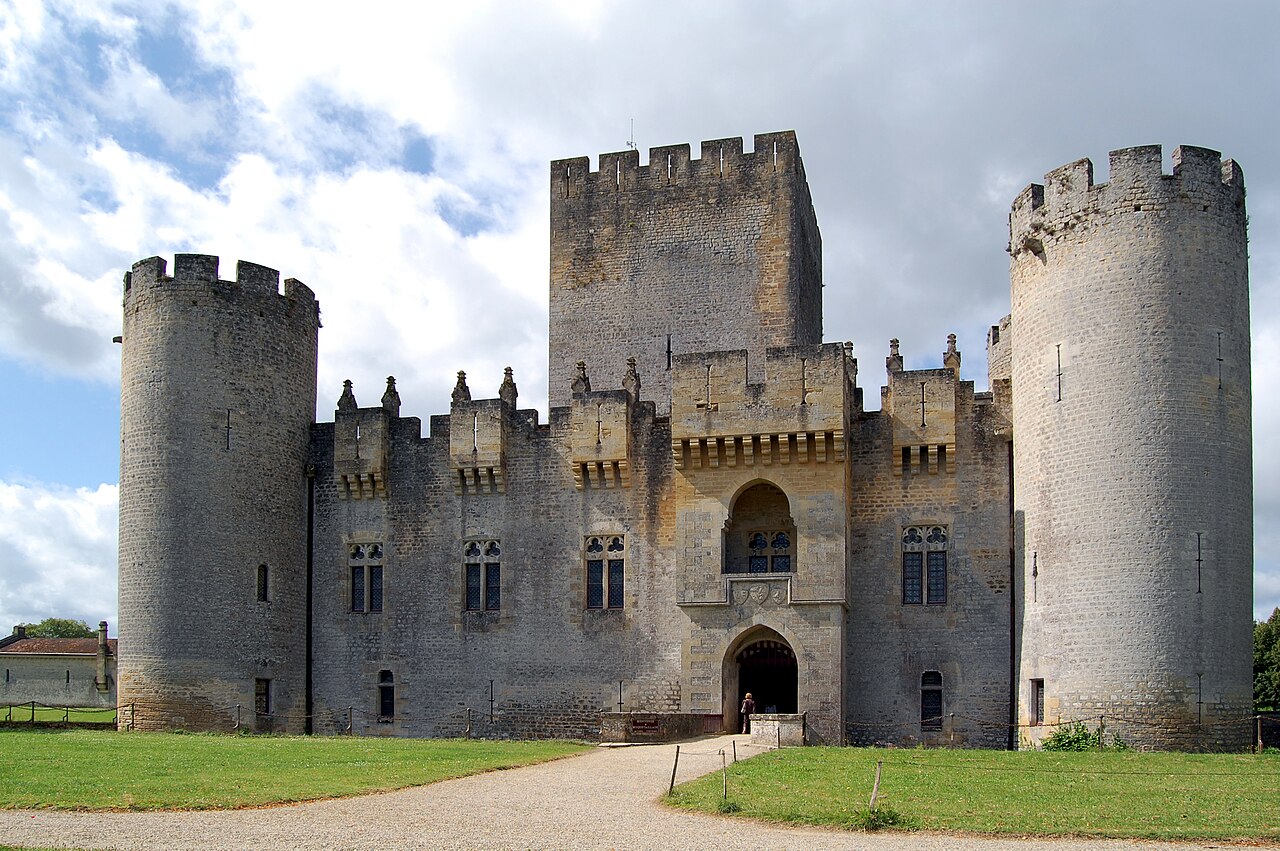
Château de Fargues
The Château de Fargues stands as a remarkable example of a medieval fortress nestled within the commune of Fargues in the Hauts-de-France region of northern France. Established in 1306 by Raymond-Guilhem, the lord of Fargues and nephew of Pope Clement V, this castle was originally conceived as a stronghold and the seat of local lordship. Its strategic location on a hill provided natural defense advantages typical of hill castles constructed during the High medieval period. The castle's early history is closely intertwined with the political and religious prominence of its founder, reflecting the importance of fortified residences in asserting territorial control during the medieval era.
The origins and medieval development
Construction of the Château de Fargues began in the early 14th century, embodying the architectural and defensive principles of the time. It was designed to serve both as a military fortress and a noble residence, featuring robust stone walls, fortified towers, and a commanding position overlooking the surrounding landscape. The castle's initial layout likely included a keep or donjon, curtain walls, and a gatehouse, elements common to hill castles built for defense and control.
In 1472, the château passed into the hands of the influential Lur family through the marriage of Pierre de Lur and Isabeau de Montferrand, the lady of Fargues. This union marked the beginning of a long association between the castle and the Lur family lineage. Later, in 1586, the family name evolved to Lur Saluces following the marriage of Jean de Lur and Catherine-Charlotte de Saluces. The Lur Saluces family played a significant role in the château's history, overseeing its maintenance and expansion over several centuries.
17th-century enhancements and the devastating fire
During the 17th century, the château underwent important enhancements under the direction of Honoré de Lur Saluces, a marquis and military officer. He strengthened the fortress's defenses and expanded its living quarters, adapting the medieval structure to the evolving needs of noble residence and security. These modifications likely included the reinforcement of walls, the addition of bastions or artillery platforms, and improvements to the interior spaces to accommodate the lifestyle of the aristocracy.
However, the castle suffered a major setback on the night of May 24-25, 1687, when a catastrophic fire ravaged much of the structure. The blaze caused severe damage, leaving large sections in ruins. Despite this, the château was not entirely abandoned. Records from 1727 indicate that the Lur Saluces family continued to occupy the residence and undertook repairs to stabilize and maintain the building. Nevertheless, the fire marked the beginning of a period of gradual decline.
Decline and partial abandonment
From the late 18th century through the early 19th century, the château's importance diminished as the Lur Saluces family acquired other estates and shifted their focus. The fortress gradually fell into neglect, with parts of the structure succumbing to decay and being overtaken by natural vegetation. This period saw the château transition from a noble residence to a more symbolic heritage site, reflecting broader changes in aristocratic life and property management during and after the French Revolution.
20th-century revival and restoration efforts
The 20th century brought renewed interest in the château, particularly under the stewardship of Bertrand de Lur Saluces in the 1920s. He revitalized the estate by planting 15 hectares of vineyards on the gravel and clay soils surrounding the castle, linking the property to the prestigious Sauternes appellation known for its sweet wines. This agricultural development redefined the château's role, combining heritage preservation with viticultural excellence.
Following Bertrand's death in 1968, management passed to his nephew, Alexandre de Lur Saluces, who led extensive restoration projects from 2000 to 2015. These efforts aimed to recover much of the château's original grandeur, restoring architectural features and stabilizing the structure. Since December 11, 2007, the Château de Fargues has been officially recognized as a historic monument, underscoring its cultural and architectural significance.
Architectural features and estate layout
The château is situated within a vast 170-hectare estate, approximately 500 meters west of the village of Fargues. While detailed architectural plans are scarce, the castle reflects centuries of development typical of fortified residences evolving from medieval strongholds to early modern noble estates. Its composition likely includes remnants of medieval curtain walls, towers, and possibly a moat or defensive ditch, although specific features are not extensively documented.
The 17th-century expansions under Honoré de Lur Saluces introduced elements characteristic of the period, potentially including baroque influences in interior decoration and adaptations for artillery defense. The fire of 1687 left parts of the château partially ruined, with some sections reclaimed by nature until restoration began in the 20th century.
Today, the château stands partially restored, retaining its medieval and early modern character. The surrounding vineyards contribute to the estate's ongoing economic and cultural vitality, maintaining a connection between historical heritage and contemporary wine production.
Château de Fargues in the cultural landscape
Beyond its architectural and historical significance, the Château de Fargues holds an important place in the cultural landscape of the Hauts-de-France region. It serves as a venue for cultural and scientific gatherings, reflecting its enduring role within the community. The estate's integration with neighboring renowned vineyards such as Yquem and Rieussec highlights its prominence in the prestigious Sauternes wine-producing area.
The château exemplifies the layered history of French noble estates, showcasing the transition from medieval fortification to agricultural estate and heritage monument. Its preservation efforts demonstrate the value placed on maintaining historical structures while adapting them for modern use.
Frequently asked questions (FAQ)
- How do I get to Château de Fargues?
- Château de Fargues is located in the picturesque region of France, easily accessible by car or public transport. The nearest major city is Bordeaux, from which you can take a train or bus to reach the castle. Once in the vicinity, local signage will guide you to this stunning historical site.
- What is the historical significance of Château de Fargues?
- Château de Fargues dates back to the 14th century and is renowned for its rich history associated with the French aristocracy. Its architecture reflects a blend of medieval and Renaissance styles, showcasing the evolution of castle design over centuries. The castle played a crucial role in local history, serving as both a residence and a fortification.
- When was Château de Fargues built?
- Château de Fargues was constructed in the 14th century, with significant renovations occurring in the following centuries. Its enduring structure has been preserved to reflect the architectural styles of its time. Visitors can appreciate the historical layers that reveal the castle's long-standing significance in the region.
- Can I visit Château de Fargues year-round?
- Yes, Château de Fargues welcomes visitors throughout the year, although the best time to visit is during the spring and early autumn when the gardens are in full bloom. Check the official website for any seasonal events or temporary closures. Guided tours are available, providing a deeper understanding of the castle's history and architecture.
- Why is the architecture of Château de Fargues noteworthy?
- The architecture of Château de Fargues is noteworthy for its unique blend of medieval fortifications and Renaissance elegance. Visitors can admire the imposing towers, intricate stonework, and beautifully designed interiors that reflect the artistic trends of the periods. This architectural fusion makes the castle a significant example of historical construction in France.
- Is it possible to take guided tours of Château de Fargues?
- Yes, guided tours are available at Château de Fargues, offering an in-depth exploration of its history and architecture. Knowledgeable guides lead visitors through the castle's key areas, sharing fascinating stories and insights. Booking in advance is recommended, especially during peak tourist seasons.
- What are the opening hours for Château de Fargues?
- Château de Fargues typically opens its doors to visitors from 10 AM to 6 PM, with extended hours during the summer months. It is advisable to check the official website for any changes in opening times or special events. Arriving early can help you avoid crowds and enjoy a more intimate experience.
- What are the ticket prices for visiting Château de Fargues?
- Ticket prices for Château de Fargues vary depending on the season and age group, with discounts often available for students and seniors. Generally, adult tickets are reasonably priced, making it accessible for families and tourists alike. Special rates may apply for group bookings or guided tours, so it's worth checking ahead.
- Are there any nearby attractions to visit along with Château de Fargues?
- Yes, the area surrounding Château de Fargues is rich in attractions, including vineyards and charming villages. Visitors can explore local wine estates, partake in tastings, or enjoy scenic walks in the countryside. Additionally, the city of Bordeaux, with its vibrant culture and history, is just a short drive away, making it an excellent complement to your visit.
Information
Website
Visit websiteSources & official resources
Verify the information above using these authoritative references.
Loading map...
Visitor reviews
No reviews yet. Been here? Write the first review and help other travelers!
Write the first reviewVisited this castle? Share your experience
Your review helps other travelers and adds first-hand knowledge to our encyclopedia.