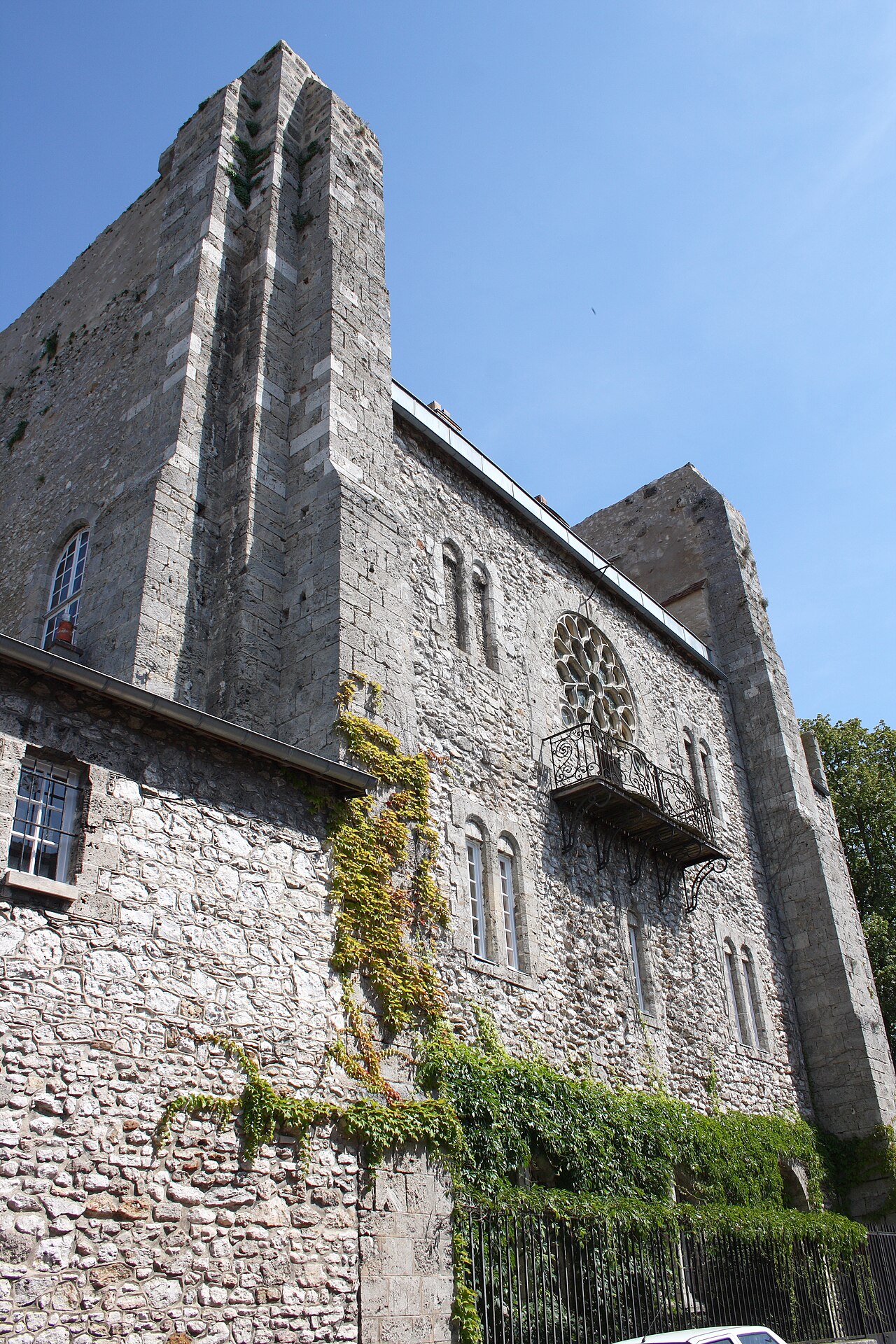
Château de Diant
Château de Diant is a medieval fortress originally constructed in the 13th century in the village of Diant, France. Built for a companion of Philippe Auguste, the castle reflects the military and residential architecture typical of the High Medieval period. Its initial construction focused on defensive features appropriate for the era, including thick stone walls and fortified towers designed to guard the surrounding territory.
Medieval origins and architectural evolution
The castle's core dates back to the 13th century, a time when fortifications were essential for local lords to assert control and provide security. The original structure likely included a keep or donjon, curtain walls, and a gatehouse, although specific details are limited due to later modifications. During the 15th century, the castle underwent significant additions and alterations, reflecting changes in military technology and residential needs. These modifications may have included the reinforcement of walls, the addition of living quarters, and adaptations to accommodate artillery or cannon defense.
19th-century modifications and preservation
In the first half of the 19th century, Château de Diant saw further changes, possibly linked to restoration efforts or modernization by its private owners. These 19th-century alterations would have aimed to preserve the castle's structure while adapting it to contemporary tastes or uses, a common practice in French château maintenance during this period.
The castle's gardens and heritage status
The gardens of Château de Diant are also recognized for their historic value and have been officially listed, highlighting their cultural importance alongside the castle itself. These gardens contribute to the estate's overall heritage, combining natural beauty with the architectural setting.
Ownership and public access
Today, Château de Diant remains privately owned and is not open to the public. Since 1946, the castle has been protected as a historic monument, ensuring its preservation for future generations despite limited public interaction. Its status safeguards both the architectural integrity of the castle and the surrounding gardens.
Architectural significance in the Île-de-France region
Located in the Île-de-France region, Château de Diant represents a typical example of a High Medieval hill castle that evolved through the centuries. Its layered history of construction and renovation offers insight into the changing functions of castles from purely military fortresses to noble residences with aesthetic considerations.
Structural features and defensive elements
The castle's original defensive features would have included battlements, arrow slits, and possibly a moat or other water defenses, common in medieval fortifications of the period. While detailed surveys are limited due to private ownership, the castle's enduring stonework and layout still reflect its strategic purpose.
Cultural and historical context
Château de Diant's connection to Philippe Auguste's companion situates it within the broader context of French medieval nobility and the consolidation of royal power during the 13th century. The castle's survival through centuries of political and social changes marks it as a valuable witness to regional history.
Frequently asked questions (FAQ)
- Is Château de Diant open to the public?
- Château de Diant is privately owned and not open to the public, so visitors cannot tour the interior or gardens.
- When was Château de Diant originally built?
- The castle was originally constructed in the 13th century for a companion of Philippe Auguste during the High Medieval period.
- What architectural styles are present in Château de Diant?
- The castle primarily reflects High Medieval military architecture with later additions from the 15th and 19th centuries.
- Are the gardens of Château de Diant accessible to visitors?
- The gardens are listed for their historic value but remain private and are not accessible to the public.
- What is the historical significance of Château de Diant?
- Château de Diant is significant for its medieval origins linked to Philippe Auguste's era and its preservation as a historic monument since 1946.
Information
Current owner
Private owner
Loading map...
Visitor reviews
No reviews yet. Been here? Write the first review and help other travelers!
Write the first reviewVisited this castle? Share your experience
Your review helps other travelers and adds first-hand knowledge to our encyclopedia.