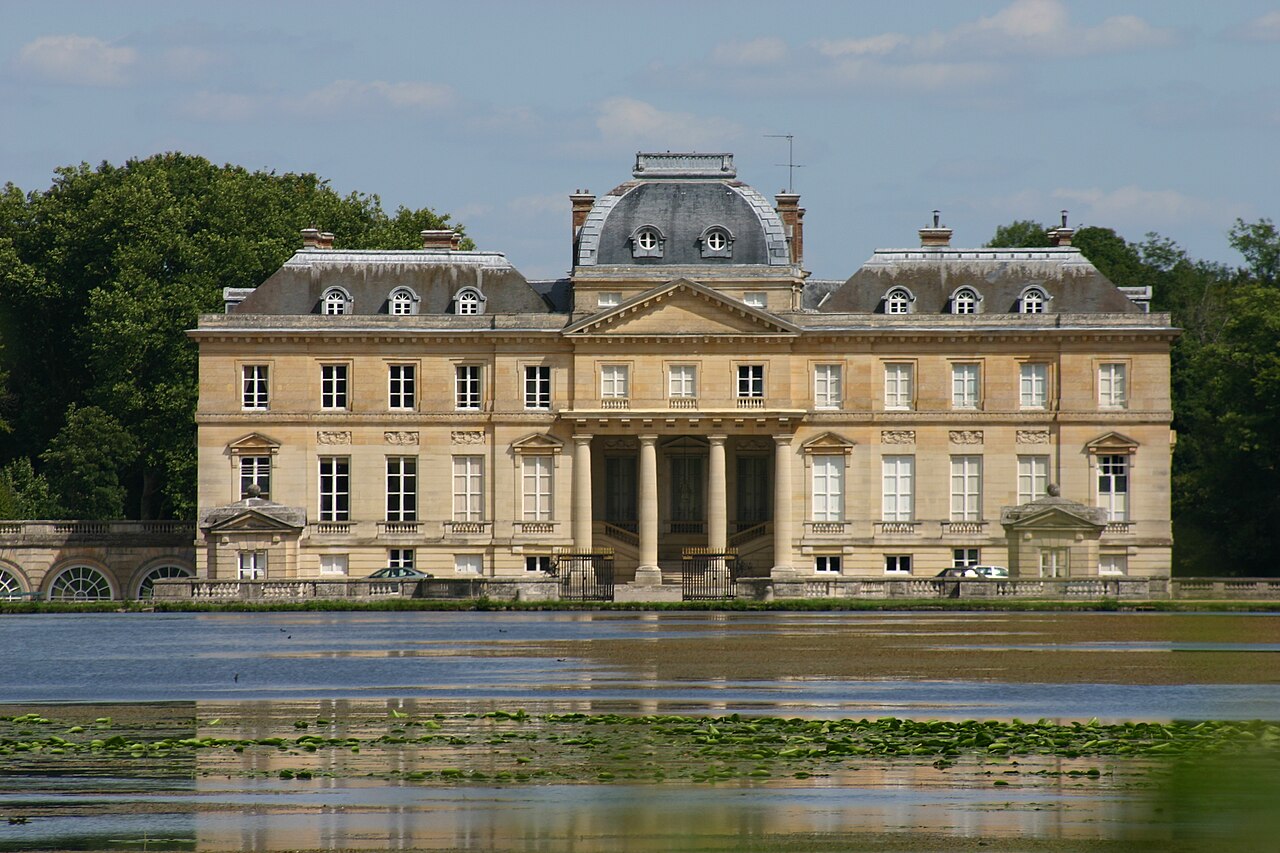
Château de Courson
The Château de Courson stands as a distinguished example of French Renaissance architecture nestled in the commune of Courson-Monteloup, France. Constructed in 1676, this château has remained a symbol of aristocratic heritage and architectural elegance for over three centuries. Originally built as a residence for the prominent Lamoignon family, it reflects the refined tastes and social stature of its early owners, who were closely linked to the royal court of King Louis XIV.
Set within a vast estate encompassing approximately 45 hectares, the château is renowned not only for its architectural grandeur but also for its historic formal gardens. These gardens were initially designed in the strict French formal style by a pupil of André Le Nôtre, the legendary landscape architect behind the gardens of Versailles. Over the centuries, the park has undergone significant transformations, blending classical symmetry with evolving horticultural trends, making it a living testament to the history of French landscape design.
Historical background and ownership lineage
The origins of the Château de Courson are intimately connected to Guillaume de Lamoignon (1617–1677), a distinguished legal official who was granted the estate by King Louis XIV in 1672. This royal gift underscored the château’s importance within the social and political fabric of 17th-century France. The château was completed four years later, in 1676, embodying the architectural ideals of the period.
In the 18th century, ownership shifted to the de Nervaux-Loys family, who preserved and enhanced the estate for over two centuries. Their stewardship ensured the continuity of the château’s aristocratic character and facilitated the development of its renowned gardens. The estate remained in the same family lineage well into the modern era, reflecting a rare continuity of ownership among French country estates.
Architectural features and style
The château’s architecture reflects the late Baroque residential style prevalent in France during the late 17th century. The influence of Nicolas de Lamoignon (1648–1724), Guillaume’s son and a royal official, is evident in the château’s refined façades and elegant rooflines. The building’s symmetrical design, balanced proportions, and classical detailing exemplify the aesthetics of the Renaissance period transitioning into the Baroque era.
Constructed primarily of stone, the château features a harmonious ensemble of main buildings complemented by ancillary structures such as outbuildings and a chapel. The preservation of these elements, including the château’s façades, roofs, and hydraulic systems, has been a priority in maintaining the estate’s historical integrity.
The formal gardens and landscape evolution
Initial design by a pupil of André Le Nôtre
The château’s surrounding park was originally laid out in the 18th century by a pupil of André Le Nôtre, whose influence is apparent in the garden’s strict geometric patterns and long, axial vistas. This formal French garden style emphasizes symmetry and order, creating a visual dialogue between the château and its landscape.
19th-century garden remodelings
The 19th century brought two significant phases of garden transformation. Around 1820, Louis-Martin Berthault, a renowned landscaper working for the Duke of Padua, introduced modifications that blended the traditional formal elements with emerging naturalistic trends. Berthault’s work added subtle curves and plantings that softened the rigid geometry of the original design.
Later, circa 1860, the celebrated landscape architects Denis and Eugène Bühler were commissioned to further enhance the gardens. Drawing on their extensive experience with major French urban parks, the Bühler brothers enriched the botanical diversity, refined pathways, and introduced new garden structures. Their contributions added layers of complexity and horticultural interest, reflecting the evolving tastes of the Second Empire period.
Heritage status and preservation efforts
The historical significance of the Château de Courson was formally recognized in the 20th century when it was declared a historic monument in 1944. This designation initially protected the château’s main buildings, including its façades, roofs, and hydraulic installations. In 1992, the protection was extended to encompass the entire estate, including the park, principal avenue, outbuildings, and chapel, ensuring comprehensive conservation of the property.
These preservation efforts have maintained the château’s architectural character and the integrity of its gardens, allowing visitors to experience the estate much as it appeared in previous centuries. The hydraulic systems, integral to the garden’s irrigation and fountain features, remain a notable aspect of the château’s engineering heritage.
Cultural significance and modern uses
Beyond its architectural and horticultural importance, the Château de Courson has played a role in contemporary cultural life. From 1983 to 2015, it hosted the Journées des Plantes de Courson, a prestigious biennial plant fair that attracted horticulturalists and enthusiasts nationwide. This event reinforced the château’s reputation as a center for botanical excellence and garden appreciation.
The estate also gained cinematic recognition when it served as a filming location for the 1985 documentary Bring On the Night, which followed the rock musician Sting during his first solo tour. This modern cultural association adds a unique dimension to the château’s historical narrative.
As of 2022, after centuries of family ownership, the château and its domain were placed on the market, signaling a potential new chapter in its long and storied existence.
Architectural ensemble and estate features
The château and its grounds present a cohesive ensemble that spans several centuries of French architectural and landscape traditions. The main building’s late Baroque elegance is complemented by the extensive formal gardens, which retain the original French formal garden layout enriched by 19th-century adaptations.
The estate’s outbuildings, chapel, and hydraulic systems contribute to the overall historical ambiance and functionality of the property. These elements, preserved under historic monument status, provide insight into the operational aspects of a grand French country estate.
The park’s botanical collection, enhanced by the Bühler brothers’ 19th-century work, includes a variety of ornamental trees, shrubs, and seasonal plants. This diversity highlights the estate’s continuing role as a site of horticultural interest and landscape design innovation.
Information
Website
Visit websiteSources & official resources
Verify the information above using these authoritative references.
Loading map...
Visitor reviews
No reviews yet. Been here? Write the first review and help other travelers!
Write the first reviewVisited this castle? Share your experience
Your review helps other travelers and adds first-hand knowledge to our encyclopedia.