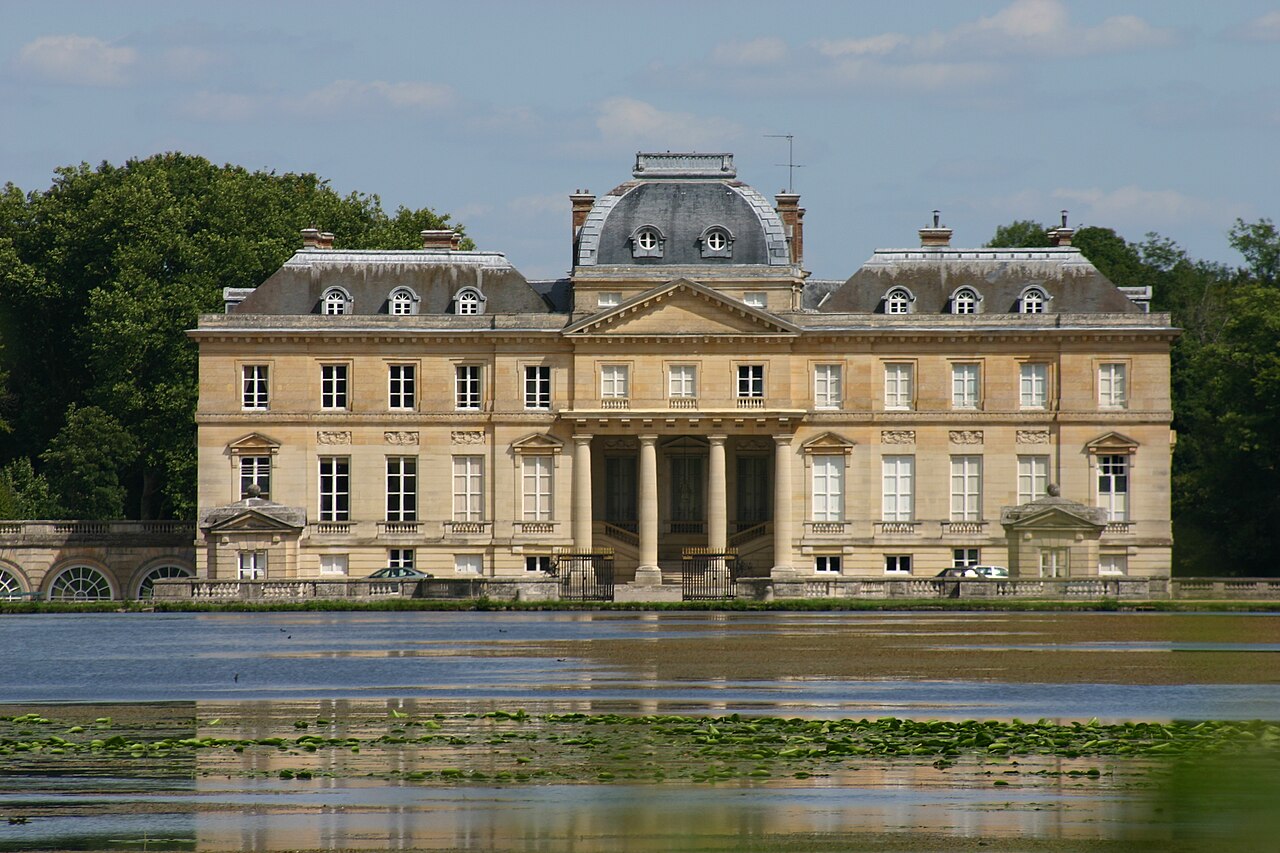
Château de Baville
The Château de Baville stands as a distinguished example of early 17th-century French aristocratic architecture, nestled within the historic region of Hauts-de-France. This hill castle reflects the cultural and architectural ambitions of the noble de Lamoignon family, who shaped the estate into a vibrant intellectual and artistic hub during the Grand Siècle, the period of France's cultural flourishing under Louis XIII.
Originally acquired in 1559 by Charles de Lamoignon, the property underwent its most significant transformation between 1625 and 1629 under his son, Chrétien de Lamoignon, a counselor at the Parliament of Paris. The château's construction during this early modern period coincided with a broader movement in French architecture toward classical harmony and balance, moving away from medieval fortress designs to more refined residential palaces.
Architectural composition and style
The château exemplifies the early 17th-century French classical style, characterized by its symmetrical layout and balanced proportions. The main building forms the rear of a formal courtyard, or cour d’honneur, a typical feature in aristocratic residences that emphasized grandeur and ceremonial approach.
The two-story structure is composed of a central block with a prominent pedimented facade, flanked by lower wings terminating in projecting pavilions. The central section is constructed entirely of white stone, which contrasts elegantly with the red brick infill of the wings, a common regional technique that adds texture and color variation. The blue slate roofs crown the building, providing a durable and visually striking finish.
Originally, the château included two symmetrical wings added in 1677 by Chrétien-François I de Lamoignon, which maintained the architectural language of the original structure. However, the left wing was dismantled in the early 19th century, with its materials repurposed to build an orangery behind the surviving right wing. This adaptive reuse illustrates how the estate evolved to meet changing functional needs while respecting its architectural heritage.
Historical significance and cultural heritage
The Château de Baville played a prominent role as a cultural and intellectual center during the 17th century. It hosted some of the most influential figures of the French literary and spiritual world, including Jean Racine, Jean de La Fontaine, Madame de Sévigné, Saint Vincent de Paul, Bourdaloue, and the poet Nicolas Boileau. Their presence reflects the château’s importance as a salon and retreat where ideas and artistic works were cultivated.
The estate remained in the de Lamoignon family until the French Revolution, when it was sold in 1791. Subsequently, it was owned by Philippe Albert Joseph de Saulty until his death in 1833. The château's history mirrors the broader social and political changes in France, transitioning from noble residence to a site of varied uses in the modern era.
Gardens and landscape evolution
The château’s gardens have undergone significant transformations reflecting changing tastes in landscape design. Initially laid out in the French formal style typical of the 17th century, characterized by geometric patterns and symmetry, the grounds were converted into an English landscape garden in 1816. This style favored naturalistic layouts with rolling lawns and informal plantings.
Later in the 19th century, the gardens were restored to their original French formal design, possibly under the direction of the renowned landscape architects Henri and Achille Duchêne. Their involvement would have ensured a faithful revival of the château’s historic aesthetic, blending formal parterres, tree-lined avenues, and ornamental garden structures known as fabriques.
20th-century uses and preservation
During World War II, the château served a practical role as a boarding facility for the Lycée Saint-Louis-de-Gonzague, illustrating its adaptive reuse in times of national crisis. In the 21st century, it gained popular cultural exposure as a filming location for the television series “L’Internat” in 2009.
Recognizing its architectural and historical value, the château, along with its dependencies and the two enclosed parks, was officially registered as a historic monument on October 22, 1990. This designation helps ensure the preservation of its unique ensemble of buildings and gardens for future generations.
Architectural details and estate layout
The château’s main building is a harmonious and balanced composition typical of the early 17th century. The central pedimented section serves as the visual and structural focal point, emphasizing the entrance and main reception areas. The flanking wings and projecting pavilions extend the living spaces while maintaining symmetry.
The use of white stone framing around red brick walls creates a distinctive polychrome effect, a hallmark of the region’s architecture in this period. The surviving right wing, along with the orangery built from the dismantled left wing’s materials, illustrates the estate’s evolving functional needs and the practical reuse of building materials.
The château is surrounded by two enclosed parks, each bordered by walls and containing several garden buildings or fabriques. These structures, often ornamental, serve leisure and decorative purposes, enhancing the overall landscape design and reflecting the tastes of successive owners.
Frequently asked questions (FAQ)
- When was Château de Baville built and by whom?
- Château de Baville was constructed between 1625 and 1629 by Chrétien de Lamoignon, a counselor at the Parliament of Paris.
- What architectural style characterizes Château de Baville?
- The château features early 17th-century French classical architecture with a harmonious composition of white stone and red brick, and blue slate roofs.
- Can visitors see the gardens at Château de Baville?
- Yes, the château is surrounded by two enclosed parks with historic garden buildings, originally laid out in the French formal style and later restored.
- What notable historical figures visited Château de Baville?
- Notable visitors include Jean Racine, Jean de La Fontaine, Madame de Sévigné, Saint Vincent de Paul, Bourdaloue, and Nicolas Boileau.
- Is Château de Baville protected as a historic monument?
- Yes, it has been officially registered as a historic monument since October 22, 1990, ensuring its preservation.
Information
Loading map...
Visitor reviews
No reviews yet. Been here? Write the first review and help other travelers!
Write the first reviewVisited this castle? Share your experience
Your review helps other travelers and adds first-hand knowledge to our encyclopedia.