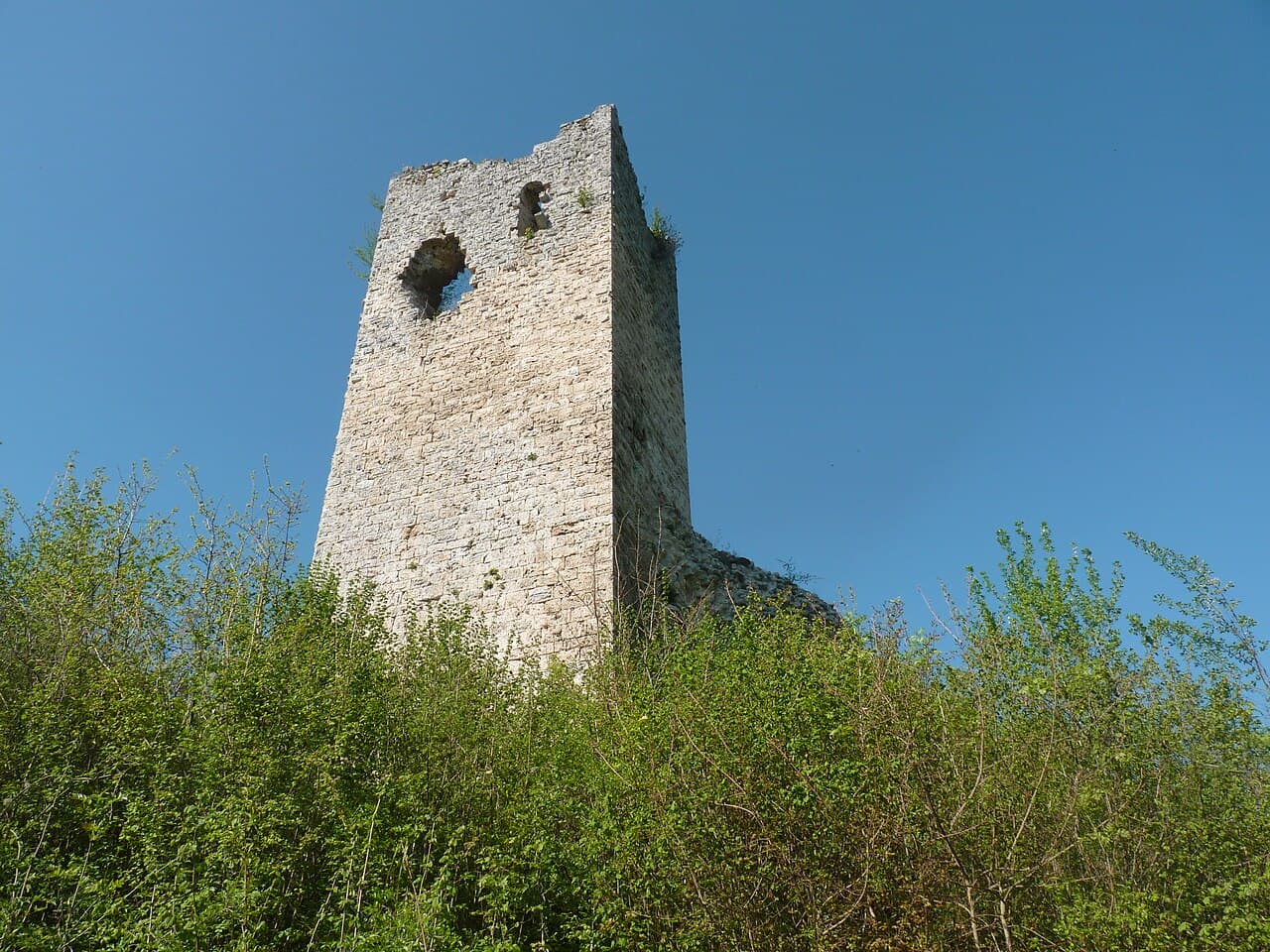
Château de Clermont (Isère)
The Château de Clermont, also known locally as the Tour de Clermont, is a significant 11th-century medieval castle located in the commune of Chirens in the Isère department of southeastern France. This castle stands as a remarkable example of early high medieval fortification architecture in the region, although it now exists primarily as ruined remains.
Historically, the site of Chirens was under the control of the Clermont-Tonnerre family from the 10th century. This noble family established their power base by constructing the castle on the strategically important Clermont hill, which overlooks the Chirens Valley. The castle’s location provided commanding views of the surrounding landscape, essential for defense and surveillance during the medieval period.
Architectural features and layout
The castle was originally built with a triple enceinte, a defensive system composed of three concentric walls or ramparts, which was a sophisticated design for its time. These walls enclosed the castle's inner structures, providing multiple layers of defense against attackers. The most notable architectural feature of the Château de Clermont is its irregular pentagonal keep, a fortified tower that served as the last refuge during sieges and as a symbol of lordly power.
The keep is distinctive due to its unusual pentagonal shape, which is not commonly found in medieval castle design. This shape may have been adapted to the topography of the hill or designed to improve defensive capabilities by eliminating blind spots. The castle’s walls and keep were constructed primarily from local stone, typical of medieval fortifications in the region.
Historical context and significance
The Château de Clermont played a vital role in the feudal control of the Chirens area. The Clermont-Tonnerre family was influential in the region, and the castle served both as their residence and as a military stronghold. The castle's construction in the 11th century places it within the broader context of castle building in France during the high medieval period, when fortifications were essential for asserting noble authority and defending territories.
By the early 16th century, the castle was reportedly abandoned. The decline in its military importance coincided with changes in warfare and the centralization of royal power in France. Subsequently, in 1626, the castle was dismantled by royal order under the influence of Cardinal Richelieu. This policy aimed to reduce the power of feudal lords by destroying castles that no longer served a defensive purpose for the kingdom. The dismantling left only the keep standing, which remains the most prominent remnant today.
Preservation and cultural heritage
Today, the Château de Clermont is classified as ruins, with much of its original structure lost to time and deliberate demolition. The surviving keep remains under the ownership of the Clermont-Tonnerre family, maintaining a direct link to its medieval origins. The site has been officially recognized for its historical and architectural value and has been listed as a monument historique by the French Ministry of Culture since 1983.
Visitors to the site can explore the remains of the castle and appreciate its strategic hilltop setting, which offers panoramic views of the surrounding valley. Although the castle is in ruins, its layout and surviving structures provide valuable insights into medieval military architecture and feudal history in the Isère region.
Access and visitor information
The Château de Clermont is accessible to the public, allowing visitors to engage with the rich history of the area and the legacy of the Clermont-Tonnerre family. The site’s location in Chirens makes it a point of interest for those exploring medieval castles in southeastern France. While the castle does not have extensive visitor facilities, its historical significance and scenic surroundings make it a worthwhile destination for history enthusiasts and cultural tourists.
Nearby historical sites and attractions
Visitors to the Château de Clermont can also explore other historical landmarks in the Isère department, including medieval churches, other castle ruins, and natural landscapes. The region’s rich history and varied terrain offer diverse opportunities for cultural and outdoor activities.
Frequently asked questions (FAQ)
- What is the history of Château de Clermont?
- Château de Clermont, located in Chirens, France, dates back to the 13th century and played a significant role in the region's feudal history. It was originally built as a defensive fortress and later transformed into a residence. The castle's rich history reflects the architectural styles and cultural influences of various periods.
- When is Château de Clermont open to visitors?
- Château de Clermont is typically open to visitors from April to October, with specific opening hours that may vary. It is advisable to check the official website for the most current information regarding specific days and times of operation. Special events may also influence opening hours, so planning ahead is recommended.
- Can I take guided tours of Château de Clermont?
- Yes, guided tours are available at Château de Clermont, providing visitors with a deeper understanding of its history and architecture. Tours are usually led by knowledgeable guides who share fascinating stories about the castle's past. It is best to book your tour in advance, especially during peak tourist seasons.
- Is Château de Clermont accessible for visitors with disabilities?
- Château de Clermont strives to be accessible to all visitors, but due to its historical nature, some areas may present challenges for those with mobility issues. It is advisable to contact the castle ahead of your visit to inquire about specific accessibility options and accommodations that may be available.
- What are the ticket prices for visiting Château de Clermont?
- Ticket prices for Château de Clermont vary depending on age and group size, with discounts often available for children and seniors. Generally, tickets can be purchased on-site or online, and it is a good idea to check for any special offers or family packages. Keep in mind that additional fees may apply for guided tours and special events.
- What is the best time to visit Château de Clermont?
- The best time to visit Château de Clermont is during the spring and early autumn when the weather is pleasant and the gardens are in full bloom. Summer can be busy with tourists, so if you prefer a quieter experience, consider visiting during weekdays. Additionally, special events and themed tours often take place during these seasons.
- Are there any nearby attractions to visit when at Château de Clermont?
- Yes, there are several attractions near Château de Clermont, including picturesque hiking trails and other historical sites. The region is also known for its beautiful natural landscapes, making it ideal for outdoor activities. Visitors often enjoy exploring the local vineyards and quaint villages nearby.
Photo gallery

Information
Loading map...
Visitor reviews
No reviews yet. Been here? Write the first review and help other travelers!
Write the first reviewVisited this castle? Share your experience
Your review helps other travelers and adds first-hand knowledge to our encyclopedia.



