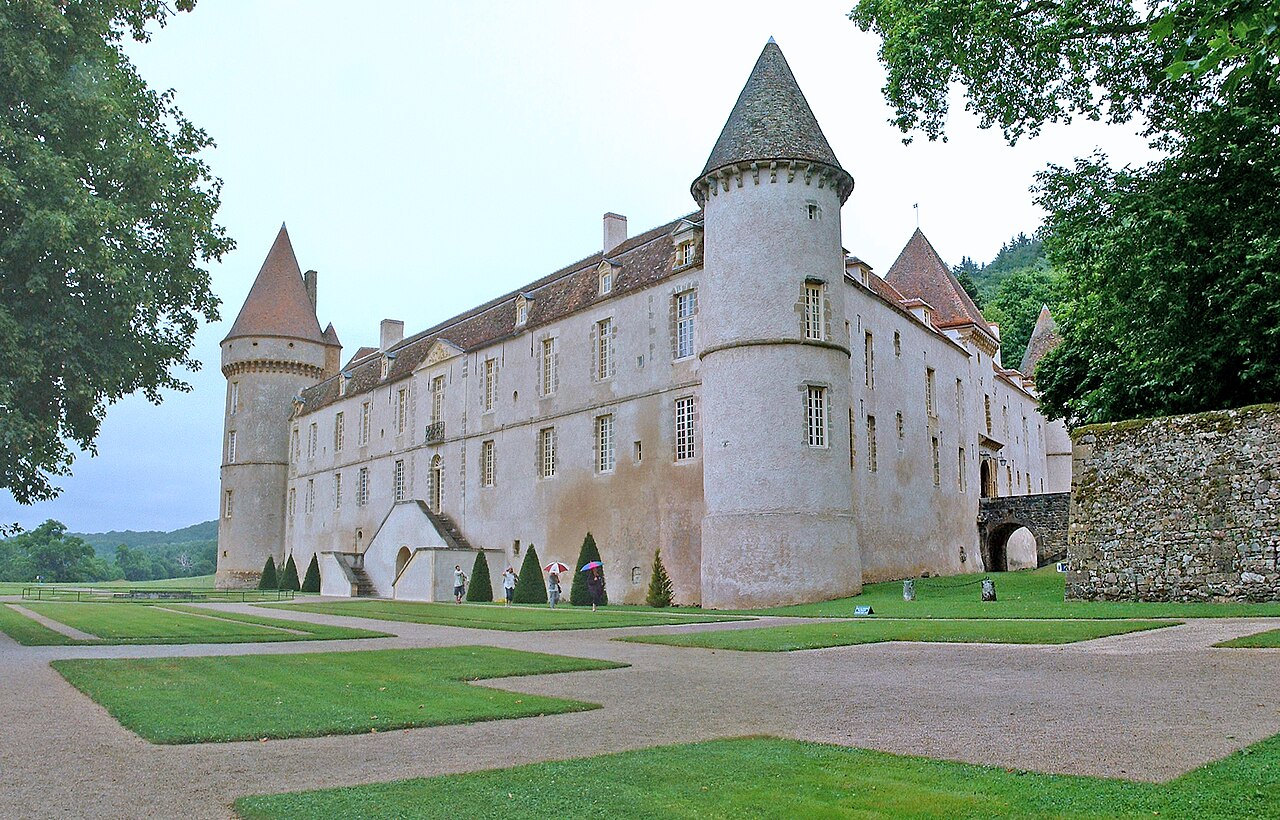
Château de Chastellux
The Château de Chastellux stands as a remarkable example of a medieval hill castle with origins stretching back to antiquity, located in Chastellux-sur-Cure, within the Yonne department of the Bourgogne-Franche-Comté region in France. This castle's history reflects a continuous evolution from a Roman military site to a fortified noble residence, embodying centuries of architectural and historical significance.
The site originally hosted a Roman fortification known as Castrum Lucii, constructed using both wood and stone. Archaeological discoveries, including the nearby Chagnats mosaic, confirm the Roman presence and strategic importance of this location along the Cure river valley. This early military installation laid the foundation for the castle that would later rise on the rocky promontory.
By approximately 1080 AD, the castle began to take its recognizable medieval form with the construction of the Saint-Jean tower, which remains the oldest surviving structure on the site. This tower is notable for being one of the oldest in Europe, rising five stories high with walls over 3.5 meters thick at the base. Its internal design includes a staircase carved within the wall thickness, a prison cell for an officer on the second floor, and a dungeon accessed through a floor vault opening. The tower is capped by a lantern housing a watch bell, which historically served to alert the castle's inhabitants to danger.
Medieval fortifications and architectural evolution
Throughout the Middle Ages, the castle expanded significantly to meet the defensive needs of the time. A second enceinte, or outer defensive wall, was constructed featuring multiple turrets and a ditch that once enclosed the castle and connected the surrounding valleys. Although the ditch has since disappeared, two of the original turrets survive today, offering insight into the castle's formidable defenses.
The 12th-century fortress included tall towers linked by a thick crenellated curtain wall with a chemin de ronde (wall walk) allowing defenders to patrol and defend the perimeter effectively. Wooden buildings were attached along the walls, serving practical purposes such as sheltering livestock and storing fodder, emphasizing the castle's primary role as a defensive stronghold rather than a comfortable residence.
The guard room, dated by an inscription to 1240, is the second oldest structure after the Saint-Jean tower. It is flanked by the Tower of the Ermitage and the Tower of the Archives, which contributed to the castle's layered defenses. On the west side, a keep (donjon) stands alongside the Tower of Amboise. Originally built as a bastion without floors, the Tower of Amboise was later raised by two floors and converted into a residential tower, reflecting a shift from purely military to more domestic functions.
Historical significance and noble lineage
The lords of Chastellux have maintained continuous residence in the castle for nearly a millennium, with documented records dating back to 1116, when a legal hearing was held in the Saint-Jean tower. The castle's strategic location on a rocky peak overlooking the Cure river made it a key defensive fortress on the border between the Duchy of Burgundy and the County of Nevers.
The castle's owners were closely allied with the powerful Dukes of Burgundy and played important roles in regional military campaigns. Notably, Marshal Claude de Chastellux distinguished himself in the 1417 siege of Paris and the 1423 Battle of Cravant. He contributed to the castle's architectural heritage by building the castle chapel and an octagonal tower in the late 15th century, where he was later buried.
Renaissance transformations and later history
In the late 16th and early 17th centuries, Olivier de Chastellux undertook significant modifications, transforming the military bastion into the residential Tower of Amboise and creating a terrace around the castle. These changes reflected the evolving role of the castle from a fortress to a noble residence. The castle continued to maintain a significant garrison until the end of King Louis XIII's reign.
The French Revolution brought considerable damage to the castle. Medieval arms were stolen, valuable furniture and archives were looted, and many priceless paintings were destroyed. All heraldic symbols were targeted for removal, reflecting the revolutionary intent to erase aristocratic legacies.
Following nearly two decades of exile during the Napoleonic era, the Chastellux family returned in 1810. Restoration efforts led by César Laurent de Chastellux during the Restoration period sought to revive the castle's medieval character by removing 18th-century decorative elements that had been added over time.
During World War II, the castle briefly served military purposes under General Jean de Lattre de Tassigny in 1940. A significant fire in 1975 damaged the roof and attic, particularly affecting the Tower of Amboise, which remains roofless to this day.
Architectural features and surviving structures
The castle is built on a rocky promontory overlooking the Cure valley, with a roughly triangular layout shaped by the natural rock formations. Its construction primarily uses stone, highlighting its defensive purpose.
The Saint-Jean tower is a dominant feature, notable for its massive walls and internal prison and dungeon facilities. The 12th-century curtain wall with crenellations and the chemin de ronde showcase medieval military architecture. The surviving turrets of the outer enceinte and the guard room add to the defensive complexity.
The castle chapel and octagonal tower, built in the late 15th century, represent the castle's religious and residential evolution. The terrace constructed in 1592 by Olivier de Chastellux provides a significant outdoor space that integrates with the castle's natural setting.
Additional structures such as a dovecote, farm buildings, and various terraces contribute to the castle's historical character and have been protected as historic monuments.
Heritage protection and public access
The Château de Chastellux has been recognized for its cultural and historical importance with multiple heritage protections. The main building has been protected as a historic monument since 1925, with the Saint-Jean tower added in 1976, and the outbuildings, terraces, and farm structures included in 1989. The entire site has been classified since 1935, ensuring the preservation of its long and complex history for future generations.
Visitors to the castle can appreciate its layered history, from Roman origins through medieval fortifications to Renaissance transformations. The castle remains a testament to the enduring legacy of the Chastellux family and the architectural evolution of French hill castles.
Frequently asked questions (FAQ)
- How do I get to Château de Chastellux?
- Château de Chastellux is located in Chastellux-sur-Cure, France, easily accessible by car or public transport. The nearest major city is Avallon, from where you can take a bus or taxi to reach the castle. Parking is available on-site for visitors who drive.
- What is the historical significance of Château de Chastellux?
- Château de Chastellux dates back to the 12th century and has a rich history tied to the nobility of Burgundy. It played a crucial role during various historical events, including the Hundred Years' War. Today, it serves as a testament to the medieval architecture and the feudal system of France.
- When was Château de Chastellux built?
- The construction of Château de Chastellux began in the 12th century, with significant renovations occurring in the following centuries. The castle has been well-preserved and showcases architectural styles from different periods. Its enduring presence offers a glimpse into France's medieval past.
- Can I visit Château de Chastellux year-round?
- Yes, Château de Chastellux is open for visitors year-round, though hours may vary seasonally. It’s advisable to check the official website for the latest opening hours and any special events that may be taking place. Guided tours are available to enhance your experience.
- Why is the architecture of Château de Chastellux noteworthy?
- The architecture of Château de Chastellux is noteworthy for its blend of medieval and Renaissance styles, featuring imposing towers and intricate stonework. The castle's layout and fortifications reflect the military needs of its era, while its decorative elements showcase the artistry of its builders. Visitors will appreciate the unique design that has withstood the test of time.
- Is it possible to take guided tours of Château de Chastellux?
- Yes, guided tours are available at Château de Chastellux, providing visitors with in-depth knowledge about its history and architecture. These tours are led by knowledgeable guides who share fascinating stories about the castle and its former inhabitants. Reservations are recommended, especially during peak tourist seasons.
- What are the ticket prices for visiting Château de Chastellux?
- Ticket prices for Château de Chastellux vary depending on age and group size, with discounts available for students and seniors. Generally, adult tickets are reasonably priced, making it an affordable option for families and history enthusiasts. Check the official website for the latest pricing information and any promotional offers.
- When is the best time to visit Château de Chastellux?
- The best time to visit Château de Chastellux is during the spring and early fall when the weather is mild, and the surrounding landscape is especially beautiful. Visiting during these seasons allows you to enjoy both the interior of the castle and its picturesque gardens. Summer months can be crowded, so plan accordingly for a more peaceful experience.
- Are there any nearby attractions to visit while at Château de Chastellux?
- Yes, there are several nearby attractions worth exploring, including the scenic Cure River and the charming village of Chastellux-sur-Cure. Additionally, the historic town of Avallon is only a short drive away, offering more cultural experiences and dining options. Combining your visit to the castle with these nearby sites makes for a delightful day trip.
Information
Website
Visit websiteSources & official resources
Verify the information above using these authoritative references.
Loading map...
Visitor reviews
No reviews yet. Been here? Write the first review and help other travelers!
Write the first reviewVisited this castle? Share your experience
Your review helps other travelers and adds first-hand knowledge to our encyclopedia.