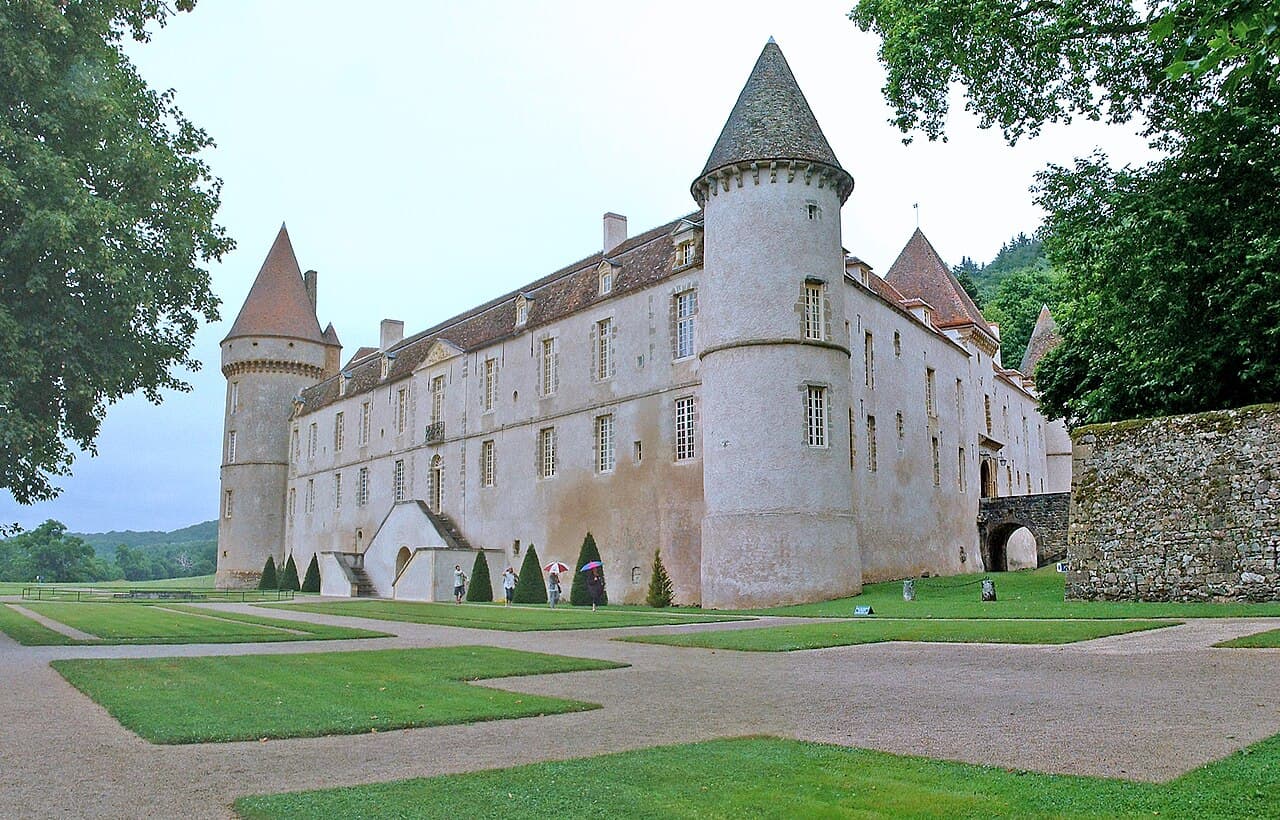
Château de Bazoches
The Château de Bazoches is a remarkable example of a hill castle with a rich history dating back to the 12th century. Situated in the commune of Bazoches within the Hauts-de-France region, this castle stands on the strategic remains of a Roman military outpost that once oversaw a vital roadway connecting the Roman cities of Autun and Sens in the province of Gallia Lugdunensis.
Originally constructed by Jean de Bazoches, the castle was established as a fortress to control this important route, reflecting the military and administrative priorities of the medieval period. Over the centuries, the château passed through the hands of several noble families, including the Bazoches, Chastellux, Montmorillon, and La Perrière lineages. This succession of ownership highlights the castle's sustained importance in regional power dynamics.
Historical significance and ownership lineage
The castle's historical prominence is further enhanced by its connection to Sébastien Le Prestre de Vauban, one of France's most celebrated military engineers and marshals under King Louis XIV. Vauban's paternal grandmother, Françoise de La Perrière, linked him to the château through her family heritage. In 1675, Vauban acquired Château de Bazoches, financing the purchase with rewards from the king for his military successes, notably the capture of Maastricht in 1673.
The formal acquisition was completed in 1679 after settling payments with the widow of the Count of Melun and the Duke of Nevers, who held feudal rights over the property. Vauban's ownership marked a new chapter for the château, transforming it from a medieval fortress into a residence and military engineering center.
Architectural features and modifications under Vauban
Architecturally, the château exhibits an irregular trapezoidal layout characteristic of medieval fortifications adapted to the terrain. Positioned approximately halfway up a wooded hillside, it offers commanding views over the Morvan massif to the south of Avallon and across the hill of Vézelay near Saint-Père village. The defensive structure includes four round towers at each corner, framing a central square keep (donjon), all arranged around an inner courtyard.
Vauban introduced significant enhancements to the château's structure and function. He added a rear entrance gate to facilitate carriage access, reflecting the evolving needs of a noble residence in the late 17th century. Most notably, Vauban constructed a large gallery that served as a workshop and study space for his team of military engineers. This facility was integral to the development of fortification plans and military research during his tenure.
Supporting buildings, known as communs, included stables that housed horses used by engineers and messengers, emphasizing the château's role as a military hub. Despite his frequent absences due to military duties, Vauban's residence at Bazoches was a center for intellectual and strategic activity, where he composed important works such as "Oisivetés" and "Dîme royale."
Interior and cultural heritage
The château's interiors have been carefully preserved by Vauban's descendants, maintaining a strong historical connection to his life and work. Visitors can explore Vauban's bedroom, his personal library, and collections of armor, all of which offer insights into the daily life of this eminent military figure.
The cultural richness of the château is further enhanced by an impressive collection of artworks. These include paintings from the workshop of Hyacinthe Rigaud, a renowned portrait by Adam Frans van der Meulen, drawings by Louis Gabois, and a religious painting in the chapel by Jean Senelle. These artistic treasures contribute to the château's status as a significant cultural landmark.
Strategic location and landscape context
Perched on a hillside, Château de Bazoches benefits from a strategic vantage point that was crucial for its defensive function in medieval times. The location allowed surveillance over key routes and the surrounding landscape, including the Morvan massif and the Vézelay hill, both important geographic features in the region.
The castle's position halfway up the wooded slope not only provided military advantages but also integrated the structure harmoniously into its natural environment, a common characteristic of hill castles designed for both defense and residence.
Preservation and current status
Recognized for its historical and architectural significance, Château de Bazoches was officially classified as a historic monument on March 11, 1994. It remains under the ownership of Vauban's descendants, who continue to preserve and maintain the estate, ensuring that its legacy endures.
The château is well preserved, with many original features intact, offering visitors a rare glimpse into the life and work of one of France's most influential military engineers. Its combination of medieval fortification elements and 17th-century adaptations makes it a unique site for understanding the evolution of military architecture and noble residences in France.
Legacy of Vauban and the château's role in military engineering
The Château de Bazoches stands as a testament to Vauban's genius in military engineering. The large gallery and associated facilities reflect his innovative approach to fortification design and military strategy. The château served not only as a residence but also as a functional center where Vauban and his engineers developed plans that influenced European military architecture for decades.
Vauban's influence extended beyond the castle walls, as his designs and writings shaped the defensive networks of France and other European states. The château thus holds a dual significance: as a historic noble residence and as a cradle of military innovation.
Visiting Château de Bazoches
Today, Château de Bazoches is accessible to visitors interested in history, architecture, and military heritage. The preserved interiors, art collections, and the castle's picturesque setting provide a comprehensive experience. Guided tours often highlight Vauban's contributions and the château's architectural evolution.
Its location in the Hauts-de-France region makes it a valuable cultural destination for those exploring northern France's rich historical landscape.
Frequently asked questions (FAQ)
- How do I get to Château de Bazoches?
- Château de Bazoches is located in Bazoches, France, approximately 30 kilometers from Avallon. You can reach the castle by car or public transport, with nearby bus services connecting to larger towns. For those driving, there is parking available on-site.
- What is the historical significance of Château de Bazoches?
- Château de Bazoches is renowned for its association with the famous military engineer Vauban, who transformed it in the 17th century. The castle played a crucial role in France's architectural heritage, exemplifying the military fortifications of the period. It has been classified as a historical monument and attracts visitors interested in French history.
- When was Château de Bazoches built?
- The original structure of Château de Bazoches dates back to the 12th century, but significant renovations were made during the 17th century under Vauban. The castle's architecture reflects various styles and periods, making it a fascinating site for history enthusiasts. Its historical layers showcase the evolution of French castle design.
- Can I take guided tours of Château de Bazoches?
- Yes, guided tours are available at Château de Bazoches, providing visitors with in-depth knowledge of its history and architecture. Tours are led by knowledgeable guides who share fascinating insights and anecdotes about the castle. It’s recommended to check the schedule in advance and book your spot during peak visiting seasons.
- Why is Château de Bazoches a popular tourist attraction?
- Château de Bazoches is popular due to its architectural beauty, rich history, and picturesque location in the Burgundy region. Visitors are drawn to its well-preserved interiors and stunning gardens, which offer a glimpse into the life of the nobility. The castle also hosts cultural events and exhibitions throughout the year.
- Is it possible to visit Château de Bazoches with children?
- Absolutely! Château de Bazoches is family-friendly and offers activities designed to engage children in history and architecture. There are also spacious grounds for children to explore and enjoy. Be sure to check for any special family programs or events during your visit.
- What are the opening hours for Château de Bazoches?
- Château de Bazoches is typically open to visitors from April to October, with specific hours that may vary by season. It’s advisable to check the official website or contact the castle directly for the most current opening times before planning your visit. During holiday seasons, special hours may apply.
- What are the ticket prices for visiting Château de Bazoches?
- Ticket prices for Château de Bazoches vary depending on age and whether you choose a guided tour. Generally, discounts are available for students and children, while family tickets may also be offered. For the most accurate and up-to-date pricing, visit the castle's official website or inquire upon arrival.
- What nearby attractions can I visit while at Château de Bazoches?
- While visiting Château de Bazoches, you can explore nearby attractions such as the picturesque town of Vézelay, a UNESCO World Heritage site, and the beautiful Morvan Regional Natural Park. These areas offer additional historical sites and opportunities for hiking and enjoying nature. Combining these visits makes for a delightful day trip in the Burgundy region.
Photo gallery

Information
Sources & official resources
Verify the information above using these authoritative references.
Loading map...
Visitor reviews
No reviews yet. Been here? Write the first review and help other travelers!
Write the first reviewVisited this castle? Share your experience
Your review helps other travelers and adds first-hand knowledge to our encyclopedia.



