Château de Cascastel

Château de Cascastel: medieval hill castle in Hauts-de-France
Cascastel-des-Corbières, Hauts-de-France, France
High Medieval (11th–13th c.)
Well Preserved

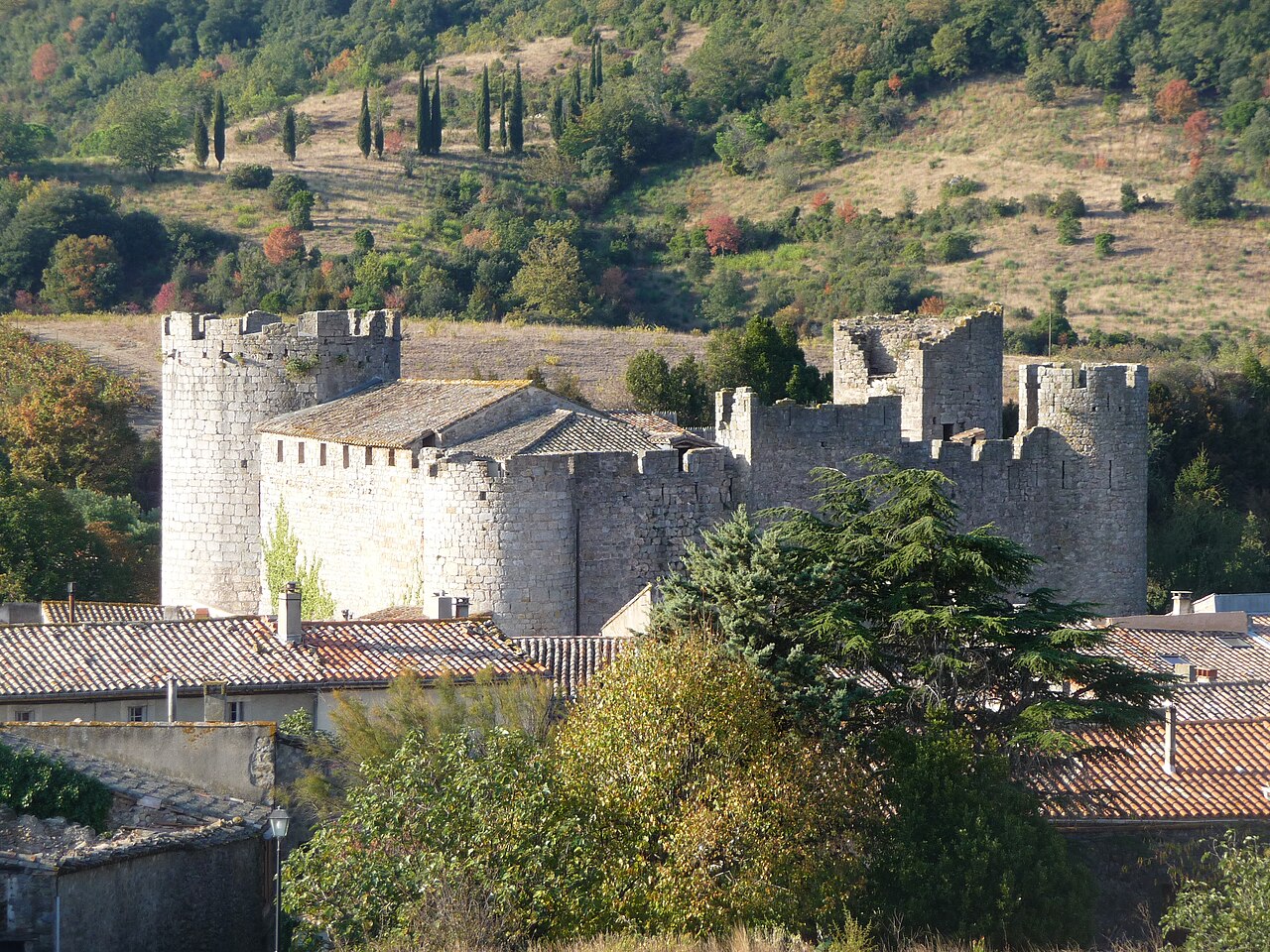
The Château de Cascastel, located in Cascastel-des-Corbières within the Hauts-de-France region of France, stands as a remarkable example of medieval military architecture and noble residence evolution. Constructed originally in the 12th century, this hill castle began as a fortified tower designed for surveillance and defense, asserting the territorial control of local lords during the High Medieval period.

Medieval origins and strategic importance

The castle's foundation lies in its 12th-century defensive tower, notable for its 2.5-meter-thick walls and an eight-meter-high vaulted interior hall. This robust construction was typical of the era's military architecture, emphasizing protection and control over the surrounding landscape. The tower's original entrance was positioned at the first floor, accessible by removable means, a common defensive feature to prevent enemy access. A cleverly integrated staircase within the wall thickness enabled discreet ascent to the tower's platform for watchmen, underscoring the tower's role as a lookout point.

During the 13th century, the château's ownership reflected the complex feudal landscape, with rights shared between the Abbots of Lagrasse and secular lords Raymond de Castel and Sicart de Cascastel. This dual control highlights the intertwined secular and ecclesiastical powers typical of medieval France. The tower also served an administrative function, safeguarding important community records such as leases and charters within its vaulted cellar rooms, emphasizing its role beyond mere military defense.

Fortifications and architectural evolution

By 1390, the château underwent significant fortification enhancements, documented in surviving charters. A new enclosure wall was constructed to separate the tower and the lords' castle from the outer fortifications. This wall was a direct response to repeated raids by mercenary bands from the neighboring kingdom of Aragon, reflecting the turbulent border conflicts of the late medieval period. The enclosure wall remains well-preserved, illustrating the strategic defensive measures employed to protect the noble residences from external threats.

Attached to the medieval tower is a 17th-century corps de logis, a residential building that opens onto a terrace. This addition marks a shift from purely military functions towards more comfortable noble living quarters. The terrace connects across a stream to cultivated gardens and mills, acquired in the 18th century, indicating the estate's economic expansion and integration of agricultural resources.

18th-century ownership and enhancements

In 1734, the château came under the ownership of Gaspard de Pailhoux and his wife Marie-Thérèse de Ros y Sorribes. Following Gaspard's death, Marie-Thérèse initiated renovations that were continued by their son Joseph Gaspard de Pailhoux de Cascastel. Joseph, the last lord of Cascastel, was a knight and a high judicial authority who also served as a councilor in Roussillon. His tenure saw the château evolve into a center of both noble residence and economic enterprise.

Joseph Gaspard notably expanded mining operations on the estate, collaborating with prominent figures such as merchant Pelletier, engineer Jean Guillot-Duhamel, and chemist Jean-Antoine Chaptal. His son-in-law, General Luc Dagobert, also played a role in these ventures. This period reflects the château's integration into broader economic and scientific developments of the 18th century.

After the upheavals of the French Revolution, Joseph Gaspard adapted to changing political landscapes by serving as mayor of Cascastel and nearby Villeneuve, living out his final years in the château until his death in 1808.

Interior features and artistic heritage

The château's interiors showcase a blend of architectural and decorative styles spanning several centuries. A notable feature is the Louis XIII period salon, distinguished by its intricate gypseries plasterwork. The salon's ceiling follows a classic French design, complemented by a fireplace and moldings that combine elements of Louis XIII and Louis XIV styles.

One of the château's artistic highlights is the series of four high-relief plaster panels from the Louis XIV–Louis XV era, titled La Chasse (The Hunt), Le Jardin (The Garden), La Volière (The Aviary), and Les Champs (The Fields). The La Chasse panel is especially remarkable for its portrait of Marie-Thérèse de Ros depicted as Diana, the Roman goddess of the hunt, complete with symbolic attributes such as the crescent moon, bow and arrows, quiver, horn, and hunting dogs. This personalized decoration reflects the château's blend of noble identity and classical symbolism.

Cultural significance and preservation

The château's historical and cultural importance has been officially recognized through its designation as a historic monument in 1948 and reaffirmed in 2001. The surrounding environment, including a nearby bridge and church, has been protected as a natural site since 1943, highlighting the château's integration into the regional heritage landscape.

Today, the Château de Cascastel stands as a well-preserved example of a hill castle that encapsulates the evolution of medieval fortifications into noble residences enriched with artistic and economic significance. Its robust tower, fortified walls, and elegant interiors offer valuable insights into the architectural and social history of the region from the High Medieval through the 18th century.

Frequently asked questions (FAQ)

How do I get to Château de Cascastel?
Château de Cascastel is located in Cascastel-des-Corbières, France, easily accessible by car or public transport. If traveling by car, take the A61 motorway and follow the signs to the village. Public transport options include local buses, which connect to nearby towns.
What is the historical significance of Château de Cascastel?
Château de Cascastel dates back to the 11th century and played a crucial role in the region's defense during the medieval period. It is an important example of the feudal architecture of the Languedoc region. The castle's history is closely tied to the local conflicts and the evolving political landscape of southern France.
When was Château de Cascastel built?
Construction of Château de Cascastel began in the early 11th century, making it one of the oldest castles in the area. Over the centuries, it has undergone various modifications and restorations, reflecting the architectural styles of different periods. Today, it stands as a testament to the medieval heritage of the region.
Can I visit the castle year-round?
Yes, Château de Cascastel is open to visitors throughout the year, although opening hours may vary with the seasons. It’s advisable to check the official website or contact the castle administration for the most current visiting hours. Special events may also be held during peak tourist seasons.
Why is Château de Cascastel popular among tourists?
Château de Cascastel attracts visitors due to its rich history, stunning architecture, and picturesque surroundings. The castle offers breathtaking views of the Corbières landscape, making it a perfect spot for photography enthusiasts. Additionally, the site hosts various cultural events that enhance the visitor experience.
Is it possible to explore the interior of the castle?
Yes, visitors can explore certain areas of the interior of Château de Cascastel, where guided tours provide insight into its history and architecture. Some areas may be restricted due to preservation efforts, but guides offer engaging stories and historical context. Self-guided tours are also available for those who prefer to explore at their own pace.
What are the ticket prices for visiting Château de Cascastel?
Ticket prices for Château de Cascastel vary depending on age and group size, with discounts available for students and seniors. Children under a certain age may enter for free. It's best to check the official website for current pricing and any special promotions.
What is the best time to visit Château de Cascastel?
The best time to visit Château de Cascastel is during the spring and early autumn when the weather is mild and the gardens are in bloom. Summer can be quite warm, while winter may bring fewer tourists but can limit access due to weather conditions. Planning your visit during weekdays can also help you avoid crowds.
Are there any nearby attractions to explore after visiting the castle?
Yes, there are several nearby attractions to explore, including the scenic village of Lagrasse and the picturesque vineyards of the Corbières region. Visitors can also enjoy local hiking trails and wine tasting experiences. These attractions make for a delightful day trip when visiting Château de Cascastel.

Information

Hill Castle

Sources & official resources

Verify the information above using these authoritative references.

Loading map...

Visitor reviews

No reviews yet. Been here? Write the first review and help other travelers!

Write the first review

Visited this castle? Share your experience

Your review helps other travelers and adds first-hand knowledge to our encyclopedia.

Write a review

(5/5)

0/2000 characters

Your review will be visible after admin approval

Nearby castles

4.7 km

Château de Durban

Durban-Corbières, France

The Château de Durban stands as a remarkable example of medieval and Renaissance architectural heritage nestled in the commune of Durban-Corbières in southern France. This hill castle was originally constructed in the 11th century upon the foundations of an earlier Roman fortification, emphasizing the strategic importance of the site across multiple historical periods. It served as the ancestral seat of the lords of Durban, a noble family whose influence and territorial control extended throughout the region during the Middle Ages. Early history and feudal significance The first documented mention of the lords of Durban dates back to 1018, marking the castle's early role within the feudal system of medieval France. During the 12th century, the Durban family were vassals to the powerful viscounts of Narbonne, managing extensive lands that included the villages of Leucate, Fabrezan, Fontjoncouse, and Villesèque. This period was marked by complex political and religious dynamics, as the region was deeply affected by the Cathar religious movement, which the Catholic Church deemed heretical. Despite this, the lords of Durban maintained their Catholic allegiance, as evidenced by Guillaume de Durban's oath of loyalty to the king of France in 1229, securing their holdings amidst the turbulent Albigensian Crusade. Architectural evolution and renaissance renovations The castle's architecture reflects its long history of adaptations and renovations. In the 16th century, the Château de Durban underwent significant modifications that introduced elements of Renaissance architecture. These changes were especially visible on the northern and western façades, where larger windows were installed to enhance natural light and comfort, a departure from the original defensive design. These windows were adorned with marble columns and intricately sculpted lintels, showcasing the artistic and cultural influences of the Renaissance period. The 20th century saw dedicated restoration efforts to preserve these details, notably in 1972, when the Renaissance windows were carefully restored to their original ornamental splendor. Medieval defensive structures Despite the Renaissance embellishments, the castle retains key medieval defensive features. Two towers remain standing: a round staircase tower and a square tower. The circular tower functioned as a vertical circulation core, providing access to multiple floors and serving as a refuge during sieges. The square tower offered commanding views of the surrounding Berre valley and the village, reinforcing the castle's role as a fortress. Both towers are constructed from local stone, exemplifying robust medieval masonry techniques typical of hill castles. Decline, abandonment, and preservation efforts The castle remained in the hands of the Durban family for centuries until the death of Joseph de Gléon, Baron of Durban, in 1787, who left no direct heirs. Subsequently, the property changed ownership multiple times. In 1873, it was sold to Paul Combes, after which significant portions of the structure were dismantled and the stones repurposed for local construction, accelerating the castle's decline into ruin. Following abandonment, the château experienced brief periods of occupation, including by a Spanish soldier who resided in one of the remaining chambers. Over time, the castle became public property but continued to suffer from stone quarrying. Archaeological interest revived in the 20th century, with excavations conducted in 1967 and preservation initiatives beginning in 1980. The local commune assumed ownership in 1989, and the site has been protected as a monument historique since 1926. Current status and visitor experience Today, the Château de Durban exists as a set of consolidated ruins that overlook the village and the scenic Berre valley. It is situated near the well-known Cathar trail (GR 367), linking it to the broader medieval history and cultural tourism of the region. Visitors can explore the remains of the main building's north face, where the Renaissance windows and architectural details have been preserved, alongside the two surviving towers that offer insights into the castle's defensive past. The castle's preservation is actively supported by the Comité de Sauvegarde du Vieux Durban, a local heritage organization dedicated to maintaining the site and promoting its historical significance through cultural events and educational programs. The layered history of the Château de Durban—from its Roman foundations and medieval fortifications to its Renaissance renovations and modern conservation—makes it a compelling destination for enthusiasts of history, architecture, and French heritage. Architectural highlights and historical context The Château de Durban exemplifies the transition from a fortified medieval stronghold to a residence reflecting Renaissance ideals of comfort and aesthetics. The juxtaposition of defensive masonry with ornamental Renaissance features illustrates evolving architectural trends and the changing needs of its inhabitants over centuries. Its strategic location on a hill provided natural defense advantages and control over the surrounding lands, a common characteristic of hill castles in medieval Europe. The castle's survival as ruins, with substantial portions still standing, allows for detailed study of construction techniques spanning from the 11th to the 16th century. Historical significance in regional politics The lords of Durban played a notable role in the feudal politics of the Languedoc region, navigating the complexities of allegiance during the Albigensian Crusade and the subsequent integration of their lands into the French crown's domain. Their loyalty to the king of France in 1229 was a pivotal moment that ensured the continuity of their lordship despite the religious upheavals surrounding the Cathar heresy. Archaeological findings and restoration work Archaeological excavations in the 20th century uncovered foundations and artifacts that confirm the castle's Roman origins and medieval phases. Restoration work has focused on stabilizing the ruins, preserving the Renaissance windows, and maintaining the structural integrity of the towers and walls. These efforts have helped safeguard the site for future generations and enhanced its accessibility to visitors.

High Medieval (11th–13th c.)
Details
10.7 km
Château d'Aguilar — France castle

Château d'Aguilar

Tuchan, France

Château d'Aguilar is a remarkable example of a 12th-century Cathar castle located near the village of Tuchan in the Aude département of southern France. Perched on a rocky hill 321 metres above sea level, this hill castle commands sweeping views over the Corbières massif and the surrounding plains, highlighting its strategic military importance throughout the High Medieval period. Its architecture reflects the practical and evolving defensive needs of the 12th and 13th centuries, with a combination of an inner keep and an outer pentagonal fortification designed to protect against increasingly sophisticated siege tactics. Originally built by the Termes family in the 12th century, the castle's earliest structures replaced an even older fortification dating back to at least 1021, when the site belonged to the counts of Fonnollède. The castle's name, Aguilar, is derived from the Latin for "eagle's nest," which aptly describes its commanding position overlooking key routes between Narbonne and Roussillon. Over the centuries, Château d'Aguilar played a pivotal role in the turbulent history of the region, including the Cathar Crusades, the Albigensian Crusade, and the ongoing conflicts between French and Spanish powers along the border. Architectural design and features The castle's layout is a testament to the military architectural innovations of the medieval period. The core of the fortress is an inner hexagonal keep dating from the 12th century, surrounded by a larger pentagonal outer enceinte constructed in the 13th century. This outer wall was deliberately oriented so that its pointed bastion faced the most vulnerable approach, demonstrating careful strategic planning. Each corner of the inner fortification is reinforced with semi-circular guard towers, equipped with narrow arrow slits to provide defenders with protected firing positions. The outer pentagonal wall is fortified by six semi-circular towers, which were designed to maximize defensive coverage and allow archers and crossbowmen to repel attackers effectively. The masonry techniques evolved between the two construction phases: the inner keep features roughly hewn stones typical of the early medieval period, while the outer walls exhibit more refined stonecutting and horizontal courses indicative of advanced 13th-century craftsmanship. The walls were strengthened internally with rubble infill to absorb impact from siege engines. Notably, Château d'Aguilar lacks a traditional central donjon or large keep, which is unusual for castles of this era. Instead, its defense relies on the layered fortifications and the natural elevation of the hill. The entrance was protected by a barbican, a fortified gateway structure that added an extra layer of security on the southern slope. Beneath the keep lies a small underground chapel of Saint-Anne, a rare feature that illustrates the spiritual dimension of the castle's inhabitants. Fortified village and underground structures Adjacent to the castle was a fortified village to the south, remnants of which survive as fragments of defensive walls. Archaeological excavations have uncovered vaulted underground chambers with robust barrel vaults, likely used for storage or as shelters during sieges. Finds include religious ornaments and a variety of military equipment such as crossbows, iron helmets, shields, and hundreds of bolts, underscoring the dual religious and martial character of the site. Historical significance and events The history of Château d'Aguilar is deeply intertwined with the Cathar Crusades and the political upheavals of southern France in the 12th and 13th centuries. The site was originally under the control of the counts of Fonnollède and later the viscounts of Carcassonne. In 1210, during the Albigensian Crusade, the castle was seized by Simon de Montfort, a leading crusader commander. The owner at that time, Raymond de Termes, was captured and imprisoned in Carcassonne, reflecting the brutal nature of the conflict. For the next three decades, the castle remained relatively quiet until Oliver de Termes, Raymond's son, reclaimed it during a brief revolt against the crusaders. Aguilar then became a refuge for faydits—dispossessed Cathar knights and lords without strongholds—highlighting its role as a bastion of resistance. In 1246, a royal garrison was installed to oversee the frontier with Aragon, marking the castle's incorporation into the French royal domain. Oliver de Termes eventually allied with King Louis IX, who purchased the castle in 1260. Despite its formidable defenses, Château d'Aguilar faced repeated sieges and occupations by various forces, including mercenaries and Spanish troops, reflecting the ongoing conflicts along the Franco-Spanish border. Notably, in 1387, mercenaries briefly captured the castle before being expelled by Aragonese forces. The 16th century saw further turmoil, including capture by Spanish forces under Emperor Charles V in 1525 and occupation by German mercenaries in 1542, before returning to French control in 1544. Decline and modern status Following the Treaty of the Pyrenees in 1659, which shifted the Franco-Spanish border southwards, Château d'Aguilar lost its strategic importance. It was gradually abandoned and fell into ruin by the late 16th century. Today, the castle stands as ruins, with substantial sections of walls and towers still visible, along with the chapel and other structural remains. Since 1949, Château d'Aguilar has been officially protected as a monument historique by the French Ministry of Culture, recognizing its cultural and historical significance. It is also known as one of the "Five Sons of Carcassonne", a group of castles famed for their defensive strength and architectural ingenuity along the border region. Visiting château d'aguilar today Visitors to Château d'Aguilar can explore the extensive ruins that vividly illustrate the castle's layered history and military architecture. The site offers panoramic views over the Corbières and the surrounding landscape, providing insight into the strategic considerations of medieval castle builders. The remains of the chapel and the underground vaulted chambers add to the site's unique character, blending martial and spiritual heritage. As a protected historical monument, the castle is accessible to the public, though facilities are limited due to its ruinous state. Visitors interested in medieval history, military architecture, and Cathar heritage will find Château d'Aguilar a compelling destination within the rich cultural landscape of southern France. Overall, Château d'Aguilar stands as a significant testament to the complex history of the Languedoc region, embodying the military, religious, and political struggles that shaped medieval France and its borderlands.

High Medieval (11th–13th c.)
Details
11 km
Cathar Castles — France castle

Cathar Castles

Villerouge-Termenès, France

The Cathar castles of southern France, particularly the Château de Villerouge-Termenès, stand as enduring symbols of the turbulent religious and political conflicts that shaped the High Medieval period in the region. Located in the Occitanie region within the Corbières Massif, this hill castle was a strategic fortress and administrative center controlled by the powerful archbishops of Narbonne from the 12th century until the French Revolution. Its history is deeply intertwined with the Cathar heresy, the Albigensian Crusade, and the ecclesiastical authority that sought to suppress the Cathar faith. The castle's origins date back to the 12th century, with its first recorded mention in the early 1100s. The site was contested among local lords and the archbishops, reflecting the complex feudal landscape of medieval Languedoc. In 1107, Pope Pascal II confirmed the ownership of the castle and village of Villerouge-Termenès to Archbishop Richard of Narbonne, after it had been occupied by Pierre de Peyrepertuse and later linked to the Termes family through marriage dowry arrangements. Despite these disputes, the archbishops maintained control, reinforcing the castle's role as a seat of ecclesiastical power and local governance. The castle’s role in the cathar crusade The Albigensian Crusade (1209-1229) was a defining conflict that targeted the Cathar sect, regarded as heretical by the Catholic Church. The castle's location in Cathar country made it a focal point in this religious war. The crusade was marked by brutal episodes such as the massacre at Béziers, where crusaders under Arnaud Amaury infamously ordered the killing of all inhabitants, regardless of faith. This crusade was notable as the first to take place on European soil and for pitting Christians against Christians. Though the castle itself was not the site of a major siege during the crusade, it was a significant stronghold of the archbishops who opposed the Cathars. In August 1321, the castle gained grim historical prominence as the execution site of Guilhem Bélibaste, the last known Cathar perfectus or "good man." His death by burning marked the effective end of the Cathar religious tradition, symbolizing the triumph of Catholic orthodoxy in the region. Architectural features and fortifications The Château de Villerouge-Termenès exemplifies medieval military architecture with a quadrangular plan fortified by four round towers at each corner. These towers are connected by curtain walls originally topped with battlements and protected walkways, designed for defense and surveillance. The castle’s exterior walls are robust, constructed with finely cut stones on the faces and a rubble core bound with mortar, typical of 12th-century masonry techniques. Access was controlled through a northern entrance featuring a drawbridge gate, a common defensive element in medieval castles, and a smaller sally port on the southern side allowed defenders to launch sorties during sieges. One tower, larger and taller than the others, contains three stacked chambers with thick walls and a narrow spiral staircase, believed to have housed the bailli, the castle’s administrative official overseeing the archbishop’s domain. The interior courtyard buildings mostly date from the 14th century, showing continued occupation and adaptation of the castle beyond its initial construction. A notable feature is the large hall in the southeastern donjon, which contains a painted wooden beam bearing the coat of arms of Bernard de Farges, archbishop of Narbonne from 1311 to 1341. The hall also preserves a Gothic fresco depicting a banquet scene that provides insight into medieval dining customs, alongside heraldic decorations that emphasize the castle’s ecclesiastical ties. Historical significance and legacy Throughout its history, the castle was not only a military fortress but also an administrative center for the archbishopric’s extensive holdings in the region. It was the seat of one of the eleven bailiwicks, where the archbishop’s bailli managed local governance, tax collection, and judicial matters. This dual role highlights the integration of religious and feudal power in medieval southern France. Despite its decline and partial ruin over the centuries, the castle’s cultural and historical importance was recognized in the 20th century. It was officially classified as a monument historique in 1976, prompting restoration efforts that have preserved much of its structure and artistic heritage. Today, the castle stands as a testament to the complex history of Catharism, the Albigensian Crusade, and the medieval church’s influence in the Languedoc region. Visiting the cathar castles The castle is accessible to visitors interested in exploring the rich history of the Cathar castles and the medieval architecture of southern France. Its well-preserved walls, towers, and frescoes offer a tangible connection to the past. The site’s location in the scenic Corbières Massif provides a dramatic natural backdrop that enhances the visitor experience. Exploring the castle allows insight into the defensive strategies of medieval fortifications, the ecclesiastical power structures of the time, and the tragic history of the Cathar faith’s suppression. The castle’s exhibitions and guided tours often include detailed explanations of its architecture, history, and role in the Albigensian Crusade, making it a valuable destination for history enthusiasts and scholars alike.

High Medieval (11th–13th c.)
Details