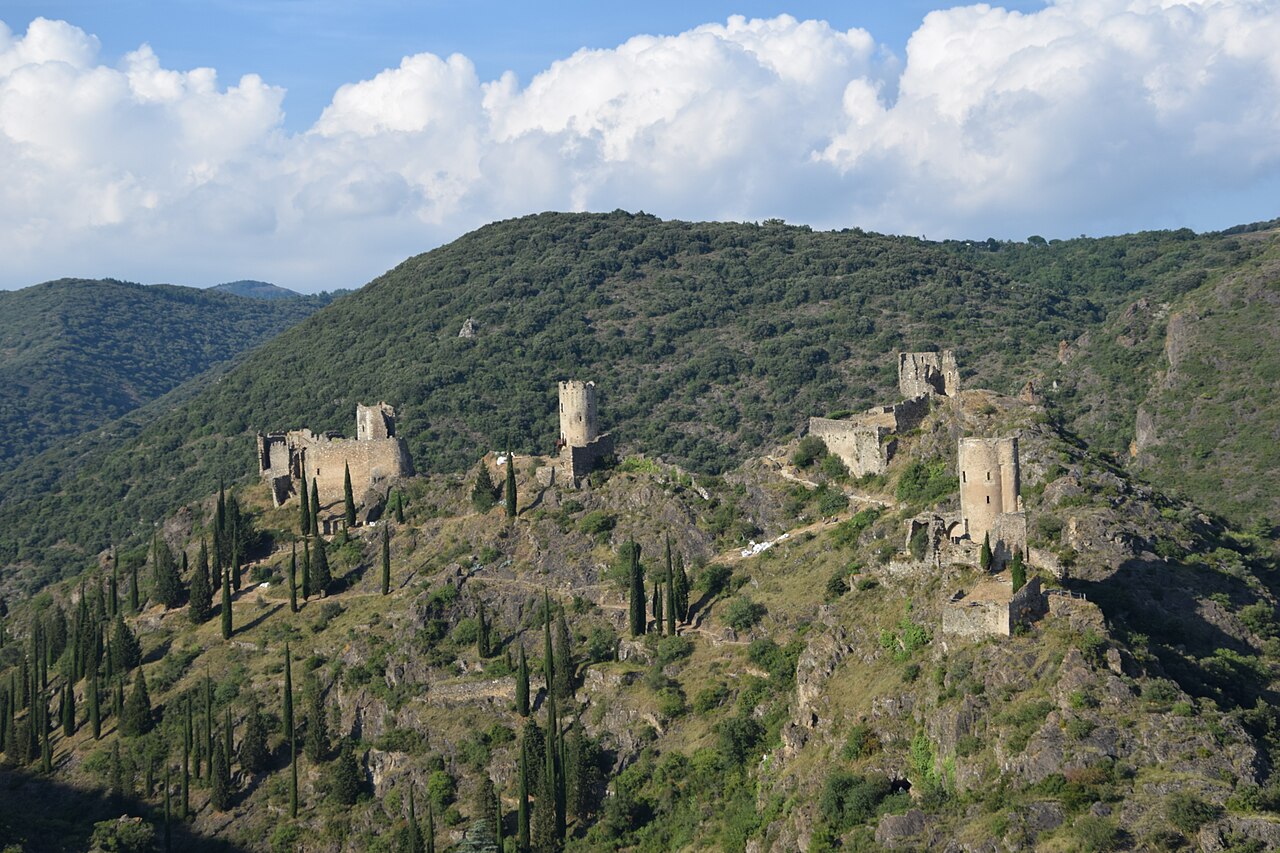
Château de Campan
Château de Campan is a historic castle located in the commune of d'Anglès, France, with origins tracing back to the 11th century. Although its initial construction dates to the High Medieval period, the castle's current architectural features mainly reflect modifications from the 16th and 17th centuries. Local legends associate the castle with the Knights Templar, suggesting a fascinating connection to this medieval military order, although documentary evidence remains limited.
Historical background and medieval origins
The earliest phase of Château de Campan likely began in the 11th century, a time when fortifications were crucial for territorial defense and control. The castle's location in d'Anglès placed it within a region of strategic importance during the High Medieval era. While detailed records from this period are sparse, the castle's initial purpose was probably to serve as a defensive stronghold and residence for local nobility.
Throughout the medieval period, the castle would have been subject to the typical architectural and military evolutions seen in French fortifications, adapting to changing warfare techniques and political dynamics. The association with the Knights Templar adds a layer of intrigue, as the order was active in France until its suppression in the early 14th century. However, no concrete archival proof confirms their direct ownership or use of Château de Campan.
Architectural evolution in the 16th and 17th centuries
The castle's current appearance is largely the result of renovations and expansions carried out during the Renaissance period, specifically in the 16th and 17th centuries. These alterations reflect a transition from purely military functions toward more residential and status-symbol roles, typical of many French castles of the time.
During this phase, Château de Campan would have incorporated architectural elements emphasizing comfort and aesthetics alongside defense. Features such as enlarged windows, decorative stonework, and more elaborate interior spaces likely replaced or complemented earlier austere medieval structures. The castle's walls and towers may have been modified to accommodate artillery advancements, blending medieval fortification principles with Renaissance innovations.
Architectural features and layout
The castle's layout is characteristic of a hill castle, strategically positioned to oversee the surrounding landscape. Defensive features would have included thick stone walls, battlements, and possibly a moat or ditch, although specific details about these elements at Château de Campan are limited.
The presence of towers, gates, and a central courtyard would have been typical, with later additions focusing on enhancing residential quarters. The blend of medieval and Renaissance architectural styles creates a complex that illustrates the evolution of castle design over several centuries.
Legendary connections and cultural significance
Local lore links Château de Campan to the Knights Templar, a medieval order renowned for their military prowess and mysterious history. These legends contribute to the castle's cultural allure and attract interest from historians and tourists alike. While the factual basis of these connections remains unverified, they enrich the narrative surrounding the castle.
The castle stands as a testament to the layered history of the region, reflecting shifts in political power, military technology, and architectural styles. Its enduring presence offers insight into the medieval and early modern periods of French history.
Current condition and visitor information
Château de Campan is currently classified as partially preserved, with some original structures remaining intact alongside later modifications. The castle may not be fully accessible to the public, and visiting hours or ticket information are not widely documented.
Visitors interested in medieval architecture and French history can appreciate the castle's historical significance and its scenic location within the Occitanie region. Nearby attractions and the surrounding landscape offer additional opportunities for exploration.
Frequently asked questions (FAQ)
- When was Château de Campan originally built?
- Château de Campan was originally constructed in the 11th century during the High Medieval period.
- What is the connection between Château de Campan and the Knights Templar?
- Local legends associate Château de Campan with the Knights Templar, though there is no definitive historical evidence confirming their ownership or presence.
- What architectural styles are visible at Château de Campan?
- The castle shows architectural features from its original medieval construction as well as significant renovations from the 16th and 17th centuries, reflecting Renaissance influences.
- Is Château de Campan open to the public for visits?
- Information about public access and visiting hours for Château de Campan is limited; potential visitors should check local sources or tourism offices for the latest details.
- Where is Château de Campan located?
- Château de Campan is located in the commune of d'Anglès in the Occitanie region of southern France.
Information
Loading map...
Visitor reviews
No reviews yet. Been here? Write the first review and help other travelers!
Write the first reviewVisited this castle? Share your experience
Your review helps other travelers and adds first-hand knowledge to our encyclopedia.