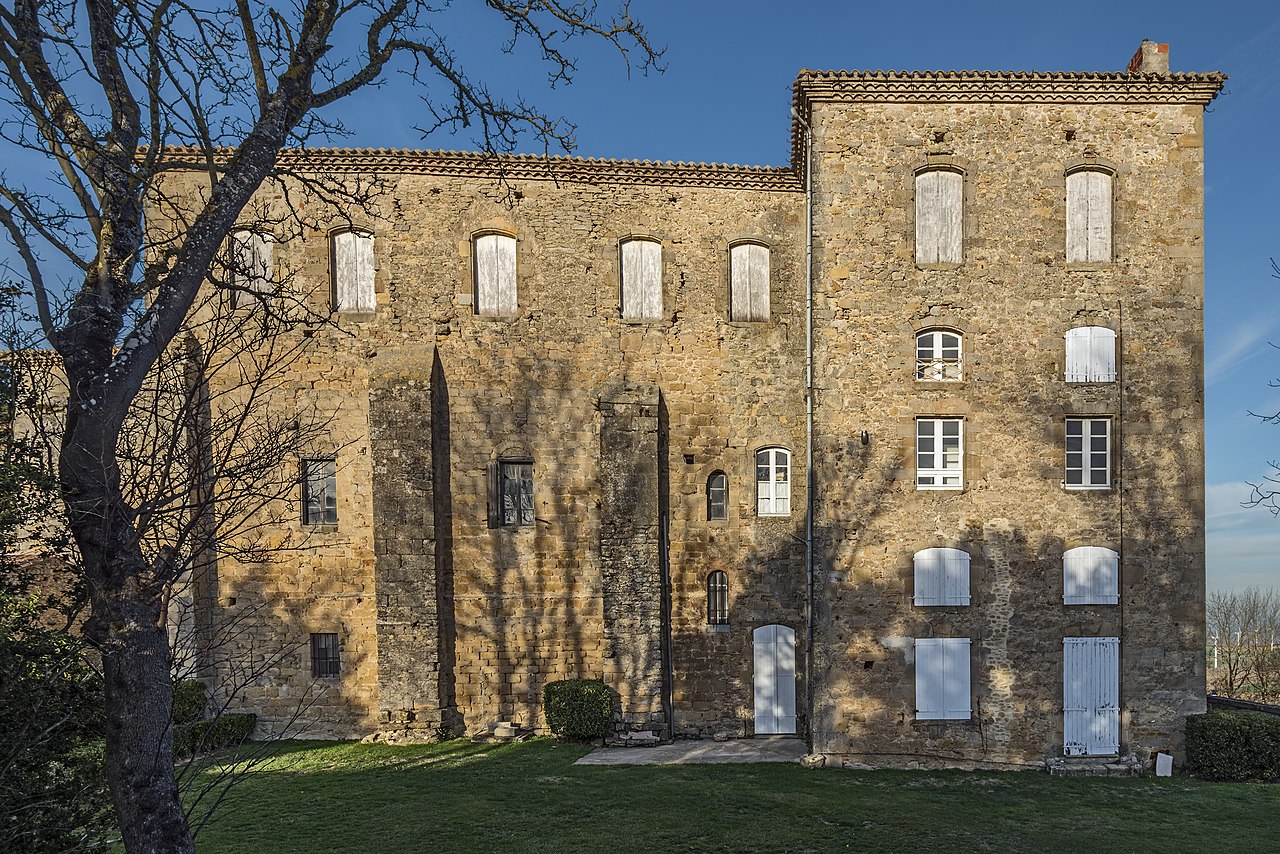
Château de Belflou
The Château de Belflou stands as a remarkable example of late 12th-century medieval fortification in the region of Hauts-de-France, France. Constructed originally as a feudal secondary fortress, it was designed to serve the local lords in both defense and administration. The castle's strategic location on a hill provided natural defensive advantages, complemented by its man-made fortifications.
Initially known as Valflor or Saint Félix de Lanès, the site began with a stronghold centered on a donjon, a fortified tower that later became the castle’s prominent southern square tower. This tower, constructed of durable stone in the late 12th century, served as the primary defensive and residential keep of the fortress. Surrounding the donjon were wooden buildings that housed the garrison and support functions, all enclosed within a defensive perimeter featuring a water-filled moat.
Historical context and ownership
The earliest surviving written record of the Château de Belflou dates back to a charter of 1206, co-signed by the counts of Foix and Toulouse. This document granted the fief to four knights of Saint Germain through Aimeric de Roquefort, the lord of Laurac, who was notably sympathetic to the Cathar movement. The Cathars were a religious group deemed heretical by the Catholic Church, and their presence in the region led to significant conflict.
During the Albigensian Crusade, a campaign initiated to eradicate Catharism, the fortress endured dramatic upheaval. In 1211, Simon de Montfort led forces that executed Aimeric de Roquefort and many of his followers, seizing control of Belflou. Following this, the castle's ownership shifted multiple times among crusader leaders, agents of the count of Toulouse, and representatives of the French crown. In 1310, King Philip IV granted the lordship of Belflou to Philippe de Fontanes and his descendants, who maintained possession for nearly five centuries.
The castle also played a role during the French Wars of Religion, experiencing a temporary occupation by Huguenot forces between 1581 and 1582. The upheavals of the French Revolution of 1789 marked a turning point when the Fontanes family fled to Switzerland, and the property changed hands, eventually coming under the ownership of the noble Calmès family and later private individuals.
Architectural features and fortifications
The Château de Belflou exemplifies medieval military architecture with its compact layout dominated by robust stone fortifications and a surrounding water-filled moat. The central feature is the imposing square donjon tower on the southern side, which retains much of its original stonework and defensive design. This tower functioned as both the stronghold's primary defense and a residential keep.
While the original wooden buildings within the walls have not survived, their former presence is evidenced by archaeological traces. The fortress was originally accessed via a drawbridge on the west side, which has since been replaced by a small stone bridge, reflecting the site's evolving use over time.
At the northeast corner of the enclosure, remnants suggest a second curtain tower, though only traces remain today. In the early 16th century, the castle underwent significant enhancements, including the raising and decorative remodeling of the northern stair tower. This stair tower is notable for its sculpted busts and gargoyle figures, and its projecting section was altered to serve both practical defensive functions and ornamental purposes.
During the 17th and 18th centuries, modifications shifted focus toward improving domestic comfort and increasing natural light, with several openings, particularly on the southern windows, enlarged. The 19th century brought further renovations, including updates to the north façade and the upper sections of the east wing. A small bridge was also added on the eastern side of the moat to facilitate access to neighboring lands.
Preservation and cultural significance
Today, the Château de Belflou remains a well-preserved example of late medieval defensive architecture in the Lauragais region. Its fortifications, moat, and main stone structures vividly illustrate the defensive strategies employed during the High to Late Middle Ages in this part of France. The castle's enduring presence offers valuable insight into the feudal military construction techniques and the turbulent history of the region.
Since 1948, the château and its moat have been protected as a historic monument, with formal classification granted in 1989. This status recognizes the site's architectural and historical importance, ensuring its preservation for future generations and its role as a cultural heritage landmark.
Architectural details and layout
The castle's layout is characterized by a compact design optimized for defense. The square donjon tower anchors the southern part of the enclosure, with thick stone walls designed to withstand sieges. The moat surrounding the castle provided a formidable obstacle to attackers, while the drawbridge controlled access strategically.
The northern stair tower added in the 16th century reflects Renaissance influences in its decorative elements, blending functionality with artistic expression. The sculpted busts and gargoyles serve both as ornamental features and as symbolic guardians of the fortress.
Throughout its history, the castle's architecture adapted to changing military technologies and domestic needs, as seen in the enlarged windows and modifications to the façade. These changes illustrate the transition from purely defensive purposes to more comfortable noble residence functions over time.
Frequently asked questions (FAQ)
- What is the historical significance of Château de Belflou?
- Château de Belflou is a remarkable example of French medieval architecture, dating back to the 12th century. It played a pivotal role in regional defense during the turbulent times of feudal conflicts and has been a witness to numerous historical events that shaped the area.
- When was Château de Belflou built?
- Construction of Château de Belflou began in the early 1100s and continued over several centuries, reflecting various architectural styles. The castle has undergone numerous renovations, preserving its historical integrity while adapting to modern needs.
- Can I visit Château de Belflou year-round?
- Yes, Château de Belflou is open to visitors throughout the year, although hours may vary by season. It is advisable to check the official website for the latest visiting hours and any seasonal events that may be taking place.
- What are the ticket prices for visiting Château de Belflou?
- Tickets for Château de Belflou are reasonably priced, with discounts available for students, seniors, and children. Special family packages are also offered, making it an affordable destination for visitors of all ages.
- Is it possible to access Château de Belflou with a wheelchair?
- Château de Belflou is committed to providing accessibility for all visitors. However, due to its historical structure, some areas may be challenging to navigate. It's recommended to contact the castle in advance to discuss specific accessibility options.
- When is the best time to visit Château de Belflou?
- The best time to visit Château de Belflou is during the spring and fall when the weather is mild, and the surrounding gardens are in full bloom. Summer can be crowded, while winter visits offer a unique charm, albeit with cooler temperatures.
- What nearby attractions can I explore while visiting Château de Belflou?
- Visitors to Château de Belflou can enjoy nearby attractions such as the picturesque village of Belflou and the beautiful landscapes of the surrounding countryside. Additionally, the region boasts several hiking trails and charming local markets, enriching your visit.
- What architectural features should I look for at Château de Belflou?
- Château de Belflou showcases a blend of Romanesque and Gothic architectural styles, characterized by its imposing towers, intricate stonework, and expansive courtyards. Look for the beautifully preserved ramparts and the stunning views they offer of the surrounding landscape.
Information
Website
Visit websiteSources & official resources
Verify the information above using these authoritative references.
Loading map...
Visitor reviews
No reviews yet. Been here? Write the first review and help other travelers!
Write the first reviewVisited this castle? Share your experience
Your review helps other travelers and adds first-hand knowledge to our encyclopedia.