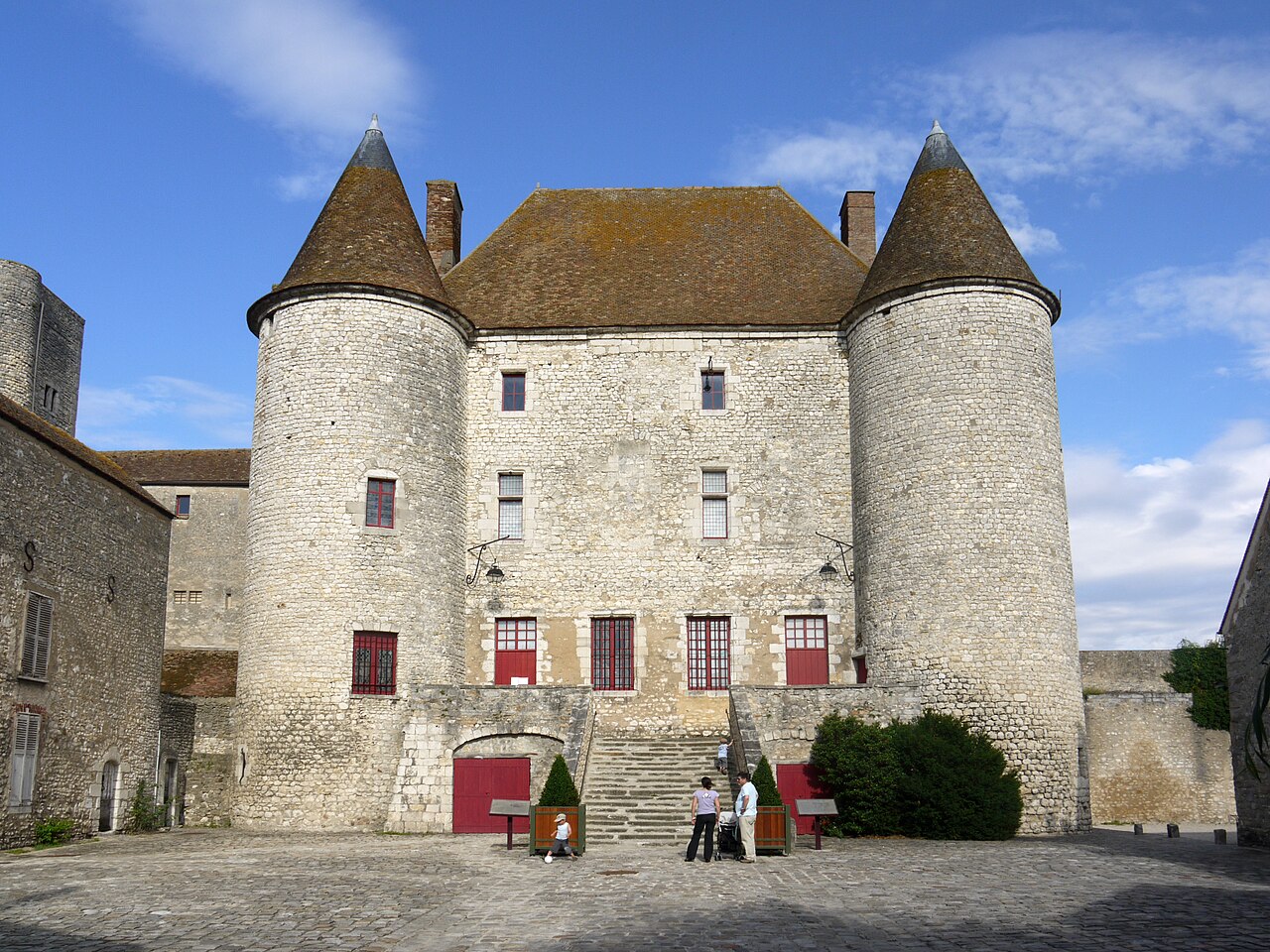
Château d'Augerville
Château d'Augerville is a historic castle located in Augerville-la-Rivière, France, with origins dating back to the early 12th century. The site is first documented in a charter from 1119, establishing its long-standing significance in the region. By 1207, the castle became a fortified stronghold under the control of Philippe d'Augerville and his son Louis d'Augerville. They constructed a château fort featuring defensive elements typical of the high medieval period, including a pigeonnier (dovecote) which was an important feature for food supply and status.
Medieval origins and fortifications
The original castle was built in the 13th century as a fortified residence designed to protect its inhabitants and assert feudal control over the surrounding lands. Its architecture would have included thick stone walls, towers, and possibly a moat, although specific details of the early fortifications are limited. The presence of a pigeonnier indicates the castle's role in the agricultural and economic life of the estate, as well as its defensive capabilities.
Decline after the hundred years' war
Like many medieval castles in France, Château d'Augerville suffered significant damage during the Hundred Years' War (1337-1453). By the end of this prolonged conflict, the castle was largely in ruins. This decline reflects the widespread destruction that many feudal fortresses endured during this turbulent period of French history.
Renaissance restoration and ownership by jacques cœur
In 1452, the castle was acquired by Jacques Cœur, a prominent merchant and financier to King Charles VII. Cœur was one of the wealthiest and most influential figures of his time, and his acquisition of Château d'Augerville symbolized his rising status. Unfortunately, his tenure was short-lived; he was accused of embezzlement, tried, and sentenced to exile, dying in 1456. Following his downfall, all his properties, including Château d'Augerville, were confiscated by the crown. There is no evidence that Cœur undertook significant reconstruction during his brief ownership.
17th-century renovations and architectural enhancements
After a period of abandonment, the castle saw renewed interest in 1644 when it was purchased by Jean Perrault de Montevrault. He initiated extensive renovations that transformed the medieval fortress into a more comfortable residence suitable for the post-medieval era. The restoration included refurbishing the facades and apartments, adding two detached wings, a new pigeonnier, and a barn. A forecourt was created, surrounded by estate buildings, which enhanced the castle's functionality and aesthetic appeal. These modifications reflect the architectural trends of the 17th century, blending practicality with refined living spaces.
Modern use and preservation
Today, Château d'Augerville serves as a luxury hotel, offering guests a unique experience combining historical ambiance with modern amenities. The estate includes a golf course, adding recreational value to the property. The castle's preservation as a hospitality venue helps maintain its architectural heritage and keeps its history accessible to the public. Visitors can appreciate the blend of medieval fortifications and later period renovations that tell the story of the castle's evolution over centuries.
Architectural features and significance
The castle's architectural evolution from a high medieval fortress to a 17th-century residence is evident in its structure. Key features include the original stone walls, remnants of defensive towers, and the pigeonnier, which has been rebuilt. The addition of wings and estate buildings in the 1600s reflects changing needs from defense to comfort and estate management. Château d'Augerville exemplifies the transition of French castles from military strongholds to noble residences.
The pigeonnier's role
The pigeonnier or dovecote was a significant feature in medieval and early modern estates. It provided a source of meat and fertilizer and was a symbol of seigneurial rights. The presence of a new pigeonnier built in the 17th century indicates the continued importance of this structure in the castle's agricultural operations.
Estate layout and grounds
The creation of a forecourt surrounded by functional buildings such as barns and stables during the 17th-century renovation reflects the castle's role as a working estate. The layout facilitated management of agricultural activities and domestic needs while maintaining an imposing residence for its owners.
Frequently asked questions (FAQ)
- How do I get to Château d'Augerville?
- Château d'Augerville is conveniently located in Augerville-la-Rivière, France, just a short drive from Paris. You can reach the castle by car via the A6 motorway, or use public transportation options that connect to nearby towns, followed by a taxi or local shuttle service.
- What is the historical significance of Château d'Augerville?
- Château d'Augerville dates back to the 17th century and has played a significant role in the history of the region. Originally built as a noble residence, it reflects the architectural styles of its time and has hosted various historical figures throughout its existence.
- When was Château d'Augerville built?
- The construction of Château d'Augerville began in the early 1600s, with various renovations taking place over the centuries. Its enduring structure showcases the evolution of French architectural styles and the castle's historical importance.
- Can I take guided tours of Château d'Augerville?
- Yes, guided tours are available for visitors looking to learn more about the history and architecture of Château d'Augerville. These tours often include insights into the castle's past and its significance within the local area.
- Why is Château d'Augerville a popular destination for visitors?
- Château d'Augerville attracts visitors due to its stunning architecture, rich history, and picturesque surroundings. The castle's serene setting in the French countryside makes it an ideal spot for those looking to explore both culture and nature.
- Is it possible to host events at Château d'Augerville?
- Yes, Château d'Augerville offers various spaces for hosting events such as weddings, corporate gatherings, and private parties. The castle's beautiful grounds and historical ambiance provide a unique backdrop for any occasion.
- What are the opening hours for Château d'Augerville?
- Château d'Augerville is typically open to visitors from Tuesday to Sunday, with specific hours varying by season. It’s recommended to check the official website for the most current information regarding opening times.
- What are the ticket prices for Château d'Augerville?
- Ticket prices for Château d'Augerville vary depending on the type of tour or event you are attending. Discounts may be available for students, seniors, and groups, so be sure to check the official website for detailed pricing information.
- When is the best time to visit Château d'Augerville?
- The best time to visit Château d'Augerville is during the spring and early autumn when the weather is pleasant and the gardens are in full bloom. These seasons also tend to attract fewer crowds, allowing for a more enjoyable experience.
- Are there nearby attractions to visit while at Château d'Augerville?
- Yes, there are several nearby attractions, including charming villages, local vineyards, and beautiful parks. Visitors can explore the scenic countryside or enjoy a leisurely walk through the historic towns in the vicinity of the castle.
Loading map...
Visitor reviews
No reviews yet. Been here? Write the first review and help other travelers!
Write the first reviewVisited this castle? Share your experience
Your review helps other travelers and adds first-hand knowledge to our encyclopedia.