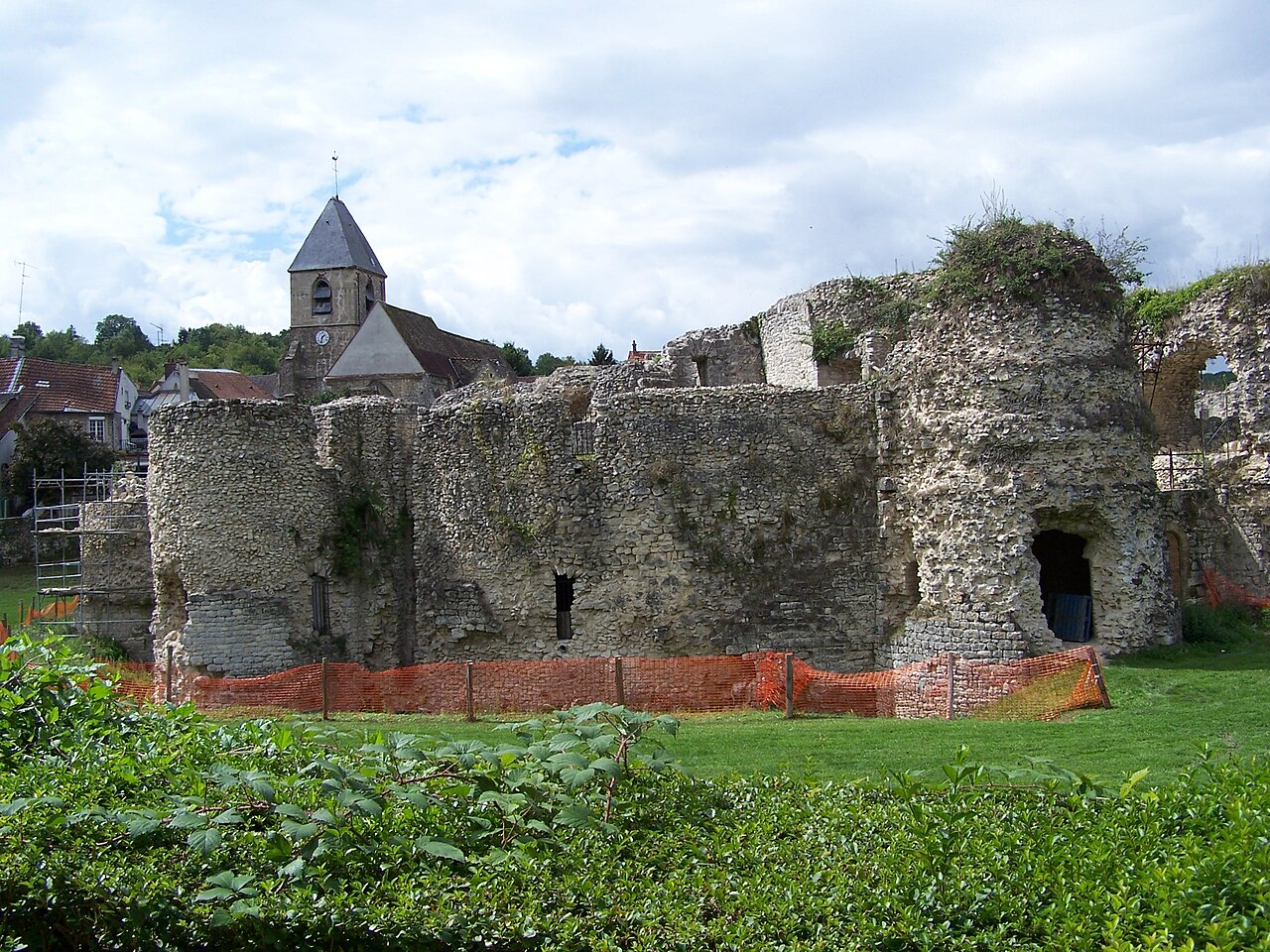
Château d'Agnou
The Château d'Agnou stands as a significant example of 16th-century Renaissance architecture in the region of Maule, France. Its origins trace back to the 12th century when the Château Saint-Vincent was established on the same site, within the fiefdom of the Boutigny family. This medieval fortress was located in the faubourg of Agnou, outside Maule's long city walls. Ownership passed through the Boutigny lineage, notably Hugues de Boutigny and his son Jean de Boutigny during the 13th century. However, the original castle was dismantled by royal order from King Louis VI and later destroyed in 1357 during the pillaging by Charles II of Navarre, leaving the site in ruins.
The rise of the Renaissance manor
In the 16th century, the site witnessed a revival with the construction of the present manor, commissioned by Nicolas de Harlay, Lord of Sancy and Superintendent of Finances under King Henry IV. The château, also known historically as Château du Hagnou or de Balagny, was conceived as a grand residence befitting the stature of its owner. Construction began in 1594 after the drainage of the surrounding marshes at Bout d’Agnou, aiming to create a large quadrilateral structure with four round towers. Ultimately, only a single wing approximately 60 meters long and a distinctive dovecote tower were completed. The dovecote, a high cylindrical stone tower with over 3,200 pigeon holes capable of housing more than 6,000 pigeons, remains one of the largest and oldest in the Paris region and France.
Architectural features and layout
The manor’s design reflects the Renaissance style with its emphasis on symmetry and classical proportions. The surviving wing demonstrates refined masonry work and elegant window arrangements typical of the period. The dovecote tower not only served a practical purpose for pigeon breeding—a privilege of the nobility abolished during the Revolution—but also acted as a status symbol. The ambitious original plan, which included four round towers at each corner, would have created a fortified yet comfortable residence blending defensive elements with Renaissance aesthetics.
Historical ownership and transformations
Following Nicolas de Harlay’s acquisition of the barony of Maule in 1602, the estate passed through several prominent families. The Morainvillier family held the barony until 1597, after which it transitioned to the Harlays of Sancy. Later, in 1638, the château was sold to Claude de Bullion, another Superintendent of Finances and Keeper of the Seals of France. During the turbulent years of the French Revolution, the château suffered significant damage when the then-owner, the Marquis de Boisse, fled into exile. Revolutionary forces vandalized the property, which was subsequently sold in 1793 to Nicolas-François Fréret before being reclaimed by the marquis in 1812.
20th-century uses and restoration
In the 19th century, the château passed through the hands of the Maule Plainval family and later the Balagnys in 1876. During the First World War, it was repurposed as a convalescent home, and in the Second World War, it was occupied by the German Wehrmacht. The building was left vacant for several decades after the 1960s until new ownership in the 1970s initiated a gradual restoration effort. Today, the château is privately co-owned and has been restored to reflect its 16th-century Renaissance appearance, preserving its historical and architectural significance.
Significance of the dovecote tower
The château’s dovecote is a remarkable feature, notable for its size and age. Housing over 3,200 pigeon holes, it could accommodate more than 6,000 pigeons, making it one of the largest in the Paris region and one of the oldest surviving dovecotes in France. Historically, the right to maintain pigeons was reserved for the nobility, symbolizing wealth and privilege. This right was abolished in 1790 during the revolutionary reforms, leading to the dovecote’s abandonment. Its preservation offers insight into the social and economic practices of the French aristocracy during the Renaissance.
Geographical and cultural context
Located in the commune of Maule, within the Île-de-France region, the château occupies a strategic position near Paris. Its construction involved significant landscape modification, including the drainage of marshlands at Bout d’Agnou, demonstrating early modern engineering efforts to adapt the environment for noble residences. The château’s proximity to royal hunting grounds suggests it may have served as a retreat for King Henry IV during hunting expeditions, linking it to the broader cultural practices of the French monarchy.
Architectural legacy and preservation
Though incomplete, the Château d'Agnou exemplifies the transition from medieval fortifications to Renaissance manors emphasizing comfort and status. Its surviving structures provide valuable architectural insights into late 16th-century noble residences in France. The ongoing preservation efforts ensure that this heritage site remains a tangible connection to France’s Renaissance period and aristocratic history.
Frequently asked questions (FAQ)
- What is the historical significance of Château d'Agnou?
- Château d'Agnou is a remarkable example of medieval architecture in Maule, France, dating back to the 14th century. It has served various purposes throughout its history, including a defensive stronghold and a noble residence, reflecting the region's rich heritage.
- When is the best time to visit Château d'Agnou?
- The best time to visit Château d'Agnou is during the spring and early autumn months, when the weather is mild and pleasant. These seasons also provide beautiful scenery, enhancing the experience of exploring the castle and its surroundings.
- Can I take a guided tour of Château d'Agnou?
- Yes, guided tours are available at Château d'Agnou, providing visitors with in-depth knowledge about the castle's history, architecture, and significance. Reservations are recommended to ensure availability, especially during peak tourist seasons.
- Is it possible to visit Château d'Agnou with limited mobility?
- Château d'Agnou has made efforts to improve accessibility for visitors with limited mobility. However, due to its historical nature, some areas may still be challenging to navigate, so it's advisable to check in advance for specific accommodations.
- What are the opening hours of Château d'Agnou?
- Château d'Agnou typically opens to visitors from 10 AM to 5 PM, with extended hours during the summer months. It is closed on certain public holidays, so checking the official website for the latest information before your visit is recommended.
- What are the ticket prices for Château d'Agnou?
- Ticket prices for Château d'Agnou are generally affordable, with discounts available for students and seniors. Children under a certain age may enter for free, making it a family-friendly destination.
- Are there any nearby attractions to visit along with Château d'Agnou?
- Yes, visitors can explore several nearby attractions, including the picturesque village of Maule and its charming streets. Additionally, the surrounding countryside offers beautiful hiking trails and scenic views, perfect for a day of exploration.
Information
Loading map...
Visitor reviews
No reviews yet. Been here? Write the first review and help other travelers!
Write the first reviewVisited this castle? Share your experience
Your review helps other travelers and adds first-hand knowledge to our encyclopedia.