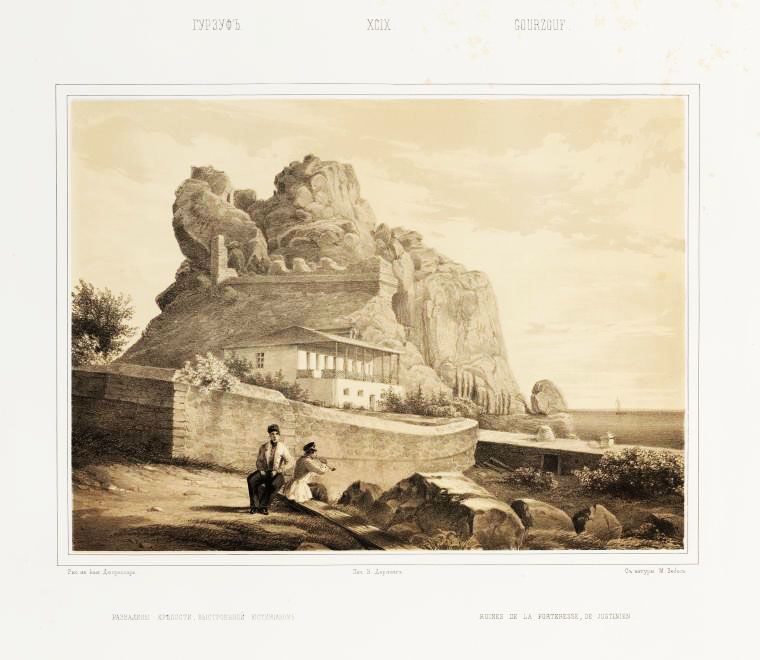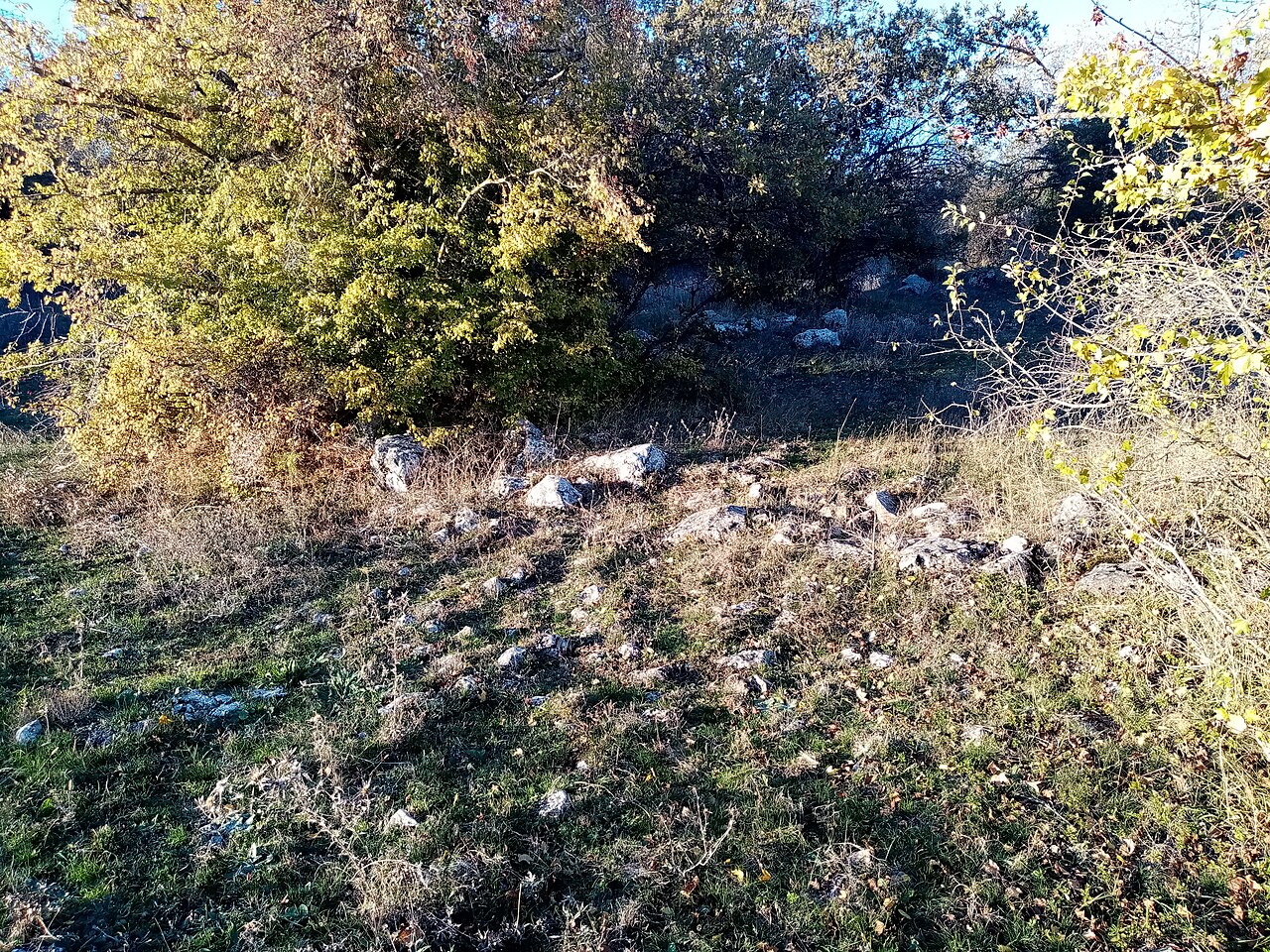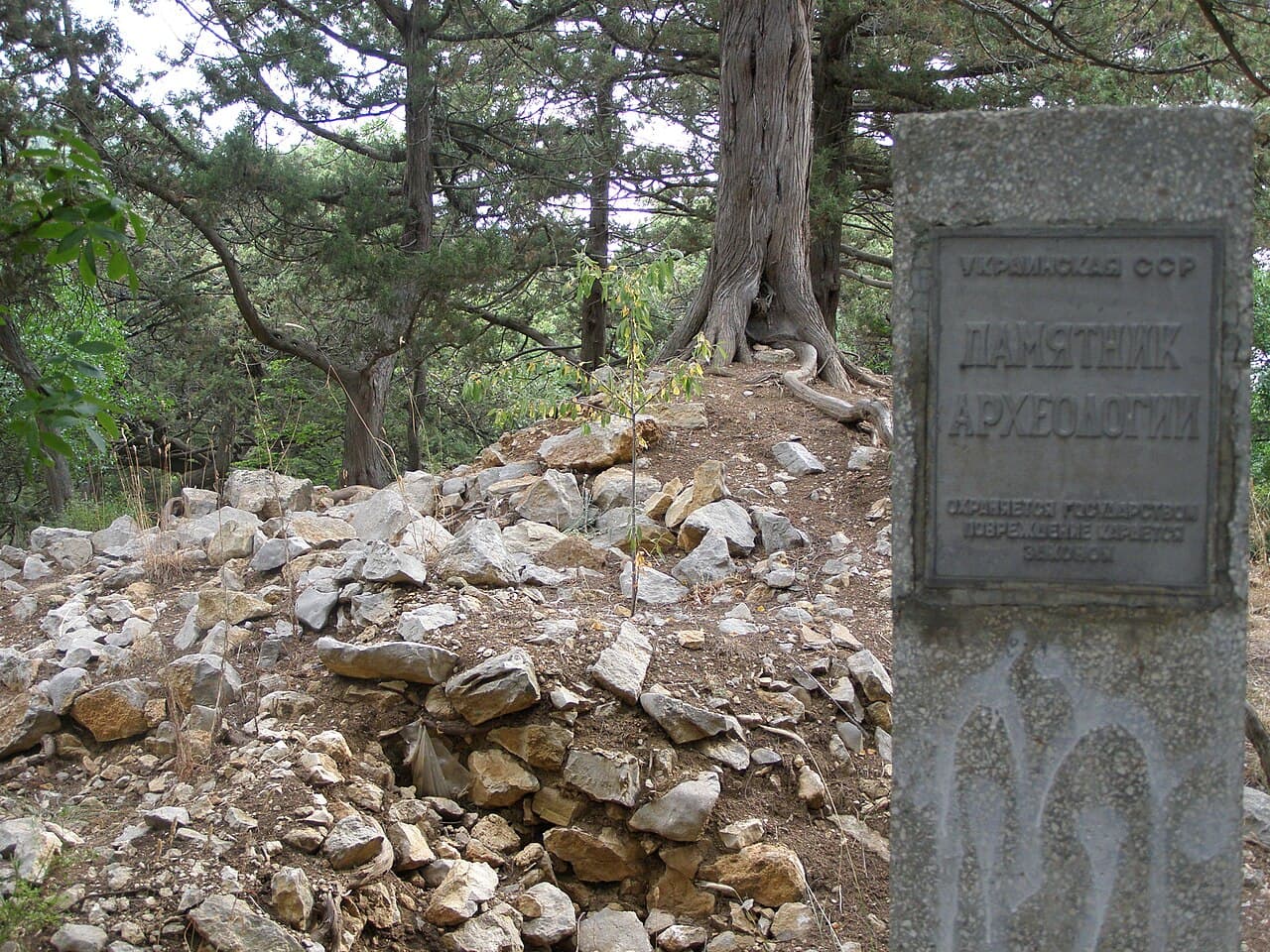
Charax (Ancient Greek: Χάραξ, gen.: Χάρακος) represents the largest Roman military settlement uncovered in the Crimea, situated on a four-hectare site at the western ridge of Ai-Todor, near the famed Swallow's Nest tourist attraction. This extensive site provides invaluable insight into Roman military architecture and strategic deployments on the northern Black Sea coast during the 2nd century AD.
The establishment of Charax traces back to the reign of Emperor Vespasian, who founded the camp as a defensive measure to protect the important Greek city of Chersonesus and the surrounding Bosporean trade emporiums from incursions by the Scythians. The camp was strategically placed to control access and safeguard Roman interests in the region. By the end of the 1st century AD, however, the Roman military presence was withdrawn from the Crimean Peninsula.
After a period of abandonment, Charax was reoccupied and restored by a vexillatio (detachment) of the Legio I Italica, and later hosted a detachment of the Legio XI Claudia towards the end of the 2nd century AD. The military camp functioned until the mid-3rd century AD, when it was finally abandoned amidst the broader Roman military retreat from the area.
Archaeological discovery and excavations
The ruins of Charax were first discovered in 1837 by Peter Keppen, who measured the defensive walls at approximately 395 metres in length. Keppen identified the site with the name "Charax," derived from the Greek term for "fortification," the only Roman camp recorded in Crimea. Despite no direct historical evidence linking the camp to Ai-Todor, the name has remained associated with this location.
In 1849, Count Shuvalov sponsored initial excavations, though these early efforts were somewhat rudimentary. More systematic and extensive excavations began in 1896 under the patronage of Grand Duke Alexander Mikhailovich of Russia, who had a summer residence nearby. These excavations continued for fifteen years, uncovering a wealth of Roman coins, bronze artifacts, and structural remains.
Michael Rostovtzeff, representing St. Petersburg University, directed the archaeological work and reclassified Charax as an "entire Roman city" rather than merely a military fortification, highlighting its urban characteristics and complex infrastructure. In 1907, a museum dedicated to the archaeological finds was established on-site, preserving and displaying the artifacts for scholarly study and public education.
Architectural features and urban layout
The excavations in the early 20th century revealed that Charax was more than a simple military camp; it contained features typical of Roman urban settlements. Remains of public water basins, thermae (baths), and an aqueduct indicate advanced water management infrastructure. The presence of a gymnasium and a sanctuary outside the defensive walls further suggest a community with social and religious functions beyond purely military purposes.
The defensive structures included cyclopean walls—massive stone fortifications whose origins have been debated. Early hypotheses proposed that these walls were constructed by the indigenous Tauri before Roman occupation, though this theory has lost favor in recent scholarship. The camp's walls formed a bastioned fortress, a style adapted to the military needs of the time, designed to withstand sieges and raids.
Defensive architecture
The layout of Charax reflects Roman military engineering principles, with thick stone walls and bastions providing vantage points for defense. The camp's position on a ridge offered strategic control over the surrounding terrain and sea approaches. The fortifications included gates and towers, facilitating surveillance and troop movements.
Urban amenities and infrastructure
The discovery of thermae and public water basins illustrates the Roman emphasis on hygiene and public welfare even in frontier settlements. The aqueduct system supplied fresh water, crucial for sustaining the garrison and any civilian inhabitants. The gymnasium served as a center for physical training and social interaction, reflecting the cultural integration of Roman and local practices.
Historical significance and military role
Charax played a key role in the Roman defensive network guarding the northern Black Sea coast. Its foundation under Vespasian was part of a broader strategy to secure trade routes and protect allied cities from nomadic tribes like the Scythians. The camp's occupation by elite legions such as Legio I Italica and Legio XI Claudia underscores its military importance.
The eventual abandonment of Charax in the mid-3rd century corresponds with the wider Roman military withdrawal from Crimea due to increasing pressure from external threats and internal instability within the empire. The site thus marks a significant chapter in the Roman Empire's frontier history.
Later research and interpretations
Further excavations led by Vladimir Blavatsky in the 1930s expanded understanding of the site's complexity. His team uncovered additional public buildings and supported theories about the site's pre-Roman origins and its deliberate slighting by retreating Roman forces to prevent enemy use.
Modern archaeological methods have refined the chronology and function of Charax, situating it firmly within the Roman military and urban tradition of the Early Medieval period. It remains a vital archaeological site for studying Roman frontier life and military architecture in Eastern Europe.
Visiting Charax today
While the precise city location remains uncertain, the ruins near Ai-Todor are accessible to visitors interested in Roman history and archaeology. The site offers a glimpse into Roman military engineering and settlement patterns on the Black Sea coast, complemented by nearby attractions such as the Swallow's Nest castle and the historic lighthouse built in the 19th century.
Frequently asked questions (FAQ)
- When was Charax founded and what was its primary purpose?
- Charax was founded in the 2nd century AD under Emperor Vespasian to protect Chersonesus and Bosporean trade routes from Scythian attacks.
- What Roman legions were stationed at Charax?
- Charax hosted detachments of Legio I Italica and Legio XI Claudia during its occupation in the 2nd and 3rd centuries AD.
- What notable architectural features have been discovered at Charax?
- Excavations revealed cyclopean walls, bastioned fortifications, thermae, aqueducts, public water basins, a gymnasium, and a sanctuary.
- Is Charax open to visitors today?
- The ruins near Ai-Todor can be visited, offering insight into Roman military architecture and proximity to other Crimean landmarks like Swallow's Nest.
- Who conducted the major excavations of Charax?
- Major excavations were conducted by Peter Keppen, Count Shuvalov, Grand Duke Alexander Mikhailovich, and Michael Rostovtzeff between the 19th and early 20th centuries.
Photo gallery

Information
Loading map...
Visitor reviews
No reviews yet. Been here? Write the first review and help other travelers!
Write the first reviewVisited this castle? Share your experience
Your review helps other travelers and adds first-hand knowledge to our encyclopedia.