Castro of Santa Trega
The Castro of Santa Trega is a significant archaeological site located on the slopes of Mount Santa Trega in the municipality of A Guarda, in the southwestern part of Galicia, Spain. This ancient fortified settlement stands at an altitude of 341 meters (1118 feet) above sea level, commanding a strategic vantage point overlooking the mouth of the river Miño. It represents one of the most emblematic and well-preserved examples of the Castro culture, a distinctive Iron Age culture prevalent in northwestern Iberia during the Late Bronze Age and Early Iron Age.
Historical context and cultural significance
The Castro culture flourished in the northwestern Iberian Peninsula from approximately the 9th century BCE until the Roman conquest in the 1st century BCE. The inhabitants of the Castro of Santa Trega were part of this cultural tradition characterized by hilltop fortified settlements known as "castros." These sites served as defensive strongholds and community centers for the local Celtic tribes. The Castro of Santa Trega is particularly notable for its size and preservation, making it a key reference for understanding the social, economic, and defensive strategies of the era.
Declared a National Historical and Artistic Monument in 1931 and recognized as a Bien de Interés Cultural (BIC), the site is protected for its archaeological and cultural value. It is one of the most visited archaeological sites in Galicia, reflecting its importance in regional heritage and identity.
Architectural features and site layout
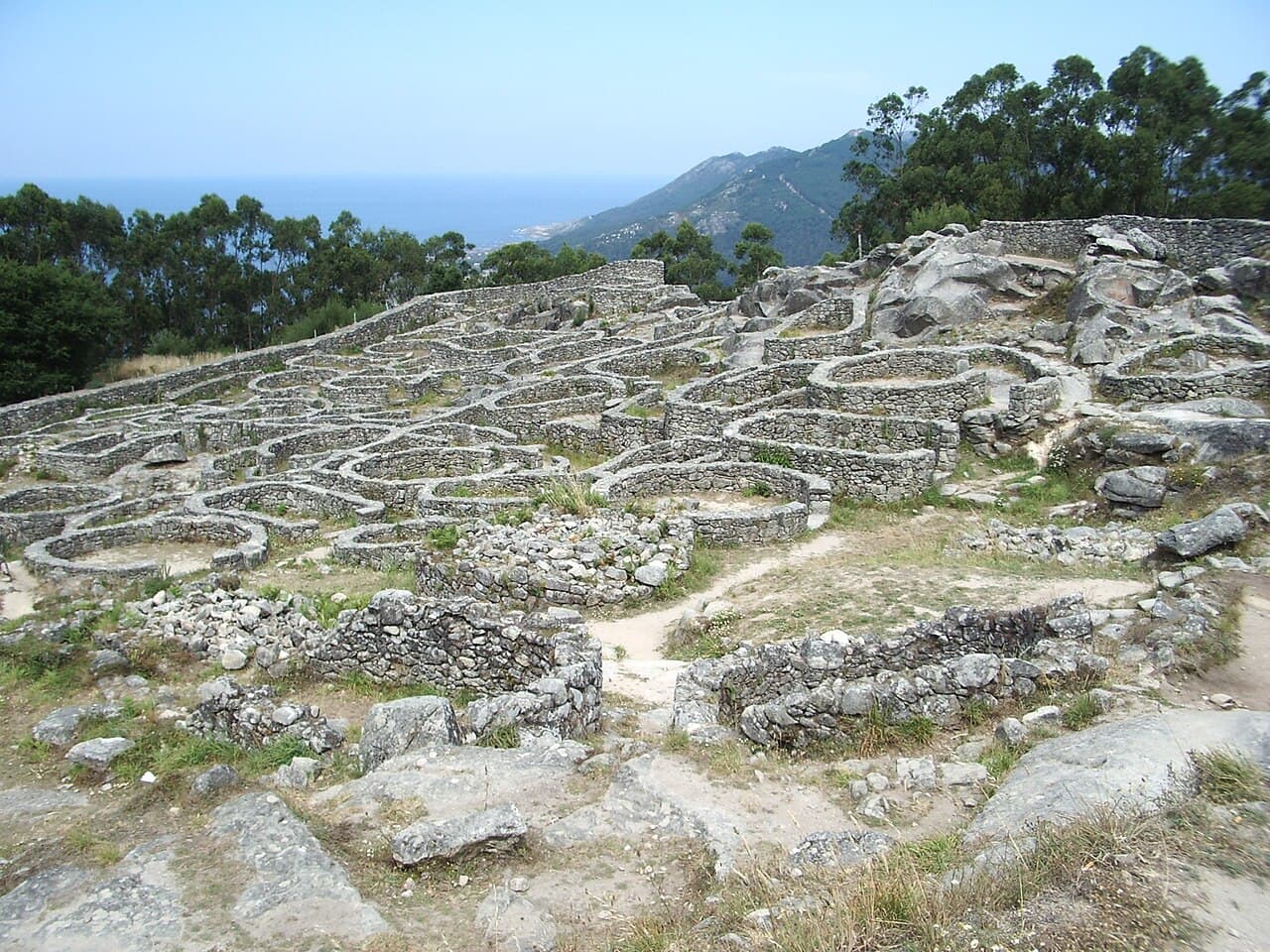
The site comprises the remains of a fortified hilltop settlement enclosed by multiple concentric stone walls and ramparts, designed to protect the inhabitants from external threats. The defensive structures include circular and oval stone houses typical of the Castro culture, arranged along narrow, winding streets that adapt to the natural topography of the hill.
The walls are constructed with local granite, showcasing the dry stone masonry technique without mortar. The fortifications include gates and towers positioned at strategic points to control access and provide lookout positions. The settlement also features communal spaces such as plazas and workshops, indicating a complex social organization.
Residential structures
The dwellings within the Castro of Santa Trega are predominantly circular or oval, with stone foundations and walls that once supported wooden roofs. Excavations have revealed hearths and storage pits, suggesting domestic activities and food preservation methods. The houses vary in size, reflecting different social statuses or family units.
Defensive elements
The fortifications include up to three concentric walls in some areas, demonstrating the importance of defense. The positioning of the site on a hill with steep slopes provided natural protection, augmented by man-made walls and ditches. The main entrance is fortified and designed to slow down attackers.
Archaeological discoveries and research
Extensive archaeological excavations have uncovered a wealth of artifacts, including pottery, tools, weapons, and jewelry, which provide insight into the daily life, trade, and craftsmanship of the Castro inhabitants. The material culture reflects both local traditions and external influences, possibly through trade with Mediterranean cultures.
Research at the site has also contributed to understanding the transition from the pre-Roman Iron Age societies to Roman provincial life. The Castro of Santa Trega shows signs of Roman influence in later occupation layers, illustrating the cultural changes brought by Roman conquest and assimilation.
Visitor experience and cultural heritage
Today, the Castro of Santa Trega is accessible to visitors who can explore the extensive ruins and enjoy panoramic views of the surrounding landscape, including the Atlantic coast and the estuary of the river Miño. Interpretive panels and guided tours help visitors appreciate the historical context and architectural features of the site.
The site’s preservation as archaeological ruins allows for direct engagement with Galicia’s ancient past, making it a significant cultural and educational resource. Its designation as a Bien de Interés Cultural ensures ongoing protection and promotes awareness of the region’s rich archaeological heritage.
Frequently asked questions (FAQ)
- How do I get to the Castro of Santa Trega?
- The Castro of Santa Trega is located in A Guarda, Spain, and can be reached by car or public transport. If you're driving, there is parking available nearby. Public buses also connect A Guarda with major cities in Galicia, making it accessible for visitors.
- What is the historical significance of the Castro of Santa Trega?
- The Castro of Santa Trega is an ancient Celtic settlement that dates back to the Iron Age, showcasing the rich history of the region. It offers insights into the lives of the Celtic people and their architectural practices. The site is not only a cultural treasure but also a vital part of Galician heritage.
- When was the Castro of Santa Trega built?
- The Castro of Santa Trega was established around the 1st century BC, during the Iron Age. It served as an important settlement for the Celtic tribes in the area, reflecting their societal structure and defensive strategies. The site has been excavated to reveal various artifacts that date back to this period.
- Can I visit the Castro of Santa Trega year-round?
- Yes, the Castro of Santa Trega is open to visitors throughout the year. However, the best time to visit is during the spring and fall when the weather is mild and the surrounding natural beauty is at its peak. Be sure to check for any seasonal events or guided tours that may enhance your experience.
- Why is the architecture of the Castro of Santa Trega notable?
- The architecture of the Castro of Santa Trega is significant due to its unique circular stone structures and defensive walls, which exemplify Celtic design. The layout of the settlement provides insight into the strategic thinking of its inhabitants regarding defense and community living. The remains of various huts and fortifications reveal a sophisticated understanding of architecture for that era.
- Is it possible to get guided tours at the Castro of Santa Trega?
- Yes, guided tours are available at the Castro of Santa Trega, which provide in-depth information about the site's history and significance. These tours are conducted by knowledgeable guides who can enhance your understanding of the archaeological findings and the cultural context. It's recommended to check in advance for availability and to book your tour, especially during peak tourist seasons.
- What are the opening hours for the Castro of Santa Trega?
- The Castro of Santa Trega typically opens at 10 AM and closes at 8 PM in the summer months, while winter hours may vary. It’s advisable to check the official website or local tourist information for the most current hours before your visit. Keep in mind that the site may close on certain holidays.
- Are there any nearby attractions to visit after exploring the Castro of Santa Trega?
- Yes, A Guarda has several nearby attractions worth visiting, including the beautiful beaches along the Atlantic coast and the scenic Monte de Santa Trega, which offers stunning views. Additionally, the local gastronomy, including fresh seafood, is a must-try. Exploring the town's quaint streets can also reveal charming shops and cafes.
- How much do tickets cost for entry to the Castro of Santa Trega?
- Entry to the Castro of Santa Trega is typically free, allowing visitors to explore the site without any charge. However, guided tours may have a fee associated with them. Be sure to verify current pricing details, as they can change or vary based on special events or seasons.
Photo gallery

Information
Loading map...
Visitor reviews
No reviews yet. Been here? Write the first review and help other travelers!
Write the first reviewVisited this castle? Share your experience
Your review helps other travelers and adds first-hand knowledge to our encyclopedia.