Castro of Borneiro
Castro of Borneiro is a significant archaeological site located in the region of Galicia, Spain. It represents one of the best-preserved examples of an iron-age castro settlement, or oppidum, characteristic of the Castro culture that flourished in Northern Spain. The site provides valuable insights into the social, economic, and defensive practices of the period, with occupation spanning from the 4th to the 1st century BCE.
The castro culture and historical context
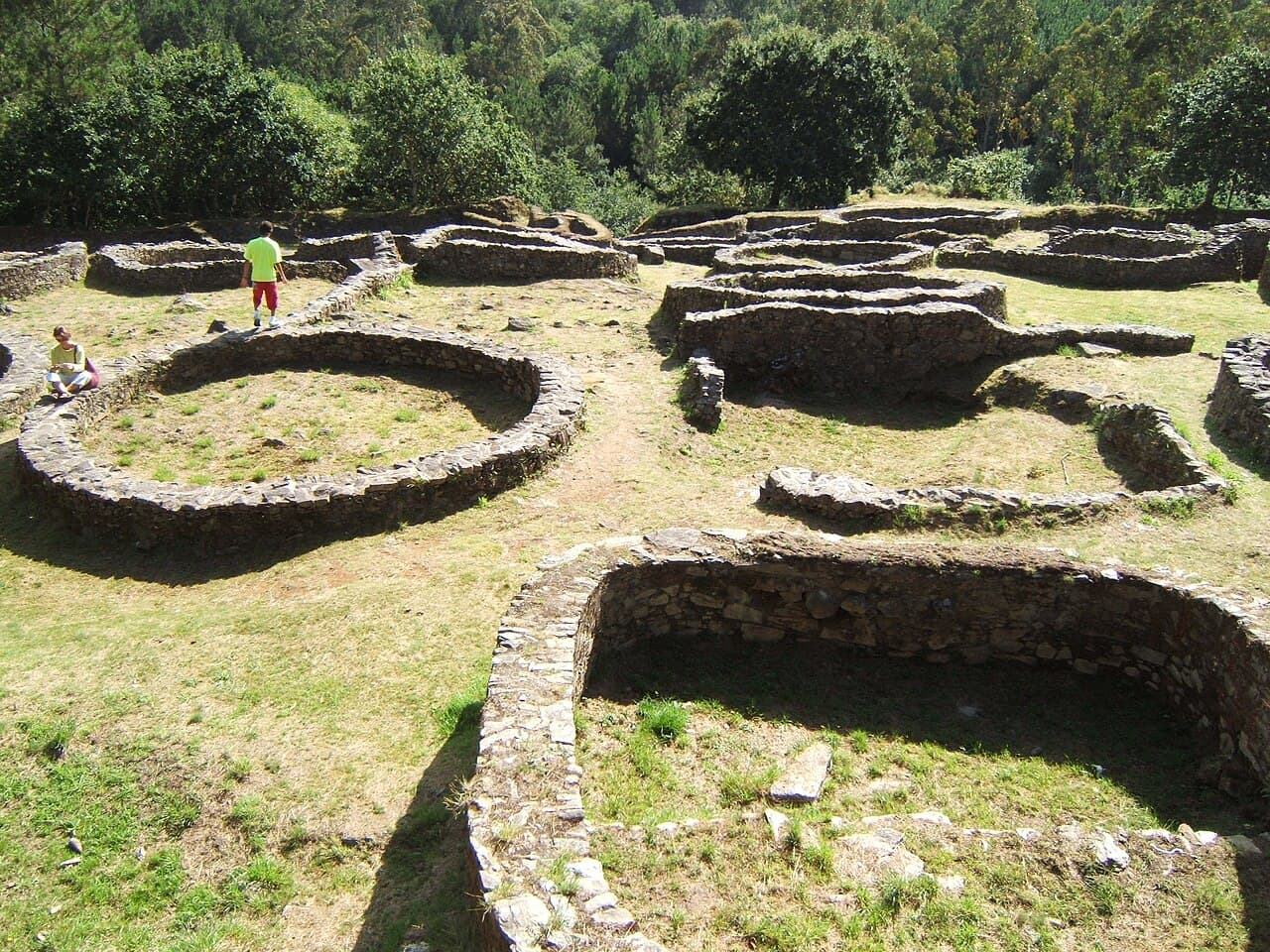
The term "castro" refers to fortified settlements commonly found across the northwestern Iberian Peninsula during the Late Bronze Age and Iron Age. These settlements were typically situated on elevated terrain and enclosed by stone walls and ditches, serving both defensive and residential purposes. The Castro culture is notable for its distinctive circular and oval dwellings, which are often clustered within the fortified perimeter.
Castro of Borneiro exemplifies this cultural tradition, with archaeological evidence indicating continuous habitation from the 4th century BCE until the 1st century BCE. This timeframe aligns with the broader regional developments during the Iron Age, including increasing social stratification and interaction with Mediterranean cultures.
Architectural features and layout
The site is characterized by its stone defensive walls that enclose the settlement, forming a roughly oval shape adapted to the natural topography. The walls, constructed with dry stone techniques, are complemented by a series of defensive ditches and terraces that enhance the fortification.
Within the enclosure, the remains of numerous circular stone houses are visible, arranged in a compact pattern. These dwellings typically feature stone foundations with walls that would have been constructed of perishable materials such as wood and thatch. The interior spaces likely included hearths and storage areas, reflecting domestic life during the Iron Age.
The site also includes evidence of communal spaces and pathways, indicating a planned settlement structure. The spatial organization suggests a community with social cohesion and shared responsibilities for defense and resource management.
Archaeological investigations and preservation
Castro of Borneiro has been the subject of multiple archaeological excavations since the 20th century, which have uncovered artifacts such as pottery, tools, and metal objects that provide insight into the daily life and trade connections of its inhabitants. The site has been carefully conserved to allow public access while protecting its fragile remains.
Visitor facilities include interpretive signage and pathways that guide exploration without damaging the archaeological fabric. These measures aim to balance educational value with preservation, making the site an important cultural resource for understanding the Iron Age in Galicia.
Significance and cultural heritage
The Castro of Borneiro stands as a key example of the Castro culture's architectural and societal achievements. Its well-preserved ruins offer a rare glimpse into the fortified settlements that dominated the landscape of Northwestern Iberia before Roman conquest.
As a protected archaeological site, it contributes to the broader appreciation of Galicia's prehistoric heritage and serves as a focal point for research and tourism. The site illustrates the adaptation of communities to their environment through strategic location and construction techniques.
Visiting the castro
Visitors to Castro of Borneiro can explore the remains of the stone walls and dwellings, gaining an understanding of Iron Age settlement patterns. The site is accessible year-round, with pathways designed to minimize impact on the ruins. Guided tours and informational materials enhance the educational experience.
Frequently asked questions (FAQ)
- What is the castro culture represented by Castro of Borneiro?
- The castro culture refers to fortified settlements from the Iron Age in Northwestern Spain, characterized by stone walls and circular houses. Castro of Borneiro is a prime example of this culture, inhabited from the 4th to 1st century BCE.
- When was Castro of Borneiro inhabited?
- Castro of Borneiro was inhabited from the 4th century BCE until the 1st century BCE, during the Iron Age period in Galicia.
- Can I visit Castro of Borneiro year-round?
- Yes, the site is accessible year-round with pathways and interpretive signage to guide visitors while protecting the ruins.
- What architectural features are notable at Castro of Borneiro?
- Notable features include dry stone defensive walls, circular stone house foundations, defensive ditches, and terraces adapted to the terrain.
- Are there guided tours available at Castro of Borneiro?
- Guided tours and informational materials are available to enhance visitor understanding of the site's historical and cultural significance.
Photo gallery

Information
Loading map...
Visitor reviews
No reviews yet. Been here? Write the first review and help other travelers!
Write the first reviewVisited this castle? Share your experience
Your review helps other travelers and adds first-hand knowledge to our encyclopedia.