Castro de Ulaca stands as a significant Iron Age hill fort settlement or oppidum attributed to the Vettones people, who inhabited the region during the third to first centuries BC. This archaeological site is located in the municipality of Solosancho within the province of Ávila, Spain. It represents one of the largest fortified settlements of the Vettones culture, offering valuable insights into the social and architectural practices of this pre-Roman Iberian people.
The oppidum is defined by an extensive 3,000-meter-long defensive wall enclosing an oval-shaped area exceeding 60 hectares. The fortification walls, constructed primarily of local stone, were designed to protect the settlement from external threats and to demarcate its territorial extent. The inner area reveals the stone foundations of over 250 houses, uncovered through systematic archaeological excavations. These dwellings suggest a densely populated community, with estimates placing the population between 1,000 and 1,400 inhabitants, marking it as a major population center in the region during the late Iron Age.
Architectural layout and defensive structures
The layout of Castro de Ulaca is characteristic of Vettones oppida, featuring a comprehensive fortification system that includes massive stone walls and strategically placed entrances. The walls are notable for their considerable length and the use of large unmortared stones, a technique typical of Vettones construction methods. The oval shape of the enclosure maximizes the defensible area on the hilltop, taking advantage of the natural terrain for enhanced protection.
Within the walls, the settlement's urban plan consists of a network of streets and residential blocks, with the stone foundations indicating rectangular and circular house structures. These houses likely had wooden superstructures and thatched roofs, consistent with Iron Age building practices in the Iberian Peninsula.
The sanctuary and religious significance
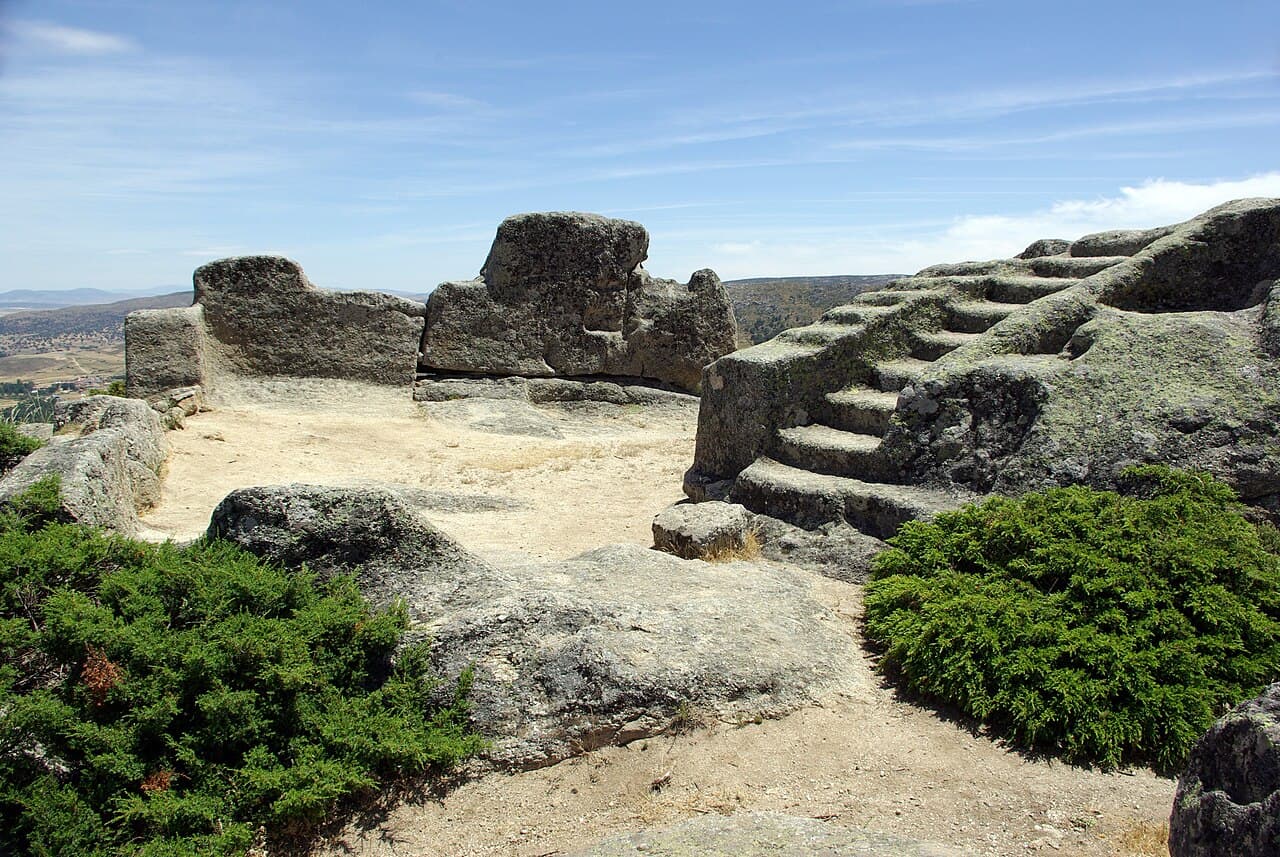
One of the most remarkable features of Castro de Ulaca is its sacred sanctuary area located in the northwest sector of the oppidum, set apart from the residential zones. This sanctuary is partially carved into the bedrock and measures approximately 16 by 8 meters. It has two entrances oriented to the southeast and west, suggesting controlled access to this important ritual space.
The sanctuary's enclosing walls, still standing up to 2 meters high in places, are constructed from large stone blocks. The interior features a prominent rock altar, which is intricately carved with a sloping surface on three sides and two sets of parallel steps on the north-facing side. These steps, consisting of six and nine steps respectively, lead to a flat top area with a network of interconnected concavities. These concavities are designed to channel liquids poured from the top, allowing them to flow down to the base of the altar, indicating ritualistic use involving libations or offerings.
Ritual practices and cultural context
The design of the altar and sanctuary suggests complex religious practices among the Vettones, possibly involving offerings to deities or ancestors. The careful engineering of the liquid channels highlights a sophisticated understanding of ritual symbolism and the importance of water or liquid substances in their ceremonies.
Archaeological research and findings
Extensive archaeological excavations at Castro de Ulaca have revealed a wealth of artifacts including pottery, tools, and remains of domestic life, which contribute to understanding the daily activities and social organization of the Vettones. The site also includes burial grounds nearby, which provide further evidence of the cultural practices and population size.
The preservation of the stone foundations and walls allows researchers to reconstruct the settlement's layout and gain insights into Iron Age urban planning and defensive strategies in the Iberian Peninsula.
Location and accessibility
Situated in the province of Ávila, Castro de Ulaca is accessible from the municipality of Solosancho. The site is open to visitors interested in archaeology and ancient history, offering a unique glimpse into one of the most important Vettones oppida. While the site consists primarily of ruins, the visible remains of walls, houses, and the sanctuary provide a tangible connection to the Iron Age past.
Visitors can explore the extensive area, observe the impressive defensive walls, and examine the sanctuary's altar, which remains a highlight of the site.
Frequently asked questions (FAQ)
- What is the historical significance of Castro de Ulaca?
- Castro de Ulaca is an ancient hill fort that dates back to the Iron Age, showcasing the strategic military architecture of the time. It is considered one of the most important archaeological sites in the region, providing insights into the lives of the ancient Iberian tribes.
- When was Castro de Ulaca built?
- Castro de Ulaca was constructed around the 5th century BC, making it one of the earliest examples of fortified settlements in the Iberian Peninsula. Its construction reflects the need for defense during a time of conflict and territorial disputes.
- Can I visit Castro de Ulaca year-round?
- Yes, Castro de Ulaca is open to visitors throughout the year, although the best time to visit is during the spring and autumn when the weather is mild. It is advisable to check local conditions prior to your visit, especially during winter months.
- What are the opening hours for Castro de Ulaca?
- The opening hours for Castro de Ulaca typically vary by season, with longer hours during the summer months. It is recommended to verify the current hours on the official website before planning your visit to ensure you have ample time to explore the site.
- Is it possible to access Castro de Ulaca by public transport?
- Accessing Castro de Ulaca via public transport can be challenging, as there are limited bus services to the area. It is advisable to consider traveling by car or joining a guided tour for a more convenient experience.
- What are the ticket prices for visiting Castro de Ulaca?
- Admission to Castro de Ulaca is generally affordable, with reduced rates for students and seniors. Check the official site for the latest pricing information, as special events may also affect ticket costs.
- What nearby attractions are there to visit while in Solosancho?
- In addition to Castro de Ulaca, visitors can explore the picturesque town of Solosancho, which offers charming architecture and local cuisine. The surrounding natural landscapes also provide opportunities for hiking and outdoor activities.
- How do I prepare for my visit to Castro de Ulaca?
- To prepare for your visit, wear comfortable shoes suitable for walking on uneven terrain, and bring water and snacks, as facilities at the site may be limited. Additionally, consider visiting early in the day to avoid crowds and enjoy the tranquility of the fort.
- Why is the architecture of Castro de Ulaca unique?
- The architecture of Castro de Ulaca is unique due to its impressive stone walls and circular structures, which were designed for defense and community living. The fort's layout reflects advanced engineering techniques of the time, showcasing the ingenuity of the Iberian people.
Photo gallery

Information
Current owner
Municipality of Solosancho
Loading map...
Visitor reviews
No reviews yet. Been here? Write the first review and help other travelers!
Write the first reviewVisited this castle? Share your experience
Your review helps other travelers and adds first-hand knowledge to our encyclopedia.



